
- Imagine you have just landed at an unfamiliar location, you haven’t bought any data plans yet. But looking for somewhere to stay before you continues a journey. What are you going to do if you’re not familiar with the new culture?
- As a Canadian (nuggetbucket54), many data plans may cover national calling while the data is limited to provinces. Being able to access information through national calling would be invaluable.
- Many tasks that seem easy for us may be difficult for others, such as the elderly. Their lacking knowledge of the latest apps such as Google Maps or Trip Advisor may limit their access to knowledge, but having a voice based assistant that is much more accessible and relatable could be very beneficial.
Well, introducing Nearbytes, a voiced based assistant that helps users to explore their surroundings with minimal effort.
Nearbytes asks for user’s location, and then recommend nearby facilities based on user’s requirements and conditions, helping users to decide where should they go. Unlike other services, Nearbytes main attracting point is its ability to handle calls, meaning users do not need an internet connection, but just need to make a phone call.
- Dasha Nearbytes is a voiced-based communicative tool based on Dasha, an easy-to-implement conversational AI platform. It’s very convenient and developer friendly. Although we have no experience of using AI, we are still able to learn it quickly due to its friendly syntax and structured flow (kindly checkout the main.dsl).
- Geoapify We used the API service provided by geoapify. It acts as a prove of concept that dasha can be combined with other external API services to create more interesting application. They also provides some cool APIs besides from what we’ve used in this project. Be sure to check out them.
- Nodejs Nodejs is used to connect Dasha and Geoapify.
- Lack of experience Ryan and I were not very experienced in AI stuff, as you have already know. We thought it would be really hard when we were told that the hackathon is centered around AI. However, the simplicity of Dasha was simply amazing. I ran into some silly mistakes and really thanks for the help again provided by @Sreekaran from Dasha.
- Minimal resources of API It would have been easier to just use the fully functional API by google (Google Maps API) since it even comes with built-in customer review handling, but we choose not to use it as we thought that it would be costly if we’re planning to let Nearbytes be used free of charge. Instead, we have chosen to use Geoapify as it provides similar API services (that suits our needs for now) while being FREE.
- We’ve really learned a lot on Dasha and it really introduces a new way to communicate with the end user. We’re looking to implement it in our future projects.
- More and more facilities: We wish for Nearbytes to not be limited to only restaurants, supermarket, and hotels. Nearbytes could be a tool for everyone to enjoy their trip without worrying about language barriers or internet connections.
- Filtering and finding details: We hope to improve Nearbytes to suit for more detailed needs. For example, users can find retaurants sorted by average rating and also look for more specific cuisines using geoapify's paramters such as
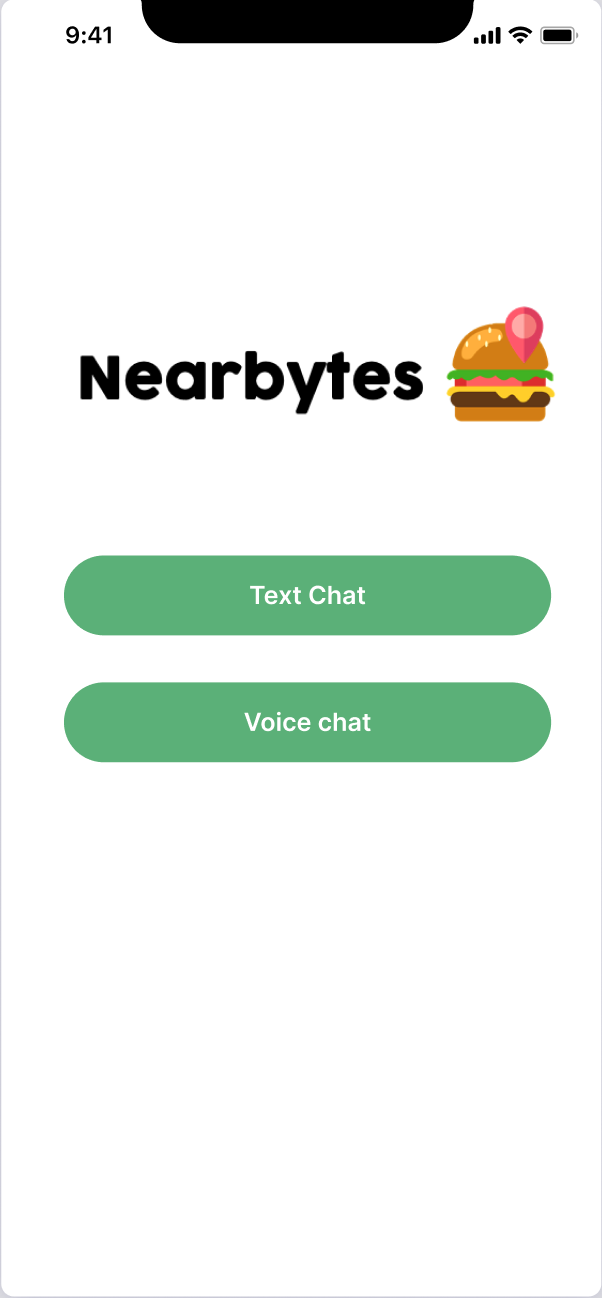
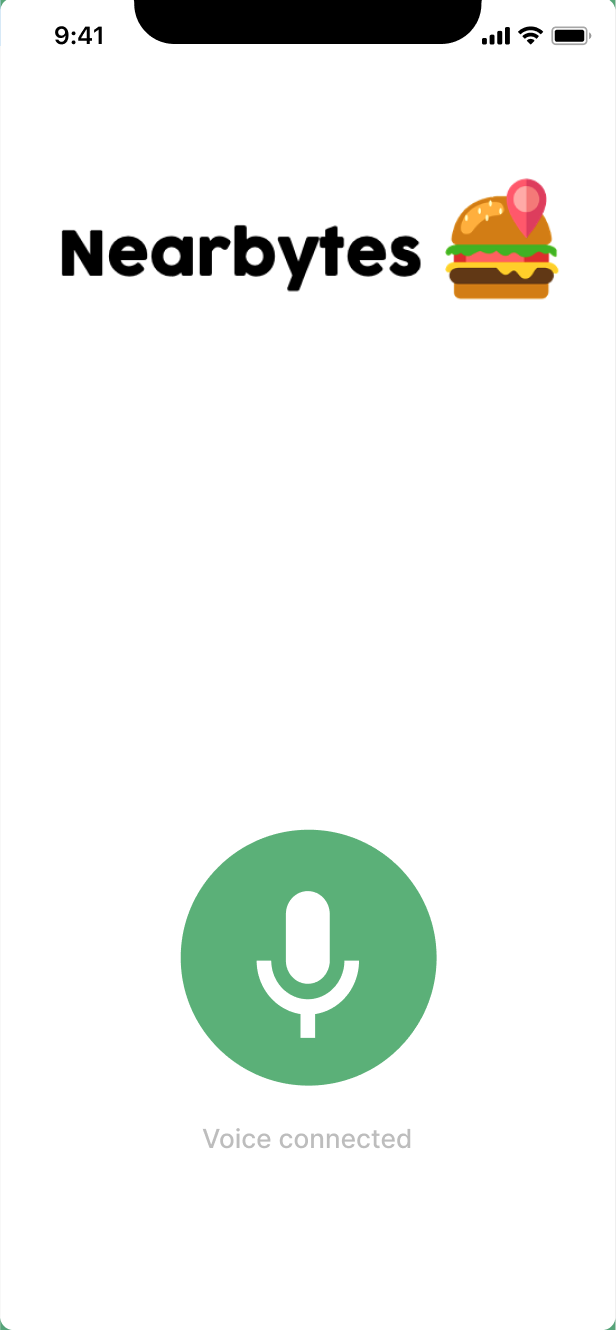
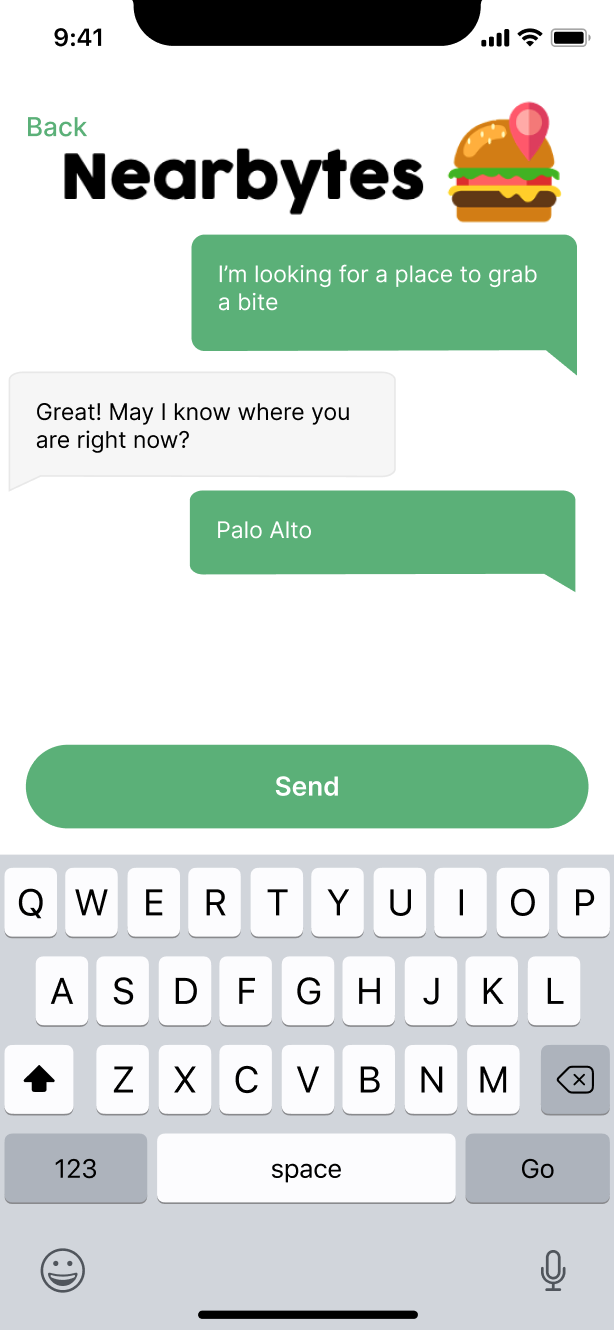
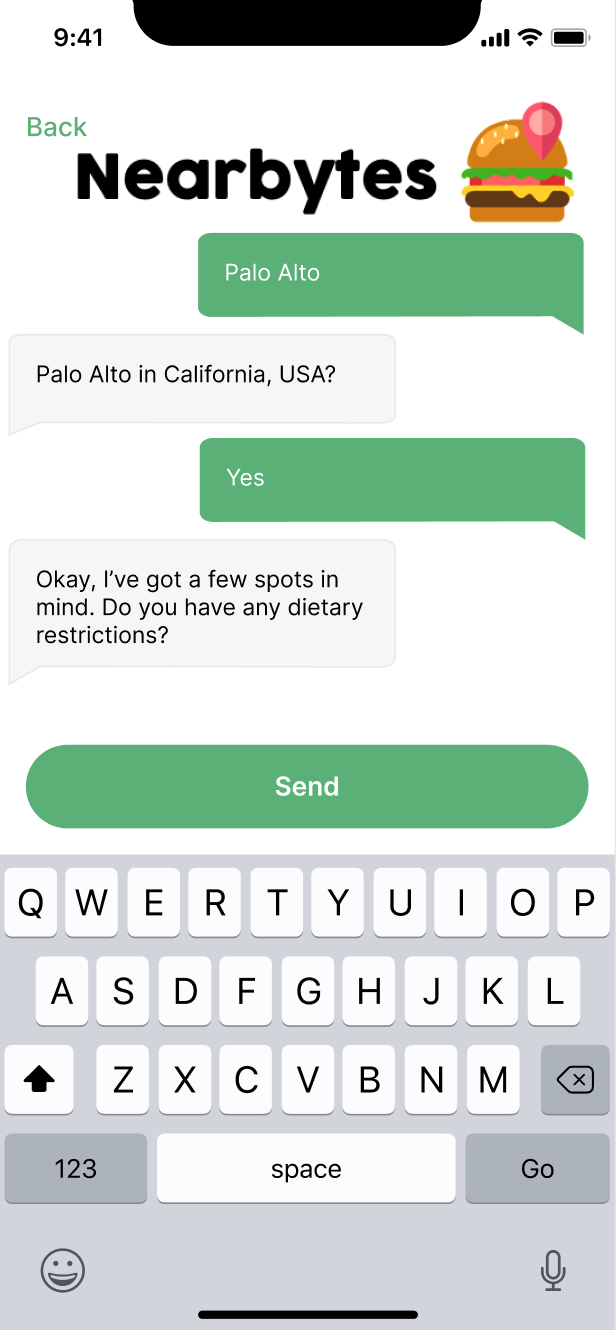
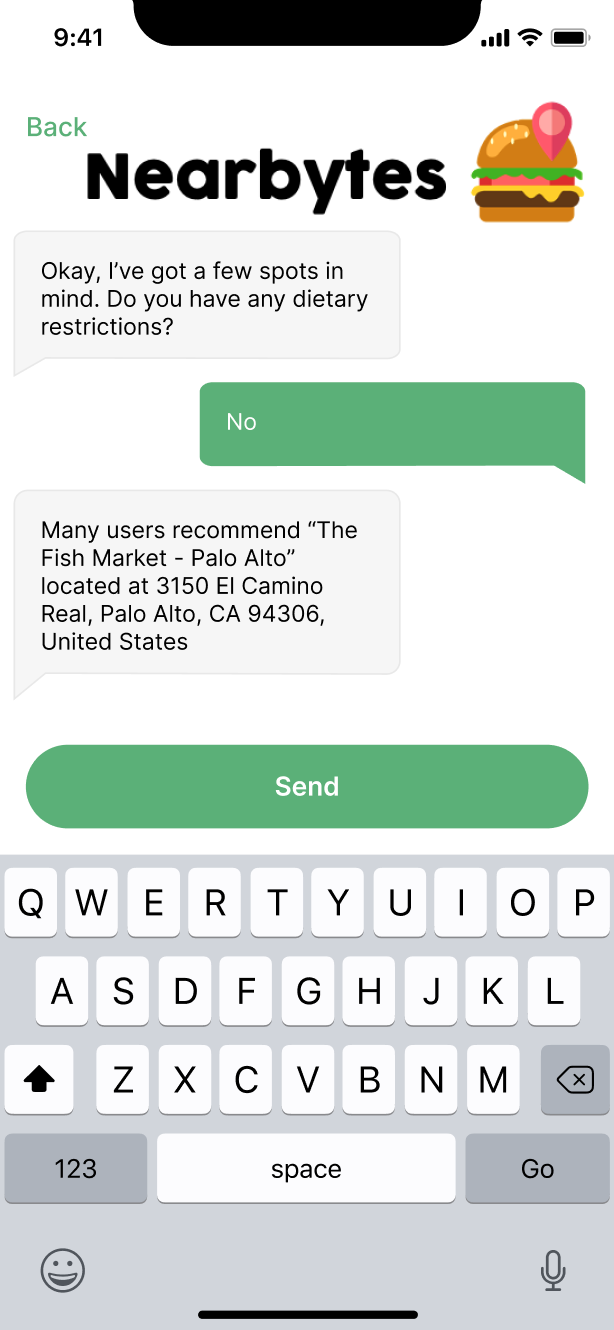
catering.restuarant.sushiorcatering.restaurant.ramen. - Finally, we are planning to develop a mobile user interface for a future app. Some mockups can be seen below:
- Replace the API_KEY with your own api key from Geoapify
- Login to dasha account via
npx dasha account login - Use
npm ito install dependencies - Use
npm start <YOUR_PHONE_NUMBER>to get a call from Dasha and try the app on your phone. You can also usenpm start chatto interact with Dasha in your local console. (It might take a while before you can start communicating with Dasha for the first time as they're training the model.)