Índice das tarefas com o processo de resolução passo a passo
-
Task 1 - Start a new Django project using a sqlite database.
-
Task 2 - Create a app and add a Finding model to store the objects described
-
Task 3 - Create a Django command that retrieves all the findings for a given id and stores them in the database.
-
Task 4 - Create a Django view to list and filter findings.
1 - Criar uma nova directoria para o projecto.
>>> mkdir intv_exercise
2 - Criar um ambiente virtual para o projecto de forma a manter as dependências isoladas.
>>> python -m venv venv
3 - Activar ambiente virtual
>>> .\venv\Scripts\activate
4 - Instalar Django e Django Rest Framework
>>> pip install Django
>>> pip install djangorestframework
5 - Registar as dependencias instaladas até ao momento num ficheiro chamado "requirements.txt".
>>> pip freeze > requirements.txt
6 - Iniciar o projecto Django
>>> django-admin startproject backend
7 - Adicionar 'rest_framework' às INSTALLED_APPS no ficheiro settings.py
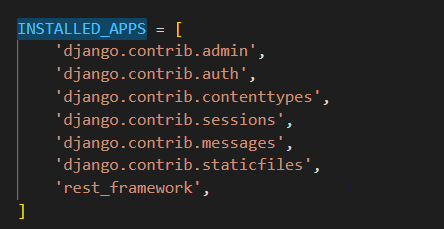
8 - Django vem por padrão com uma BD SQlite nas settings , vamos criar as migrações necessárias para criar as nossa tabelas base
>>> python manage.py makemigrations
>>> python manage.py migrate
1 - Vamos criar uma nova app dentro do nosso projecto chamada "findings"
python .\manage.py startapp findings
2 - Adicionamos a nova app às INSTALLED_APPS
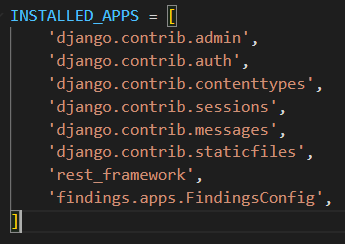
3 - Dentro da nossa nova app no ficheiro models.py vamos criar um novo modelo chamado FindingsModel.
Findings são problemas de segurança encontrados durante o scan da app/api.
Cada finding vem com os dados recolhidos durante o scan, uma descrição da vulnerabilidade e uma sugestão de como corrigi-la.
O nosso modelo deve conter :
   ● id -> The finding id

   ● target_id -> String (unique Base58 value)

   ● definition_id -> String (unique Base58 value)

   ● scans -> Array of strings (unique Base58 value)

   ● url -> String

   ● path -> String

   ● method -> string
O nosso diagrama de UML para o presente modelo, fica assim :
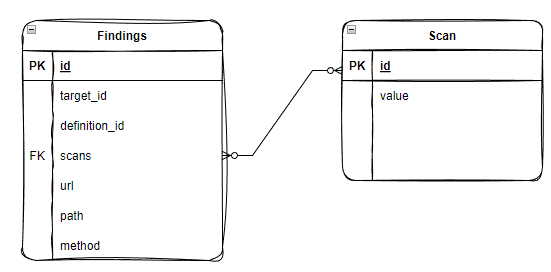
Em alternativa, se o campo "scans" não fosse obrigatório no nosso findingsModel, poderíamos ter criado algo como :
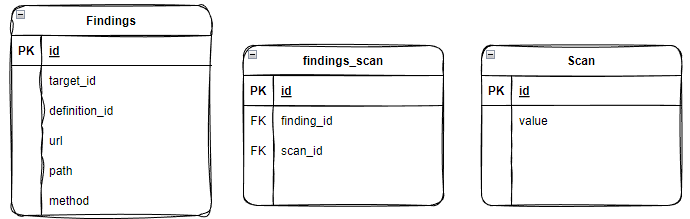
O nosso modelo fica assim:
	class ScanModel(models.Model):
	   id = models.AutoField(primary_key=True)
	   value = models.CharField(max_length=100)

	   def __str__(self):
		   return self.value

	class FindingsModel(models.Model):
		HTTP_METHODS = (
			('GET', 'GET'),
			('POST', 'POST'),
			('PUT', 'PUT'),
			('PATCH', 'PATCH'),
			('DELETE', 'DELETE'),
		)
		id = models.AutoField(primary_key=True)
		target_id = models.CharField(max_length=100)
		definition_id = models.CharField(max_length=100)
		scans = models.ManyToManyField(ScanModel)
		url = models.URLField()
		path = models.CharField(max_length=200)
		method = models.CharField(max_length=10, choices=HTTP_METHODS)

		def __str__(self):
		   return self.target_id
4 - Fazer as migrações e migrar os nossos novos modelos.
>>> python manage.py makemigrations
>>> python manage.py migrate
1 - Vamos criar uma nova directoria na nossa app findings : management/commands.
2 - Criar um novo ficheiro chamado get_findings.py que servirá como comando para acedermos através do manage.py
3 - Iremos fazer a chamada a API e guardar a resposta na nossa BD:
from django.core.management.base import BaseCommand, CommandError
from django.conf import settings
from findings.models import FindingsModel, ScanModel
import requests
import json

class Command(BaseCommand):
    help = 'Fetch the API findings from the "List Findings" endpoint'

    def add_arguments(self, parser):
        parser.add_argument('target_id', type=str, help='The target ID of the scan', default="Tt2f8EyPSTwq")

    def handle(self, *args, **kwargs):
        target_id = kwargs['target_id']
        results = self.make_api_call(target_id)
        self.save_to_db(results)

    def make_api_call(self, target_id : str) -> dict:
        url = f"https://api.probely.com/targets/{target_id}/findings/"
        headers  = {
            "Content-Type": "application/json",
            "Authorization": f"JWT {settings.PROBELY_API_KEY}"
        }
        #Make the request and get the response
        response = requests.get(url, headers=headers)
        if response.status_code != 200:
            raise CommandError(f"Was expecting 200 status code from API, instead got {response.status_code}")
        results = response.json().get("results")
        return results

    def save_to_db(self, results : dict) -> None:
        for finding in results:
            try:
                finding_id = finding.get("id")
                target_id = finding["target"].get("id")
                definition_id = finding["definition"].get("id")
                scans = finding.get("scans", [])
                url = finding.get("url")
                path = finding.get("path")
                method = finding.get("method")
            except Exception as e:
                raise CommandError(f"Something went wrong while extracting the data from the API response", e)
            try:
                # Create or retrieve the Scan instances
                scan_instances = [ScanModel.objects.get_or_create(value=scan_value)[0] for scan_value in scans]

                # Create or retrieve the Finding instance
                # get_or_create method returns a tuple of two values:
                # (1 - The instance that matches the query, 2 - True/False. A boolean indicating whether the instance was created or not.)
                finding, created = FindingsModel.objects.get_or_create(
                    id=finding_id,
                    target_id=target_id,
                    definition_id=definition_id,
                    url=url,
                    path=path,
                    method=method
                )
                if created:
                    self.stdout.write(self.style.SUCCESS(f"Successfully created finding {finding.id}"))
                else:
                    self.stdout.write(self.style.WARNING(f"Finding ID {finding.id} already in the database"))
                # Update the scans field for the finding
                finding.scans.add(*scan_instances)
            except Exception as e:
                raise CommandError(f"Something went wrong while creating or fetching the finding in the database:", e)
1 - Vamos criar os urls, as views e os serializers necessários para servir os dados que guardámos na BD.
2 - No nossa directoria mãe , importamos os url que vamos definir na nossa findings app.
from django.urls import path, include

urlpatterns = [
    path('admin/', admin.site.urls),
    path('findings/', include('findings.urls')),
]
3 - Vamos definir os URLS que acabámos de importar no ficheiro urls.py da nossa app.
from django.urls import path, include
from .views import FindingsList

urlpatterns = [
    path('list/', FindingsList.as_view(), name='findings_list'),
]
4 - Vamos criar os serializers responsáveis por fazerem parse dos nossos dados no ficheiro serializers.py dentro da nossa app.
from rest_framework import serializers
from findings.models import FindingsModel, ScanModel

class ScanSerializer(serializers.ModelSerializer):
    class Meta:
        model = ScanModel
        fields = ('value',)

    def to_representation(self, instance):
        # ModelSerializer serializes a model instance to a dictionary-like object, we need to override that behavior because we want to return a string for each scan.
        # to_representation allows to define how the object should be serialized and what data should be included in the serialized representation.
        return instance.value

class FindingsSerializer(serializers.ModelSerializer):
    scans = ScanSerializer(many=True)

    class Meta:
        model = FindingsModel
        fields = ('id', 'definition_id', 'target_id', 'url', 'path', 'method', 'scans')
5- Por fim , necessitamos da nossa view que é responsável por lidar com o pedido que for enviado para o caminho especificado:
from rest_framework import status
from rest_framework.response import Response
from rest_framework.views import APIView
from findings.models import FindingsModel, ScanModel
from .serializers import FindingsSerializer


# Create your views here.
class FindingsList(APIView):
    def get(self, request, format=None):
        # Get query parameters if any
        definition_id = request.GET.get('definition_id')
        scan_value = request.GET.get('scan_value')

        # Get all findings
        findings = FindingsModel.objects.all()
        if definition_id:
            findings = findings.filter(definition_id=definition_id)
        if scan_value:
            findings = findings.filter(scans__value=scan_value)

        # Serialize findings and respond
        serializer = FindingsSerializer(findings, many=True)
        if len(serializer.data) == 0:
            return Response({'Message' : 'No content found'},status=status.HTTP_404_NOT_FOUND)
        else:
            return Response(serializer.data, status=status.HTTP_200_OK)