


kSTEP is a framework for reproducing and testing Linux kernel scheduler bugs.
Important
OSDI'26 AE reviewers: start with AE.md, not the general getting-started instructions below.
docs/AE.md contains the reviewer-specific instructions for accessing our reserved machines and reproducing the paper figures.
If you are not an OSDI'26 AE reviewer, continue here.
git clone https://github.com/kstep-dev/kstep./install_deps.sh./reproduce.py <name|all> [--run <buggy|fixed|plot>]-
<name|all>: Name of the bug to reproduce (seereproduce.py), orallto reproduce all bugs. -
--run: Choose which version or action to run (buggy,fixed, or generate aplot), default to all. -
Example:
./reproduce.py sync_wakeupchecks out both the buggy and fixed kernels, builds kSTEP, runs thesync_wakeupdriver, and plots the results.
Note
Reproducing all bugs will require at least 64GB of available disk space.
| kSTEP Driver, Fix, and Output | Figure |
|---|---|
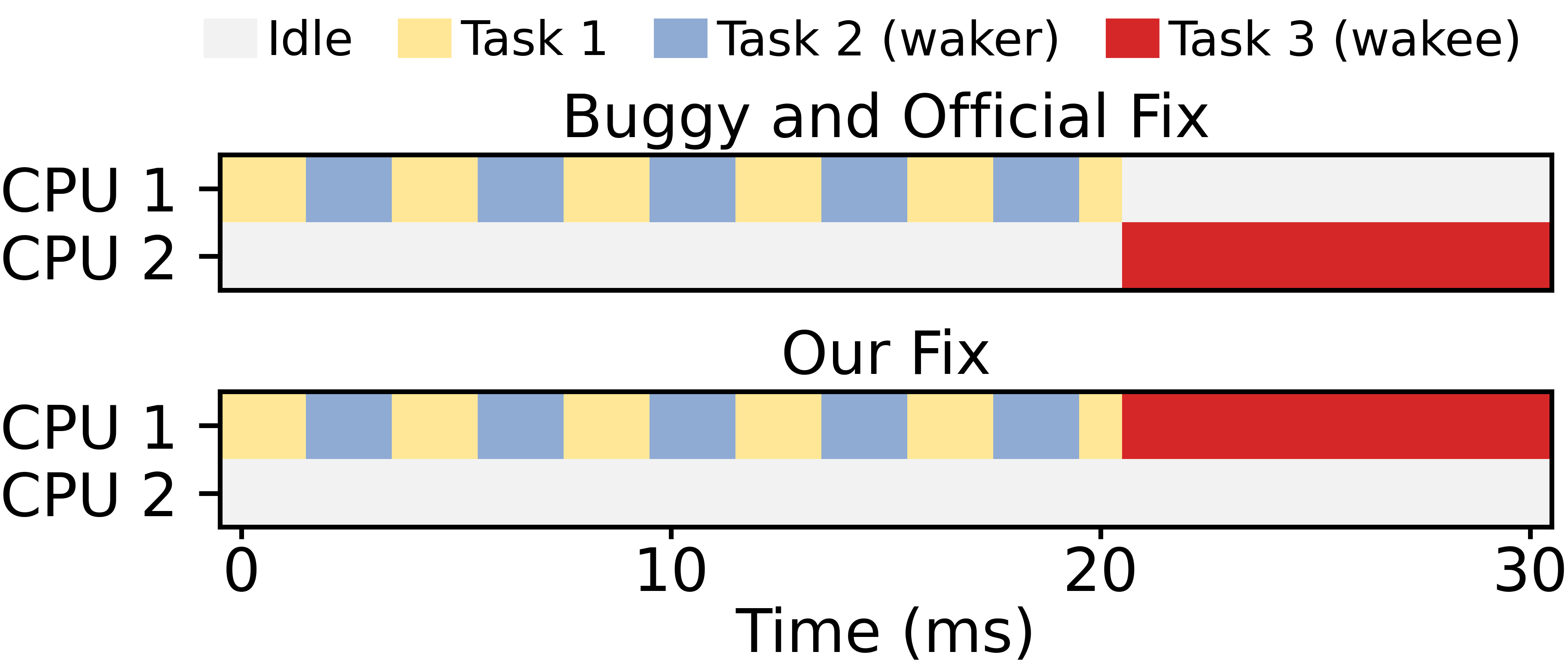
| sync_wakeup.c Official Fix: linux@aa3ee4f Our Fix: sync_wakeup.patch buggy.jsonl, fixed.jsonl |
 |
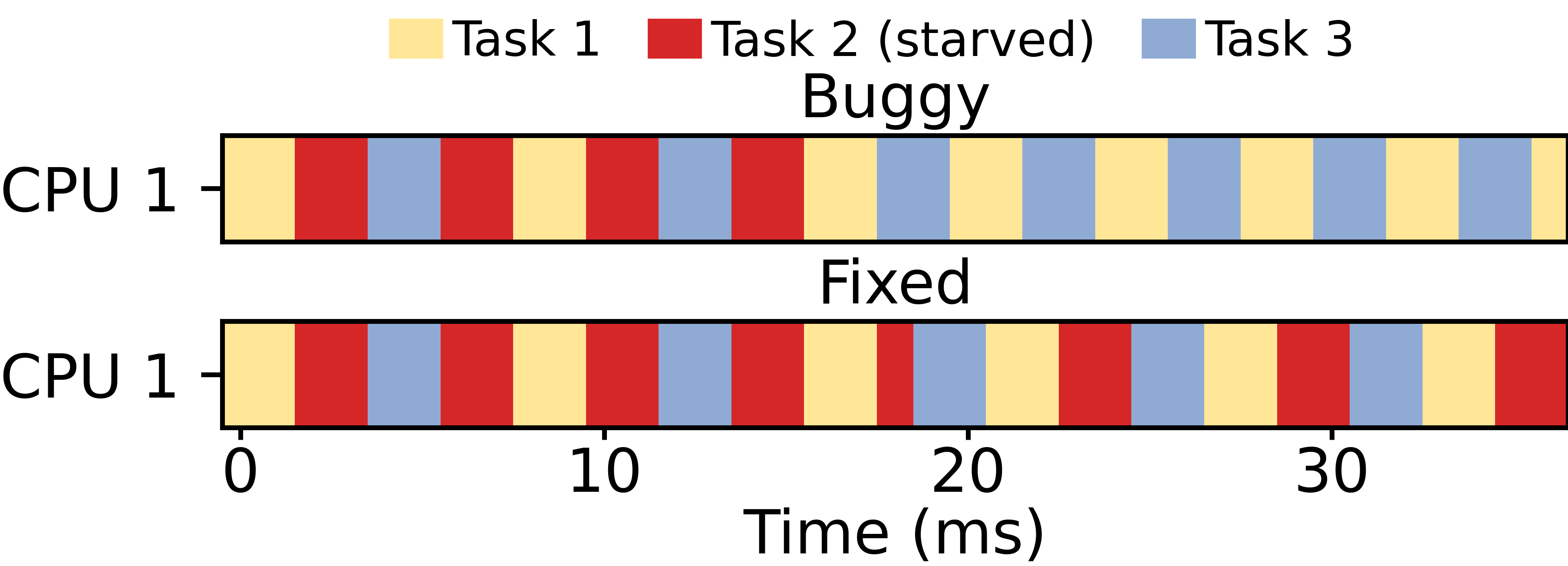
| vruntime_overflow.c Fix: linux@bbce3de buggy.jsonl, fixed.jsonl |
 |
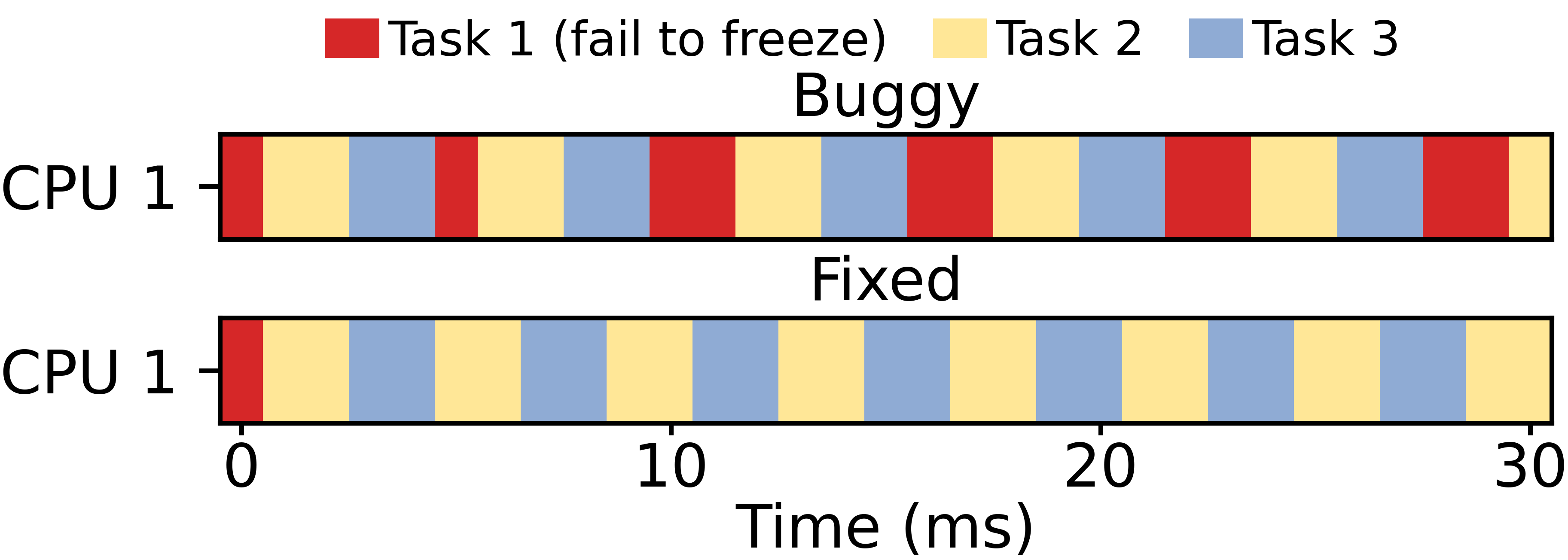
| freeze.c Fix: linux@cd9626e buggy.jsonl, fixed.jsonl |
 |
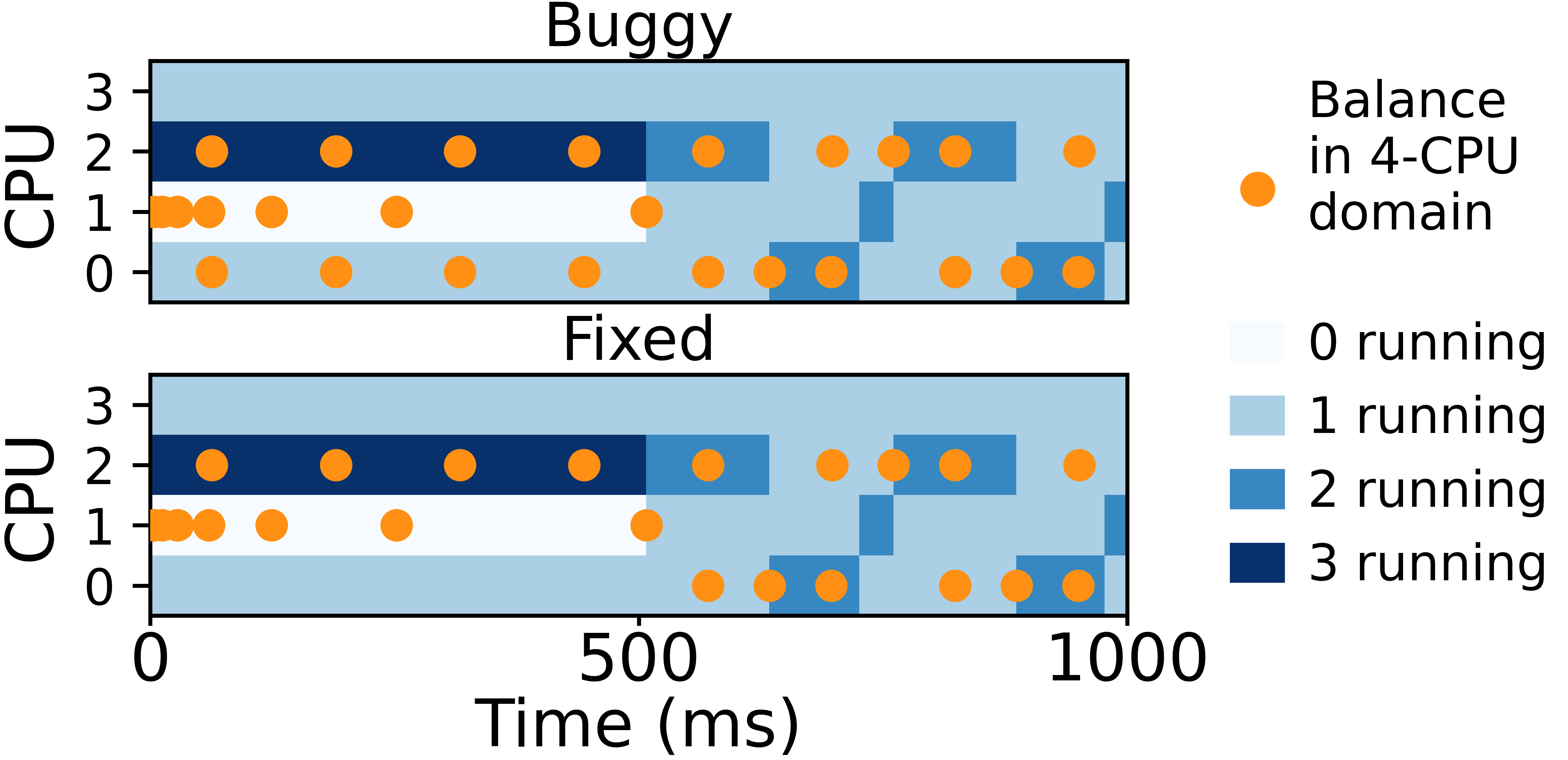
| extra_balance.c Fix: linux@6d7e478 buggy.jsonl, fixed.jsonl |
 |
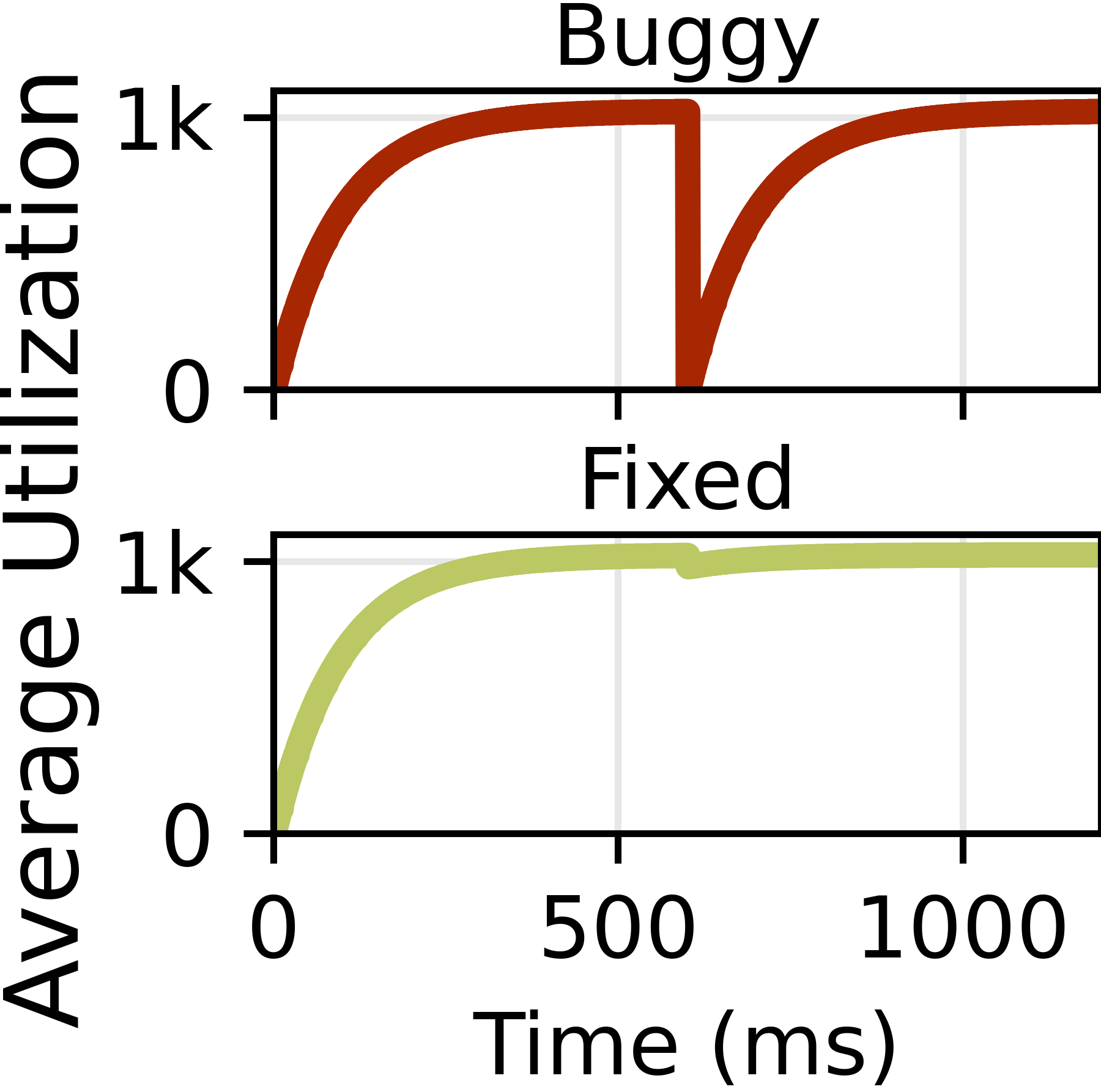
| driver_util_avg.c Fix: linux@17e3e88 buggy.jsonl, fixed.jsonl |
 |
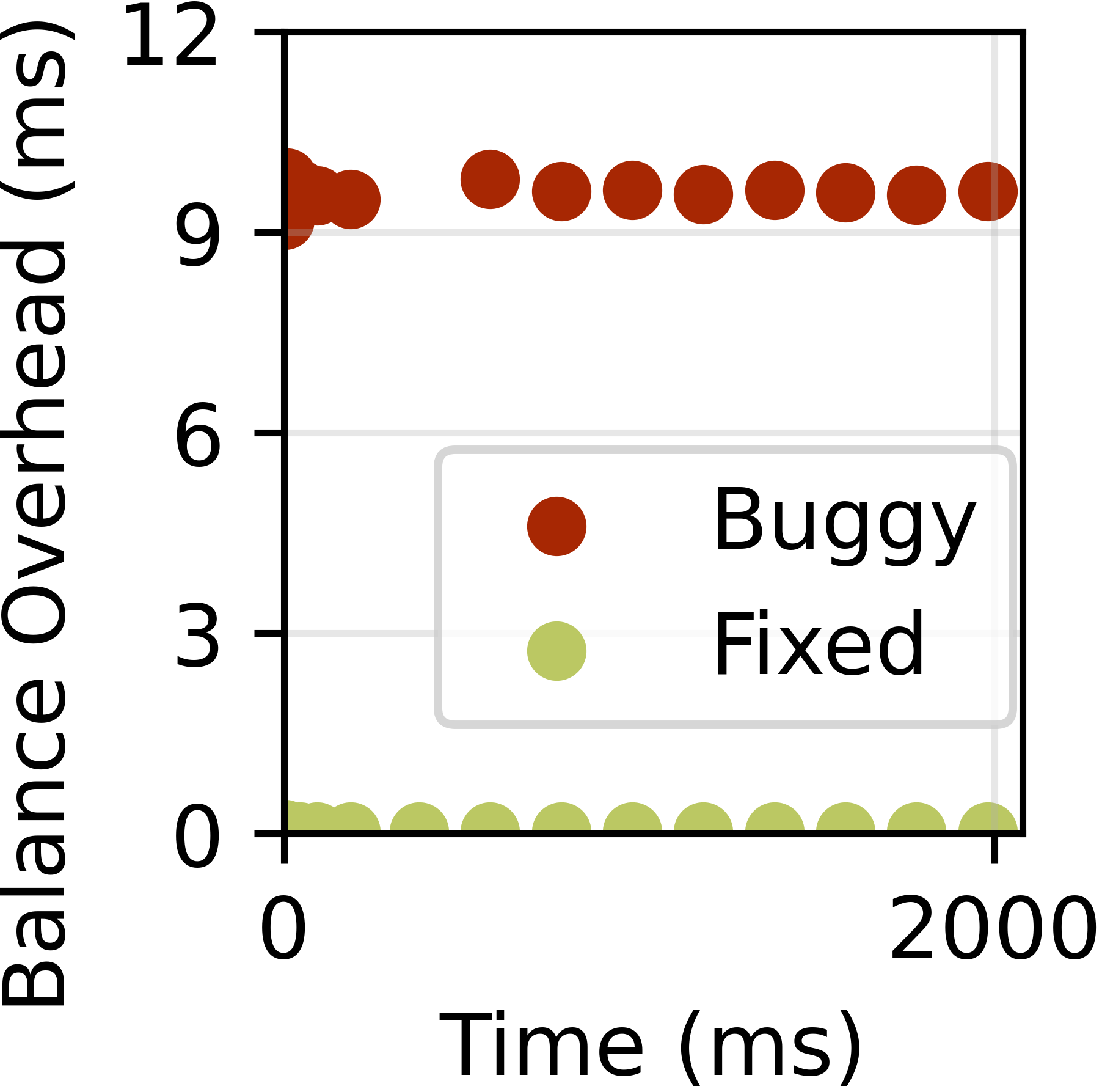
| long_balance.c Fix: linux@2feab24 buggy.jsonl, fixed.jsonl |
 |
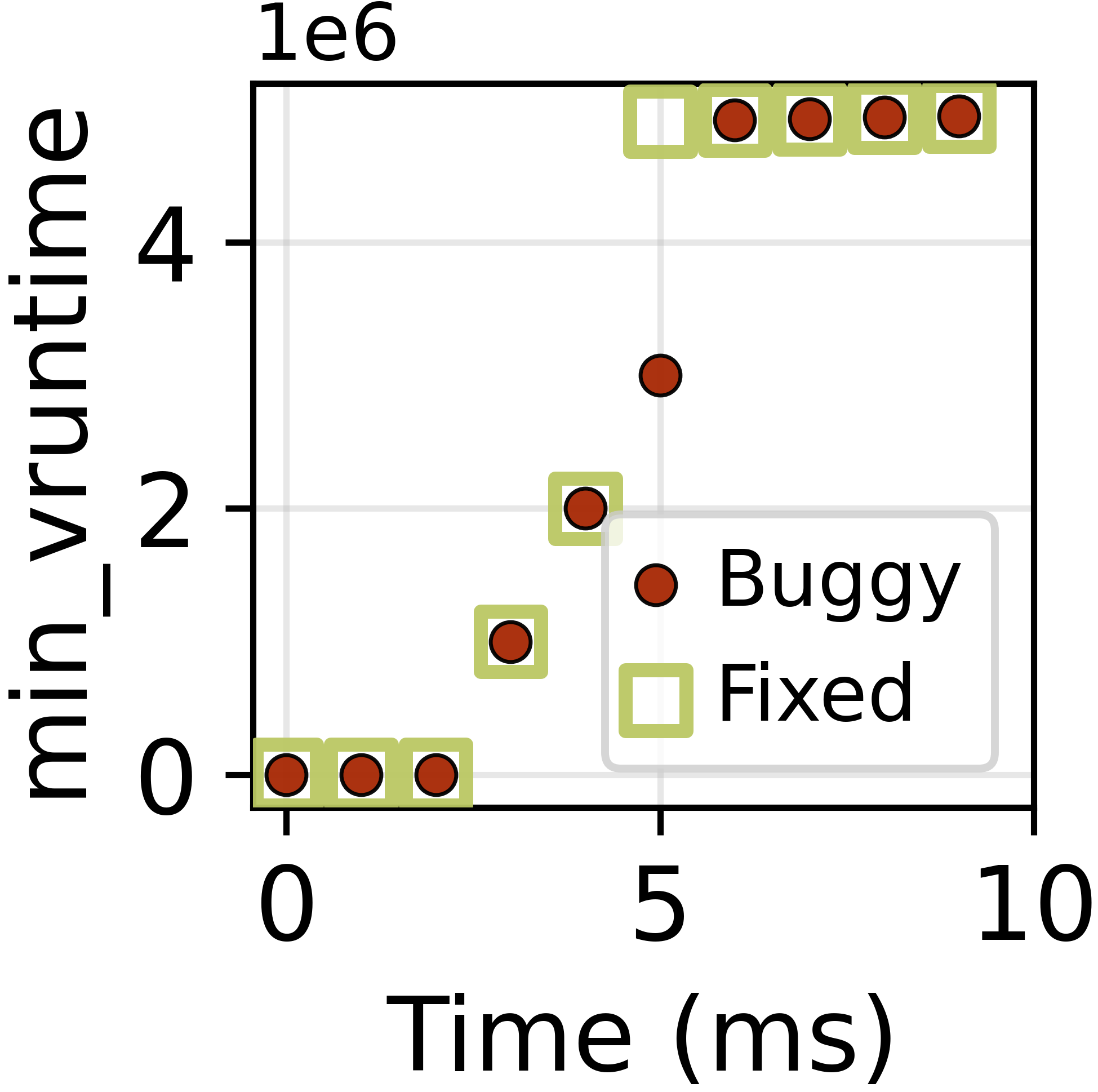
| lag_vruntime.c Fix: linux@5068d84 buggy.jsonl, fixed.jsonl |
 |
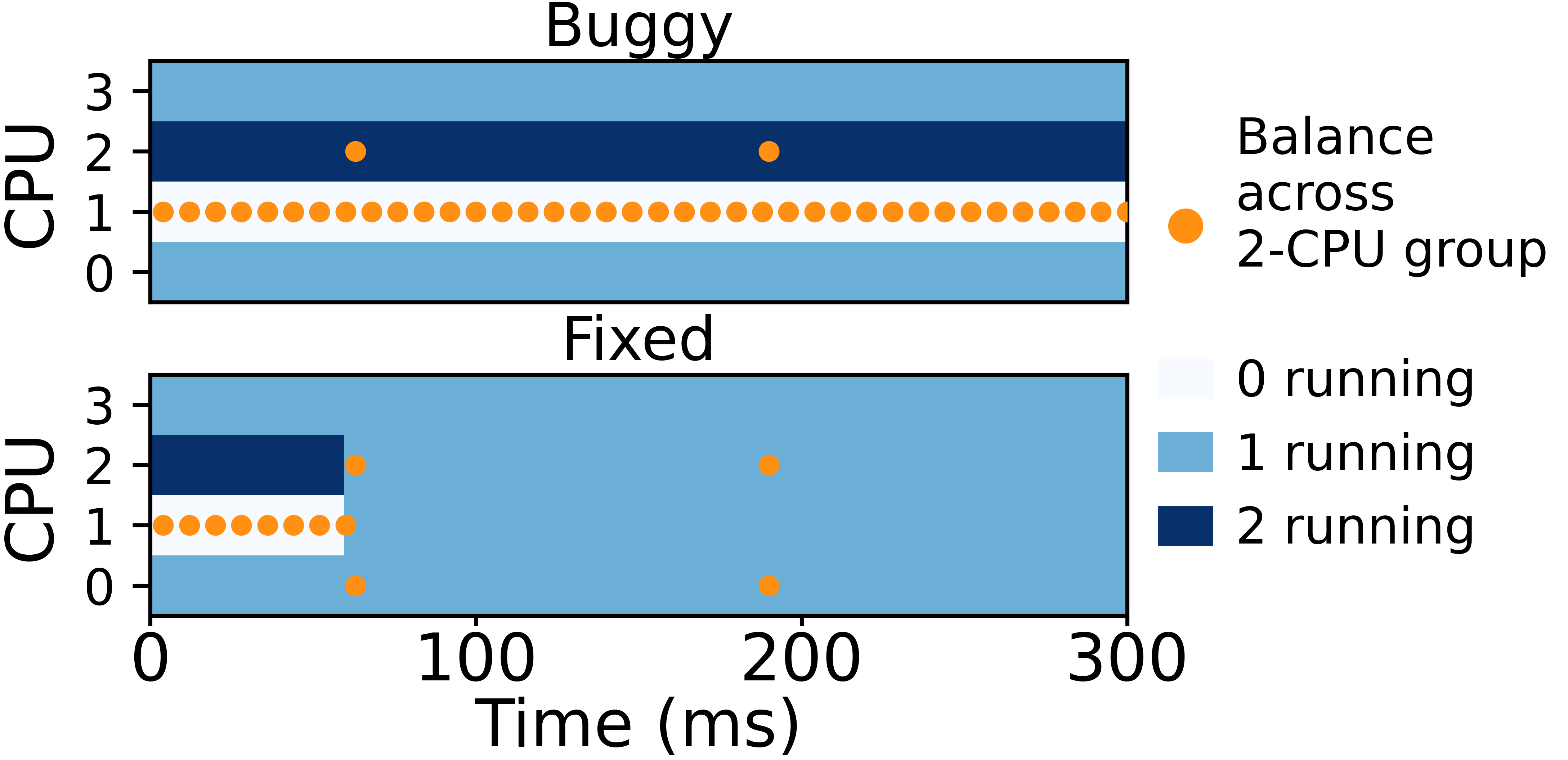
| even_idle_cpu.c Fix: even_idle_cpu.patch buggy.jsonl, fixed.jsonl |
 |
| local_group_imbalance.c Fix: fix_local_group_imbalanced.patch buggy.jsonl, fixed.jsonl |
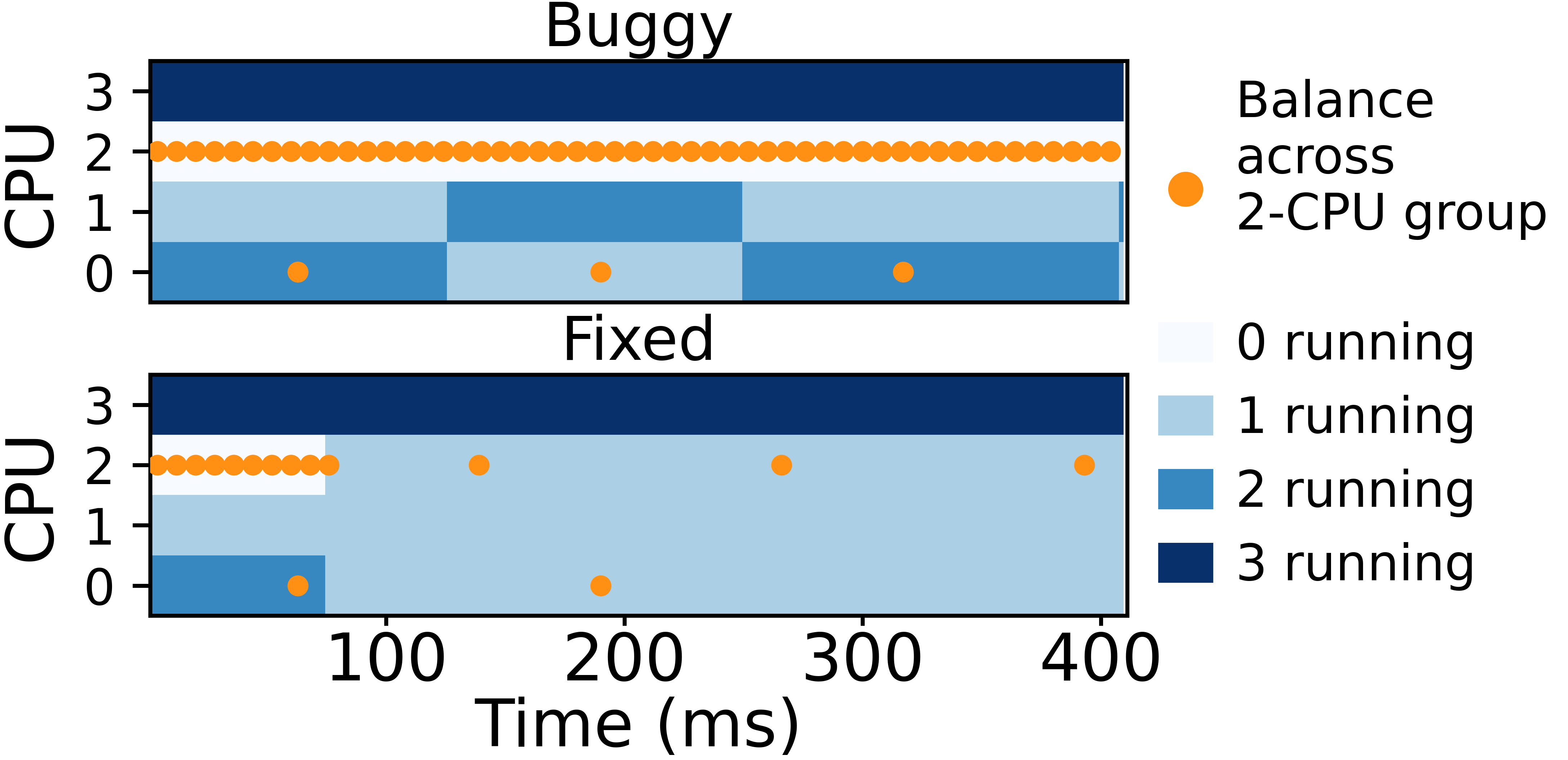 |
| util_avg_jump.c Fix: fix_util_avg_jump.patch buggy.jsonl, fixed.jsonl |
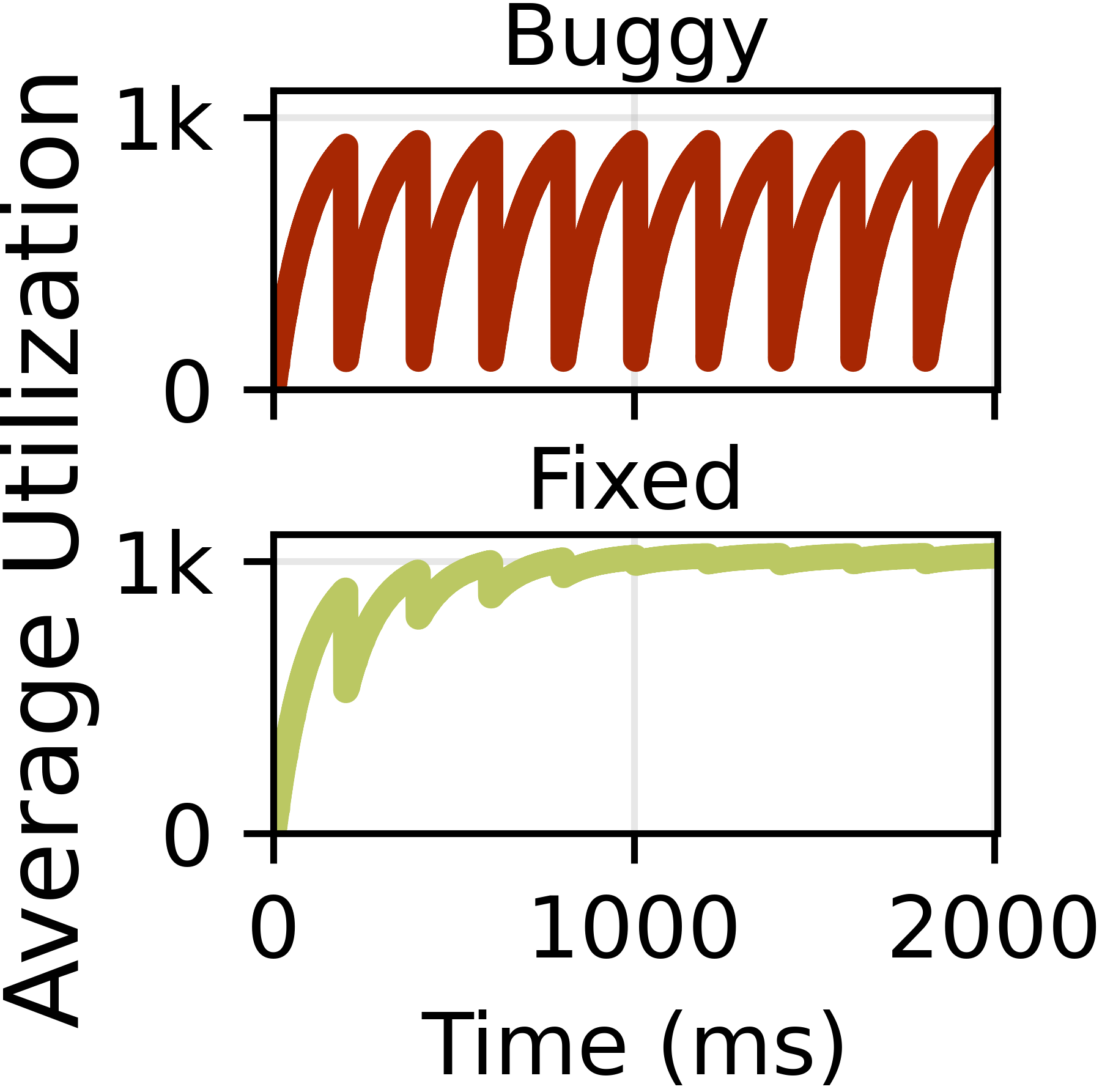 |
| rt_runtime_toggle.c Fix: linux@9b58e97 buggy.jsonl, fixed.jsonl |
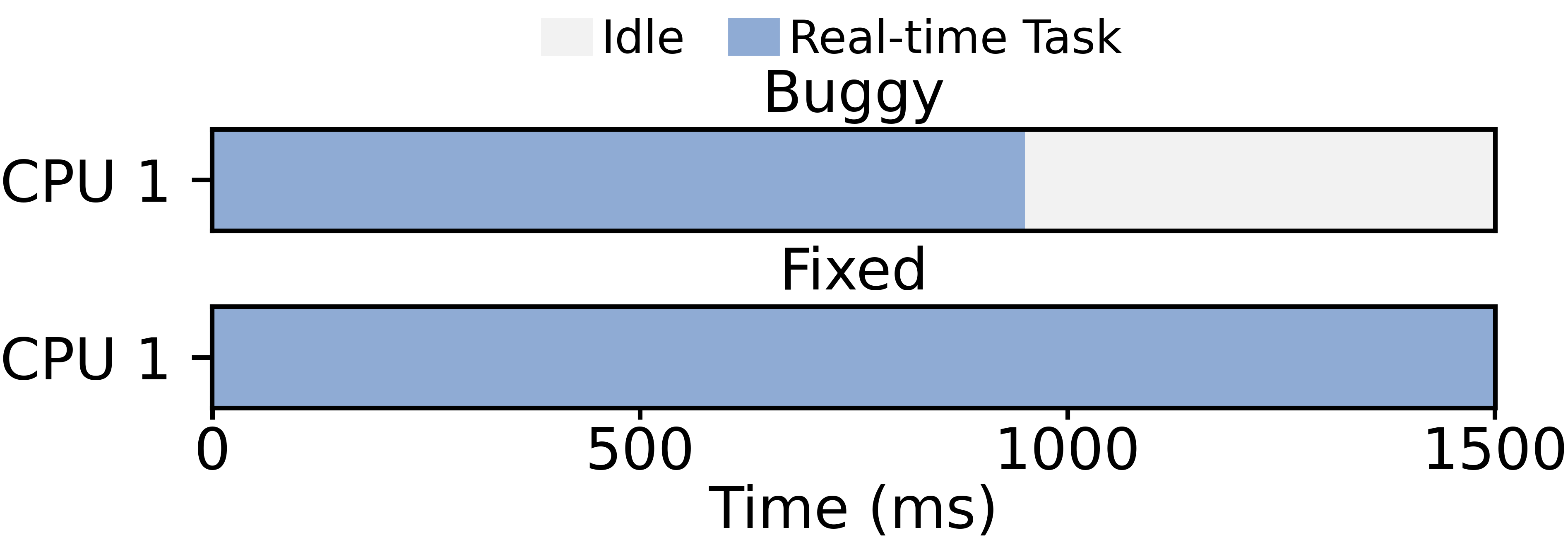 |
| uclamp_inversion.c Fix: linux@0213b70 buggy.jsonl, fixed.jsonl |
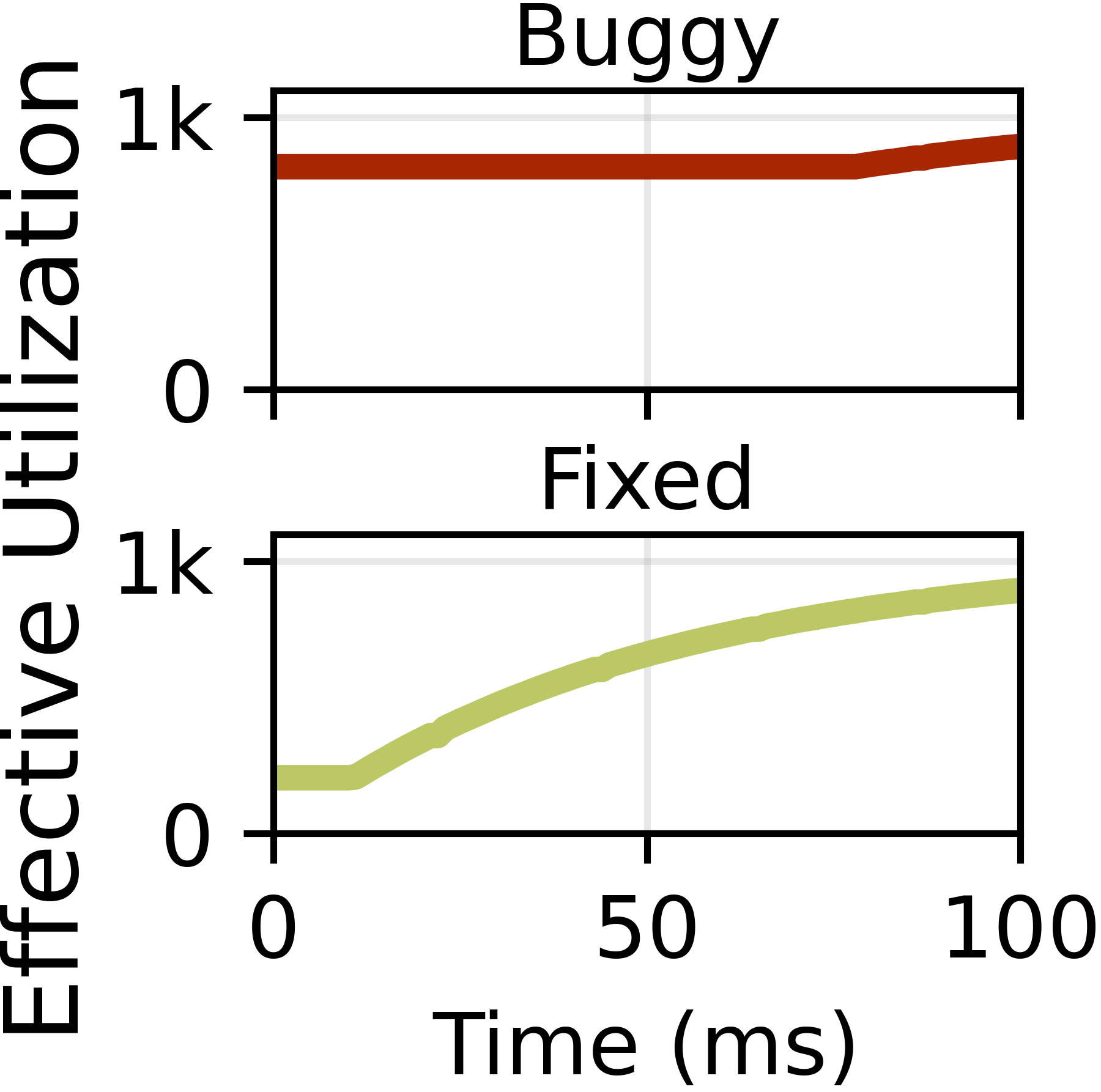 |
| h_nr_runnable.c Fix: linux@3429dd5 buggy.jsonl, fixed.jsonl |
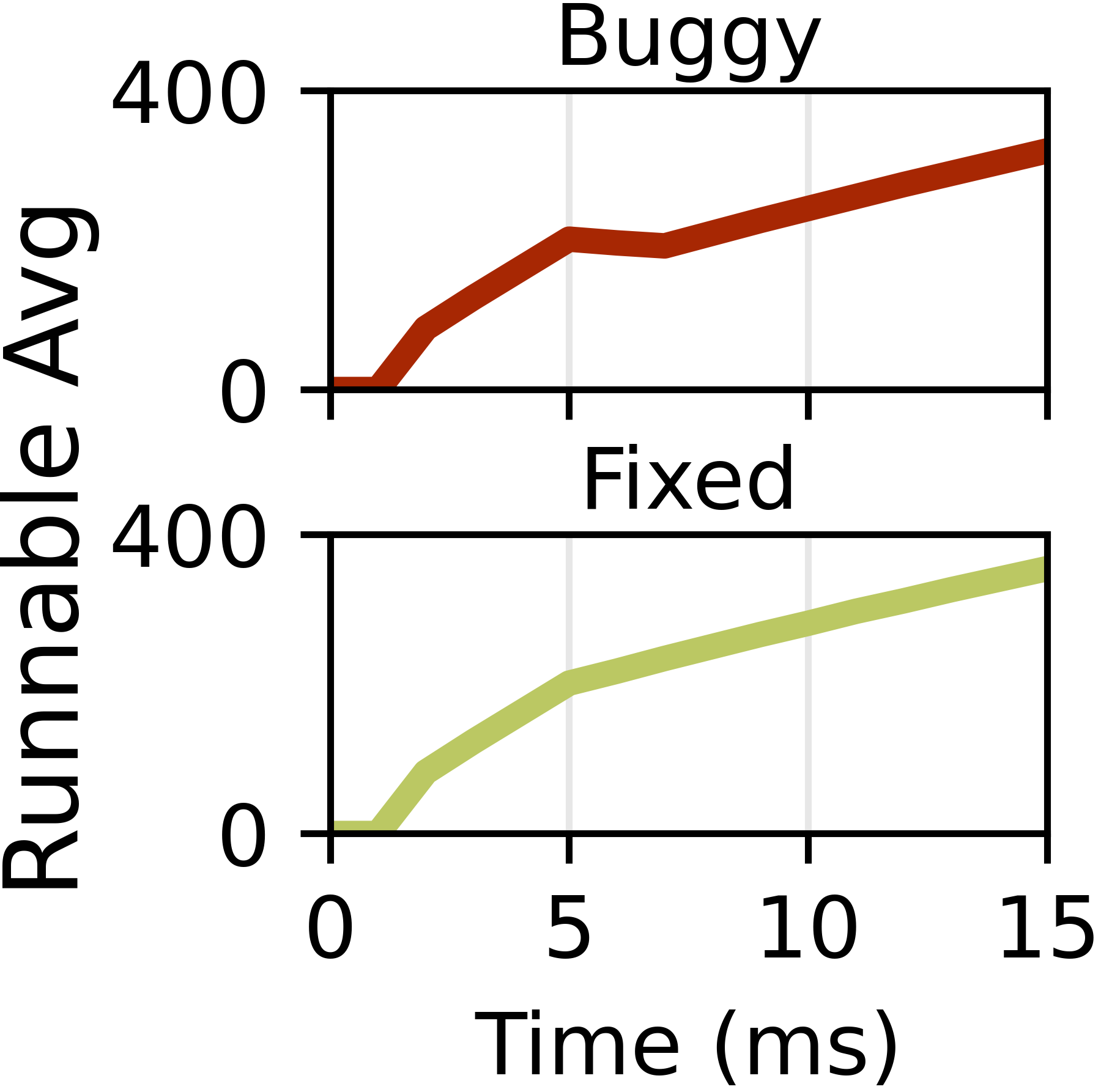 |
For driver development, please refer to AGENTS.md for recommended workflow and tips.
./checkout_linux.py <version> [<name>] [--tarball]-
<version>: Linux tag (e.g.,v6.14) or commit hash (e.g.,6d7e478,5068d84~1). -
Example:
./checkout_linux.py v6.14 foo_buggychecks out Linux v6.14 underlinux/foo_buggy, and symlinkslinux/currentto it.
make linux [LINUX_NAME=<name>]  # Build kernel
make kstep [LINUX_NAME=<name>] # Build kSTEP rootfs (default target)[LINUX_NAME=<name>]: Name of the Linux directory underlinux/, default to whatlinux/currentpoints to.
./run.py <driver_name> [--smp <cpus>] [--mem_mb <mb>] [--log_file <path>]-
<driver_name>: Driver to run (see*.cfiles in thekmod/drivers/andkmod/drivers_new_bugs/directories). -
[--log_file <path>]: Log file to save the output, default todata/logs/latest.log. -
Example:
./run.py sync_wakeupruns thesync_wakeupdriver with default parameters.
-
kmod/: Kernel module (
kstep.ko) loaded at bootdriver.c+driver_*.c: Bug-specific drivers that setup and run test casesdriver.h: Public API for drivers (task creation, ticking, sleeping, cgroups, etc.)internal.hand other*.cfiles: Framework primitives and utilities
-
user/: Minimal userspace (
init.c) that mounts filesystems and loadskstep.ko -
linux/: Git worktrees of Linux source
linux/master: Main clone of Linux kernellinux/current: Symlink to active kernel versionlinux/*.patch: Fixes for specific bugs
-
data/: Data directory
data/rootfs: Root filesystem imagesdata/logs: QEMU log files
-
scripts/: Python utilities for parsing logs and plotting results