Overview
Based on the numerous feedback internally at MS and the adopting partners, it seems the locator pattern is too big an ask for the current development plans.
As Such, I recommend that the MRTK V2 should drop the MRTK approach built by the community members and uplift the Services to standalone services maintained within the project Scenes.
This would be more in line with partners and enterprise app developers expectations for how they should build apps.
This doesn't deteriorate the excellent work done to architect the services and the overall architecture for managing the cross-platform nature of the toolkit, but brings it back more in to line with Microsofts SDK approach and reduces friction to adoptions.
If such an Locator approach is needed in the future, I'm sure the wider community will build upon this excellent framework and deliver that capability without Microsoft needing to maintain it.
Expected Behavior
MRTK services should operate independently in the scene as requested by MS Partners and internal staff to better facilitate the current developers used to using Unity.
Updated Architecture diagram to suit:
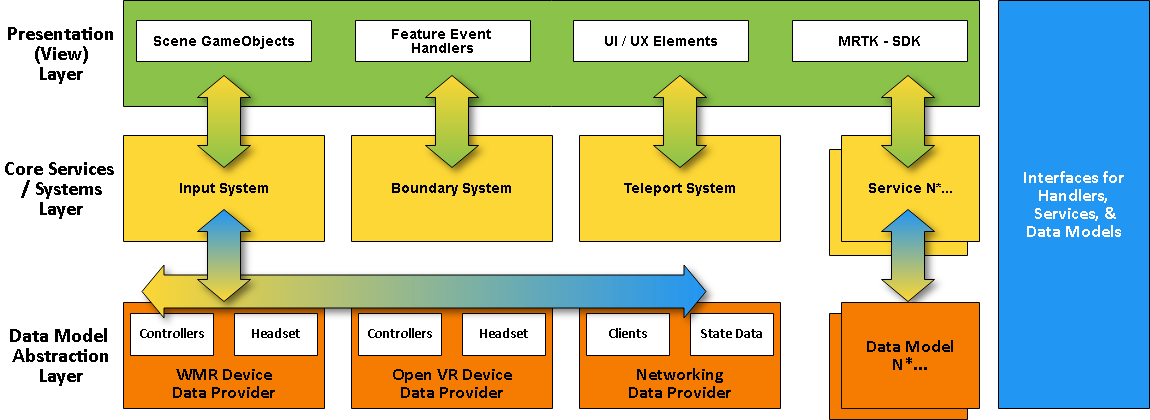
This ensures a smoother adoption based on Microsoft's internal experience.

Overview
Based on the numerous feedback internally at MS and the adopting partners, it seems the locator pattern is too big an ask for the current development plans.
As Such, I recommend that the MRTK V2 should drop the MRTK approach built by the community members and uplift the Services to standalone services maintained within the project Scenes.
This would be more in line with partners and enterprise app developers expectations for how they should build apps.
This doesn't deteriorate the excellent work done to architect the services and the overall architecture for managing the cross-platform nature of the toolkit, but brings it back more in to line with Microsofts SDK approach and reduces friction to adoptions.
If such an Locator approach is needed in the future, I'm sure the wider community will build upon this excellent framework and deliver that capability without Microsoft needing to maintain it.
Expected Behavior
MRTK services should operate independently in the scene as requested by MS Partners and internal staff to better facilitate the current developers used to using Unity.
Updated Architecture diagram to suit:

This ensures a smoother adoption based on Microsoft's internal experience.