Exploring the Language 1
Through the power of combinators, the simple language elements be used to construct highly complex contracts with relative ease.
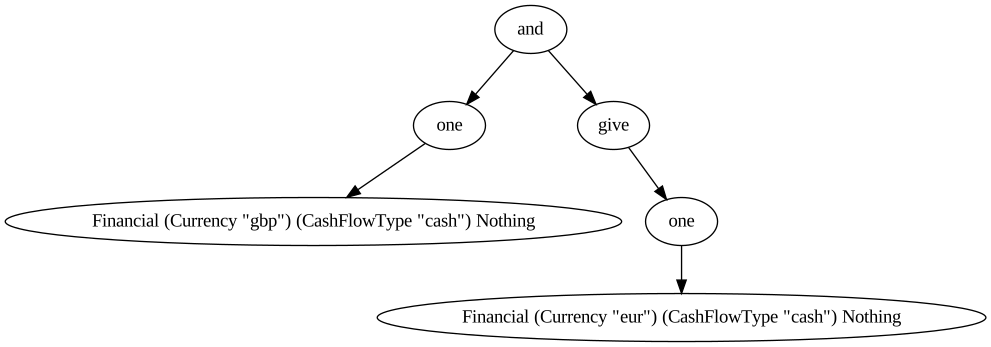
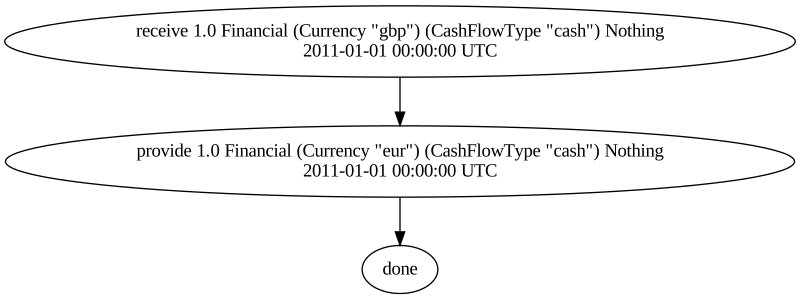
The following sample contract extends the top contract by adding a payment (give) of one EUR to the existing receipt of one GBP at the time of acquisition.
contract = one (Financial gbp cash Nothing) `and` give (one (Financial eur cash Nothing))The Syntax Tree is now:
The Decision Tree now shows this as follows:
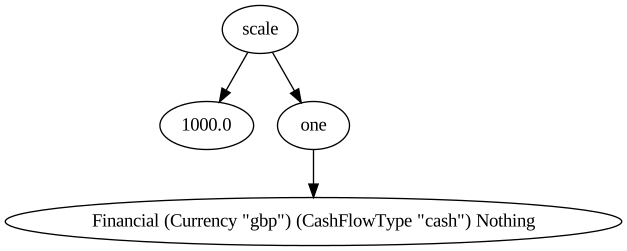
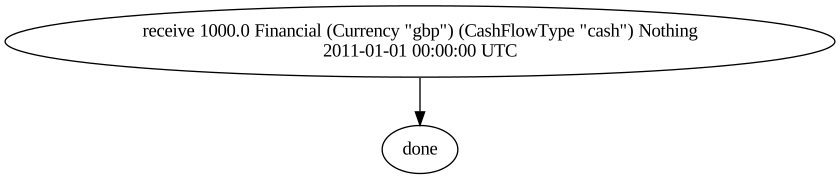
contract = scale 1000 (one (Financial gbp cash Nothing))The scale keyword acts as a multiplier. It is used to multiply the child contract by a factor. In the above example, the contract acquirer now receives 1,000 GBP at the moment of contract acquisition.
The Syntax Tree for this contract:
The Decision Tree now shows:
scale can be added to a contract many times. There are times that this can be useful, especially when working with multiple independent external observables.
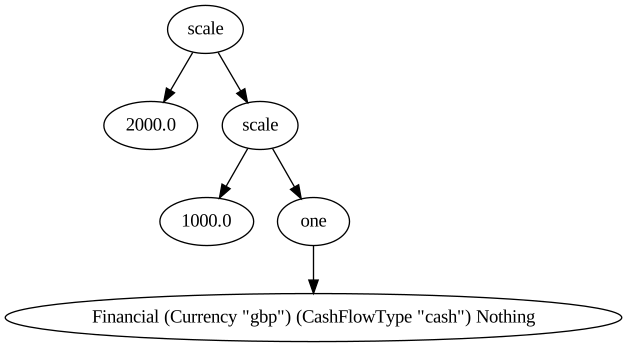
contract = scale 2000 (scale 1000 (one (Financial gbp cash Nothing)))This now shows as:
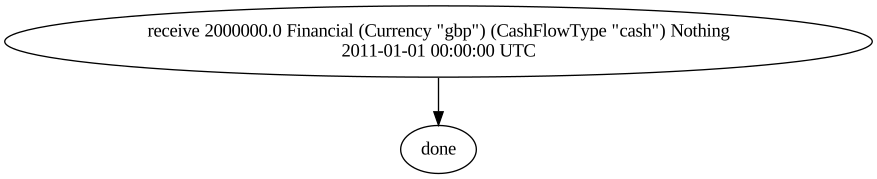
The Decision Tree - which is the result of execution of the contract as of 1/1/2011 - now shows:
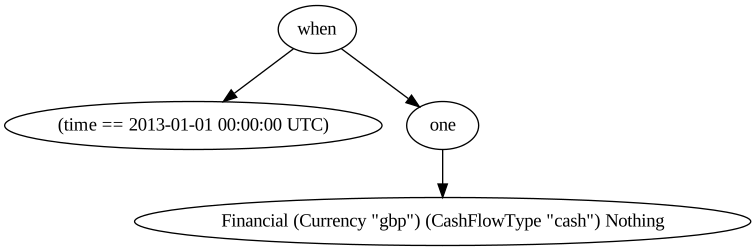
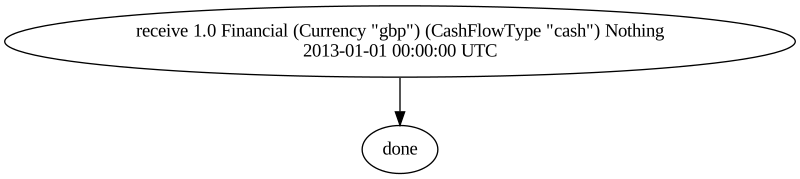
contract = when (at (date 2013 1 1)) (one (Financial gbp cash Nothing))The above contract, as long as it is acquired before 1 January 2013, will deliver one GBP to the acquirer at exactly 00:00:00 on 1 January 2013.
The Syntax Tree:
The Decision Tree:
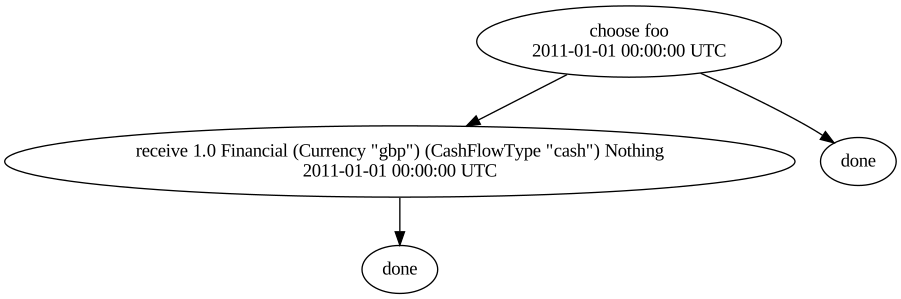
The or keyword allows the contract to make a decision. This can be used to support options and other path dependent contracts. or is always accompanied by a label, which allows the decision to be addressed at runtime.
contract = or "foo" (one (Financial gbp cash Nothing)) ZeroIn the above example, the decision named 'foo' must be supplied by the contract acquirer. If they select to take the option 'foo', they will receive one GBP, otherwise Zero.
The Syntax Tree:

The Decision Tree:
A suite of samples is available here.