You signed in with another tab or window. Reload to refresh your session.You signed out in another tab or window. Reload to refresh your session.You switched accounts on another tab or window. Reload to refresh your session.Dismiss alert
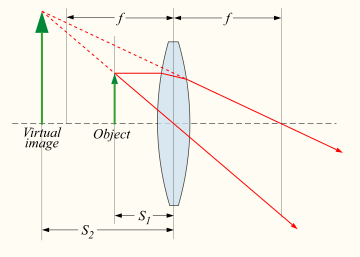
Optical geometry : An abstract concept of determining the path of light rays.
In our case optical geometry is mixed with optics (from physics), to approximate the position and dimensions of the final image.
Implementations
The program reads values imputed by the user.
The program calculates the resulting values (hi, ho, M).
The program then creates the animations that it animated depending
on the location and height of the image, found through the calculations.
Formulas used in calculations
1⁄f =
1⁄di +
1⁄do,
M =
hi⁄ho =
-di⁄do
f = focal length
M = magnification
hi = image height
ho = image height
di = object distance
do = object height
Pythagorean theorem : a2 + b2 = c2 ; was also used to calculate the ray lengths and trigonometry was used to calculate the ray angles in the animation.
Features
Features - Animations
Dynamic Animations
Animation changes depending on the settings chose (i.e: if image is real, the rays will merge on the opposite side of the lens)
Features - Animations
Settings Table
Multiple custom settings input
Can select any setting already in table with radio button
Features - Theme
Customizable Theme
The theme of the program can be changed between the ones available
Features - Path - Error Windows
Path Changer
Allows the user to input a custom file path for the database.
A window that displays the error that occurred when accessing the database, allowing the user to debug without the use of an IDE