 Datarun

Replies: 8 comments 2 replies

Current ApproachAssignments
Teams
{
    "uid": "P5fjmw0elDV",
    "code": "317",
    "name": "team-317",
    "disabled": false,
    "activity": { "uid": "RHl5bdmYXVr" },
    "users": [ { "uid": "qqHQA2BFJJf" } ],
    "managedTeams": [],
    "formPermissions": [
        { "form": "Tcf3Ks9ZRpB", "permissions": ["ADD_SUBMISSIONS"] },
        { "form": "oHpNiSgUOT4", "permissions": ["ADD_SUBMISSIONS"] }
    ]
}
Form Permissions: [
"VIEW_FORM_TEMPLATE",
"EDIT_FORM_TEMPLATE",
"VIEW_SUBMISSIONS",
"ADD_SUBMISSIONS",
"EDIT_SUBMISSIONS",
"DELETE_SUBMISSIONS",
"EDIT_SUBMISSIONS_FROM_TEAMS",
"EDIT_SUBMISSIONS_CONDITION",
"APPROVE_SUBMISSIONS",
"APPROVE_SUBMISSIONS_CONDITION",
"DELETE_SUBMISSIONS",
"DELETE_SUBMISSIONS_FROM_TEAMS",
"DELETE_SUBMISSIONS_CONDITION"
]
Data Forms
Goal1. Mobile App (First Release)
2. Web Interface (Future Plan)
Key Implementation steps
|

New updates1. Task as a Core Entity
2. Assignment as a Link Entity
|
New things and ideas on the way:Inventory Reports and Online ManagementInventory reports are managed online. Offline operations for stock movements are not allowed to ensure quantities are handled directly and accurately, without discrepancies or errors. Key functionalities include:
Supervisor RoleSupervisors can:
System Workflow and Automation
This ensures that supervisors always have a ready plan, and no village remains without a report or gets duplicate submissions from multiple teams. Online Accessibility for Supervisors
Future Enhancements
Activities Without Routes or AssignmentsFor activities that don’t involve routes, assignments, or inventory (e.g., surveys, emergency unit reports, pest control):
Map Integration for Supervisors and Teams
Transaction History and Alerts
|
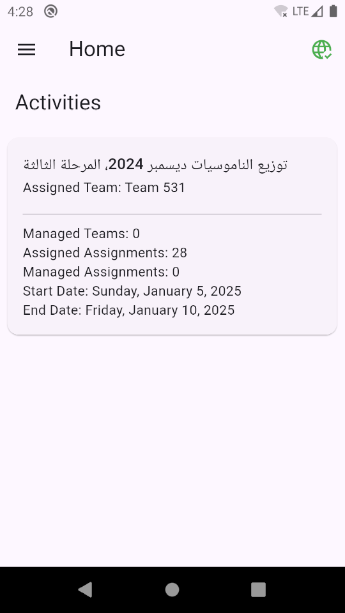
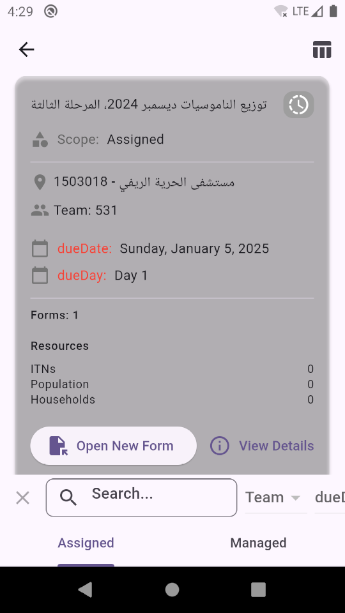
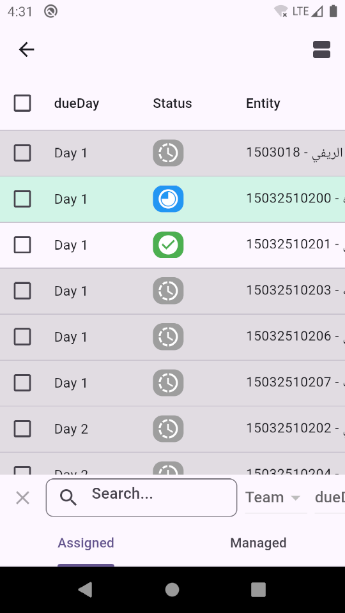
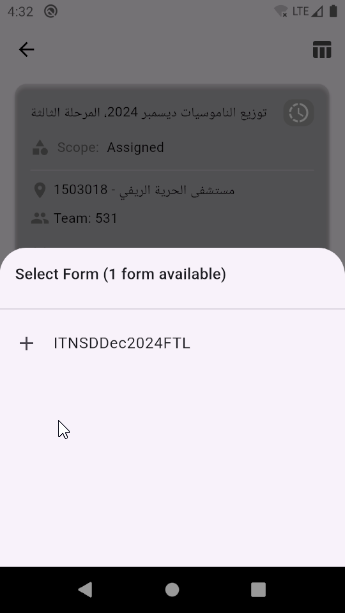
Initial Assignment/task's card:| |


|
Check out the new release's (V1.0.2) test APK and code:
|
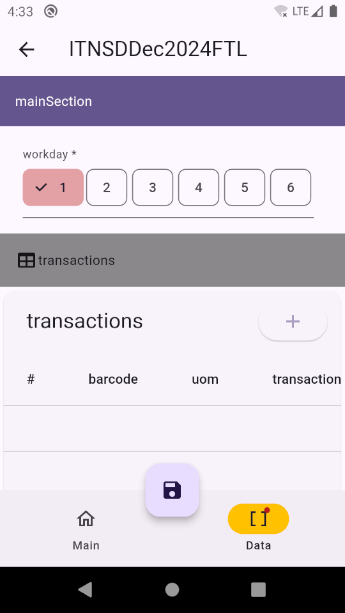
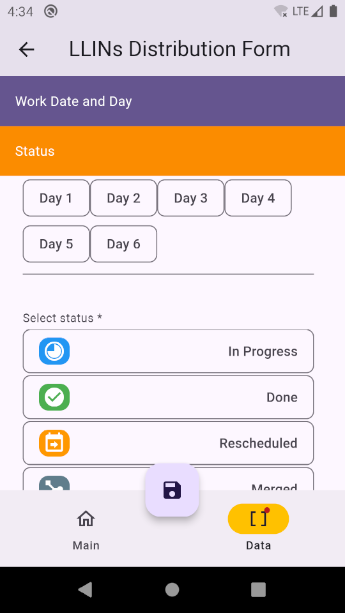
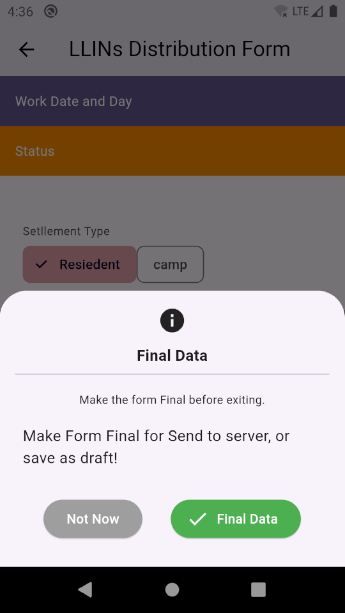

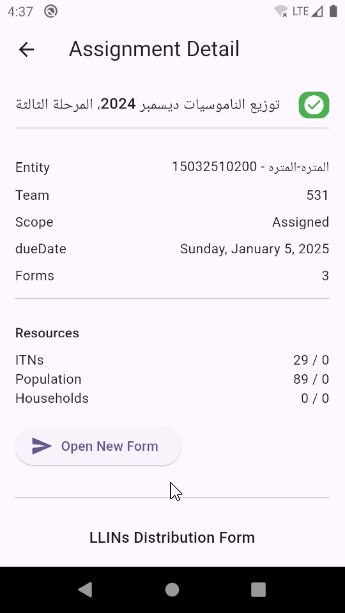
Early Structure and Limitations
Combining Ideas from Other Systems
Offline and Team Collaboration
New introduced Fields' structure:
{
    "uid": "dataElementUid",
    "name": "householdreference",
    "type": "Reference",
    "description": "<string>",
    "defaultValue": "<string>",
    "mandatory": "<bool>",
    "optionSet": "<string>",
    "properties": "<Map>"
}
{
    "id": "dataElementUid",
    "path": "grandparentSection.parentSection.dataElementUid",
    "parent": "parentSection",
    "rules": [ { "expression": "#{inputmethod} == 'fromList'", "action": "Show" } ],
    "order": 22,
    "calculation": "<string>",
    "defaultValue": "<string>",
    "mandatory": "<bool>",
    "readOnly": "<bool>",
    "constraint": "<string>",
    "constraintMessage": "<string>",
    "choiceFilter": "<string>",
    "properties": "<Map>"
}
{
    "path": "households_information.householdnames",
    "parent": "households_information",
    "name": "householdnames",
    "description": "<string>",
    "label": {
        "en": "Household Data",
        "ar": "بيانات المنازل"
    },
    "rules": [],
    "appearance": null,
    "order": 18,
    "repeatable": "<bool>",
    "id": "householdnames"
}
Progression
Current Focus AreasThe system is evolving to address current limitations by separating and refining core components. However, there are still areas to improve:
|
|
While Seeking System Design Ideas for a Flexible Dimensional Data Model that enables quick development of facts and dimensions based on business needs (Dynamic and Context-Dependent Dimensions): Data elements can appear in different dimensions based on the reporting context. Some examples:
In a single activity, two teams collect data on ITNs distributed in a given location. One team reports detailed actual work, while another reports higher-level, aggregated monitoring totals. The data represents the same metric (ITNs distributed) but across different dimensions.
Within the same activity, a data element might represent different categories: Handed-out warehouse quantities Distributed quantities Lost quantities This is a simple examples I could initially think about, but the goals is to handle more complex example without too much configuration complexities on the user! Initial thoughts:
Comparison and Innovations
An excellent research link on warehouse modeling, indexed and categorized by subject. It covers topics that might help me learn more about what I need. The Data Warehouse Toolkit, by Ralph Kimball — – |
Upcoming Desktop Version for operation room team review and approve:
|

|
There have been significant changes to both the back end and the APP including core components. first I need to test the basics thoroughly, then I’ll deploy the new backend version, followed by the APP update. I'll introduce advanced features gradually to avoid breaking things or overwhelming our users in the field —constant complaints can be very discouraging |
integrating new ideas (adapted from other systems with some custom changes)Core Concepts
Some Key Details About ScopingFormal Definition:
Scope Instance Table Fields:
2. How It Works in Each Scenario2.1 One‐Off Form
2.2 Multi‐Stage, No Repeats
2.3 Multi‐Stage, Entity‐Bound at One Stage
2.4 Planned Visit to Existing Entity
2.5 Ad‐Hoc (“Log‐As‐You‐Go”)
Example OF WorkFlow Configuration “Receive Inventory”:
INSERTS SAMPLESBelow is a concrete Warehouse Inventory example showing how we’d model Receive, Issue, and Discard flows
1. EntityType Definitions1.1.
|

Uh oh!
There was an error while loading. Please reload this page.
Uh oh!
There was an error while loading. Please reload this page.
We manage field activities involving teams and assignments, where data collection is a core task. Activities may target specific entities such as locations, health facilities, or people, and could involve tasks like distributing items (e.g., ITNs, medicines) or supervising teams. Each team has planned locations and allocated quantities for their assignments.
Current Design:
Challenges:
Dependencies/References:
All reactions