Runtime-neutral route definitions for Python services.
routedef gives applications one route contract that can be mounted into multiple runtimes. The core package has
no FastAPI, Cloudflare, ASGI, auth, database, or application dependency. Runtime-specific code lives in adapters.
RouteDef: method, path template, handler, and metadata.RouteRequest: canonical request object for handlers.RouteResponse: canonical response object for handlers.RouteTable: ordered method/path matching with{path_param}extraction.build_fastapi_router: FastAPI router integration.CloudflareDispatcher: direct Cloudflare Python Workers integration.
Use RouteDef when you need the same route definitions to work across more than one Python runtime, especially
when migrating between framework-hosted APIs and Cloudflare Python Workers.
- One handler contract instead of per-runtime handler shapes.
- App-owned auth and authorization through metadata, auth providers, and enforcers.
- Dependency-free core package with optional runtime adapters.
- Testable route behavior without starting a web server.
- Migration-friendly wrappers for legacy split-argument handlers.
Do not use RouteDef as a full web framework, ORM, dependency injection container, auth library, or request
validation system. It intentionally does not own app policy, storage, schemas, background jobs, or runtime
lifecycle. If a service will only ever run in one framework and already has a stable route layer, the adapter
boundary may not be worth adding.
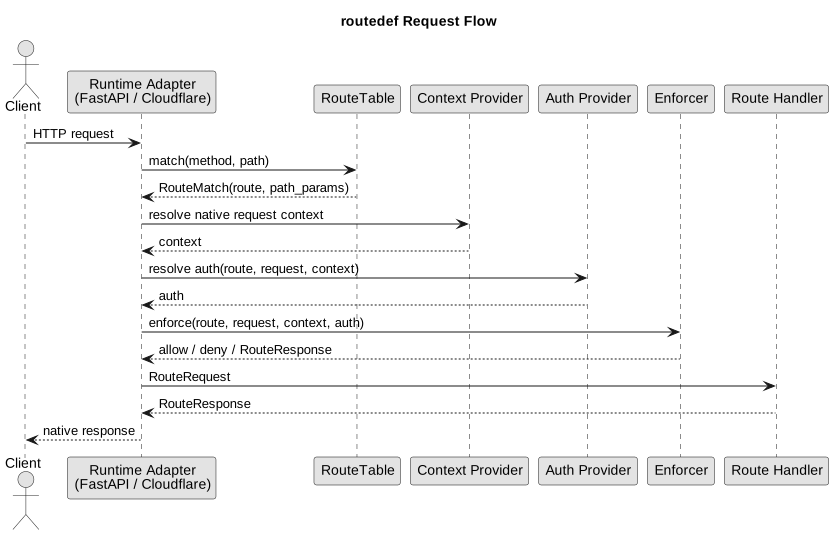
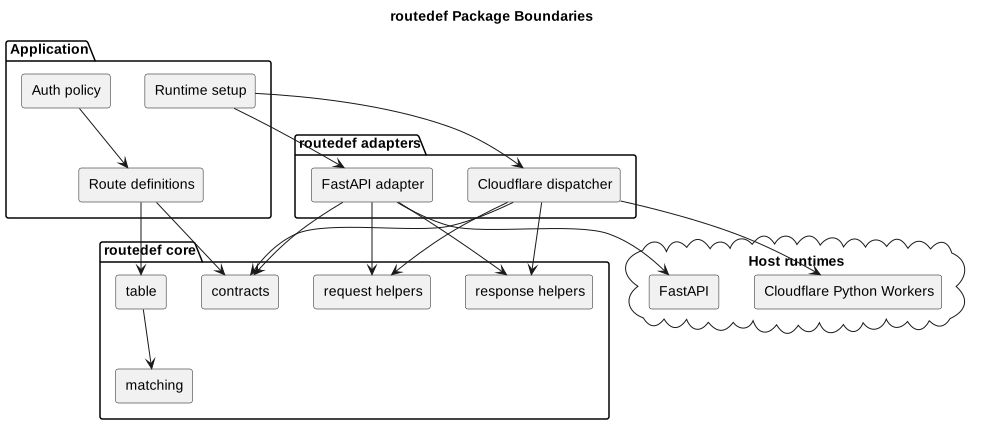
See docs/architecture.md for package boundaries and examples/README.md for generic samples covering route metadata policy, bearer-token auth, and legacy split-argument handlers.
from routedef import RouteDef, RouteRequest, RouteResponse, RouteTable


async def get_item(request: RouteRequest[None, dict[str, object]]) -> RouteResponse:
    return RouteResponse.json({"id": request.path_params["id"]})


routes = RouteTable([RouteDef("GET", "/v1/items/{id}", get_item)])from fastapi import FastAPI
from routedef.adapters.fastapi import build_fastapi_router
app = FastAPI()
app.include_router(build_fastapi_router(routes))from routedef.adapters.cloudflare import CloudflareDispatcher
from workers import WorkerEntrypoint
dispatcher = CloudflareDispatcher(routes)
class Default(WorkerEntrypoint):
async def fetch(self, request):
return await dispatcher.dispatch(request)A real local Cloudflare fixture lives in examples/cloudflare-worker. Run it with:
uv run python scripts/check_cloudflare_worker.pyThe integration script vendors the local src/routedef package into a temporary Python Worker project, runs
pywrangler sync, starts wrangler@latest dev, and probes routes over HTTP.
uv run pre-commit run --all-files
uv run pytest -q --cov=src/routedef --cov-branch --cov-report=term-missing --cov-fail-under=100
uv run pre-commit run mutation-sweep --hook-stage manual
uv run pre-commit run cloudflare-worker-integration --hook-stage manual
The project requires 100% branch coverage, strict typing, security/dead-code/complexity checks, REUSE compliance, max-LOC checks, mutation testing, and a Cloudflare Worker runtime integration gate.