Point it at any file in your git repo. Get a short, vivid narrative of how it came to be.
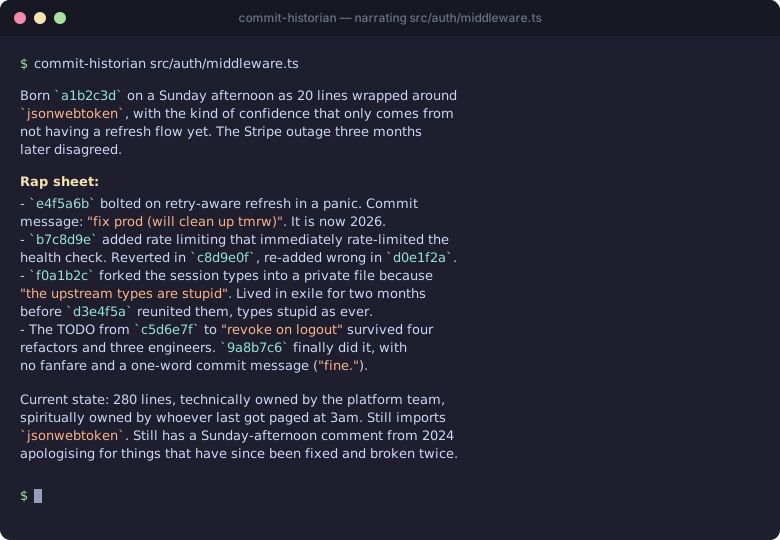
commit-historian is a CLI code archaeologist. It feeds a file's git log (with patches) to Claude and asks for a story — with real commit SHAs as anchors — so you can read the why behind code, not just the what.
Image above is an illustrative example. Replace with a real capture from your repo after running it.
npx commit-historian <path>
# or globally
npm i -g commit-historiancommit-historian <path> # full history with patches
commit-historian <path> --short # metadata only, faster + cheaper
commit-historian <path> --since v1.0 # limit to a ref or date
commit-historian <path> --model <id> # override model
commit-historian <path> --dry-run # print the prompt; no API callRequires ANTHROPIC_API_KEY in your environment. Defaults to
claude-sonnet-4-6.
git log answers what changed. git blame answers who. Neither
answers why this file is shaped the way it is — which is the actual
question when you join a project, audit a module, or onboard onto a
team's code. commit-historian does that, with citations.
- Resolves the file inside your repo (follows renames).
- Runs
git log --follow -p --date=shortand caps the patch payload. - Streams the log to Claude with a strict system prompt: anchor every claim to a real short SHA, surface tensions and reverts, keep it under ~450 words.
- Streams the markdown narrative to stdout.
No data leaves your machine except the git log you pass to Anthropic's API.
MIT