298. Binary Tree Longest Consecutive Sequence #300
Merged
Conversation
This file contains hidden or bidirectional Unicode text that may be interpreted or compiled differently than what appears below. To review, open the file in an editor that reveals hidden Unicode characters.
Learn more about bidirectional Unicode characters


Collaborator
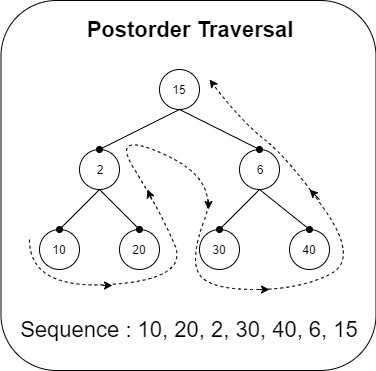
You are right. In post-order traversal, it is like wrapping a tree in a veil or blanket that first touches the tree's outer nodes. Therefore post-order looks appropriate to calculate that kind of distances.
|

altay9
approved these changes
Jun 5, 2021
Collaborator
 altay9
left a comment
altay9
left a comment
altay9
left a comment
There was a problem hiding this comment.
Quite fine Erdem. Thanks.


Sign up for free
to join this conversation on GitHub.
Already have an account?
Sign in to comment


Add this suggestion to a batch that can be applied as a single commit.
This suggestion is invalid because no changes were made to the code.
Suggestions cannot be applied while the pull request is closed.
Suggestions cannot be applied while viewing a subset of changes.
Only one suggestion per line can be applied in a batch.
Add this suggestion to a batch that can be applied as a single commit.
Applying suggestions on deleted lines is not supported.
You must change the existing code in this line in order to create a valid suggestion.
Outdated suggestions cannot be applied.
This suggestion has been applied or marked resolved.
Suggestions cannot be applied from pending reviews.
Suggestions cannot be applied on multi-line comments.
Suggestions cannot be applied while the pull request is queued to merge.
Suggestion cannot be applied right now. Please check back later.
Resolves: #58
Algorithm:
The intuition is pretty simple. If a node has a consecutive sequence (hereinafter cs) with the left branch and another on the right, the length of the cs at this node would have been the maximum of these two cs. If there is no consecutiveness with either left or right, we can assume than the length of the cs incoming from that direction is 0. If both are 0, the length of cs at this node can remain 1.
We can think this backwards too. If a node's value is consecutive to its parent's, then it should return the length of its cs, otherwise 0. At the base case of null leaves, they should return a length of 0. For this, we send the parent's value to a DFS of both left and right branches, receive their values and add the maximum one to 1. If the length of cs here is longer than the global maximum, we update it. I think the traversal here can be described as "postorder".