
This project aims to unleash WebRTC creativity using web components. It has a collection of about 40 web components for building a wide range of real-time communication and collaboration web applications.
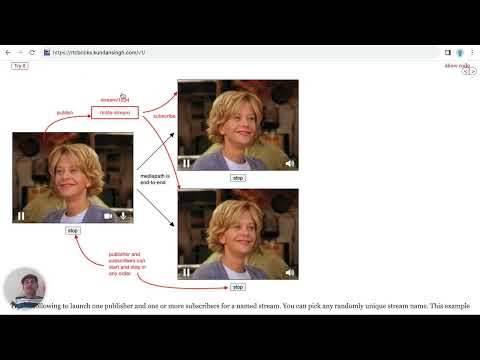
I started this project with one generic web component, <video-io>, for publish-subscribe in WebRTC apps. It has a simple video box abstraction that can be published or subscribed to a named stream. The motivation, software architecture, implementation, and various connectors of <video-io> are presented in the research paper, A Generic Web Component for WebRTC Pub-Sub. In summary, it promotes reuse of media features across different applications, reduces vendor lock-in of communication features, and provides a flexible, extensible, secure, feature-rich, and end-point driven web component to support a large number of communication scenarios. A presentation and demonstration video is also available below.
| Video Demonstration | Research paper |
|---|---|
 |
 |
As I worked through many sample and demo web apps using this <video-io> component, I kept creating more abstractions and web components, e.g., for layout of multiple video boxes, or text chat, or speech transcription, or call signaling, and so on. The collection will keep growing, and improving, as I work on more application scenarios. But the basic foundational ideas or the theme of this project remains the same, as follow:
- Separate any app logic from any user data.
- Keep the app logic in the endpoint, if possible.
- Use vanilla JavaScript, and say no to any framework.
- Create flexible and extensible interfaces in HTML5 web components.
Please contact the software owner, or join the discussion group mentioned below,
to get started with this project. It is actually very easy to get started.
Just checkout the code, run a simple web server, and access the v1 directory
in a browwer. That will open the full tutorial to get started.
I just use Python command like, python -m SimpleHTTPServer, from within the
rtcbricks directory, to launch a simple web server, to see the tutorial.
I have also hosted the tutorial on my website, at rtcbricks.kundansingh.com/v1 but this is access controlled. Please reach out to the project owner to get access, if you can't run the tutorial on your local server.
The core software is released under dual license: AGPL (GNU Affero General Public License) as well as Alternative commercial license. In summary, if you keep this software to yourself, or make your whole product or service open-source, then AGPL is fine; if you want to sell your own software with pieces of this project inside, even if you are offering software-as-a-service or a cloud hosted product, you'll likely need to buy the alternative commercial license.
If you are interested in sponsoring this project, or hiring (contract work) for integration with your system, please reach out to the owner by email, mentioned below. You can also join the project support and discussion group for all our projects.
Software owner is Kundan Singh (theintencity@gmail.com). All pieces of this software including source code, documentation, and binaries are copyright protected as © 2026, Kundan Singh <theintencity@gmail.com>.
Any contributions to this software such as in the form of pull request or suggested changes that gets merged or included is this software, automatically get the copyright and ownership transferred to the original software owner mentioned above, and turn into the dual license term mentioned here, to be compatible with the original software license. This clause allows the software owner to continue to provide the open source offering at the dual license terms, and benefits everyone.