In this project I used;
- olist_customers_dataset.csv file as customers table,
- olist_order_items_dataset.csv as order_items table
- olist_orders_dataset.csv file as orders table

select c.customer_id,count() as CustomerIDDuplicate from customers c group by c.customer_id having count()>1;


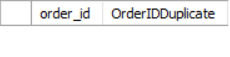

select oi.order_id,count() as OrderIDDuplicate from order_items oi group by oi.order_id having count()>1 order by OrderIDDuplicate desc limit 5 ;
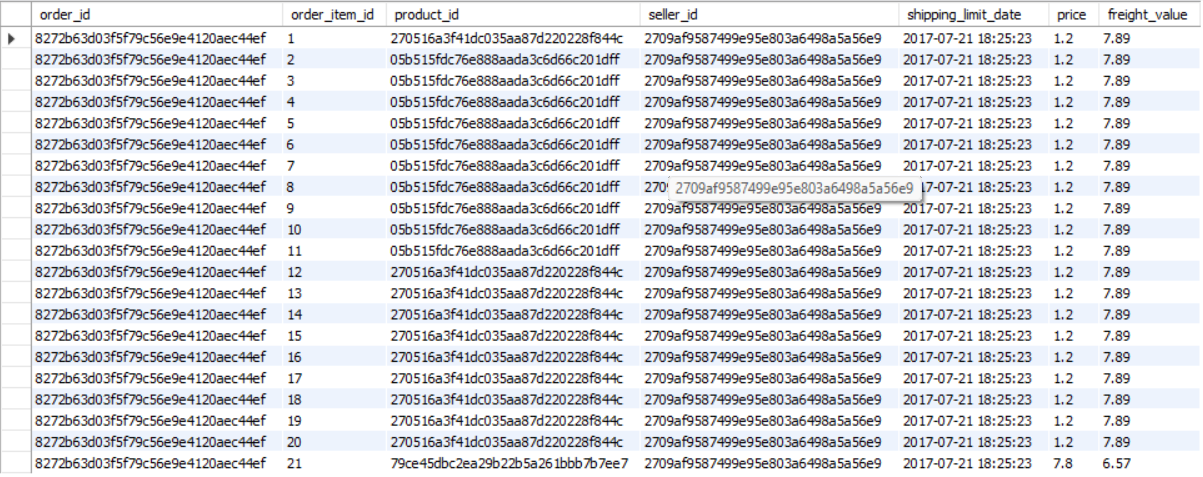
As we can see, before we join order_items table with orders and customers table, we need to use group by function to sum all rows of price and freight value columns to avoid duplicate customers and orders.
2.1) Join all tables, then create new columns like total orders, total sales and TotalOrdersByCustomer. To find dates, first we need to use STR_TO_DATE function to convert text values to date.
SELECT c.customer_id,c.customer_state,c.customer_city,round(sum(oi.price+oi.freight_value),2) as TotalSpendbyCustomer,
round(sum(oi.price+oi.freight_value) over (),2) as TotalSales,count(o.order_id) as TotalOrdersByCustomer,
round(sum(oi.price+oi.freight_value) over () / count(oi.order_item_id) over (),2) as AvgSpendByCustomer,
count(o.order_id) over () as TotalOrders,max(STR_TO_DATE(o.order_purchase_timestamp, "%m/%d/%Y")) as LastOrderDateByCustomer,
max(STR_TO_DATE(o.order_purchase_timestamp, "%m/%d/%Y")) over () as LastOrderDate,
DATEDIFF(max(STR_TO_DATE(o.order_purchase_timestamp, "%m/%d/%Y")) over (),max(STR_TO_DATE(o.order_purchase_timestamp, "%m/%d/%Y")))
as DateDiffFromLastOrderByCustomer FROM customers c
inner join orders o on o.customer_id=c.customer_id
inner join order_items oi on oi.order_id=o.order_id
group by c.customer_id,c.customer_state,c.customer_city limit 10;

Ceating one view to calculate total points based on total spend, total orders and difference between last order date and customer's last order date
create view customer_orders_view as
select x.*,max(x.TotalOrdersByCustomer) over() as MaxOrdersByCustomer,min(x.DateDiffFromLastOrderByCustomer) over() as MinDateDiffFromLastOrder,
max(x.DateDiffFromLastOrderByCustomer) over() as MaxDateDiffFromLastOrder,avg(x.DateDiffFromLastOrderByCustomer) over() as AvgDateDiffFromLastOrder from (
SELECT c.customer_id,c.customer_state,c.customer_city,round(sum(oi.price+oi.freight_value),2) as TotalSpendbyCustomer,
round(sum(oi.price+oi.freight_value) over (),2) as TotalSales,count(o.order_id) as TotalOrdersByCustomer,
round(sum(oi.price+oi.freight_value) over () / count(oi.order_item_id) over (),2) as AvgSpendByCustomer,
count(o.order_id) over () as TotalOrders,max(STR_TO_DATE(o.order_purchase_timestamp, "%m/%d/%Y")) as LastOrderDateByCustomer,
max(STR_TO_DATE(o.order_purchase_timestamp, "%m/%d/%Y")) over () as LastOrderDate,
DATEDIFF(max(STR_TO_DATE(o.order_purchase_timestamp, "%m/%d/%Y")) over (),
max(STR_TO_DATE(o.order_purchase_timestamp, "%m/%d/%Y"))) as DateDiffFromLastOrderByCustomer FROM customers c
inner join orders o on o.customer_id=c.customer_id
inner join order_items oi on oi.order_id=o.order_id
group by c.customer_id,c.customer_state,c.customer_city) x;

create view segmentationview as
Select x.,x.TotalSpendPoints+x.TotalOrderPoints+x.TotalDaysDiffPoints as TotalPoints,
case when x.TotalSpendPoints+x.TotalOrderPoints+x.TotalDaysDiffPoints >12 then "Champions"
when x.TotalSpendPoints+x.TotalOrderPoints+x.TotalDaysDiffPoints >8 then "Loyal customers"
when x.TotalSpendPoints+x.TotalOrderPoints+x.TotalDaysDiffPoints >4 then "Potential Loyalists"
else "At Risk Customers" end as CustomerSegment from (
select c.,case when c.TotalSpendbyCustomer>=c.AvgSpendByCustomer2 then 5
when c.TotalSpendbyCustomer>=c.AvgSpendByCustomer then 4
when c.TotalSpendbyCustomer>=c.AvgSpendByCustomer0.7 then 3
when c.TotalSpendbyCustomer>=c.AvgSpendByCustomer0.4 then 2
else 1 end as TotalSpendPoints,
case when c.totalOrdersByCustomer>=c.MaxOrdersByCustomer0.8 then 5
when c.totalOrdersByCustomer>=c.MaxOrdersByCustomer0.5 then 4
when c.totalOrdersByCustomer>=c.MaxOrdersByCustomer0.2 then 3
when c.totalOrdersByCustomer>=c.MaxOrdersByCustomer0.1 then 2
else 1 end as TotalOrderPoints,
case when c.DateDiffFromLastOrderByCustomer<=c.MaxDateDiffFromLastOrder0.1 then 5
when c.DateDiffFromLastOrderByCustomer<=c.MaxDateDiffFromLastOrder0.2 then 4
when c.DateDiffFromLastOrderByCustomer<=c.MaxDateDiffFromLastOrder0.3 then 3
when c.DateDiffFromLastOrderByCustomer<=c.MaxDateDiffFromLastOrder*0.5 then 2
else 1 end as TotalDaysDiffPoints from customerordersview c) x ;
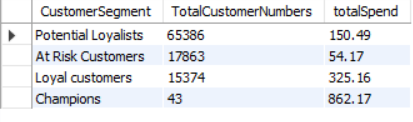
Select s.CustomerSegment,count(*) as TotalCustomerNumbers,round(avg(s.totalSpendByCustomer),2) as totalSpend from segmentationview s
group by s.CustomerSegment;
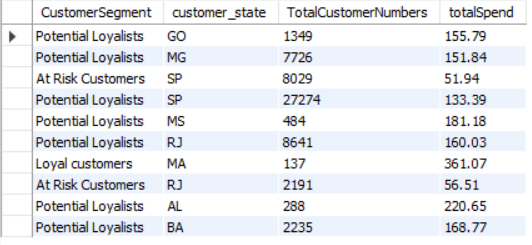
Select s.CustomerSegment,s.customer_state,count(*) as TotalCustomerNumbers,round(avg(s.totalSpendByCustomer),2) as totalSpend from segmentationview s
group by s.CustomerSegment,s.customer_state;
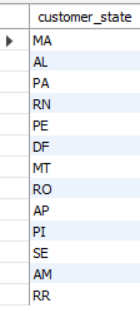
select y.customer_state from (
select distinct s.customer_state,x.customer_state as customer_state2 from segmentationview s
left join (
select distinct s.customer_state from segmentationview s where s.CustomerSegment="Champions") x
on s.customer_state=x.customer_state) y where y.customer_state2 is null;