DevOps is a set of practices that bridges the gap between software development and IT operations. It aims to shorten the development lifecycle and provide continuous delivery with high software quality.
- Collaboration: Breaking down silos between dev and ops teams for seamless communication.
- Automation: Automating repetitive tasks like testing, deployment, and infrastructure provisioning.
- Continuous Integration/Continuous Delivery (CI/CD): Ensuring code changes are automatically tested and delivered to production frequently.
- Monitoring and Feedback Loops: Using metrics and logs to inform decisions and improve system performance over time.
- Agility and Iteration: Adopting an iterative development process for faster innovation and quicker recovery from failures.
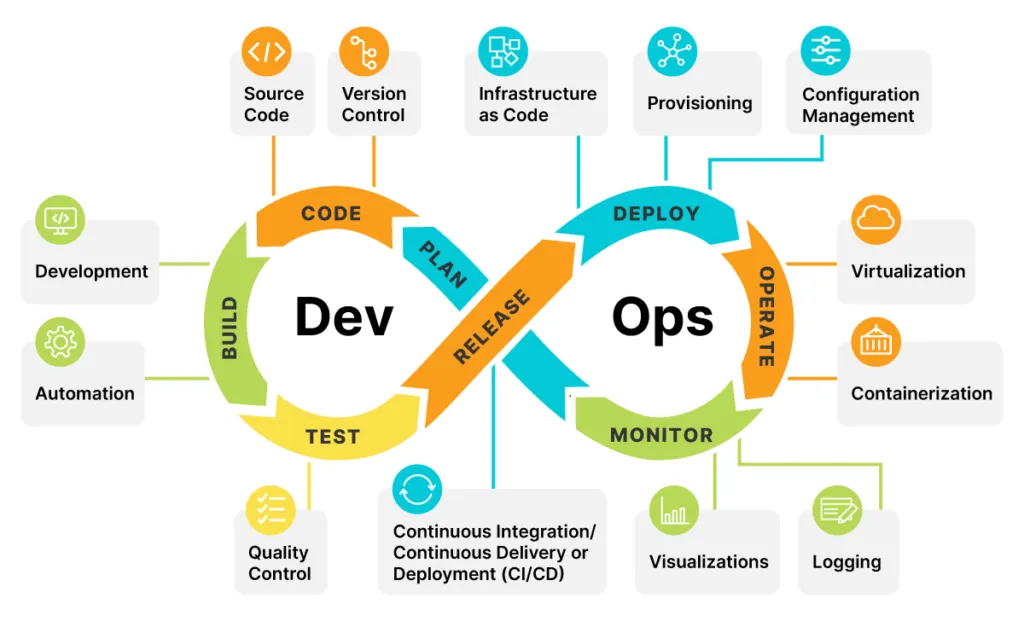
- Planning: Define project goals, features, and timelines through collaboration and requirement gathering.
- Development: Code is written, version-controlled, and reviewed for quality and functionality.
- Building: Code is compiled, packaged, and prepared for testing or deployment.
- Testing: Automated and manual tests are run to ensure code quality and detect bugs early.
- Release: Validated builds are prepared and approved for deployment to production.
- Deployment: Code is delivered to the production environment using automated or manual processes.
- Operations: The application is managed, supported, and maintained in the live environment.
- Monitoring: System performance, user behavior, and errors are continuously tracked to guide improvements.
DevOps is more than just a toolchain, it's a cultural shift that promotes shared responsibility, rapid feedback, and continuous improvement. Understanding its principles and lifecycle helps teams deliver reliable, scalable, and high-quality software faster and more efficiently.