A ComfyUI custom node set to refine and improve the quality of small faces in MiniMax H3 video.
MiniMax H3 renders faces poorly when the head occupies a small fraction of the frame. This is a property of head-size-in-frame, not of output resolution, so it persists at 720p and above. These nodes detect the face on every frame, crop to it so it fills a canvas, let H3 re-generate it, and composite the result back into the original video.
Modelled on Impact Pack's FaceDetailer, adapted from stills to video.
Source on the left, refined on the right:

Single frame at full resolution:
| Source | Refined |
|---|---|
 |
 |
The reason it works is what H3 is handed. Instead of a distant head a few dozen pixels tall, it gets the face tracked and normalized to fill the canvas:
| Crop in: what H3 sees | Crop out: what H3 returns |
|---|---|
 |
 |
| full-res still | full-res still |
These two are what to watch for temporal behaviour: the box has to sit still on a moving subject, or the refined face boils.
Clone into ComfyUI/custom_nodes/:
git clone https://github.com/Carasibana/ComfyUI-H3-FaceRefine.gitRestart ComfyUI. The nodes appear under MiniMax H3/Face Refine.
For the nodes themselves:
| ComfyUI with MiniMax H3 support | H3's own nodes are core (comfy_extras/nodes_minimax_h3.py), not an add-on, you just need a build recent enough to have them |
| a face detector | e.g. face_yolov8m.pt in models/ultralytics/bbox/. The one thing you must supply yourself |
Python packages (ultralytics, scipy, insightface) install automatically from
requirements.txt / pyproject.toml.
A note on onnxruntime.
insightfaceneeds it, and this pack deliberately does not pin a variant. If you installonnxruntime-gpualongside an existingonnxruntime, the CPU-only package shadows it,CUDAExecutionProviderdisappears, and identity matching silently runs on CPU. Install one or the other, not both. Check with:python -c "import onnxruntime; print(onnxruntime.get_available_providers())"
Additionally, to run the example workflows:
| ComfyUI-VideoHelperSuite | video load and save |
| ComfyUI-H3-NativeAudioLock | supplies MiniMaxH3NativeAudioLock, which drives lipsync. It ships inside that repository under custom_nodes/ComfyUI-H3-NativeAudioLock, so copy that folder into your own ComfyUI/custom_nodes/ |
| ComfyUI-GGUF | only if loading H3 as GGUF |
| ComfyUI-Impact-Pack | only for the SAM workflow (supplies SAMLoader) |
a SAM model in models/sams/ |
as above |
Model lookups go through ComfyUI's folder_paths, so anything registered in
extra_model_paths.yaml is found automatically.
| Model | Goes in | Source |
|---|---|---|
face_yolov8m.pt |
models/ultralytics/bbox/ |
Bingsu/adetailer |
person_yolov8m-seg.pt (optional, for fallback_detector) |
models/ultralytics/segm/ |
Bingsu/adetailer |
| MiniMax H3 diffusion model | models/diffusion_models/ |
Comfy-Org/MiniMax-H3 |
| Qwen3-VL text encoder | models/text_encoders/ |
Comfy-Org/MiniMax-H3 |
minimax_h3_video_vae_fp16.safetensors |
models/vae/ |
Comfy-Org/MiniMax-H3 |
minimax_h3_audio_vae_fp32.safetensors |
models/vae/ |
Comfy-Org/MiniMax-H3 |
minimax_h3_fl2v_lightx2v_turbo_4step_v0.1_comfy.safetensors (optional, big speed-up) |
models/loras/ |
Kijai/MiniMax-H3_comfy, distilled by lightx2v |
sam_vit_b_01ec64.pth (SAM workflow only) |
models/sams/ |
Meta segment-anything |
InsightFace buffalo_l (crowd tracking) |
models/insightface/ |
downloaded automatically on first use |
H3's original weights are MiniMaxAI/MiniMax-H3; the
Comfy-Org repository above is the repackaged form ComfyUI expects. The example workflows load the
model and text encoder as GGUF through ComfyUI-GGUF,
which is what lets H3 fit in 12 GB. Swap those two loaders for the stock UNETLoader and
CLIPLoader if you have VRAM for full-precision weights.
Only the face detector is genuinely required by the nodes themselves. Everything else is needed because the pipeline runs H3, so if you are already generating H3 video you will have it already.
Two example workflows are included, both annotated in-graph:
| Template | Paste mask | Extra dependency |
|---|---|---|
| H3 Face Refine | dilated + blurred rect | none |
| H3 Face Refine SAM | true face-shaped (SAM) | Impact Pack |
Both are installed as ComfyUI workflow templates. Open them from
Workflow → Browse Templates once the pack is installed, no file hunting required.
They also live in example_workflows/ if you would rather load the JSON
directly.
Start with the rect one. Load it, then set:
- Source clip: point the loader at your video.
- Ref image(s): the same character references you generated the clip with.
- Vocals: an isolated vocal track, for lipsync.
- Prompt: the clip's own prompt.
lengthon the H3 node: your clip's exact frame count.
Everything else can stay at the shipped values for a first run.
source clip ───┬──────────────────────────────────────────────────────┐
               ▼                                                      │
      H3 Face Track + Crop ──┬── crops ─────────────────┐             │
               │             │                          ▼             │
               │             │     MiniMaxH3ReferenceToVideo          │
               │             │        (refs; W/H <- canvas_w/h)       │
               │             │                          │             │
               │             └──────────► H3 Inject Video Latent      │
               │                                        │             │
               │                 MiniMaxH3NativeAudioLock <- vocals   │
               │                                        │             │
               │                        H3 Per-Frame Denoise          │
               │                                        │             │
               │              SamplerCustomAdvanced ─► VAEDecode      │
               │                                        │             │
               └── transform ─────────► H3 Face Stitch Back ◄─────────┘
                                                │
                                  original audio ──► save
The transform output is the spine of the whole thing: it records where every crop came from, so
the stitch can put each refined face back exactly where it belongs.

Detects the face on every frame, fills gaps where detection fails, smooths the trajectory, and
emits a constant-size batch of crops plus the transform needed to paste results back.
Inputs
| Input | Default | What it does |
|---|---|---|
images |
- | The clip to refine. Connect your video loader. |
detector |
first found | Face detection model from models/ultralytics/. face_yolov8m.pt is a good default. |
confidence |
0.35 |
Detection threshold. Lower catches more profiles and partial faces at the cost of false positives. |
crop_factor |
2.5 |
Crop side as a multiple of face height. 2.5 puts the face at ~40% of the crop. Bigger gives more context so the seam lands in hair and background, but less magnification. 2.0-3.0 is the useful range. |
canvas_width / canvas_height |
512 |
Resolution H3 generates at. Ignored unless canvas_mode is manual. 768 is H3's native short edge and gives the best faces, at 2.25× the cost of 512. |
canvas_mode |
manual |
manual uses the two values above. auto_no_downscale sizes from the largest crop so no frame is ever downscaled. auto_capped_768 does the same but clamps to 768, a sane VRAM ceiling and the best default. |
smooth_window |
21 |
Frames of smoothing on the crop centre. 21 at 24 fps is ~0.9 s. Raise if the box shivers, lower if it lags fast head movement. |
size_smooth_window |
51 |
Frames of smoothing on the crop size. Deliberately larger than the centre window, because size jitter makes the crop breathe, which changes the resample factor every frame and reads as shimmer. |
smooth_method |
gaussian |
gaussian rejects jitter best. savgol preserves the shape of a push-in at large windows. moving_average is a plain boxcar and leaves residual jitter. |
size_mode |
per_frame |
per_frame holds the face at a constant fraction of every crop, which is correct for push-ins. max_of_clip uses one size throughout, only useful when the shot is static. |
identity_reference (opt) |
- | A clear face image of the person to track. Picks the subject by identity rather than size. |
identity_track (opt) |
True |
Hold one subject through a crowd. Continuity decides most frames; the identity embedding is consulted only when two candidates are similarly plausible or their boxes overlap. |
identity_threshold (opt) |
0.28 |
Minimum cosine similarity to accept a face as the reference person. Below it, the frame falls back to continuity, which is what carries tracking through profiles and occlusion. |
select (opt) |
largest |
Used only when no identity_reference is connected, and as the first-frame tie-break. largest or most_central. |
fallback_detector (opt) |
none |
Used only on frames where the face detector finds nothing. A person/body model gives a real head position from the top of the body box, which beats interpolating blindly. |
fallback_head_frac (opt) |
0.5 |
Head centre as a multiple of face height below the top of the person box. 0.5 suits a head seen from behind. |
Outputs
| Output | Goes to |
|---|---|
crops |
H3 Inject Video Latent → images, and H3 Face Mask (SAM) → crops |
transform |
H3 Face Stitch Back, H3 Per-Frame Denoise, H3 Face Mask (SAM) |
preview |
Optional: a debug view of the tracked boxes |
report |
Text summary: detections, gaps, magnification warnings |
canvas_w / canvas_h |
Must be wired to the H3 node's width / height |
Wire the canvas, don't type it. In the
auto_*modes this node chooses the size. If the H3 node'swidth/heightdisagree, the latent shapes differ and injection refuses.
Watch
reportformagnification < 1.0x. That means the crop is being downscaled into the canvas and real detail is being discarded. Raise the canvas, or skip clips that are close-up throughout since they have nothing to gain.
Multiple people: run the pipeline once per subject, each with that person's identity_reference
and their own refs on the H3 node, then chain them, feeding run 1's stitched output in as run 2's
base_images. The composites accumulate.
.png)
Encodes real frames into the video stream of H3's joint audio-video latent, leaving the audio stream intact. This is the missing img2img path: H3's stock nodes always build a zeros latent, because references are conditioning re-injected each step, never a starting point. Without this there is no video-to-video.
Inputs
| Input | What to connect |
|---|---|
av_latent |
The LATENT output of MiniMaxH3ReferenceToVideo |
images |
crops from H3 Face Track + Crop |
vae |
The video VAE |
Outputs: av_latent (onwards to MiniMaxH3NativeAudioLock) and report.
It has no widgets. Strength is set downstream by BasicScheduler's denoise, not by
SplitSigmas. See Denoise below.

Varies denoise strength along the temporal axis via the latent's noise mask, so one sampling pass covers a shot that goes from distant to close.
A single denoise cannot serve a whole clip: a tiny face has no detail to preserve and wants a strong pass so the model synthesizes, while a large face has real detail and wants a gentle pass so it is not rewritten. This node scales the base denoise per frame by measured face size.
Inputs
| Input | Default | What it does |
|---|---|---|
av_latent |
- | From MiniMaxH3NativeAudioLock |
transform |
- | From H3 Face Track + Crop. This is where face sizes come from |
strength_small_face |
1.0 |
Multiplier where the face is smallest. 1.0 = the full denoise set on BasicScheduler. |
strength_large_face |
0.35 |
Multiplier where the face is largest. Lower preserves the detail those frames already have. |
scale_mode |
absolute_px |
absolute_px keys off real face size in source pixels, which is safe across a batch, since a clip that never has a small face just sits at the baseline. relative_to_clip normalizes to that clip's own min/max, so its smallest face always gets the full boost. Use the latter when tuning one clip to its extremes. |
face_px_small |
30.0 |
Face height (source px) at or below which full strength_small_face applies. |
face_px_large |
120.0 |
Face height (source px) at or above which strength_large_face applies. |
gamma |
1.0 |
Curve on the interpolation. >1 keeps strength high until the face is genuinely large; <1 drops it off early. |
smooth_frames |
9 |
Smooths the strength curve over time. An abrupt denoise change between neighbouring frames shows up as a texture pop, so be generous. |
Outputs: av_latent (to SamplerCustomAdvanced → latent_image) and report.
Base denoise and these multipliers are tuned together. The example workflows ship a base of
0.45 which this node scales down on large-face frames. If you bypass this node, drop the base a
long way or every large face gets rewritten.
Denoise values do not transfer from SDXL-family models. H3 is flow matching with a large sigma shift:
sigma = shift * t / (1 + (shift - 1) * t)
At the default shift of 12, 0.25, an ordinary FaceDetailer value, lands at an effective sigma
of 0.800 and rewrites the frame.
| denoise | effective sigma (shift 12) |
|---|---|
| 0.02 | 0.197 |
| 0.05 | 0.387 |
| 0.15 | ~0.66 |
| 0.25 | 0.800 |
steps and denoise are independent: BasicScheduler builds a steps/denoise-long
full-range schedule and keeps the lowest steps+1 sigmas, so 4 steps with a turbo LoRA is both
fast and gentle. Do not use SplitSigmas. On a 4-step schedule at shift 12 even the last
split point is already sigma 0.800.
Push the ceiling too high and the head drifts relative to the body, a content problem no mask can hide.
.png)
Produces true face-shaped paste masks instead of a rectangle, temporally smoothed. Optional, and
requires Impact Pack for SAMLoader.
Inputs
| Input | Default | What it does |
|---|---|---|
crops |
- | The tracker's crops, not the decoded result. See the warning below. |
sam_model |
- | From Impact Pack's SAMLoader |
transform |
- | From H3 Face Track + Crop |
threshold |
0.93 |
SAM confidence threshold for accepting mask pixels. |
dilation |
0 |
Grow the mask. SAM masks are accurate, so they rarely need it. |
temporal_smooth |
5 |
Frames of averaging across the mask stack. 1 disables it, and the mask edge will shimmer. |
Outputs: masks (to H3 Face Stitch Back → masks) and report.
Mask the input, never the output. Wire the tracker's crops here. This matches FaceDetailer, which computes its mask from the source image; generation never feeds back into the mask. Mask the generated result instead and, if the model nudges the face inward, the mask traces the new smaller silhouette while the original face pokes out past it, most visibly the nose on profile shots. It is also cheaper: no dependency on the sampler, so SAM need not be resident alongside the video model.
Is it worth it? Often not. A rect mask frequently beats SAM here. SAM traces the face tightly, so any drift in the refined face lands right on the silhouette, whereas a slightly looser rect puts the seam in hair and background where it reads far less. Try the rect workflow first.
If you use SAM masks, drop
featheron the stitch node to 4-8. A rect needs far more.

Warps each refined crop back onto the exact float box it came from, colour-matches it, feathers the
edge and composites. A single batched grid_sample does the warp, so a trajectory smoothed to
sub-pixel precision is not re-quantized on the way home.
Inputs
| Input | Default | What it does |
|---|---|---|
base_images |
- | The original frames, the same clip fed to the tracker |
refined_crops |
- | VAEDecode output |
transform |
- | From H3 Face Track + Crop |
paste_region |
face_only |
What actually composites. face_only / face_ellipse paste just the detected face box; full_crop pastes hair, shoulders and background too and risks a visible rectangle. |
mask_dilation |
16 |
Grow the face box before blurring, in canvas px, so the blur has room and the blend does not eat into the face. |
feather |
6 |
Gaussian blur radius on the paste mask, in source pixels, measured against the final frame, so the blend is the same physical width at any magnification. Use ~24 with a rect mask, 4-8 with SAM. |
colour_match |
1.0 |
Match the crop's per-channel mean/std to the region it replaces. The crop and the frame went through independent passes, so without this the face can come back subtly brighter and read as pasted on. |
blend |
1.0 |
Global opacity of the refined face. Below 1.0 mixes back toward the original, useful to dial back over-sharpening. |
undetected_frames |
fade_out |
What to do where no face was found. All frames still go through H3 either way, which is what keeps it temporally consistent. This only controls pasting. fade_out ramps the composite to zero across the gap; skip hard-cuts to original pixels; composite_anyway risks H3 hallucinating a face onto the back of a head. |
feather_scales_with_crop (opt) |
False |
Legacy: treat feather as canvas pixels so the blend narrows as the crop shrinks. Leave off. |
masks (opt) |
- | Per-frame masks from H3 Face Mask (SAM). Overrides paste_region. |
Outputs: images, the finished frames. Send to your video save node.
Only the face region composites. The wide crop exists to give the sampler context. It is not what gets pasted. Pasting the whole crop covers roughly 88% of the canvas versus 16% for the face box, and any change the model made to hair or background returns as a rectangle.

A debug node. Prints the per-frame boxes so you can sanity-check tracking before spending time on a sampling pass.
| Input | Default | What it does |
|---|---|---|
transform |
- | From H3 Face Track + Crop |
max_rows |
12 |
How many frames to print. |
Outputs: info (a string). It is an output node, so it displays in the graph directly.
Use it when the stitch looks misaligned, or to confirm gap-filling behaved on a clip where the subject turns away.
H3 is a joint audio-video model. MiniMaxH3NativeAudioLock encodes real audio into the audio
stream of the AV latent, sets noise_mask to ones for video and zeros for audio so only video
denoises, and the video branch cross-attends to that fixed audio. That is what shapes the mouth.
Feed it an isolated vocals track for a cleaner signal. The original audio goes separately into the save node. Two distinct audio paths, easy to confuse.
- Frame count must sit on H3's 17k+5 grid (5, 22, 39 … 175, 226, 362). Clips generated by H3 already do.
- Cost is
canvas² × frames. Auto canvas sizing considers face size only, so on a long clip it can pick a canvas that exceeds VRAM and falls back to streaming weights from system RAM, an order-of-magnitude slowdown rather than a clean error. SAMLoader'sAUTOdevice mode leaves the model on CPU untilprepare_device()is called. This pack calls it; if you write your own SAM path, missing it makes mask passes 10-50× slower with the GPU idle at half power.
The compositing approach is taken directly from
ComfyUI-Impact-Pack by
ltdrdata, specifically FaceDetailer and its detailer paste.
The dilate-then-blur face-region mask, the crop-for-context-but-paste-only-the-face principle, and
the bbox+SAM masking path are all its design; this pack adapts them to a per-frame video pipeline.
If you find this useful, that project is why.
The lipsync path in the example workflows depends on MiniMaxH3NativeAudioLock, from
MiniMax-H3-NativeAudio-MusicVideo-Workflow
by Shrek3OnVH5. It is not redistributed here, so install it
from that repository.
Also builds on:
- MiniMax H3, the joint audio-video model being refined
- ComfyUI by comfyanonymous
- ComfyUI-VideoHelperSuite by Kosinkadink
- ComfyUI-GGUF by city96
- Ultralytics YOLO for detection, and InsightFace for identity embeddings
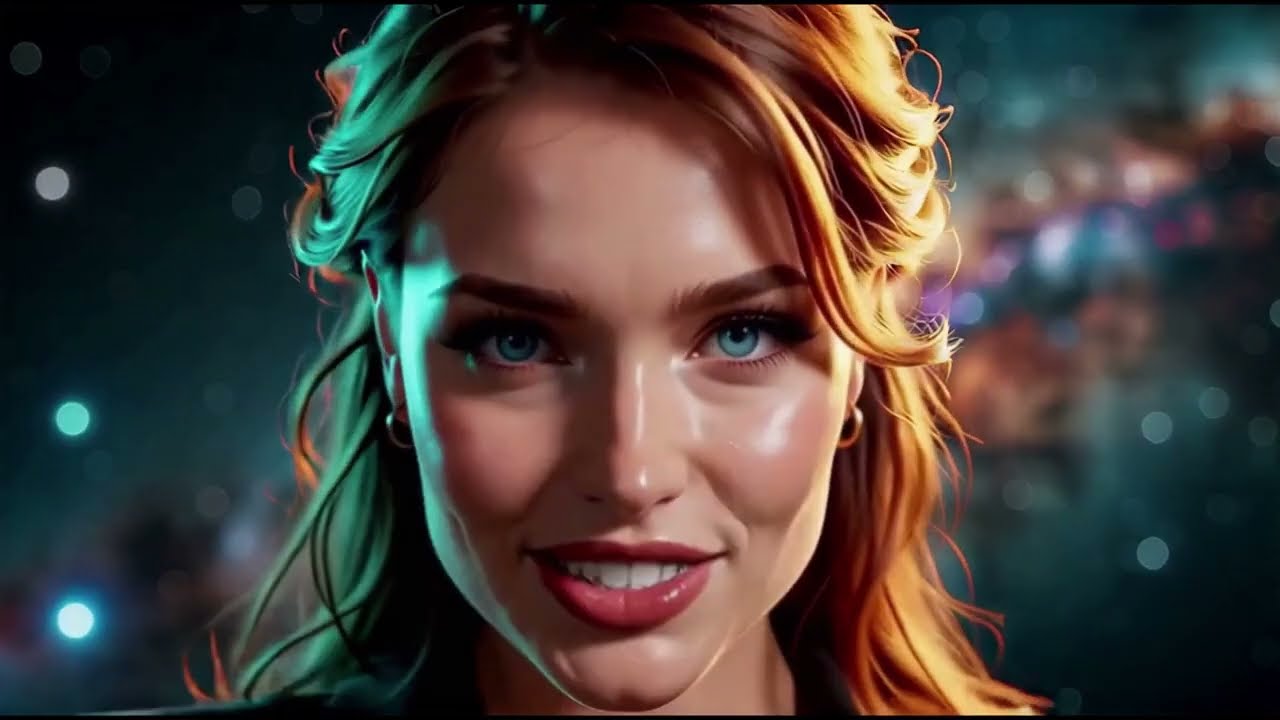


More Than Words Can Ever Steal, a music video by Carasibana, generated with MiniMax H3. Every shot where the subject sits at any distance from camera was face-refined with this pack.
MIT. See LICENSE.
Built with Claude Code.