WifiFunctions
In this task, software has been developed on top of the SPI driver, developed by Movidius, for the WiFi module CC3100MOD from Texas Instruments. This software provides a layer of functions for creating an ad-hoc WiFi, establishing a connection with another device using the desktop and mobile APIs defined in Tasks “Middleware API Desktop” and “Middleware API Android”, sending/receiving data (of any kind) and closing connection. Moreover, the application developed in Task “Control Mode” directly depends on this.
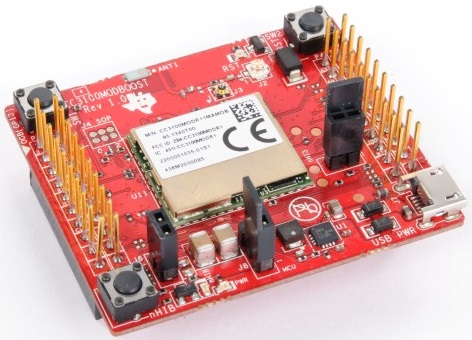
The CC3100MOD can create an ad-hoc network and has security and encryption (WPA2). The ad-hoc WiFi allows connection with the external configuration computer even without WiFi infrastructure. Furthermore, since the SSID is public, an additional security feature is used: a network password. When using WPA, the password is a string between 8 and 63 characters long. When in place, this password is necessary to use the EoT device. The password is stored in the CC3100MOD’s flash memory and can be eventually changed (or removed) from EoT’s Control mode.
The result of this task is a library called WifiFunctions, which is an abstraction layer between the Simplelink WiFi driver and the programmer. The functionality provided, apart from the Simplelink driver functions (check CC3100 programmer’s guide for more information), is as follows:
- Generation of access point.
- Connection to existing access points.
- Scanning of the WiFi spectrum to find the less saturated channel.
- Profile management for saving a previously generated access point, and reuse it when the device is restarted.
- Ping.
- Change own MAC address.
- Set WiFi signal intensity and power policy.
- The Wifi chip only supports one client connection in AP mode. This was first observed by UCLM. This is not indicated neither in the Wifi manuals nor in the TI web. It is only mentioned in one post in the TI forum. We assume only one client will make the first connection to the EoT device. This, in fact, can be considered more secure. More clients can connect to the EoT device after connection to an external Wifi.
- Potential conflict detected with FlashIO in the first hardware setup proposed over the SPI bus. This conflict is solved with EoT Rev1 board.
- Nonblocking calls in the first version of WiFi driver do not work in server- related functions (accept and select, the timeout parameter does not work, so these calls block forever). Movidius subcontractor Emdalo sent additional code that uses the non-blocking call along with a wait, and another thread to signal the end of the wait, but this hack does not solve the problem completely. It will be solved in future versions.
No external dependencies.
simplelink.h - CC31xx/CC32xx Host Driver Implementation
Copyright (C) 2014 Texas Instruments Incorporated - http://www.ti.com/
Redistribution and use in source and binary forms, with or without modification, are permitted provided that the following conditions are met:
Redistributions of source code must retain the above copyright notice, this list of conditions and the following disclaimer.
Redistributions in binary form must reproduce the above copyright notice, this list of conditions and the following disclaimer in the documentation and/or other materials provided with the distribution.
Neither the name of Texas Instruments Incorporated nor the names of its contributors may be used to endorse or promote products derived from this software without specific prior written permission.