A Brief Prelude to Early Japanese Mathematics
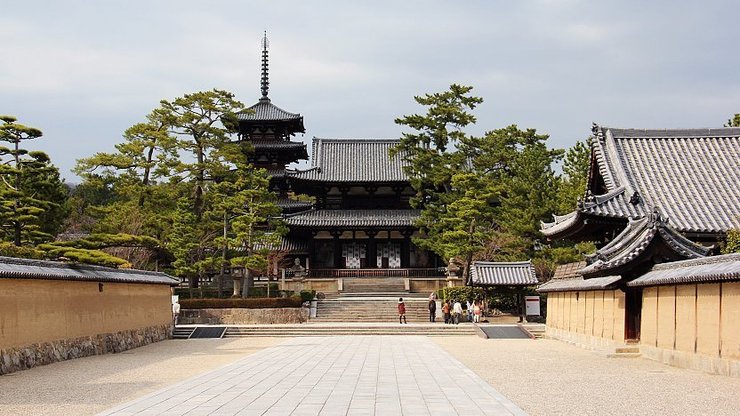
Figure 1: The Horyuji Temple, built in the Asuka period
Early Japanese mathematics, also referred to as "wasan," has an interesting and unique chapter in the development of mathematical philosophy. Japan's mathematical development from the 5th to the 17th centuries was characterized by both isolation and adaptation, laying the groundwork for later developments and the adoption of Western mathematical concepts in the 17th century.
Japanese mathematicians made significant contributions to the field of mathematics throughout this formative period, which lasted from 450 to 1600 AD. The Japanese approach to mathematics was distinguished by empirical research and an emphasis on practical applications, in contrast to their Western counterparts who had created systematic frameworks and notational methods. These varied uses included work in astronomy, calendar calculations, surveying, and architecture.
The introduction of Chinese mathematical ideas into Japan alongside Buddhism had a considerable impact on early Japanese mathematics. This intellectual interchange was crucial in forming the mathematical culture of ancient Japan. Although Japanese mathematicians did not follow strict mathematical formalism during the Middle Ages, they were able to use geometry and other mathematical concepts to solve practical problems in technology, architecture, and other fields.
Before the Seki Takakazu school appeared in the 17th century, Japanese mathematics was a synthesis of native traditions and Chinese influences, with a primary emphasis on practical problem-solving. However, scholars like Seki Takakazu started to create systematic techniques and notations for mathematics during this time period, which constituted a significant turning point in the formalization of Japanese mathematics.
The early foundations laid the groundwork for the eventual creation of Wasan, a distinctly Japanese mathematical tradition that later fused with Western mathematical concepts. This blending of mathematical ideologies left behind a rich and varied legacy that had a lasting impact on Japan's mathematical heritage and added to the larger global discussion of mathematics.
We shall go further into the complexities of early Japanese mathematics in the pages of this wiki, investigating the ground-breaking concepts, creative minds, and cultural factors that influenced this extraordinary journey. Join us as we explore Wasan's secrets and follow its development from real-world applications to codified mathematics.
- Wikimedia Foundation. (2023, July 31). Japanese mathematics. Wikipedia. https://en.wikipedia.org/wiki/Japanese_mathematics
- Encyclopædia Britannica, inc. (n.d.). Wasan. Encyclopædia Britannica. https://www.britannica.com/topic/wasan
- Yu, A. C. (n.d.). Wasan (Japanese mathematics) - Japanese wiki corpus. Wasan (Japanese mathematics) - Japanese Wiki Corpus. https://www.japanesewiki.com/culture/Wasan%20(Japanese%20mathematics).html