Project planning
The chosen paper is the fourth one, which is about the whole genome assembly of the durian fruit. The aim of this project is to re-analyze the data from the paper and figure out which genes and pathways that are important for the different processes in the durian fruit, as well as compare transcriptomic data between different plant organs (fruit stalk, aril, leaf, stem and root). This will be done in order to see whether the results from this project will differ from the results in the paper, as well as to gain knowledge about different bioinformatic tools and methods.
The analyses that will be performed and the softwares that are going to be used can be seen in the diagram below, figure 1. This image (figure 1) represents the workflow to follow in order to finish the project.
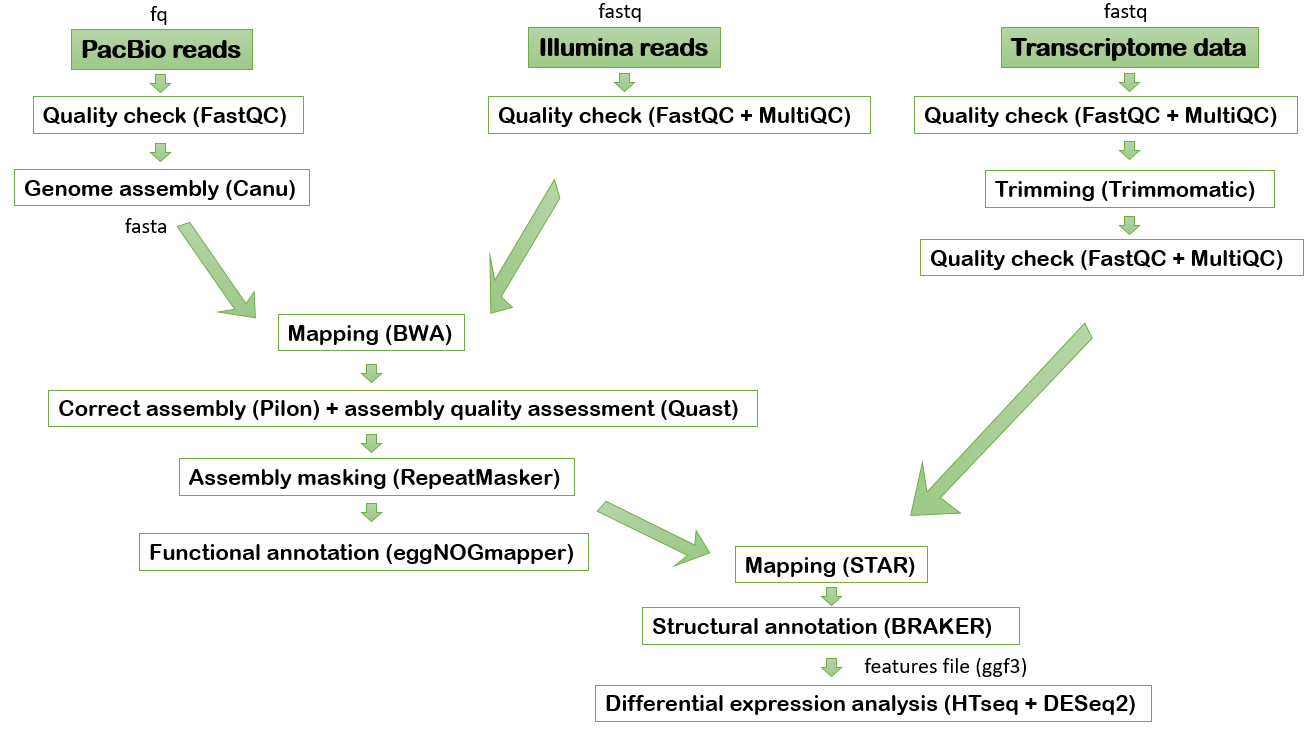
Figure 1. Workflow of project. The analyses that will be done and the softwares that are going to be used can be displayed, as well as the input data and output data.
Some of these analyses that can be seen in the figure will take a longer time. These are Canu and BWA. Canu will take approximately 17 hours and BWA takes approximately 1 hour. If time allows, additional analyses will be done, such as for example transcriptome assembly and assembly evaluation with more than one method.
The project must be finished before may 18. Milestones for when certain steps in this project must be finished can be seen below in a bullet list:
- 6/4 - Preprocessing
- 8/4 - Compulsory computer lab
- 19/4 - Genome assembly
- 28/4 - Mapping
- 11/5 - Annotation
- 13/5 - Compulsory computer lab
- 17/5 - Analysis of result
- 18/5 - Hand in presentation and github
The data handled in this project is from an eukaryot and a whole genome assembly is to be made. Data obtained are trancriptome data, a PacBio read and Illumina reads. The PacBio reads is a long-read and Illumina reads are short-reads and these are from the fruit stalk of the durian fruit Durio zibethinus. The transcriptome data is RNA-seq data and is from the stem, root, leaf and aril of the durio zibethinus.
This will result in a big amount of data, which means a lot of space is needed in order to store the data. This may cause a problem if only storing in the home directory since the home directory only got 32 Gb. However, if more space is needed, a personal folder will be created within the project directory and the data will be saved there. Big data files will also be compressed in order to save space!
The metadata is going to be stored in a table. There will is one sample per row and one variable per column, informative names and avoiding spaces when naming, as well as be consistent in order to avoid confusion.
The code and the data (such as figures, text, results) are going to be separated in the working directory. The code is going to be in a repository with version control (github) in order to track the coding process and be able to go back to a previous code that works if the current code has errors. A readme file will exist where the workflow is explained in which order the codes are executed. The files will have informative and unique names to avoid confusion when searching for different files. Folder and file names will start with a number, since then the order of when files/folders were created can be tracked. Big data files will be compressed in order to save space.
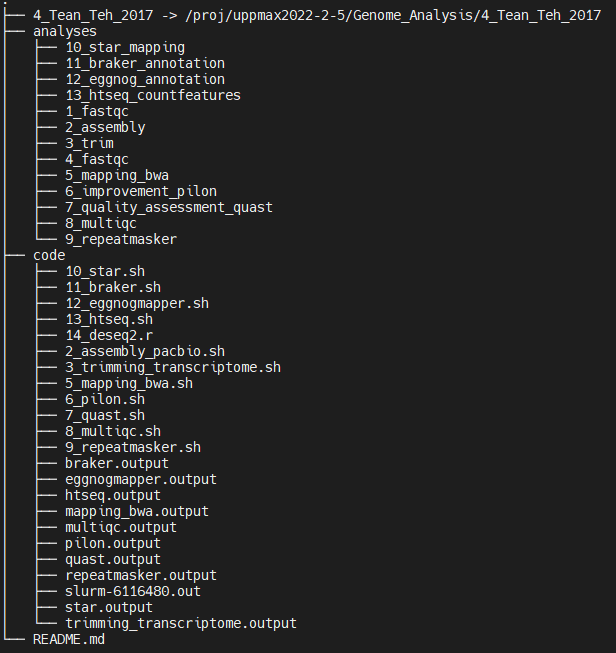
Figure 2: Here one can see the organization of the folders and files belonging to this project.