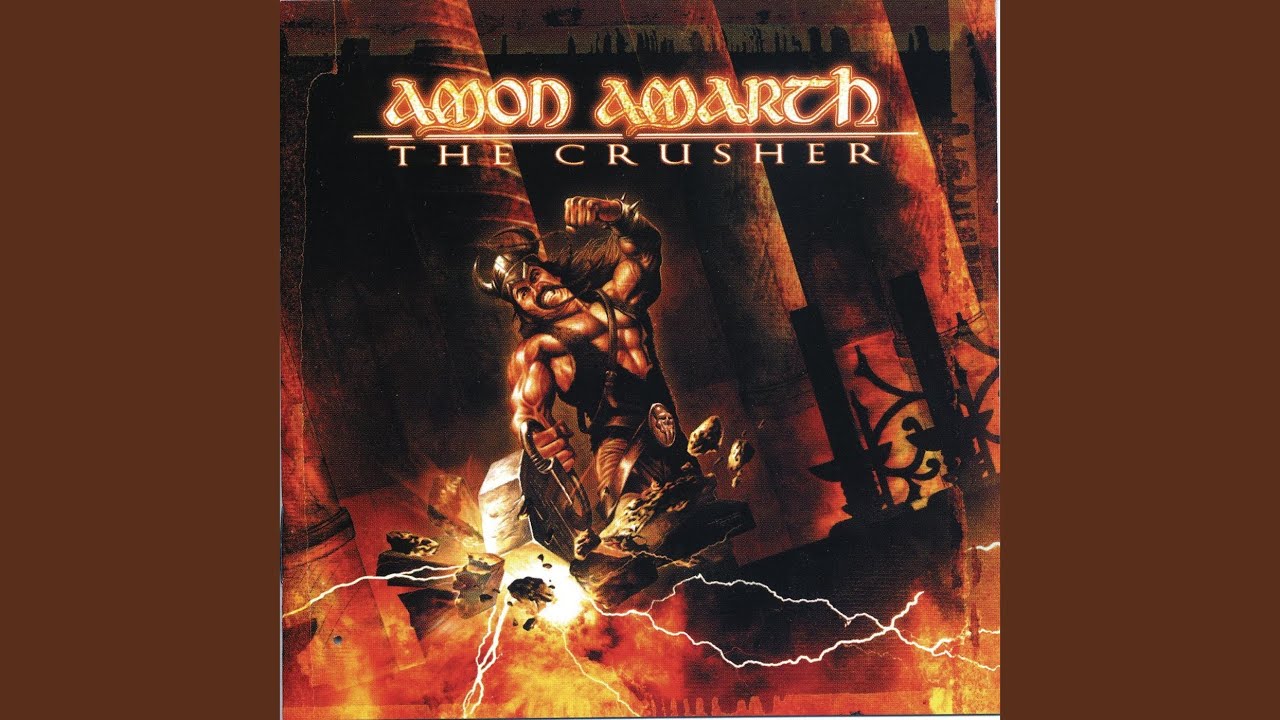
The primordial void from which all realms emerged. GitHub enforces the repository name
.github; the lore name is Ginnungagap.

Image credit: @norsemythologyclips — go follow them.
This repository is the substrate beneath every realm in Norse Architecture — the org profile, community health defaults, canonical platform config, reusable workflows, and the automation that carves laws and scatters runes across the org.
profile/README.md— the organization profile at github.com/NorseArchitectureCONTRIBUTING.md,SECURITY.md,SUPPORT.md— community health defaults applied to every realm that doesn't provide its ownconfig/— canonical platform config files fanned out to every realm by the scatter system;manifest.psd1declares which files each realm receivesscripts/— PowerShell automation:carve-the-laws.ps1enforces branch rulesets org-wide,scatter-the-runes.ps1distributes config,sound-gjallarhorn.ps1bumps CPM versions in Yggdrasil after each realm release.github/workflows/— six reusable workflows consumed across every realm
scripts/carve-the-laws.ps1 applies the "Law of the Æsir" branch ruleset to every realm via the GitHub API. Idempotent — PUT if a same-named ruleset exists, POST otherwise:
pwsh scripts/carve-the-laws.ps1                                    # all realms
pwsh scripts/carve-the-laws.ps1 Asgard                             # one realm
pwsh scripts/carve-the-laws.ps1 -Repos Asgard,Svartalfheim,Midgard  # selected realms
Requires gh authenticated with admin on the target repos. Verify a change with:
gh ruleset list -R NorseArchitecture/<realm>config/ is the single source of truth for platform-wide config — .editorconfig, .gitattributes, .gitignore, global.json, nuget.config, LICENSE, MSBuild props, and CI workflows. config/manifest.psd1 assigns each realm one or more named file groups: git, universal, sdk, dotnet, nuget, tests, schema, ci, release, workflows, claude. schema is the odd one out — it's assigned to no realm by default; a repo opts in via a manifest.psd1 Exceptions entry the day it grows a {Realm}/schema/{Name}.Database Microsoft.Build.Sql project. See "Schema projects" below.
Any push to config/** on master triggers scatter-the-runes.yml, which runs scatter-the-runes.ps1. The script clones each realm, copies its assigned files, and opens an auto-merge PR — or pushes onto an existing sync branch if one is already open. Idempotent and safe to re-run manually:
pwsh scripts/scatter-the-runes.ps1                                    # all realms
pwsh scripts/scatter-the-runes.ps1 Svartalfheim                       # one realm
pwsh scripts/scatter-the-runes.ps1 -Realms Asgard,Svartalfheim,Midgard  # selected realms
pwsh scripts/scatter-the-runes.ps1 -DryRun                            # print plan, no writes
pwsh scripts/scatter-the-runes.ps1 -Audit                             # classify every destination, write nothing
Requires SCATTER_PAT — a PAT with repo scope set as an org secret. Locally: gh auth login or $env:GH_TOKEN.
Before touching any file, the script classifies the realm's existing copy against the canonical file's git lineage (Get-RuneClassification, scripts/lib/rune-lineage.ps1) into one of four states: Current (byte-identical to HEAD), Stale (matches some earlier canonical blob — an ordinary not-yet-synced file, including one the realm never had), Divergent (content outside the canonical file's lineage entirely — a realm edited a file it isn't allowed to own), or LineageUnavailable (no git history for the canonical path, or this checkout of Ginnungagap is a shallow clone — full history is required, hence fetch-depth: 0 on the scatter-the-runes.yml checkout step). -Audit runs the classification and prints a report for every realm/file pair without copying, committing, or pushing anything. Outside audit mode, LineageUnavailable is an unconditional hard-fail (the script refuses to guess), and Divergent is also a hard-fail unless the specific Realm/path is named via -AcceptDivergence for a deliberate, explicit reversion — scattering back over a realm's own edits should never be an accident.
Canonicity law: a scattered file is canonical by definition — no realm ever edits one directly. Realm-specific law instead lives in one of two realm-owned files that are never scattered: Directory.Analyzers.props (a realm's manifest of the NorseRealmAnalyzer items it ships — its own Roslyn diagnostics analyzers) and Directory.Realm.targets (an additive-only seam for realm-specific targets; it may add new items and targets but must never redefine a canonical property or target). Both are imported at the very end of the realm-root Directory.Build.targets — see below.
config/Directory.Build.targets (the dotnet group) is the single home of law shared across every layer — src/, tests/, gen/, and now schema/ — so the group-level Directory.Build.targets files stay thin chain stubs plus whatever is genuinely specific to that one layer (e.g. tests/'s OutputType=Exe). It carries, in order: the SDK-implicit-using removal and analyzer-package delivery Choose (both already present before this round); the standalone NorseRef/NorseDesignRef fallback (hoisted 2026-08-07 from the src/tests/gen group files — keyed on Bifröst's absence, never on UseProjectReferences, so the workspace's own crossing in Bifröst's root file never double-emits); the standalone realm-analyzer-manifest attach (imports the realm's own Directory.Analyzers.props and wires its declared analyzers in as a realm-internal ProjectReference, guarded twice over so the workspace path — Bifröst's own manifest-driven attach — is never double-imported); the hoisted generator-strip target _NorseRemoveUnwantedGeneratorAnalyzers (now covering gen/ too, closing a gap the Task 7 postmortem flagged — previously only src//tests/ stripped stray NuGet-delivered generator copies); and, imported last so realm additions can react to canonical state without mutating it, the Directory.Realm.targets seam.
The schema scatter group (config/schema/Directory.Build.props + .targets) exists for consumer platforms bridging to Microsoft.Build.Sql (DacFx) schema projects — the platform's own persistence stays EF Core + Postgres. It ships at props level: native DSP/ModelCollation, brand-injected PackageId/SqlTargetName, and TreatTSqlWarningsAsErrors for T-SQL compiler warnings (a separate concern from DacFx static-analysis rule promotion). At targets level it defaults RunSqlCodeAnalysis=true under UseProjectReferences=true — closing a gap where a rules package's packed build/*.targets (the actual mechanism that enables analysis and promotes rule IDs to errors) only auto-imports across a NuGet package crossing, never through a ProjectReference; a documented (commented) rule-promotion extension-point pattern for a consumer's own rules package; and a stale-transitive-rule strip target mirroring the Roslyn generator strip's provenance doctrine (only a packed copy of a Rules="true" NorseRef is stripped — the live ProjectReference copy always wins).
scripts/verify-schema-templates.ps1 proves the whole thing end to end against a disposable fixture realm (scripts/verify-schema-fixtures/): both crossings (ProjectReference and package), RunSqlCodeAnalysis auto-enable, rule promotion (a fixture table literally named forbidden trips a fixture DacFx rule, NR0001, promoted to a hard build error only when the promotion line is active), and the stale-transitive-rule strip. Run it after touching anything under config/schema/.
A tag push (v*.*.*) is the sole release inception point. Each realm's own release.yml runs build-test + one codeql call per language it has, gates one or more publish-* jobs on those, then fans in to a single create-release job — so a realm shipping to more than one target (e.g. Naglfar's npm + NuGet) never races two jobs both trying to create the same GitHub Release. publish-* workflows are publish-only: they pack/push/scan and upload their output as an artifact bundle named <target>-artifacts; create-release.yml downloads every bundle matching that pattern and creates the release in one shot, whatever the bundle count.
| Workflow | Purpose |
|---|---|
ci-build-test.yml |
Restore → build → test → Cobertura coverage → PR comment → enforce branch-coverage threshold |
ci-build-test-npm.yml |
Checkout → Node setup → install → build → test — the npm-realm equivalent of ci-build-test.yml |
codeql.yml |
Language-parameterized CodeQL scan (csharp or javascript-typescript); a realm calls it once per language it actually has |
publish-nuget.yml |
Packs, generates an SBOM, pushes to GitHub Packages, uploads nuget-artifacts — publish-only, no release creation |
publish-npm.yml |
Packs, generates an SBOM, publishes to GitHub Packages, uploads npm-artifacts — publish-only, no release creation |
publish-container.yml |
Builds, Trivy-scans, and pushes all four Yggdrasil images to GHCR in parallel (matrix), uploads container-<name>-artifacts — publish-only, no release creation |
create-release.yml |
Downloads every *-artifacts bundle a realm's publish jobs produced and creates exactly one GitHub Release |
update-bifrost.yml |
Stamps the calling realm's new SHA into Bifröst's submodule pointer; requires the bifrost_token secret |
sound-gjallarhorn.yml |
Bumps <{Realm}Version> in Yggdrasil's Directory.Packages.props once a realm's NuGet package is live; skips pre-releases |
scatter-the-runes.yml |
Triggered by pushes to config/** — fans updated config to all realms via scatter-the-runes.ps1 |
Call any workflow_call workflow from a realm with:
jobs:
  ci:
    uses: NorseArchitecture/.github/.github/workflows/ci-build-test.yml@master
    with:
      minimum_coverage: 80   # optional; org floor is 0.1% (temporarily lowered until
                              # the ASP.NET Identity template is out of Yggdrasil)