Qoder Introduction

desc: Agentic coding platform for real software.
category: Product
img: https://img.alicdn.com/imgextra/i1/O1CN01vgzWYC1vm4GnayZeb_!!6000000006214-0-tps-1712-1152.jpg
time: August 21, 2025 · 8min read
Development Trends in AI Coding
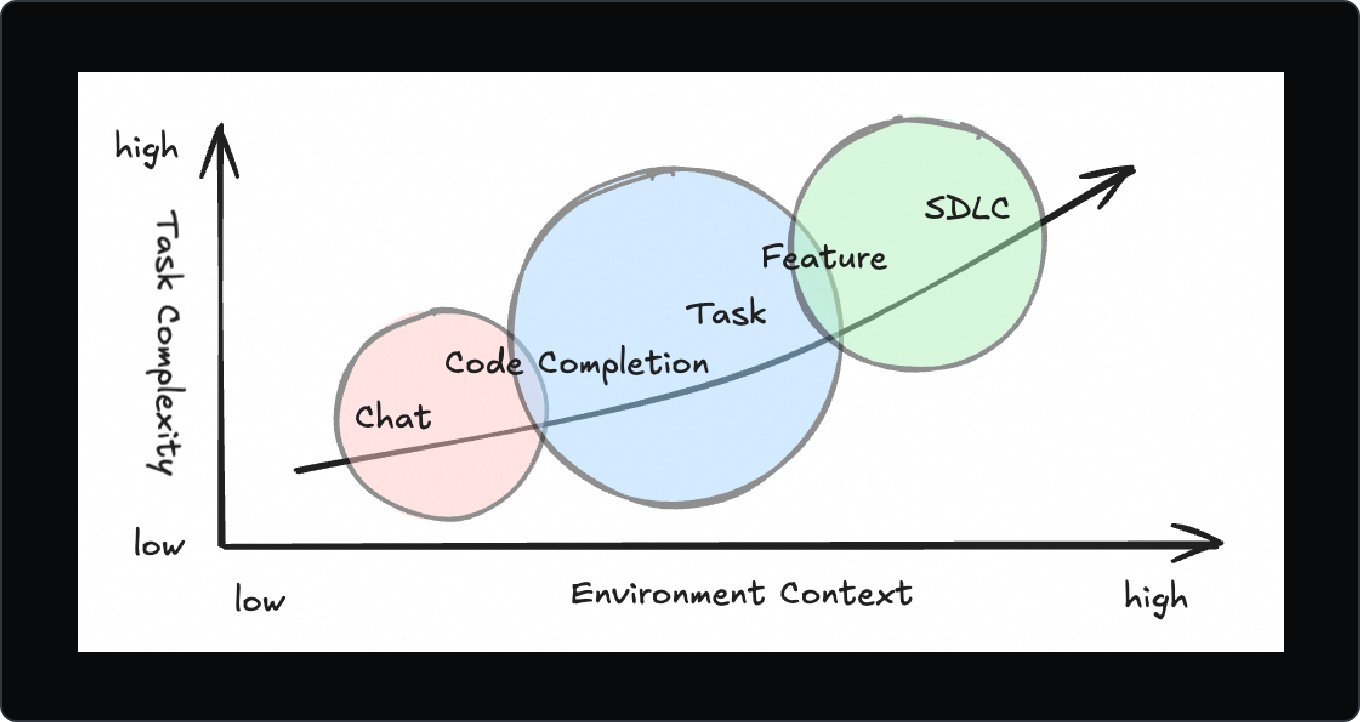
As large language model (LLM) technology continues to evolve, it is rapidly transforming AI-assisted coding. The scope of application is expanding—from simple code suggestions to end-to-end feature implementation—and the level of AI autonomy is increasing.
AI coding capabilities are progressing through three key stages:
-
Assisted code writing: basic autocompletion and snippet generation.
-
Conversational refactoring: interactive code modification and refactoring via chats.
-
Autonomous programming: delegating full development tasks to AI agents.
This evolution has shifted the role of AI from a tool to a collaborator, capable of handling complex, long-running software engineering tasks.
Challenges of Real-World Software Development
While social media is full of stories about “Wow Projects” built from a single prompt, real-world software development remains complex. As Fred Brooks highlighted in The Mythical Man-Month, software development is inherently difficult due to:
-
Complexity
-
Conformity
-
Changeability
-
Invisibility
These challenges persist—and in some ways, are amplified—in the AI era.
-
The abstract nature of software makes knowledge alignment and inheritance difficult, leading to technical debt and collaboration friction.
-
While AI can automate repetitive coding tasks, developers may neglect deep design and requirement clarification, resulting in AI-generated code that’s hard to maintain.
-
Current human-AI collaboration is often synchronous, requiring constant back-and-forth. This limits AI’s efficiency and prevents it from working at full capacity.
Our Approach
We’ve been exploring how to build a tool that maximizes AI’s potential while addressing the real challenges of software development.
Transparency
Knowledge Visibility

Our first goal is to make the invisible visible. We believe AI should help developers understand a project’s architecture, design decisions, and technical debt—like an expert curator who knows everything about the codebase.
This visibility:
-
Reduces onboarding time
-
Improves knowledge transfer
-
Provides context for AI-generated code to align with the project’s overall structure
Execution Transparency
When AI works silently in the background, developers may feel a loss of control. To address this, we've introduced:
-
To-dos: clear task breakdowns
-
Action Flow: real-time execution tracking
Developers can see the AI’s plan, progress, and decisions at any time—making the process transparent and trustworthy.

In AI coding, visibility is not optional—it’s essential for effective collaboration.
Enhanced Context Engineering
We believe better context leads to better code. The key is Enhanced Context Engineering, which includes:
-
Deep codebase understanding: The AI doesn’t just read code—it understands structure, dependencies, and design philosophy.
-
Memory: A persistent record of project history, user actions, and AI interactions, enabling long-term context retention.
By enriching the input context, Qoder delivers more accurate suggestions and provides insights for architectural decisions—going beyond code completion to intelligent co-development.

Enhanced Context Engineering is not just a technical feature—it’s a new development philosophy.
Spec-Driven and Task Delegation
In the age of AI agents, the developer’s primary role shifts from executor to intent clarifier.
Chat Mode: Agent Collaboration
-
You guide the AI via chats.
-
You review, refine, and approve each change.
-
Ideal for short, iterative tasks.
Quest Mode: Autonomous Delegation
-
You write a detailed specification (Spec).
-
You delegate the task to the AI.
-
The AI works asynchronously, only asking for help when stuck.
-
Perfect for long-running, well-defined tasks.

A Spec is more than a task description—it’s a thinking tool and a communication medium. It aligns human and AI goals, acts as a project compass, and becomes part of the team’s knowledge base.
Quest Mode is designed for this new paradigm: write the Spec, delegate the task, and check the results.

Two modes, two collaboration styles:
| Chat Agent Mode | Quest Mode |
|---|---|
| Chat Iteration | Spec First |
| Coding Through Conversation | Delegate Tasks to AI Agent |
| For Short Task | For Long Task |
| Supervise the workflow | Accurate describe the purpose |
The future of development might look like this:
-
Morning: Clarify requirements with stakeholders.
-
Afternoon: Use AI to draft detailed Specs.
-
End of day: Delegate tasks via Quest Mode.
-
Next morning: Review results, refine, and repeat.
Write Specs → Check & Refactor — a new workflow for software development.
Providing the Most Appropriate Model
As the number of available models grows, we asked: "Should choosing the right model be the user’s job?" Our answer is: "No."
Developers need solutions, not model comparisons. They shouldn’t have to study evaluation metrics to pick the best model.
Qoder automatically routes your task to the best model based on complexity and context—ensuring optimal performance without user overhead.
You focus on what to build. We handle how it’s built.
How to Use Qoder to Complete Your Work
Starting a New Project
Qoder has no learning curve. Just describe your idea in natural language.
For example:
- "Create a Spring Boot application for uploading, previewing, and downloading photos."
Qoder will generate the project scaffold and core business logic.
Alternatively, use Quest Mode to first generate a Spec—describing the tech stack, architecture, and initial version. A good initial version is a runnable project.
Adding a Feature to an Existing Project
Most development happens on existing codebases. Before coding, developers need to understand:
-
What the project does
-
Its technical architecture

Repo Wiki provides instant insight. Qoder builds a background index of the codebase and imports it into memory. When you start a task, the context is already prepared—no manual selection needed.
This enables accurate, context-aware assistance from the very first line of code.
Familiar Code Editing with AI Assistance

For daily coding, Qoder supports your workflow with:
-
Code Completion
-
Next Edit Suggestions (NES): Predicts your next change across multiple lines
-
Inline Edit: Edit code directly in the chat
These features integrate seamlessly into your existing habits—enhancing, not disrupting, your flow.
Final Thoughts
Our vision is to solve the real challenges of software development:
-
Make the invisible visible
-
Strengthen knowledge alignment between humans and AI
-
Eliminate technical debt and collaboration friction
-
Free developers from repetitive work so they can focus on innovation
Qoder is available for free during its public preview. We invite you to use it for real-world projects and share your feedback.