Radio Communication Tech Challenge 2026
This page contains the A-Team submission for the SSL radio tech challenge.
The A-Team has been using embedded 5GHz WiFi modules from u-blox. These modules offer multi-connectivity like 2.4 GHz, 5GHz WiFi, and Bluetooth, as well as specific protocol abstractions like MQTT. We use these modules in 5GHz WiFi mode for SSL events, but 2.4GHz WiFi and Bluetooth could be well suited to portable demonstrations, particularly for educational outreach.
The A-Team has the Odin-W262 module for many years, but it's a bit pricier and is certified for global sale which means it often falls back to the "global" set of WiFi channels restricting options. The team is profiling the Nora W36X radio which is cheaper and allows the designer to lock the regulatory domain.
Both radios connect with UART+FC.
The A-Team has open sourced the KiCAD schematics and layout, as well as JLCPCB PCB manufacturing files for both radio boards.
We stage annual releases representing the hardware actually used at the competition. These releases contain updated per-board ERRATA.md files each year.
The A-Team uses embedded rust an embedded async framework called Embassy for nearly all of our firmware. While all of our firmware is open source in this repository, we isolated most of our drivers into a lib-stm32 crate, that should be valid for any stm32 embassy project when included as a dependency. Simply clone the repository and add the lib-stm32 as a path dependency.
Driver source folders:
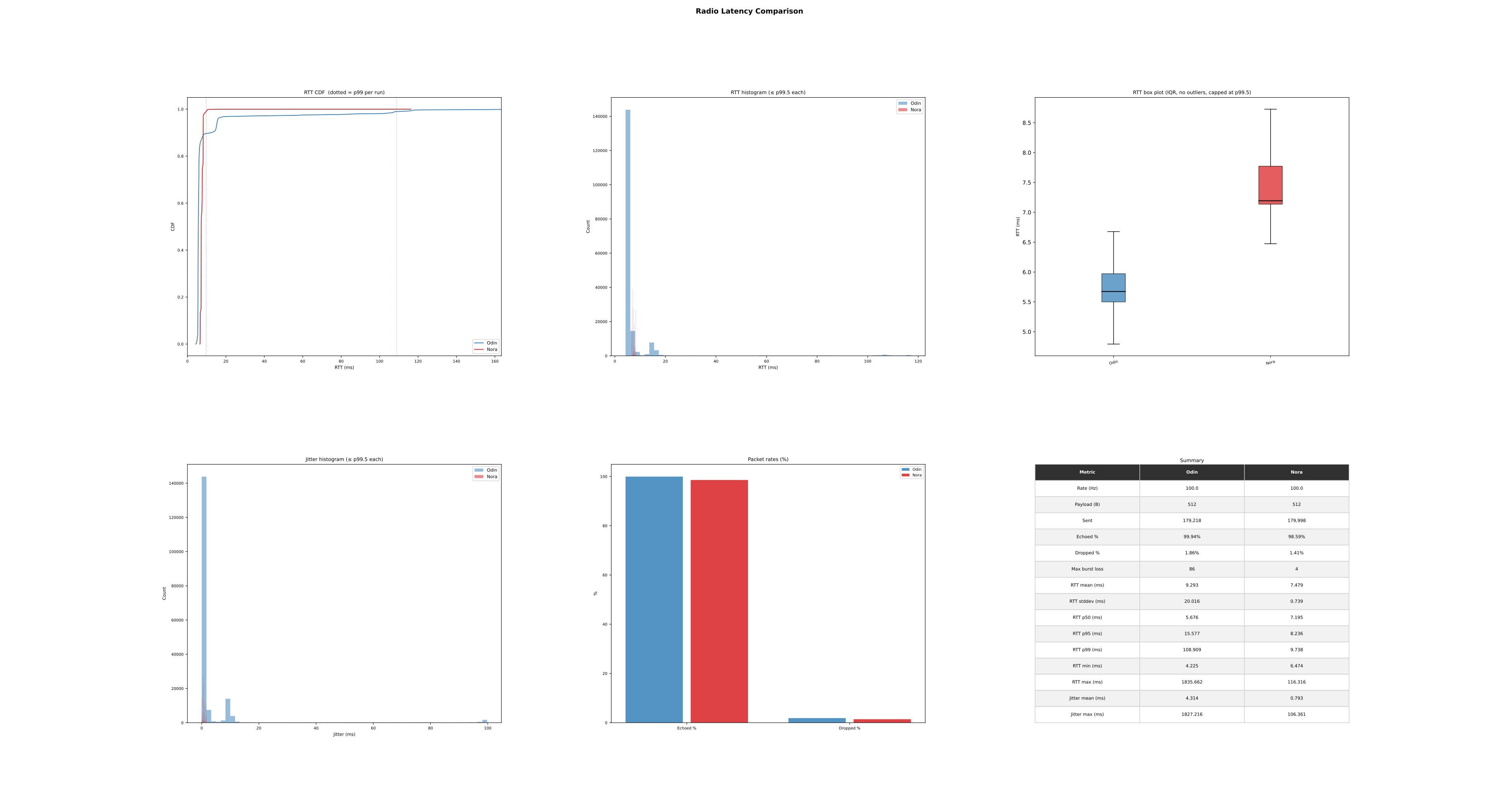
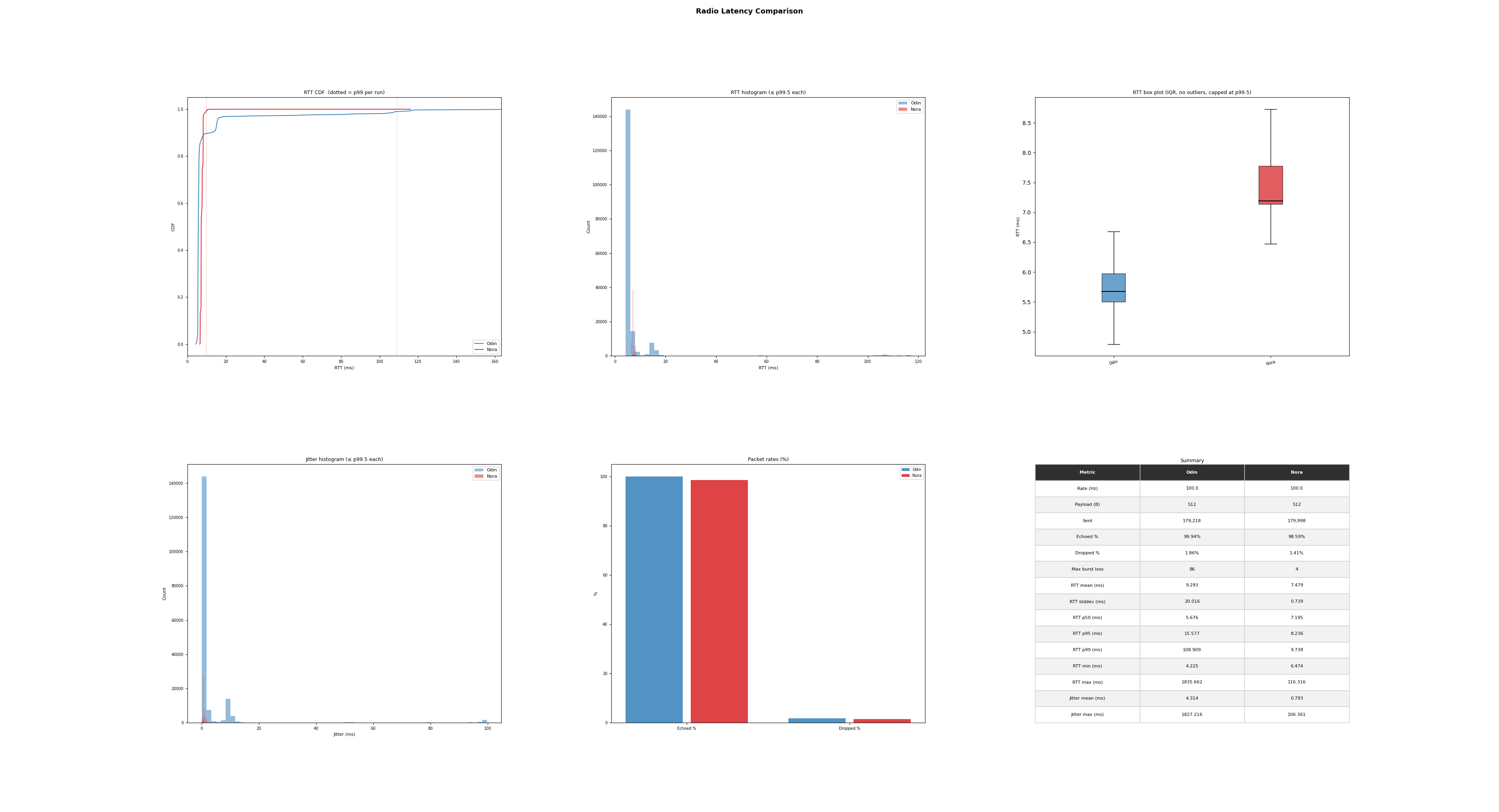
The team has collected lab data to get initial numbers for the requested metrics. The tests were run for 30 minutes, with 512-byte packets, and a transmit rate of 100Hz. A sequence number in each packet allowed the analysis scripts to compute the metrics. All of the firmware test images and analysis scripts are included in this firmware repository.
| Metric | Odin | Nora |
|---|---|---|
| Round Trip Latency | Mean: 9.293ms, stddev: 20.016ms p50: 6.676ms p95: 15.577ms p99: 108.909ms |
Mean: 7.479ms, stddev: 0.739ms p50: 7.195ms p95: 8.236ms p99: 9.738ms |
| Average Packet Loss | 1.86% (3331/179120) | 1.41% (2544/179998) |
| Data Rate (1) | 51.2kpbs | 51.2kbps |
| Detect Interference | No | No |
| Startup Time (2) | 9.67s | ~17s |
| Power Consumption (3) | 100mA | 100mA |
| Cost | $50 USD | $11 USD |
- Data rate was fixed by driving test script at the packet size and rate we use.
- From cold power on, includes initial region scan.
- Benchtop supply measured whole system power draw at ~100mA. Datasheets indicate max impulse power draw in multi-protocol trx is 800mA.
The p50, p95, and p99 numbers indicate the time by which N% of the packets would have arrived, round trip. E.g. For the Odin p50, 50% of packets complete the round trip journey within 6.676ms.
We recommend opening the image(s) in a new tab.
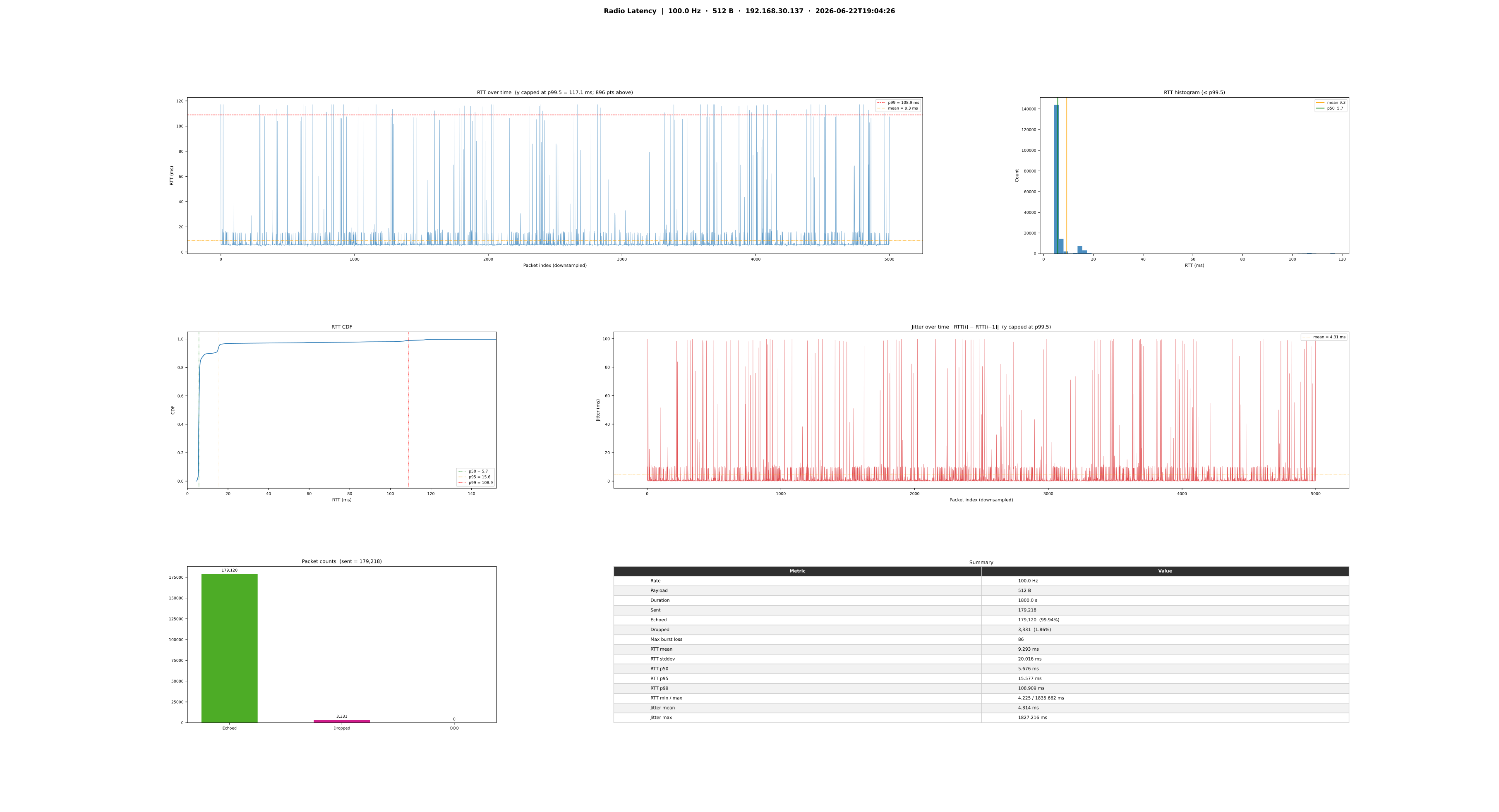
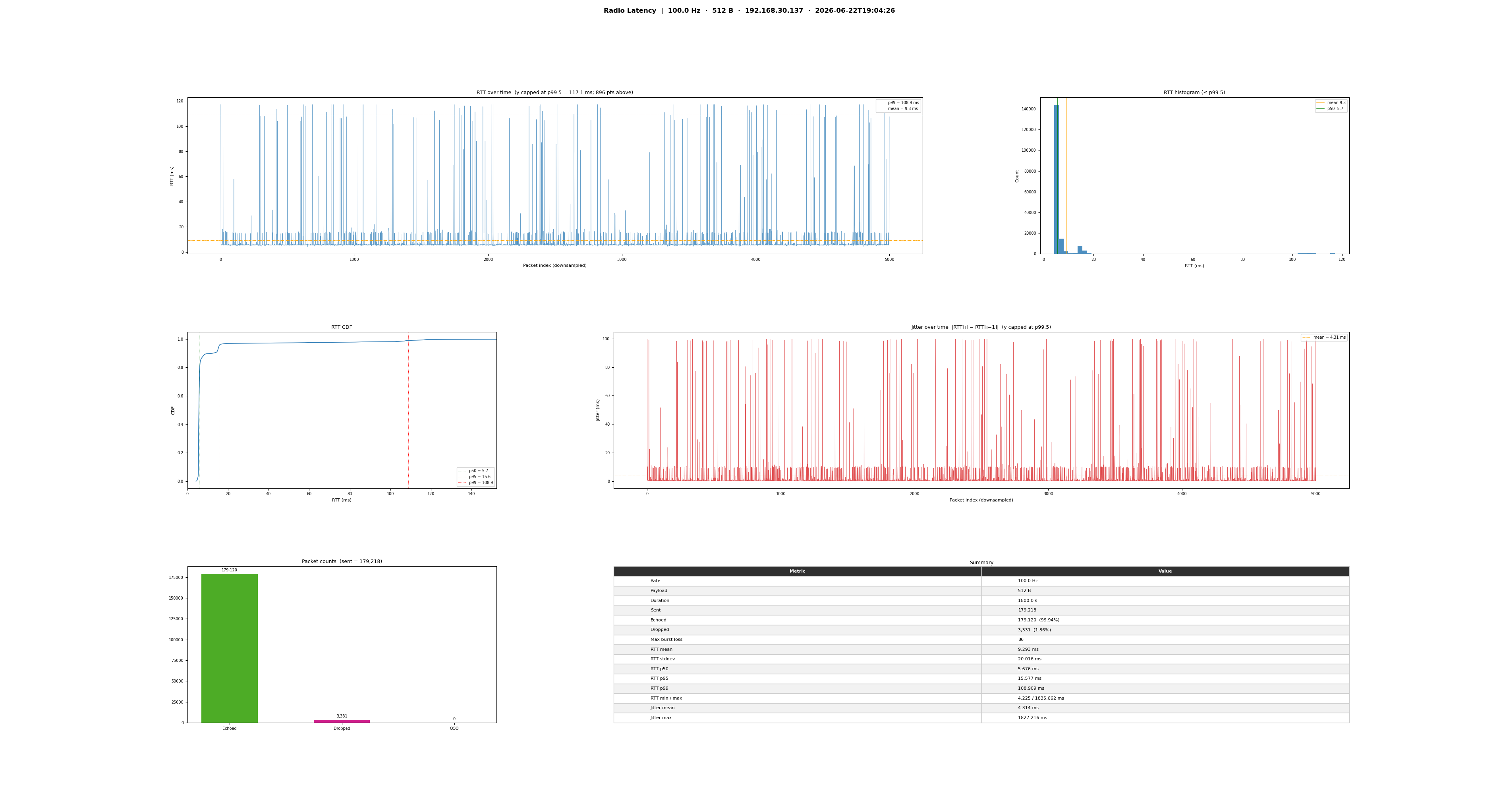
We recommend opening the image(s) in a new tab.
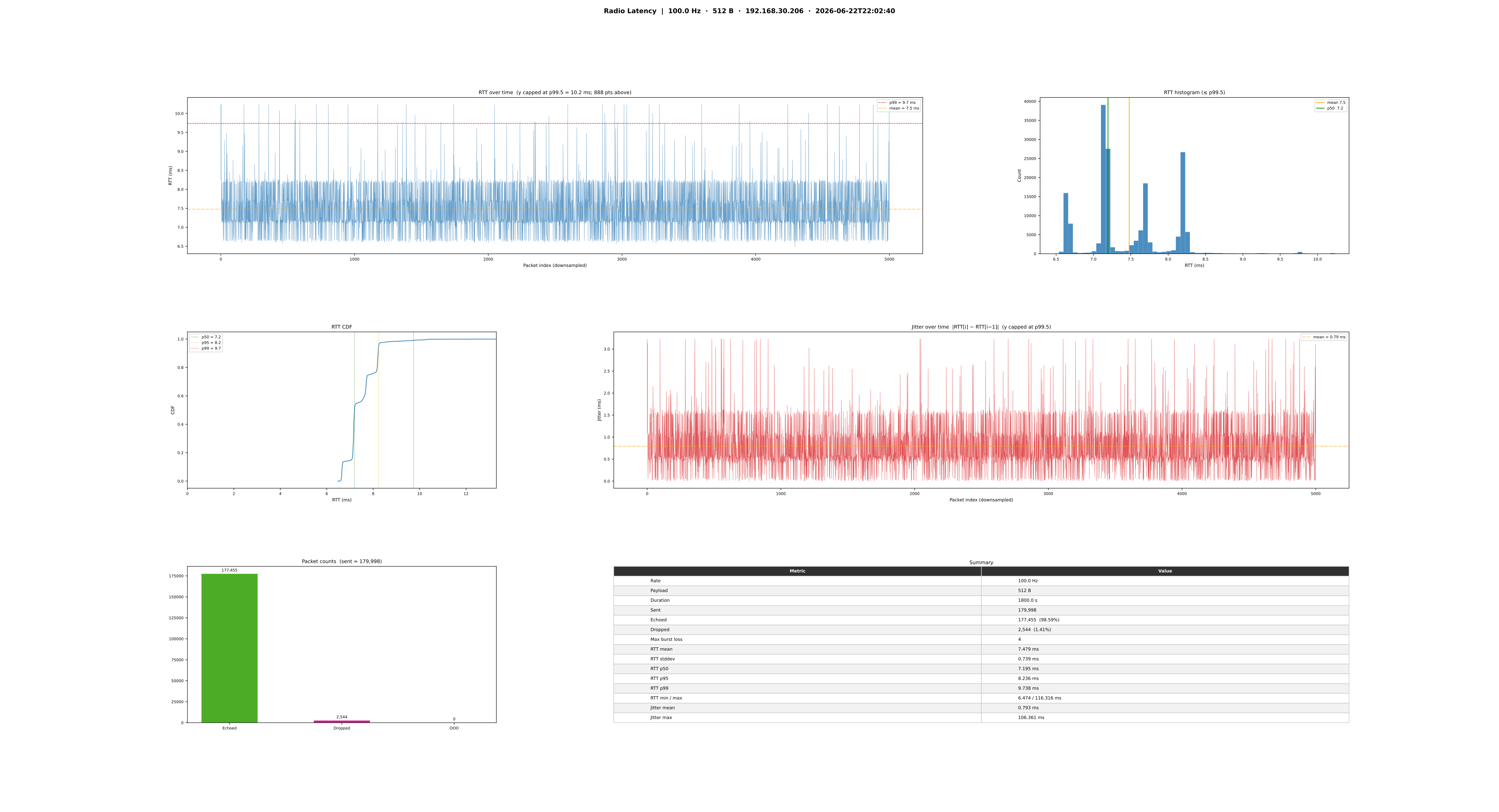
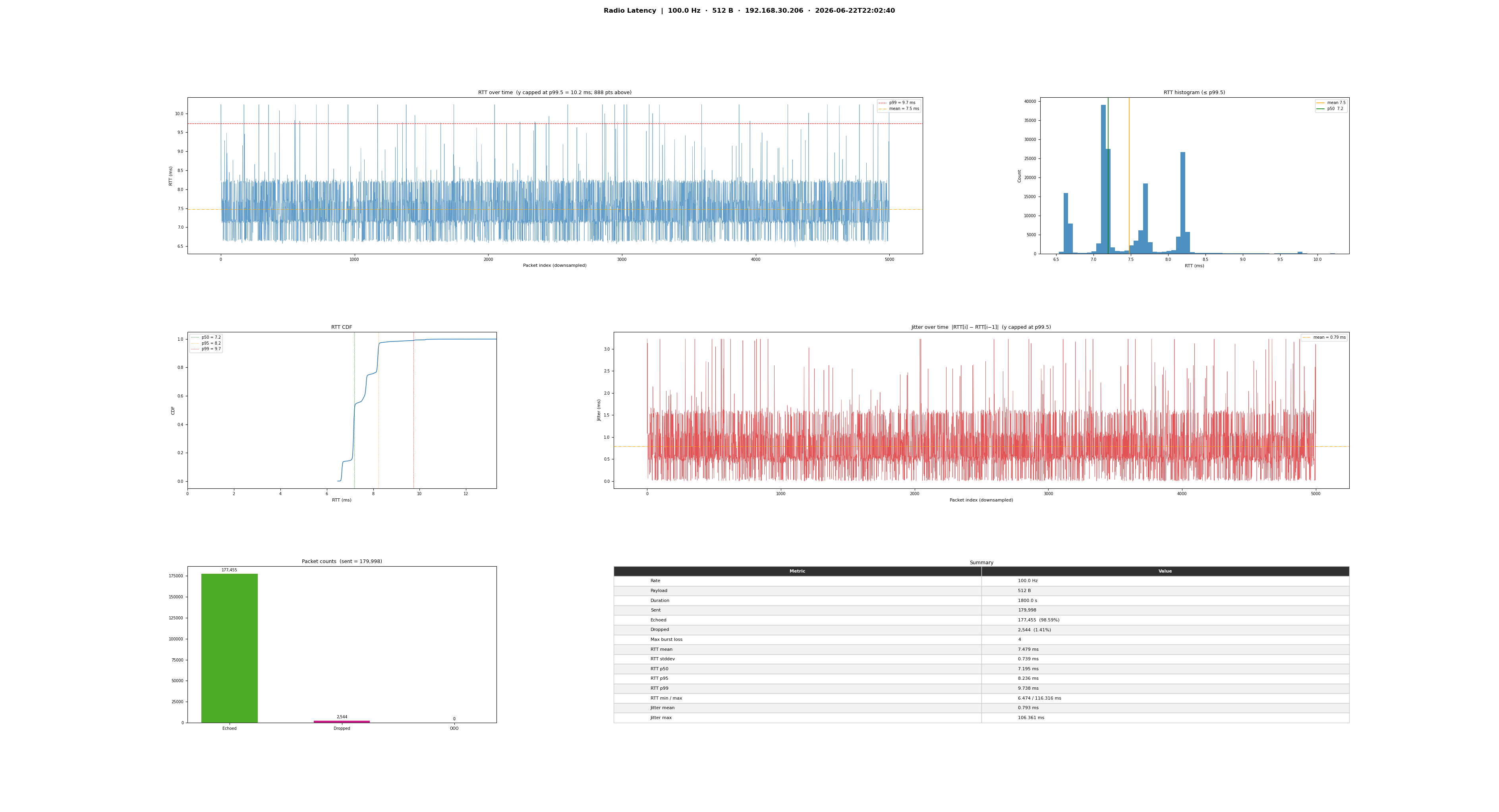
We recommend opening the image(s) in a new tab.
Coming soon!