This repository was archived by the owner on Dec 6, 2025. It is now read-only.
Project 4 – Rise of the AI

·
270 commits
to main
since this release
Immutable
release. Only release title and notes can be modified.
a1c03dd
This commit was signed with the committer’s verified signature.
 StevenLi-phoenix
Steven Li
StevenLi-phoenix
Steven Li


A Raylib platformer that fulfills the CS-3113 Project 4 brief: brand-new assets, fixed-step gameplay, three scrolling levels plus a boss arena, three global lives, and multiple enemy AI behaviours. The prototype follows a coven of customizable witches who fight their way through Windy Meadows, Luminous Ruins, Skyreach Summit, and a Final Duel while orchestral music and bespoke SFX keep the action grounded.
Features
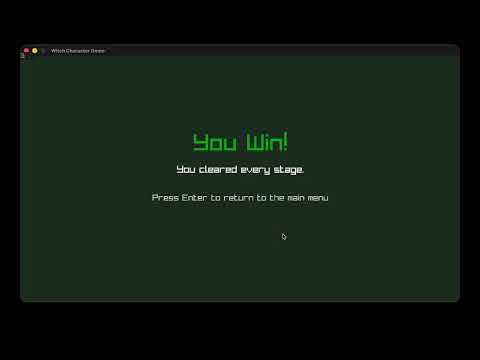
- Full scene flow – Start menu → Character select → 3 levels → Boss fight → Victory/Game Over, all driven by a cached
Scenegraph and a sharedGameContext. - Six selectable witch variants – Fire, Grass, Light, Water, Arcane (normal), and Forest Spirit (green) sprites parsed from JSON metadata so every animation row/frame count matches the atlas.
- Scrolling platform stages with HUD – Tile-based
Maprenderer, goal-zone overlays, dynamic camera clamping, and a pause overlay bound toP/Esc. - Distinct AI behaviours – Wanderers patrol platforms, followers chase within radii, flyers bob around anchors, and the Samurai boss adds stomp-to-damage logic.
- Lives & progression logic – Three campaign lives shared across scenes, respawn + reset hooks, and fail-safe transitions back to the menu when the counter hits zero.
- Audio pipeline – Looping background music plus jump/hit/death SFX.
Controls
- Menu/Character Select:
Enter/Spaceto confirm,Esc/Backspaceto go back,←/→(orA/D) to cycle variants. - Gameplay:
A/Dor←/→to move,Space/W/↑to jump, hold movement mid-air for drift control. - System:
PorEsctoggles pause,Escon menu quits. - Debug (when built with
DEBUG=1): Number keys1-6jump directly between scenes (seehandleDebugSceneShortcuts()inmain.cpp).
How This Project Was Implemented
Scene Flow & Game Context
main.cppbootstraps Raylib, audio, and a static cache of everyScenesubclass (StartMenuScene,CharacterSelectScene,LevelOne/Two/Three,BossFightScene,GameOverScene,VictoryScene).GameContexttracks global state (lives, current scene, variant, pause flag, audio availability) and exposes helper functions such asRequestSceneChange()to queue transitions safely at the end of an update loop.
Level Framework & AI
LevelBaseencapsulates tile-map creation, camera logic, HUD rendering, goal detection, respawns, and enemy registration. Concrete levels overridegetLevelData(),getSpawnTile(),getGoalTileArea(), andsetupEnemies()to inject bespoke layouts and AI mixes.- Generic
EntityAI supports wander, follow, and fly behaviours with parameters for patrol bounds, follow radii, and sinusoidal flight paths. The boss scene overridesonPlayerEnemyCollision()to implement stomp damage with invulnerability frames and a timed transition to the victory scene.
Witch Avatar System
WitchsubclassesEntityand loads variant-specific metadata (square_size, atlas rows/columns, per-animation row/frame counts) fromassets/witch/<Variant>/witch_animations.json.- Movement input funnels through
beginInputFrame()/finalizeInputFrame()so landing locks, turn locks, and queued animations (run, jump, fall, attack) stay synchronized with physics. - Collider offsets and render offsets ensure the visual sprite (which includes empty padding around the feet) lines up with the physics body.
Audio & UX Polish
- Music loads once (
assets/sound/04_theimperialfleet.wav) and loops automatically; SFX (jump,hurt,explosion) are loaded per level duringinitialise()and unloaded inshutdown()to avoid leaks when scenes are destroyed or cached. - Pause overlays, goal highlight rectangles, and HUD text all live in the base level class so every derived level stays focused on layout + AI definition.
Technical Details
Core Class Hierarchy
class Scene {
public:
    virtual void initialise() = 0;
    virtual void update(float dt) = 0;
    virtual void render() = 0;
    virtual void shutdown() = 0;
};

class LevelBase : public Scene {
protected:
    virtual const unsigned int *getLevelData() const = 0;
    virtual int  getLevelWidth()  const = 0;
    virtual int  getLevelHeight() const = 0;
    virtual Vector2    getSpawnTile()    const = 0;
    virtual Rectangle  getGoalTileArea() const = 0;
    virtual void setupEnemies();
    virtual bool onPlayerEnemyCollision(Entity &enemy);
    virtual void onLevelCompleted();
    virtual void renderForeground();
};
// LevelOne, LevelTwo, LevelThree, BossFightScene : public LevelBase

class Entity {
public:
    void update(float dt, Entity *player, Map *map, Entity *others, int count);
    void render();
    void setAIType(AIType type);
    void setPatrolBounds(float left, float right);
    void setFollowRadius(float radius);
    void setFlyParameters(Vector2 anchor, float horizRange,
                          float horizSpeed, float vertAmp, float vertFreq);
    bool intersects(const Entity &other) const;
};

class Witch : public Entity {
public:
    bool setVariant(const std::string &variant);
    void beginInputFrame();
    void moveLeft();
    void moveRight();
    bool tryJump();
    void finalizeInputFrame();
    void playRun(); void playJump(); void playIdle();
};

struct GameContext {
    SceneID currentScene;
    SceneID pendingScene;
    int maxLives;
    int lives;
    std::string selectedVariant;
    bool paused;
    bool audioReady;
};
GameContext &GetGameContext();
void RequestSceneChange(SceneID scene);
// Fixed-step simulation keeps physics deterministic across machines.
while (deltaTime >= FIXED_TIMESTEP)
{
if (gCurrentScene) {
gCurrentScene->update(FIXED_TIMESTEP);
}
deltaTime -= FIXED_TIMESTEP;
gDeltaTime = FIXED_TIMESTEP;
}projects/project4/main.cpp:74-82
// Wanderer enemy example – patrol bounds, gravity, and AI type/state.
Entity *wanderer = new Entity(spawn, size, "assets/slime/slime_green.png", NPC);
configureSlimeSprite(wanderer);
wanderer->setAcceleration({0.0f, 981.0f});
wanderer->setSpeed(140);
wanderer->setAIType(WANDERER);
wanderer->setAIState(WALKING);
wanderer->setWanderDirection(-1);
wanderer->setPatrolBounds(leftBound, rightBound);
registerEnemy(wanderer);
projects/project4/levels/level_one.cpp:27-42
Build & Run (macOS-tested)
- Install Raylib following the course setup guide or
brew install raylib. - From
projects/project4, build the binary:make # add DEBUG=1 for debug hotkeys/logs - Launch the game:
make run
- Optional helpers:
make cleanremoves the compiled executable.make debugruns with--debugsoinit_log_levelraises the log verbosity.make DEBUG=1 DEBUG_BUILD=1 runfor compile debug code and run.
Requirement Alignment
- Requirement 1 – Menu Screen (10%):
StartMenuScenedraws the title + “Press Enter to Start” prompt and listens forKEY_ENTER/KEY_ESCAPE. It’s a dedicated scene, not just hidden UI (levels/start_menu_scene.cpp). - Requirement 2 – Three Scrolling Levels (40%):
LevelOne,LevelTwo, andLevelThreeeach supply unique tile maps, spawn points, goal rectangles, and enemy rosters. The camera clamps to the map extents, so every stage scrolls horizontally/vertically. - Requirement 3 – Three Lives (20%):
GameContextinitializeslives = maxLives = 3.LevelBase::handlePlayerEnemyCollisions()andcheckFallBoundary()decrement lives, trigger respawns, and push the Game Over scene when the counter hits zero. Completing all levels routes to the victory screen and resets state. - Requirement 4 – AI (20%): Level 1 features a patrolling wanderer, Level 2 introduces a chaser with follow radii, Level 3 combines a flying sentry plus a guardian follower, and the boss arena uses a souped-up follower with stomp damage + invulnerability logic.
- Requirement 5 – Audio (10%):
main.cppstreams looping background music, whileLevelBaseloads jump/hit/death SFX. Assets live inassets/sound/and only play ifInitAudioDevice()succeeds. - Extra Credit – Boss Level:
BossFightSceneadds a dedicated fourth encounter with unique mechanics (HP gate, stomp-only damage, delayed victory transition).
Asset Credits
- Fantasy Shoujo – Dark Witch (BASIC/PLUS) by nyknck – supplies the playable witch sprites/metadata in
assets/witch/<Variant>/.License: per itch.io pack (commercial use with attribution, no redistribution).URL: https://nyknck.itch.io/fantasy-shoujo-dark-witch - FREE Samurai 2D Pixel Art v1.2 by Luis Zuno / Ansimuz – used for the samurai boss atlas in
assets/samurai/*.png.License: permissive custom license included indownloads/itchioasserts/FREE_Samurai 2D Pixel Art v1.2/License.txt(personal/commercial use allowed, attribution appreciated, no asset redistribution/NFTs).URL: https://ansimuz.itch.io/free-samurai-2d-pixel-art - Brackeys Platformer Assets (CC0) curated by Brackeys with sprites by analogStudios_ and RottingPixels – provides
world_tileset.png,slime_green.png, and thehurt.wav,jump.wav,tap.wav,explosion.wavSFX inassets/.License: CC0 1.0 (seedownloads/itchioasserts/brackeys_platformer_assets/LICENSE & CREDITS.txt).URL: https://brackeysgames.itch.io/brackeys-platformer-bundle - Music: “The Imperial Fleet” composed by Andreas Waldetoft for Stellaris: Utopia (© 2017 Paradox Interactive) – stored as
assets/sound/04_theimperialfleet.{mp3,wav}and looped as background music.
License: Copyrighted soundtrack, used here for educational/non-commercial coursework purposes only.
URL: https://www.paradoxinteractive.com/games/stellaris/about
Screenshots
Start Menu
Start Menu

Character Select

Level One

Level Two

Level Three

Boss Fight

Boss Fight

Game Over

What's Changed
- Auto fix by @StevenLi-phoenix in #18
- mannal fix by @StevenLi-phoenix in #19
Full Changelog: project3...project4
Contributors
StevenLi-phoenix