
At a glance:
- Developer-first search engine for instant, typo-tolerant results
- Self-hosted Typesense database or managed typesense cloud deployment
- Simple Typesense API patterns for indexing, filtering, and ranking
- Flexible integrations for Typesense Laravel, Typesense React, and Typesense Docker
Download Typesense database to add fast, typo-tolerant discovery to your apps with simple setup, scalable indexing, and developer-friendly relevance controls. Build a modern Typesense search engine for product catalogs, documentation, and content that need instant, reliable results.
Typesense delivers fast, typo-tolerant search for apps, docs, and ecommerce with simple APIs, instant results, and scalable relevance controls.
Typesense is built for teams that need fast search without maintaining a heavy relevance platform. A Typesense database can power product discovery, documentation search, content libraries, internal tools, and application-wide lookup flows. The project focuses on practical defaults: typo tolerance, faceting, sorting, filtering, and ranked results that work quickly after setup.
For developers comparing typesense search options, the appeal is the balance between speed and clarity. The Typesense API keeps indexing and querying readable, while Typesense documentation explains common patterns without hiding operational details. Teams can start locally with Typesense Docker, move toward Typesense install workflows for production, or evaluate typesense cloud when managed hosting is preferred.
A Typesense search engine organizes records into collections with schemas that define searchable fields, sortable values, facets, and ranking signals. This structure helps a Typesense database stay predictable as data volume grows. Instead of treating search as a black box, Typesense makes the path from document indexing to query response easy to inspect and tune.
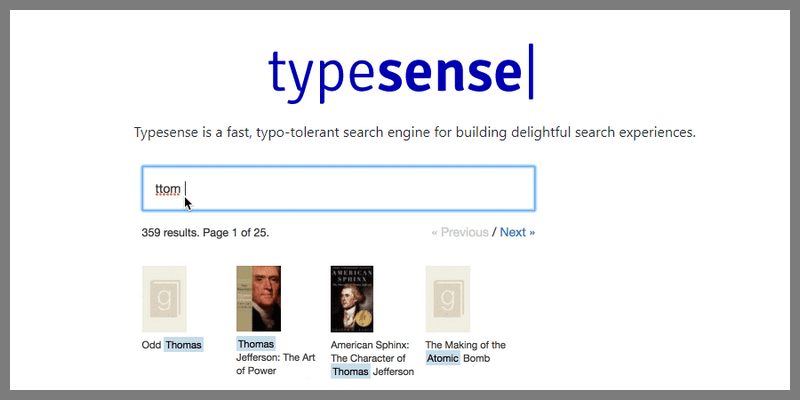
The core typesense search experience is designed around speed. Queries can combine prefix search, typo tolerance, filters, facets, and sort orders while still returning results quickly. For ecommerce catalogs, docs portals, and SaaS dashboards, that means users can type incomplete terms and still land on useful matches.
Typesense open source adoption is also important for teams that want control over deployment and configuration. Typesense GitHub resources make it possible to review releases, follow issues, and inspect implementation details. A Typesense tutorial can help new users move from sample data to real collections, while Typesense documentation fills in deeper production behavior.
Typesense integration usually begins with choosing the client or framework path that matches the application. A Typesense API request can create collections, import documents, run searches, and manage keys. This makes the project approachable for backend services, frontend interfaces, admin panels, and automation scripts.
Laravel teams often use Typesense Laravel patterns to connect application models to searchable collections. React teams can combine Typesense React interfaces with instant search UI patterns, filters, and faceted navigation. When local development matters, Typesense Docker gives developers a repeatable environment for testing schema changes before production rollout.
Pricing and deployment decisions depend on the team's control requirements. Typesense pricing for hosted usage should be weighed against self-hosted infrastructure, maintenance effort, and scaling plans. A Typesense install on your own servers gives operational control, while typesense cloud reduces maintenance and helps teams move faster.
The strongest Typesense search experience comes from thoughtful schema design. Fields should represent how users actually search: names, titles, categories, descriptions, tags, SKUs, authors, locations, or metadata. A Typesense database can then rank results based on text relevance, field weights, filters, and sorting rules.
Typo tolerance helps users who misspell names or enter partial words. For a product catalog, Typesense search engine behavior can recover from small mistakes and still show matching items. For documentation, Typesense documentation and a well-built Typesense tutorial can guide teams toward synonyms, facet choices, and ranking improvements.
Typesense open source flexibility lets teams inspect behavior and adapt deployment as needs change. Typesense GitHub discussions and release notes can be useful when evaluating upgrade paths, bug fixes, or new search features.
| Step | Action |
|---|---|
| 1 | Review Typesense documentation and decide between Typesense install, Typesense Docker, or typesense cloud |
| 2 | Define the first Typesense database collection schema with searchable, filterable, and sortable fields |
| 3 | Use the Typesense API to import sample records and validate typesense search responses |
| 4 | Connect application code through Typesense integration, Typesense Laravel, or Typesense React |
| 5 | Test relevance, typo tolerance, facets, and Typesense pricing assumptions before production launch |

| Area | Developer-facing value |
|---|---|
| Search quality | Fast typo-tolerant typesense search with prefix matching and ranking controls |
| Deployment | Self-hosted Typesense database, Typesense Docker testing, or managed typesense cloud |
| API design | Clean Typesense API requests for collections, documents, keys, and queries |
| Ecosystem | Typesense Laravel, Typesense React, Typesense GitHub, and Typesense tutorial resources |
| Operations | Practical scaling choices informed by Typesense pricing and Typesense documentation |
| Component | Minimum | Recommended |
|---|---|---|
| OS | Linux server or container host | Linux production host with monitored resources |
| RAM | Small dataset testing capacity | Memory sized for indexed records and query traffic |
| Storage | Persistent disk for local evaluation | Reliable SSD storage for production Typesense database nodes |
| CPU | Modern dual-core development machine | Multi-core server for concurrent typesense search workloads |
| Deployment | Single Typesense Docker container | Replicated Typesense install or managed typesense cloud |
Typesense is a strong choice for builders who want search that feels fast without spending weeks on relevance infrastructure. Product teams can use a Typesense search engine for catalogs, marketplace listings, help centers, and knowledge bases. Engineering teams can use the Typesense API to automate indexing and keep application data synchronized.
A startup may begin with Typesense Docker and a small Typesense tutorial, then move into a production Typesense install when traffic grows. Another team may choose typesense cloud because hosted operations are simpler than managing nodes, backups, and upgrades. In both cases, Typesense documentation helps connect practical setup decisions to long-term maintenance.
Why are search results missing? Check the collection schema, confirm records were indexed through the Typesense API, and review Typesense documentation for field configuration.
Should I use self-hosting or typesense cloud? Choose Typesense install for control, or typesense cloud when managed operations and faster rollout matter more.
Can I build a frontend quickly? Yes-Typesense React patterns help connect search boxes, filters, facets, and result lists to a Typesense database.
Is local testing simple? Typesense Docker is a practical way to test typesense search behavior before deploying production infrastructure.
Where should I compare costs? Review Typesense pricing alongside hosting, storage, maintenance, traffic, and expected search workload.
Teams adopting Typesense usually get the best results when they start with a narrow collection and real user queries. A small Typesense database with accurate fields teaches more than an oversized schema copied from another project. After the first successful import, typesense search tuning can focus on field weights, facets, synonyms, and sorting rules.
Typesense API usage should be planned around data freshness. Applications with frequent product updates, article edits, or permission changes need reliable indexing jobs. Typesense integration work should include retries, monitoring, and clear ownership for schema migrations. Typesense GitHub and Typesense documentation are useful references when choosing safe upgrade steps.
Framework-specific paths make adoption easier. Typesense Laravel can support model-driven indexing in PHP applications, while Typesense React can create responsive search experiences for documentation portals, SaaS dashboards, and ecommerce pages. A Typesense tutorial is often enough for proof-of-concept work, but production teams should validate backup plans, node sizing, and access keys.
Typesense open source users benefit from transparency and deployment freedom. Managed users benefit from typesense cloud operations and simpler maintenance. Both paths can produce a reliable Typesense search engine if teams test relevance with real queries, monitor latency, and revisit Typesense pricing as traffic grows.
typesense search, typesense cloud, Typesense database, Typesense API, Typesense documentation, Typesense search engine, Typesense open source, Typesense GitHub, Typesense tutorial, Typesense install, Typesense pricing, Typesense integration, Typesense Laravel, Typesense React, Typesense Docker