admin role no access to create user via UI #19399

Description

Apache Airflow version
2.1.3
Operating System
AWS K8s
Versions of Apache Airflow Providers
airflow@airflow-worker-0:/opt/airflow$ pip freeze | grep apache-airflow-
apache-airflow-providers-amazon==2.1.0
apache-airflow-providers-celery==2.0.0
apache-airflow-providers-cncf-kubernetes==2.0.2
apache-airflow-providers-docker==2.1.0
apache-airflow-providers-elasticsearch==2.0.2
apache-airflow-providers-ftp==2.0.0
apache-airflow-providers-google==5.0.0
apache-airflow-providers-grpc==2.0.0
apache-airflow-providers-hashicorp==2.0.0
apache-airflow-providers-http==2.0.0
apache-airflow-providers-imap==2.0.0
apache-airflow-providers-microsoft-azure==3.1.0
apache-airflow-providers-mysql==2.1.0
apache-airflow-providers-postgres==2.0.0
apache-airflow-providers-redis==2.0.0
apache-airflow-providers-sendgrid==2.0.0
apache-airflow-providers-sftp==2.1.0
apache-airflow-providers-slack==4.0.0
apache-airflow-providers-sqlite==2.0.0
apache-airflow-providers-ssh==2.1.0
Deployment
Other 3rd-party Helm chart
Deployment details
the web pod installs extrapiplibrary
      extraPipPackages:
      - "authlib"
      - "Flask-AppBuilder==3.1.1"
we have standard deployment on k8s and we have webconfig
  webserverConfig:
        stringOverride: |
          """Default configuration for the Airflow webserver"""
          import logging
          import os
          import json
          from airflow.configuration import conf
          from airflow.www.security import AirflowSecurityManager
          from flask_appbuilder.security.manager import AUTH_OAUTH

          log = logging.getLogger(__name__)
          basedir = os.path.abspath(os.path.dirname(__file__))

          # The SQLAlchemy connection string.
          SQLALCHEMY_DATABASE_URI = conf.get('core', 'SQL_ALCHEMY_CONN')

          # Flask-WTF flag for CSRF
          WTF_CSRF_ENABLED = True

          CSRF_ENABLED = True
          # ----------------------------------------------------
          # AUTHENTICATION CONFIG
          # ----------------------------------------------------
          # For details on how to set up each of the following authentication, see
          # http://flask-appbuilder.readthedocs.io/en/latest/security.html# authentication-methods
          # for details.

          # The authentication type
          AUTH_TYPE = AUTH_OAUTH

          # SECRET_KEY = os.environ.get("FLASK_SECRET_KEY")

          # Uncomment to setup Full admin role name
          # AUTH_ROLE_ADMIN = 'Admin'

          # Uncomment to setup Public role name, no authentication needed
          # AUTH_ROLE_PUBLIC = 'Public'

          # Will allow user self registration
          # AUTH_USER_REGISTRATION = True

          # The default user self registration role
          # AUTH_USER_REGISTRATION_ROLE = "Public"

          OAUTH_PROVIDERS = [{
              'name': 'aws_cognito',
              #    'whitelist': ['@ga.gov.au'],  # optional
              'token_key': 'access_token',
              'icon': 'fa-amazon',
              'remote_app': {
                  'api_base_url': os.environ.get("OAUTH2_BASE_URL") + "/",
                  'client_kwargs': {
                      'scope': 'openid email aws.cognito.signin.user.admin'
                  },
                  'authorize_url': os.environ.get("OAUTH2_BASE_URL") + "/authorize",
                  'access_token_url': os.environ.get("OAUTH2_BASE_URL") + "/token",
                  'request_token_url': None,
                  'client_id': os.environ.get("COGNITO_CLIENT_ID"),
                  'client_secret': os.environ.get("COGNITO_CLIENT_SECRET"),
              }
          }]


          class CognitoAirflowSecurityManager(AirflowSecurityManager):
              def oauth_user_info(self, provider, resp):
                  # log.info("Requesting user info from AWS Cognito: {0}".format(resp))
                  assert provider == "aws_cognito"
                  # log.info("Requesting user info from AWS Cognito: {0}".format(resp))
                  me = self.appbuilder.sm.oauth_remotes[provider].get("userInfo")
                  return {
                      "username": me.json().get("username"),
                      "email": me.json().get("email"),
                      "first_name": me.json().get("given_name", ""),
                      "last_name": me.json().get("family_name", ""),
                      "id": me.json().get("sub", ""),
                  }


          SECURITY_MANAGER_CLASS = CognitoAirflowSecurityManager

    ###################################
What happened
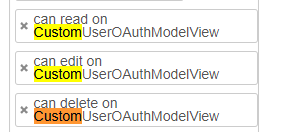
We are using CustomUserOAuthModelView and under roles, there are only three permission that can be add can read on CustomUserOAuthModelView, can edit on CustomUserOAuthModelView, can delete on CustomUserOAuthModelView
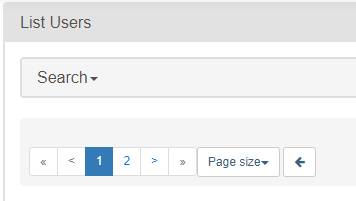
The add user button isnt available for Admins and the /Users/add endpoint isn't accessible by Admins.
What you expected to happen
Admin roles should have access to /Users/add endpoint and the add user button should be visible
How to reproduce
upgrade from v1.10.15 to v2.1.3
Anything else
No response
Are you willing to submit PR?
- Yes I am willing to submit a PR!
Code of Conduct
- I agree to follow this project's Code of Conduct