
Hype Engine v0.1.0
Hype Engine is now ready for its first public release: a self-hosted social
publishing and workflow-automation platform for teams that want control of
their content, data, and infrastructure.
Highlights
- Plan, schedule, repeat, and review social content across projects and
connected accounts. - Use a visual workflow builder with input, logic, HTTP, AI, JavaScript, and
publish nodes, backed by a separate job process. - Run the web app, job server, and PostgreSQL with the included Docker Compose
configuration. - Integrate with the API v1 endpoints for project-scoped automation, including
post creation, updates, scheduling, history, media, accounts, and tags. - Benefit from idempotency handling on API v1 post creation, scheduling, and
media-upload writes. - Use versioned PostgreSQL migrations, startup migration locking, health
endpoints, CI checks, and a documented security-reporting process.
Install
Start with the
quick-start instructions
or the full
development and operations guide.
For the quickest local evaluation:
cp .env.example .env
# Replace DBPASS and JWT_SECRET with unique, strong values.
docker compose up --build
Then open http://localhost:3000. The web and job health checks are available
at http://localhost:3000/health and http://localhost:3001/health.
Upgrade notes
For an existing checkout or deployment:
- Back up the PostgreSQL database before the first upgrade to the versioned
migration system. - Preserve the existing
.env, especiallyJWT_SECRET; changing it makes
previously encrypted provider credentials unreadable. - Check the
.envvalues against the current.env.exampleand ensure
SITEURLis the deployment's externally reachable HTTP(S) origin. - Update the source and dependencies with
npm ci, then runnpm run migratebefore starting native web and job processes. The entry points also
run pending migrations at startup. - For Docker deployments, rebuild and start the existing stack with
docker compose up -d --build; do not usedocker compose down -vunless the
database, logs, and uploaded media are intentionally being discarded. - Confirm both health endpoints return a successful response after the
upgrade.
The migration runner records applied files in schema_migrations, uses a
PostgreSQL advisory lock to avoid web/job startup races, and adopts a non-empty
legacy schema as its baseline before applying the explicit legacy upgrade
migrations.
Known limitations
- This is the first public release. Interfaces and migrations may evolve
before 1.0, so operators should test upgrades against a database backup. - Mastodon credential validation is present, but the current publish adapter
returns a synthetic provider ID rather than creating a Mastodon status. - The account connection flow currently supports Twitter/X, LinkedIn, and
Facebook; do not assume every provider named elsewhere in the product has an
equivalent OAuth connection flow. - Built-in Unsplash search, Tenor search, and external-media download are not
implemented. - Password-reset email delivery is not implemented.
- Provider credentials, API keys, and social-network capabilities require the
operator's own configuration and remain subject to each provider's policies.
Screenshots and product tour
Use these assets in the GitHub release body or attach them to the release:
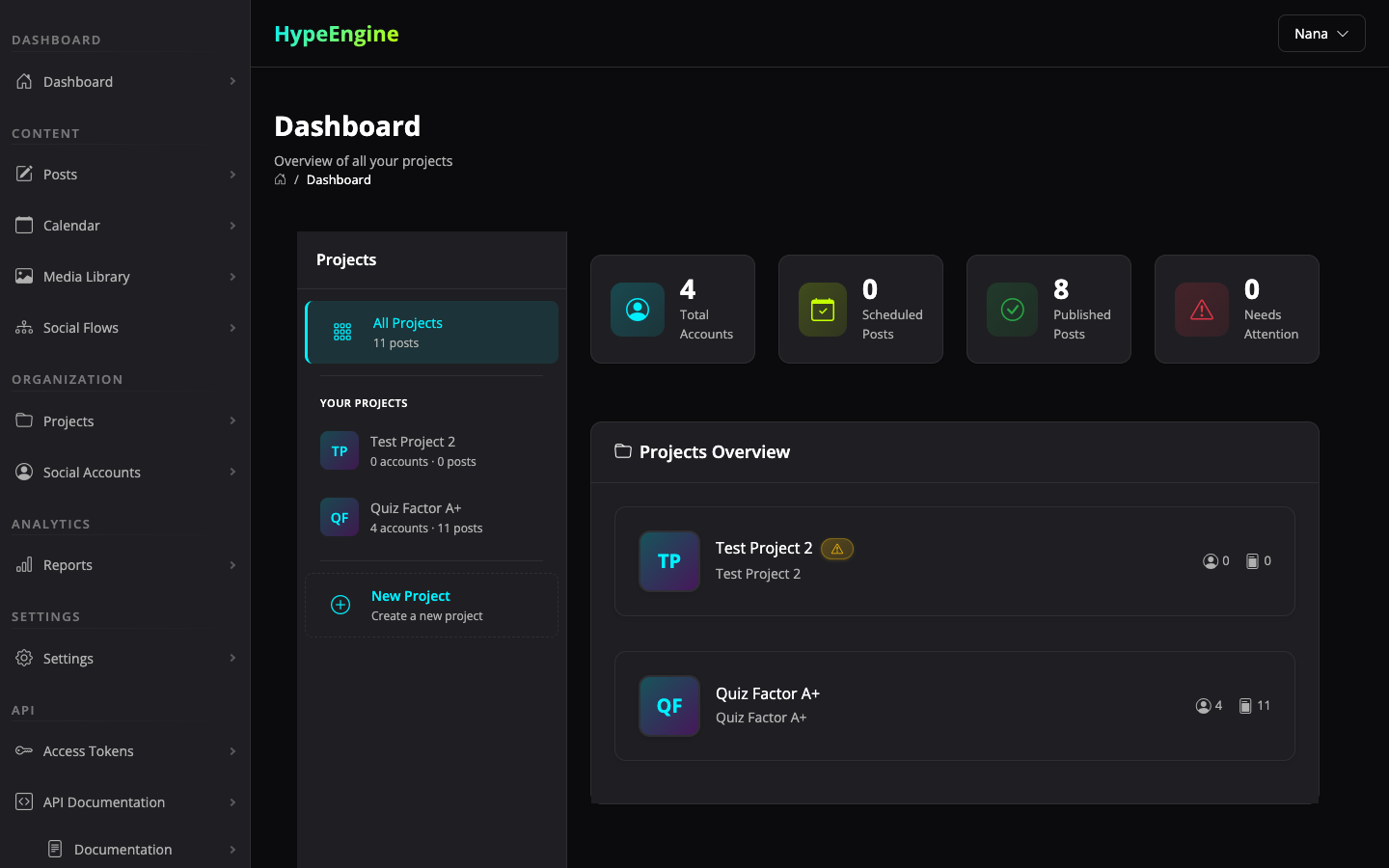
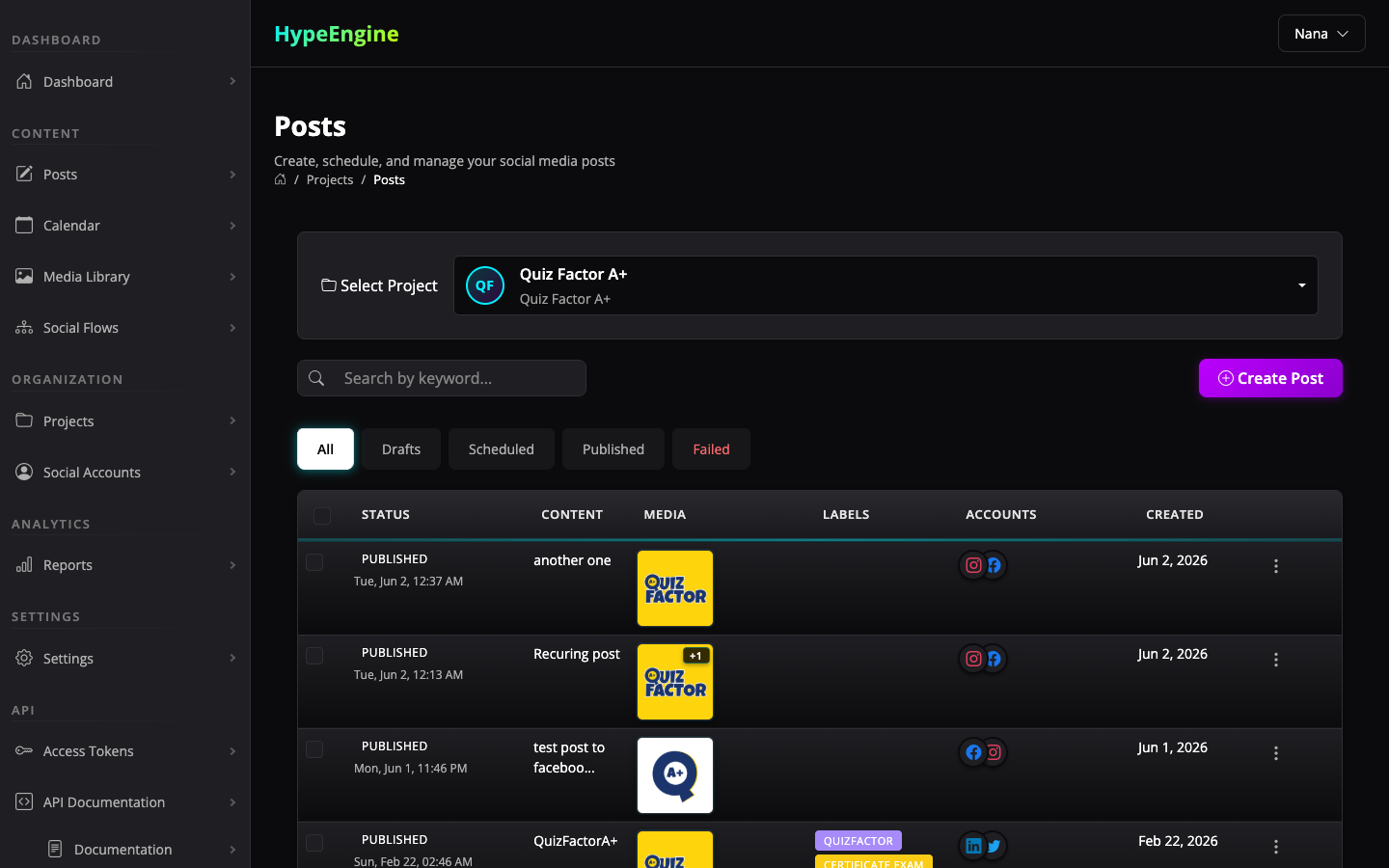
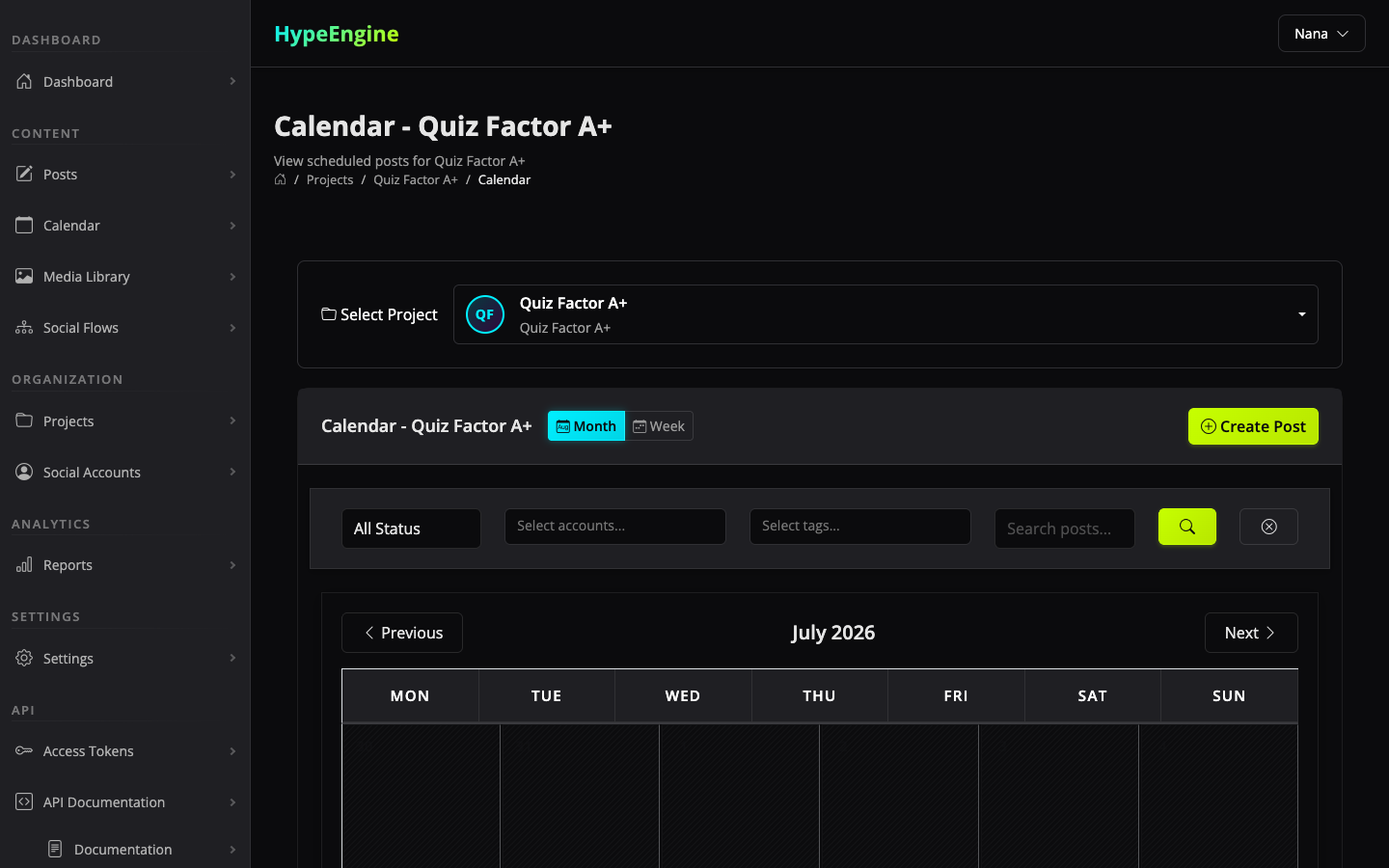
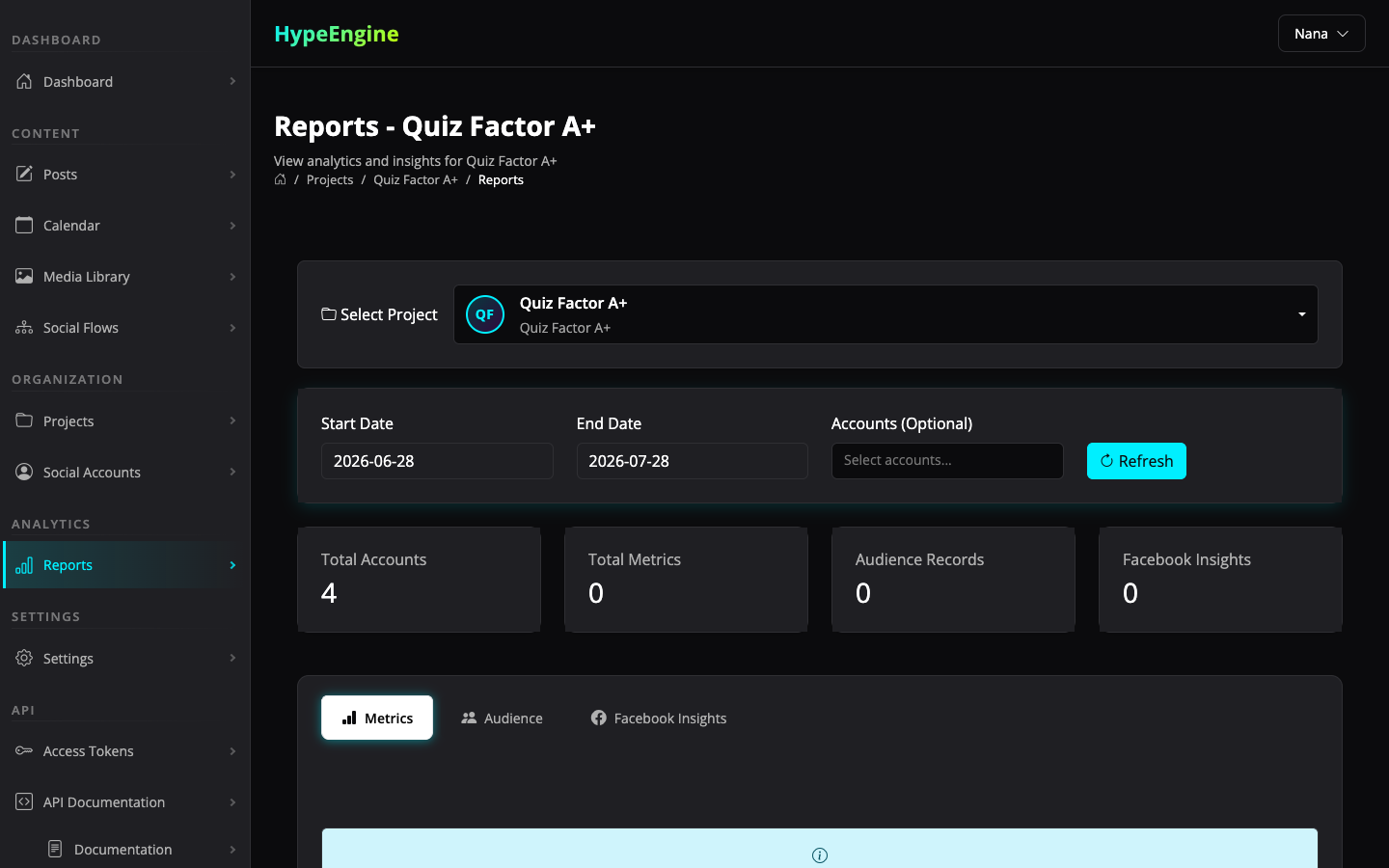
The silent
78-second product tour
shows the dashboard, post management, and content calendar. All screenshots
are 1440x900 PNGs captured from the live demo; see the
media gallery
for asset notes.
Contribute
Contributions are welcome across the UI, documentation, test coverage, Docker
experience, provider integrations, and workflows. Start with the
contribution guide,
then consult the
architecture guide
and
shared vocabulary.
Choose a scoped
good first issue
or a larger
help wanted
task for your first contribution.
Security
Please report vulnerabilities privately through GitHub's Security tab, as
described in the
security policy.
Do not include credentials, access tokens, personal data, or private customer
content in a public issue.