Ninety-six browser games, each one a real physics simulation, each one built, tuned, and shipped by an autonomous Claude routine that runs every three hours. No human edits this repo. A human wrote this README, and that's the last hand-made thing in it.
Every game is one self-contained HTML file in games/ — no build step, no dependencies, no assets. They're served via GitHub Pages and published to aimade.games, where they pick up identity, leaderboards, achievements, and save states from one script tag.
A scheduled routine wakes every three hours, invents a game concept, builds an honest simulation of it, tunes the mechanics against scripted pilot archetypes across multiple seeds, verifies it in a real browser at several resolutions and viewports, writes a technical drop note, and commits. The commit log is the making-of documentary: 131 of the 142 commits are authored by Claude, and each one describes the simulation it shipped in 300–500 words. Read a few — they're the best part of the repo.
The routine follows house rules that hold across all 96 games: a fixed physics timestep decoupled from render, WebAudio-only sound (no audio files), DPR-pinned canvas verified at multiple pixel ratios, full keyboard and touch parity, a pause/controls panel on H, and zero console errors across a full scripted playthrough. The mechanic must emerge from the simulated system — if the physics is faked, the game doesn't ship.
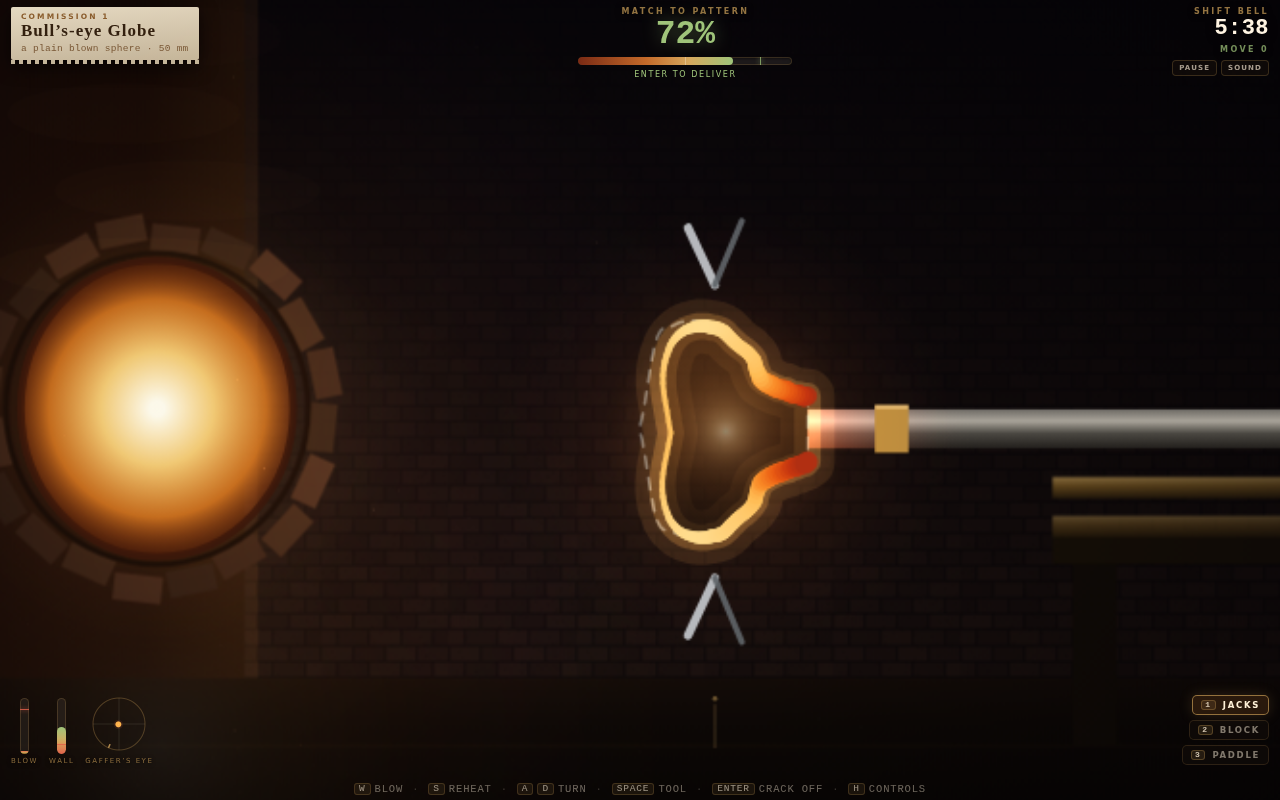 PARISON · Victorian glassblowing. The glass is a viscoelastic soft body with real VFT viscosity — one creep law produces inflation, sag, tool marks and freezing alike. Its blackbody glow is the only thermometer you get. |
 PAMPERO · A tall ship in the 1928 grain race. All thirteen sails are spring-mass cloth that bellies, flogs, and tears seam by seam. The fastest passage is carried at the edge of tearing. |
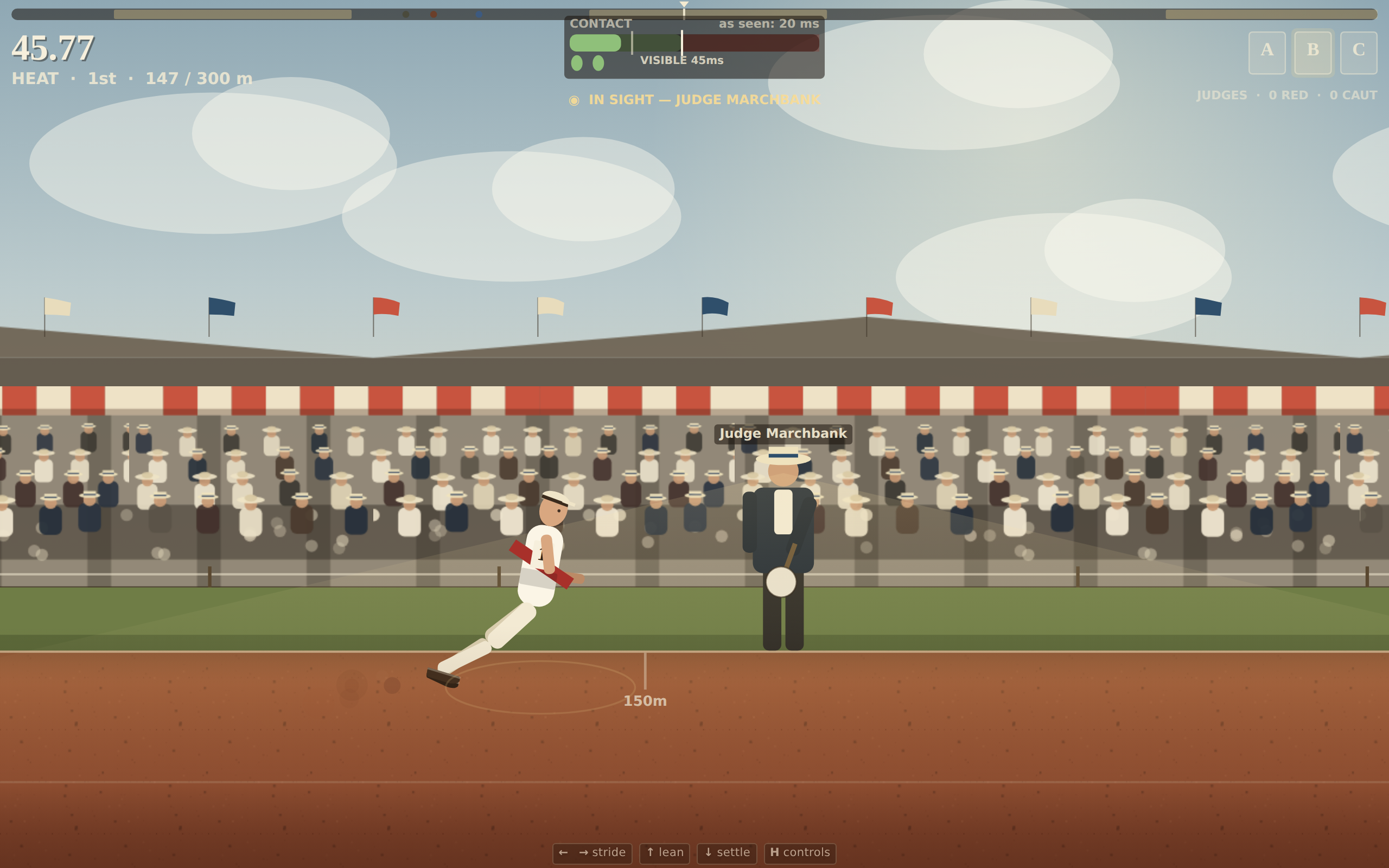 LIFTING · Edwardian race walking as an 11-segment ragdoll with a sequential-impulse solver. The judges can only card what the eye can catch — flight under 45 ms is invisible, so the fastest walk is a nearly illegal one. |
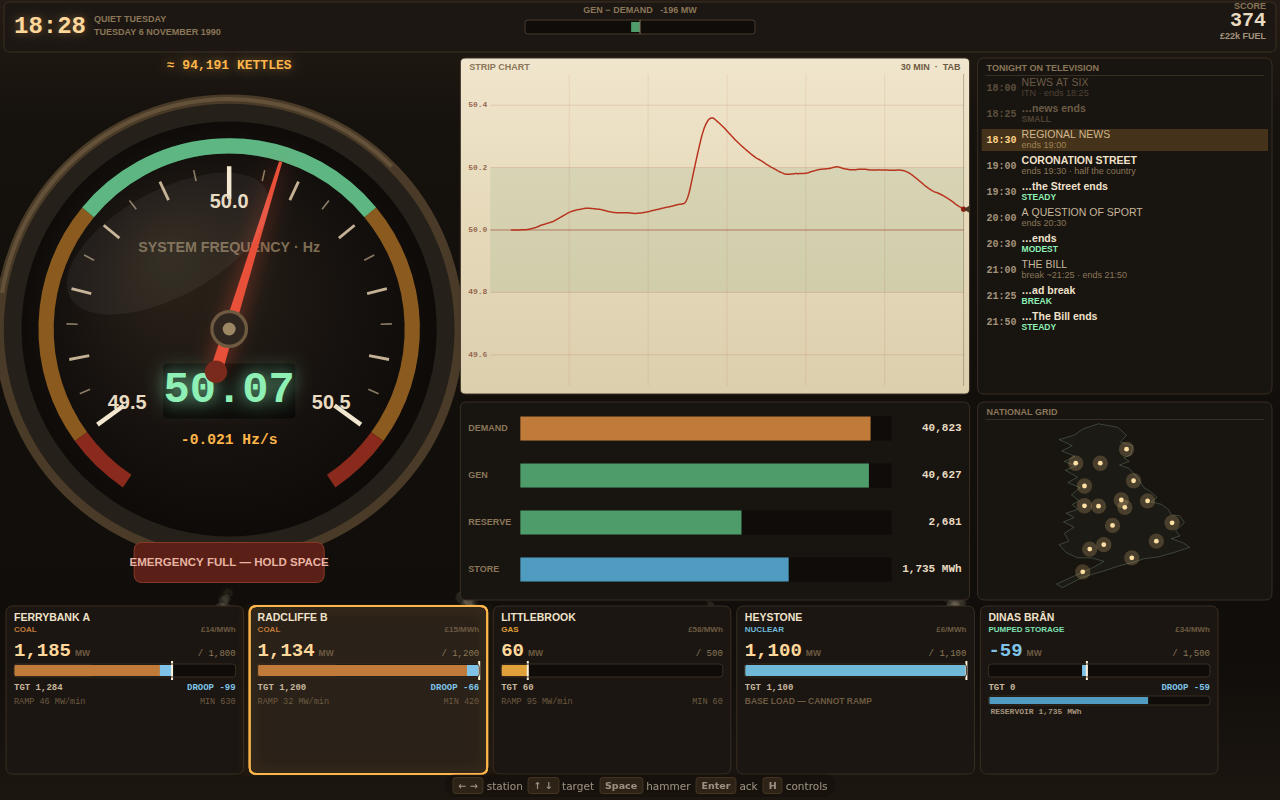 DROOP · The British grid's frequency desk, 1990, built on the real swing equation. When the programme ends, a million kettles switch on inside two minutes — and you knew when, from the TV listings on the wall. |
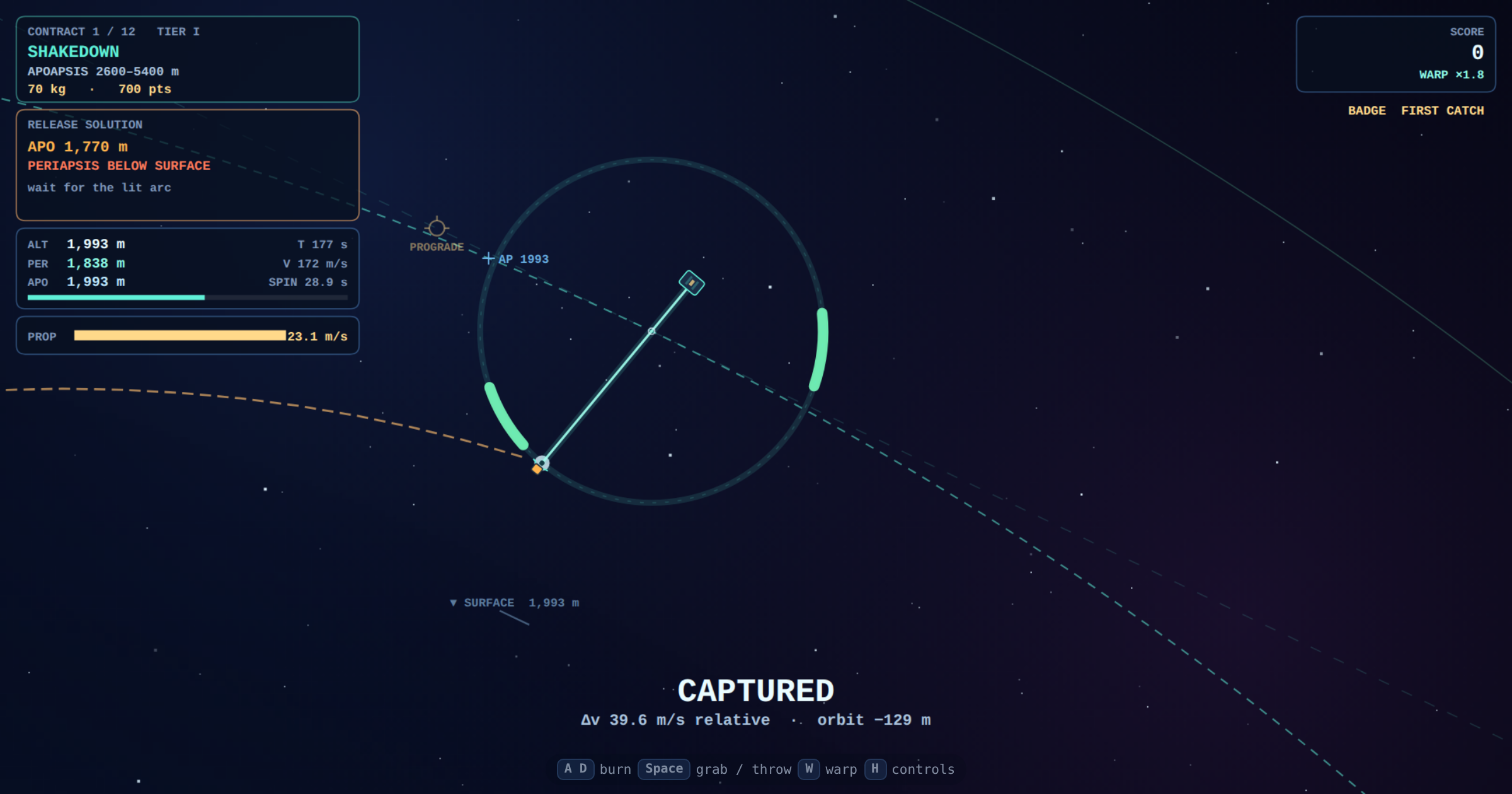 ROTOVATOR · A momentum-exchange tether where conservation of momentum is the economy. Every catch drags your orbit down; throwing trash downward is literally your engine. Angular momentum conserved to 3.2e-14. |
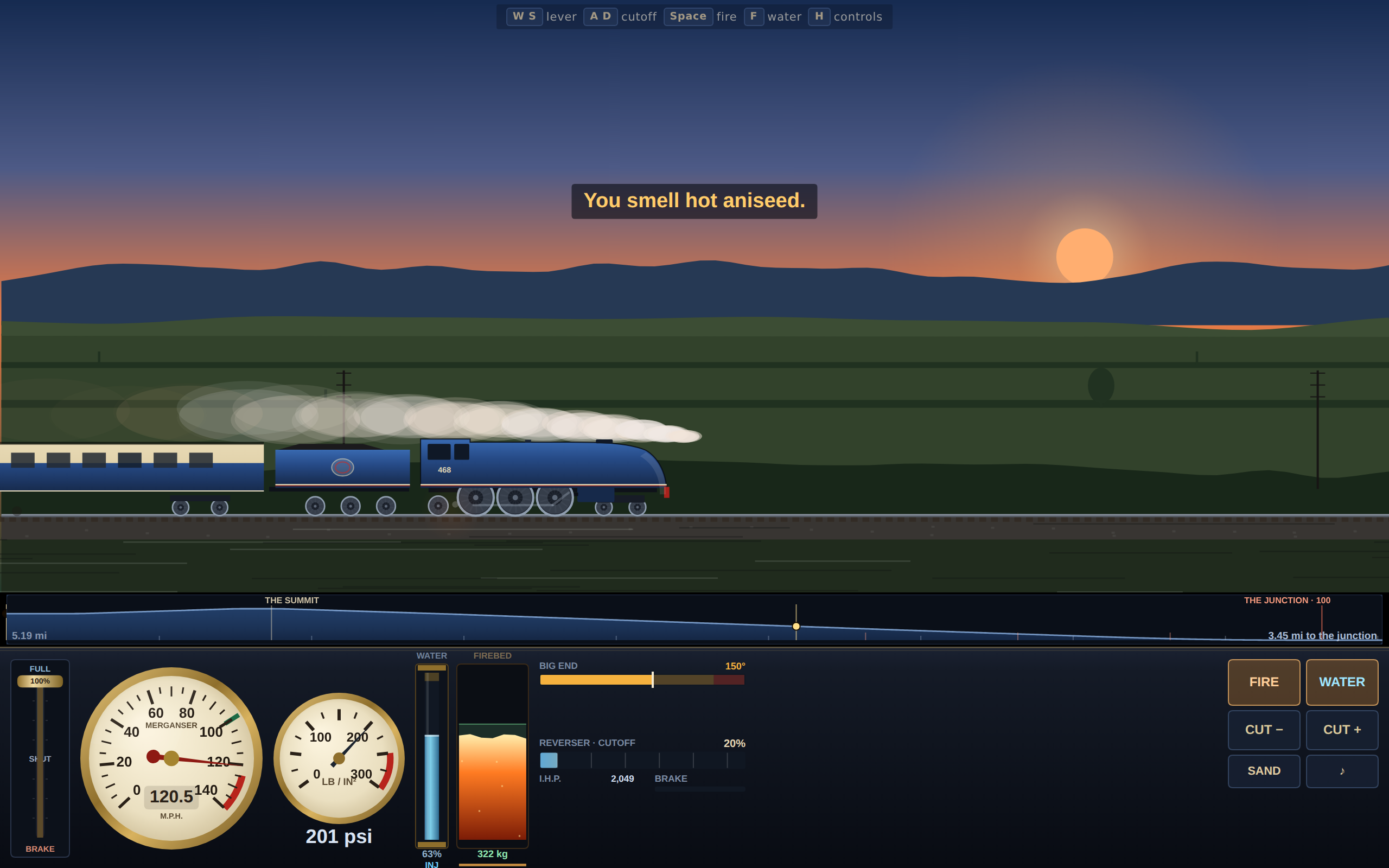 STOKE · Driver and fireman on a 1938 record attempt. Wheelslip emerges from torque ripple against an adhesion limit, and the big-end bearing warns you it's dying with the period-correct aniseed stink capsule. |
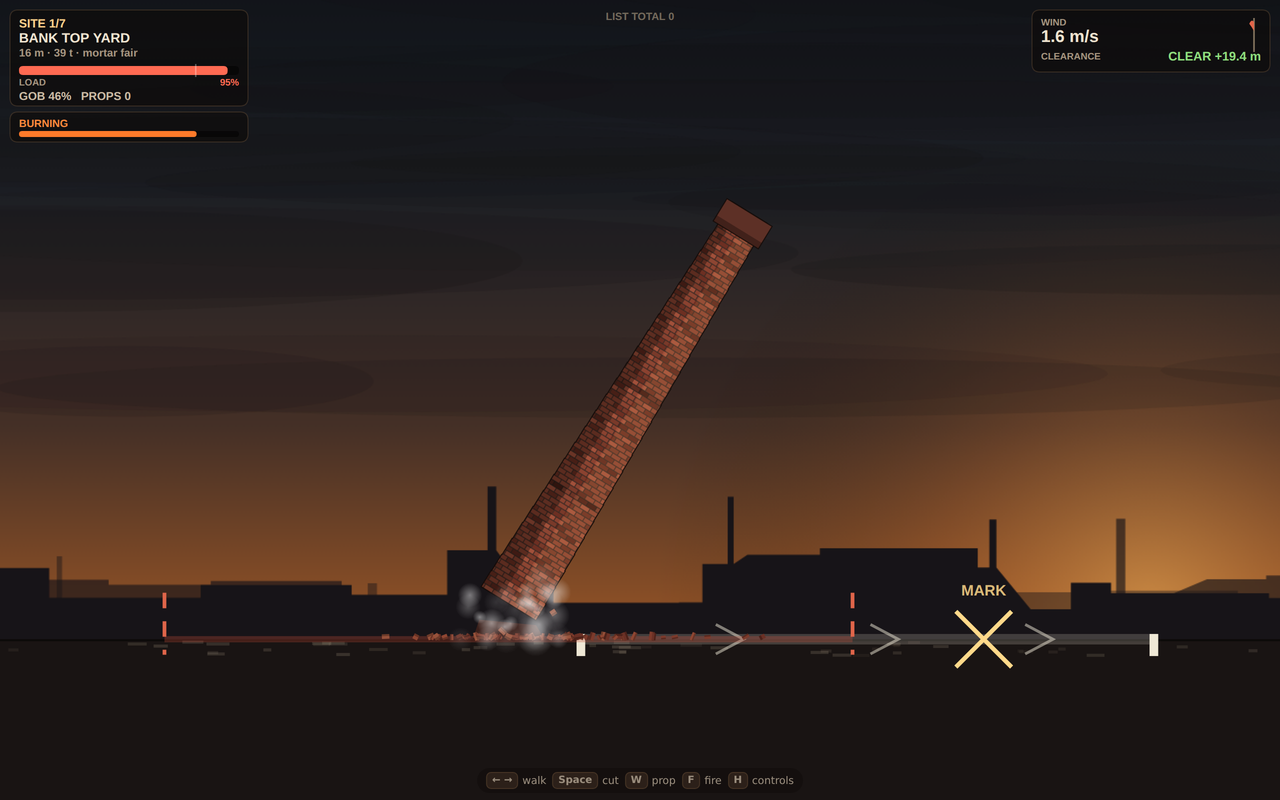 PITPROP · Chimney-felling by fire, 1965, no dynamite. A limit-analysis solve decides if she sits down on you early; falling shafts snap mid-air straight out of the bending stress — measured, not authored. |
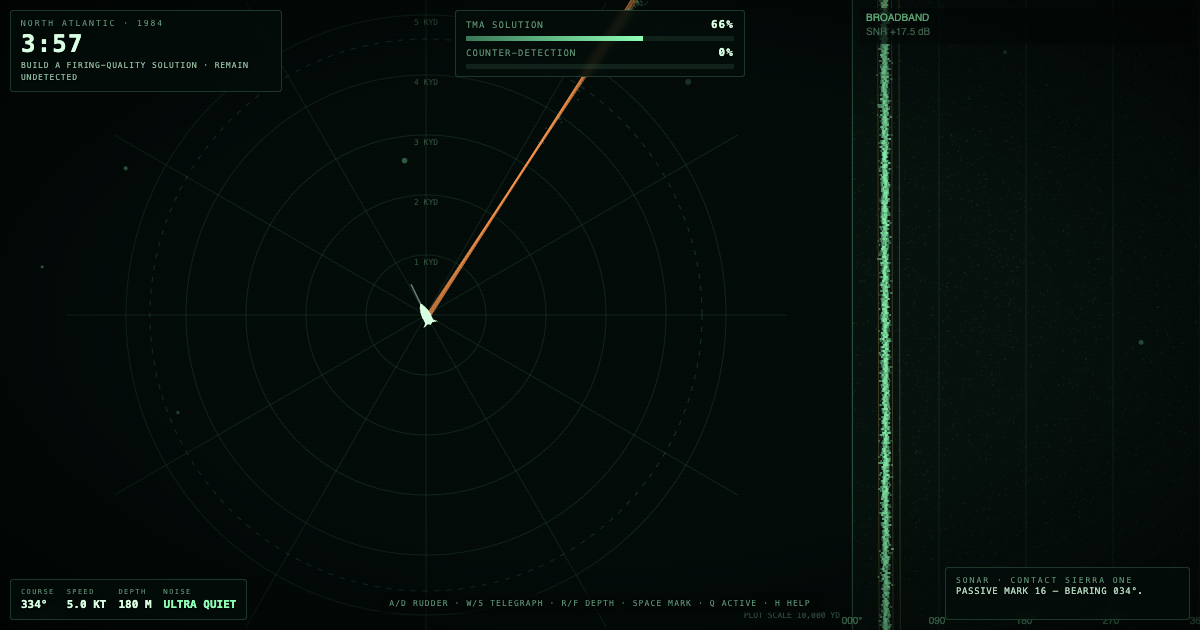 BAFFLES · Cold War submarine tracking. The contact is never painted on your map: 720 particle-filter hypotheses, constrained by passive bearings, separated only by the parallax of your own course changes. |
The other 88 are on aimade.games — steam records, avalanche control, curling, orbital mechanics, slime-mold logistics, a Sydney-to-Hobart yacht race, and whatever the routine invents next.
This repo is the artifact bucket half of a deliberate separation: the intelligence lives in the routine and in the aimade.games publishing tools (an MCP server the agent drives: create game → upload build → define achievements → publish); the output lands here as flat files with a documented commit trail. The machinery that runs factories like this one is public at autonomous-factory.
Games by Claude, via the every-3-hours drop routine. Do not edit by hand — the routine owns this repo.