DomainOntologiesIntegratedFramework
Domain ontologies are structured and standardised representations of the knowledge within a given domain and provide a shared understanding of the domain that can be interpreted by both machines and humans [1]. They are a key enabler for interoperability and reuse of data. However, to ensure that the domain ontologies themselves can be reused together with other domain ontologies, they must build on existing standards. For ontologies, this means that they should use an existing top-level ontology and adhere to the conventions and best practices for the selected top-level ontology and its accompanying framework of domain ontologies.
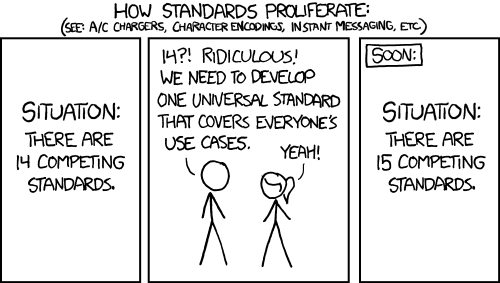
Figure 1. XKCD cartoon summarising the problem of multiplication of standards. Source: https://xkcd.com/927/
In order not to fall in the common trap illustrated in the comic in Figure 1, i.e. not to duplicate concepts already defined in other ontologies, it is important that new domain ontologies not only build on EMMO, but also on other existing domain ontologies. That is especially true for application-oriented ontologies. Figure 2 shows an example of how some existing domain and application-oriented ontologies import and reuse each other.
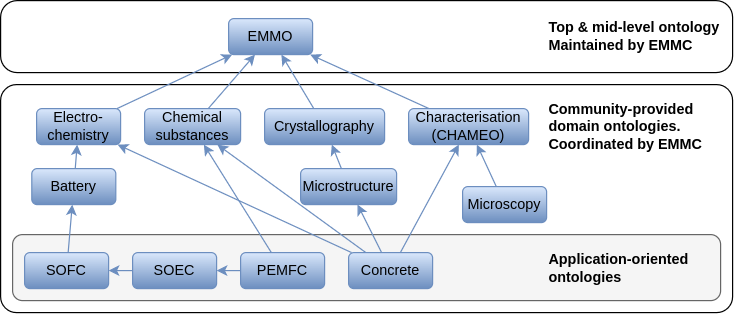
Figure 2. Dependency diagram between domain and application-oriented ontologies.
[1]: De Baas et al. Review and Alignment of Domain-Level Ontologies for Materials Science (2003). DOI: 10.1109/ACCESS.2023.3327725