Architecture
A single Express/Node.js service exposing grouped routes for three modules—Authentication, Offer, and User—backed by Redis, and S3 (via LocalStack).
-
/api/authentication→ User login, registration, resetPassward -
/api/offer→ Create, list, update, delete offers ; add, accept, reject, complete, review requests -
/api/user→ User profile retrieval & management
Each module is organized under api/, controllers/, swagger/, validation/, and uses shared middlewares/ for logging, error handling, and auth checks.
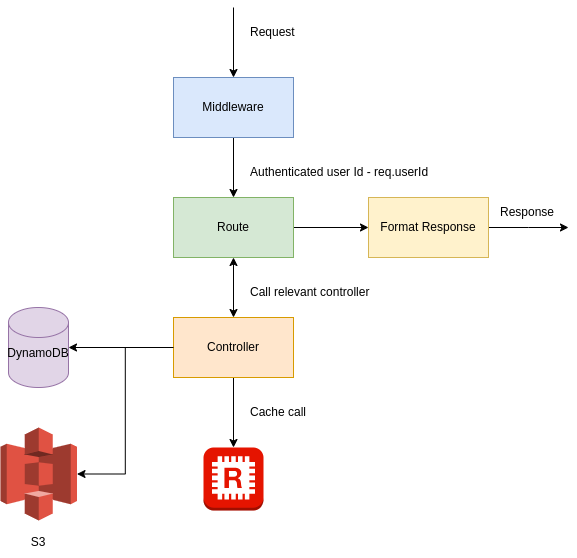
- Request enters the system.
- Middleware authenticates the request and attaches the user ID (req.userId).
- Route identifies the appropriate controller based on the request.
- Controller processes the logic, making calls to:
- Redis for caching,
- DynamoDB for persistent data storage,
- S3 for object/file storage.
- The controller sends the data back through the Route.
- Format Response structures the output.
- Response is returned to the client.
This architecture leverages caching (Redis), NoSQL data storage (DynamoDB), and object storage (S3) for efficient request handling.
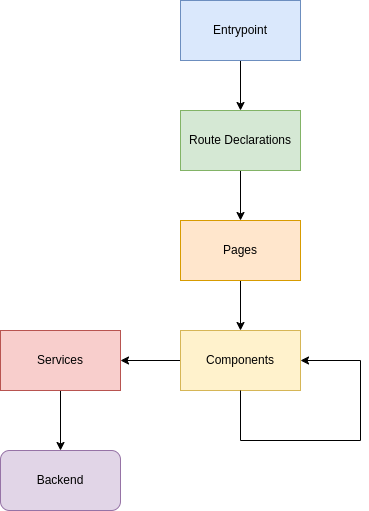
- Entrypoint initializes the application.
- Route Declarations define the navigation structure.
- Pages map to specific routes and serve as containers for content.
- Components are reusable UI building blocks used within Pages.
- Services handle logic such as data fetching and communication with the Backend.
- Components may also interact directly with Services for dynamic behavior.
This structure promotes a clear separation of concerns and modularity in frontend development.