Quick Menu
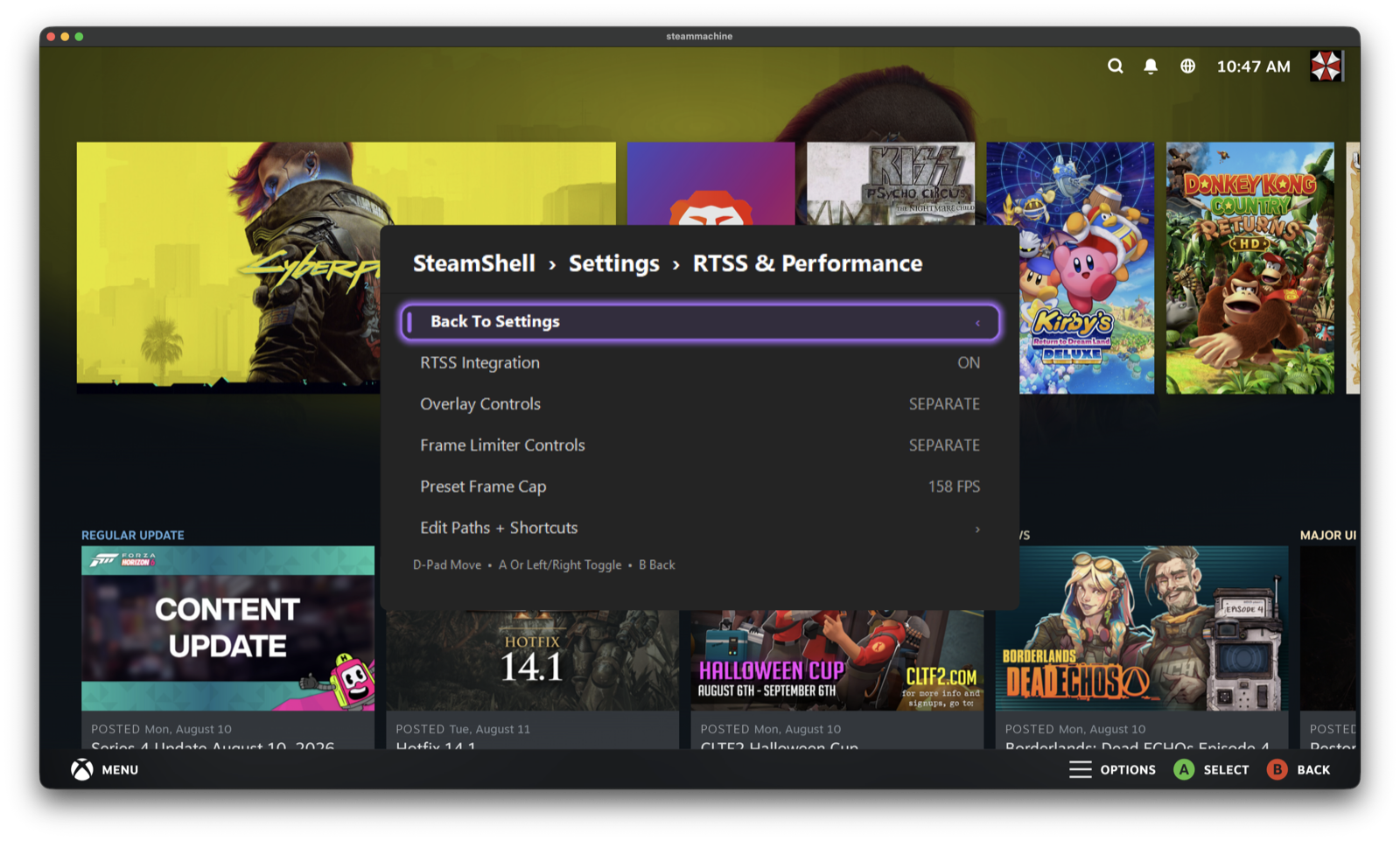
The Quick Menu is SteamShell's controller-first surface. It draws over whatever is in front — Steam Big Picture, a game, or the desktop — and closes back to it.
Controls: D-pad moves · A selects · B goes back · Left/Right adjusts a value without leaving the row · Delete closes the selected window on the Task Switcher page · Home/End jump to the first and last row.
Every row shows its live value on the right, so the menu is a status readout as much as a control panel.
The top level. Every row shows its current value on the right, so the menu doubles as a status readout — you can see the active audio device, resolution, refresh rate, scale and RTSS state without selecting anything.
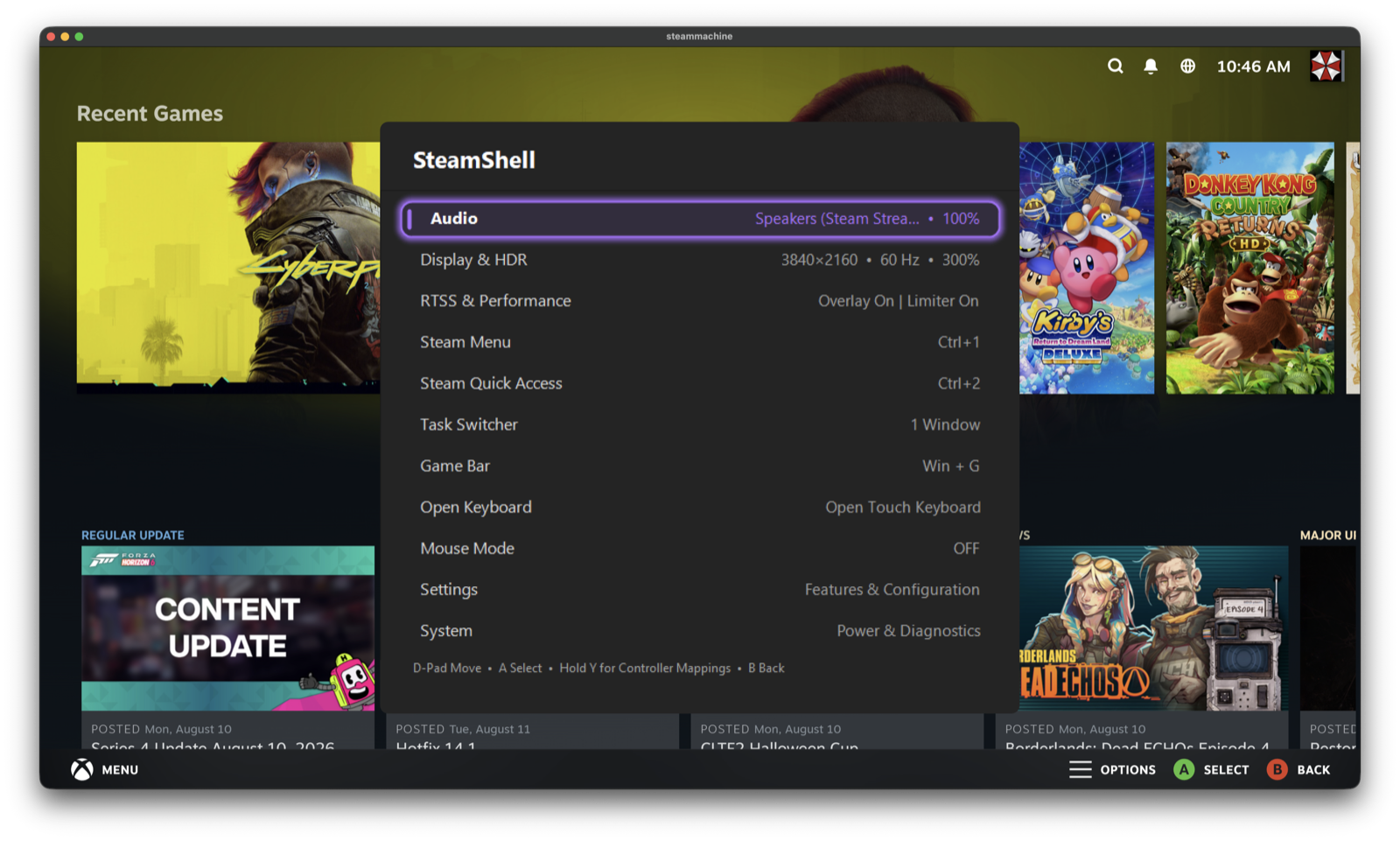
Output device, volume and mute. Left/Right cycles the output device in place; there is no separate dialog to get lost in.
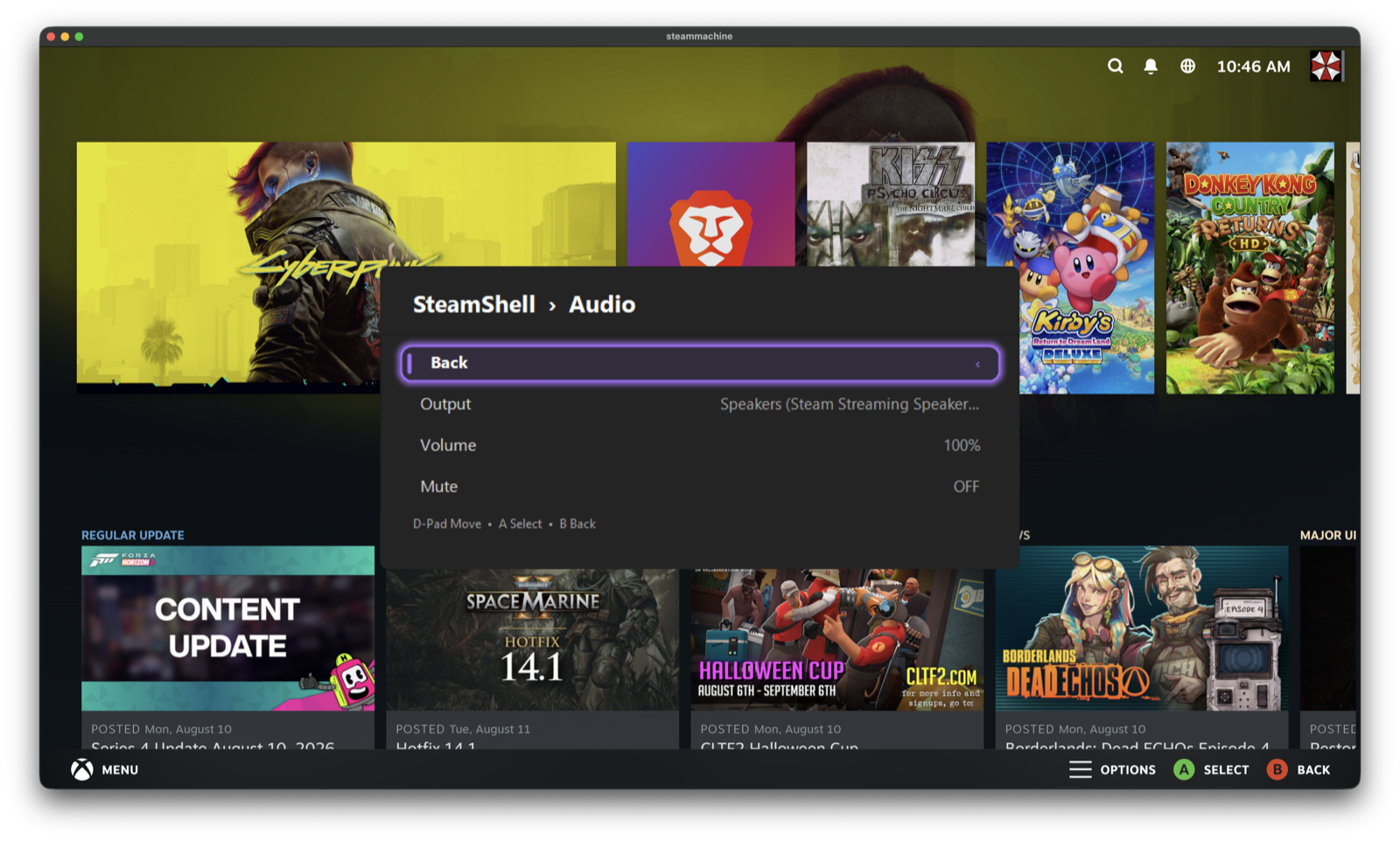
HDR, resolution, refresh rate and scale, read live from Windows DisplayConfig. Apply commits the selection and shows CURRENT when what is on screen already matches.
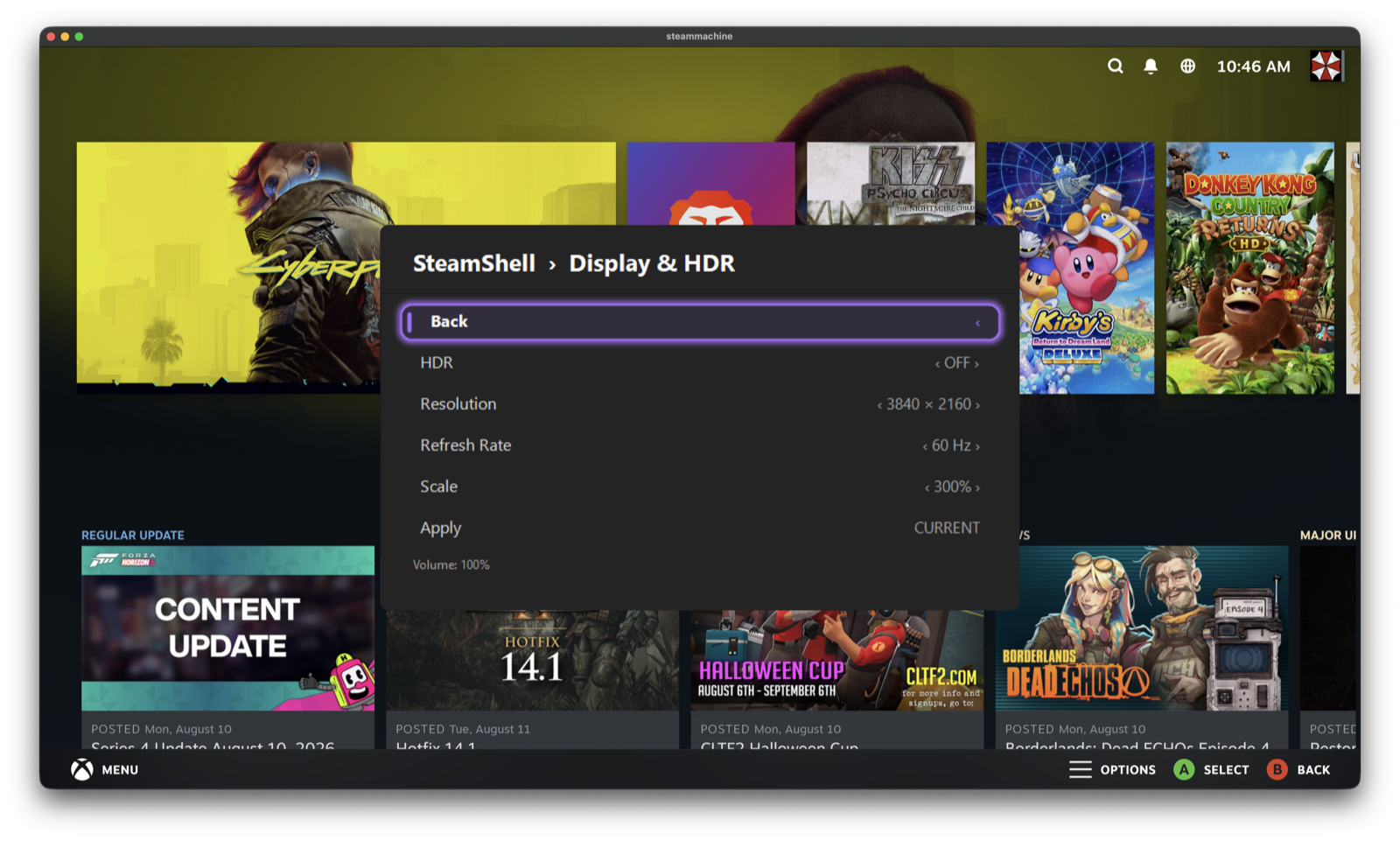
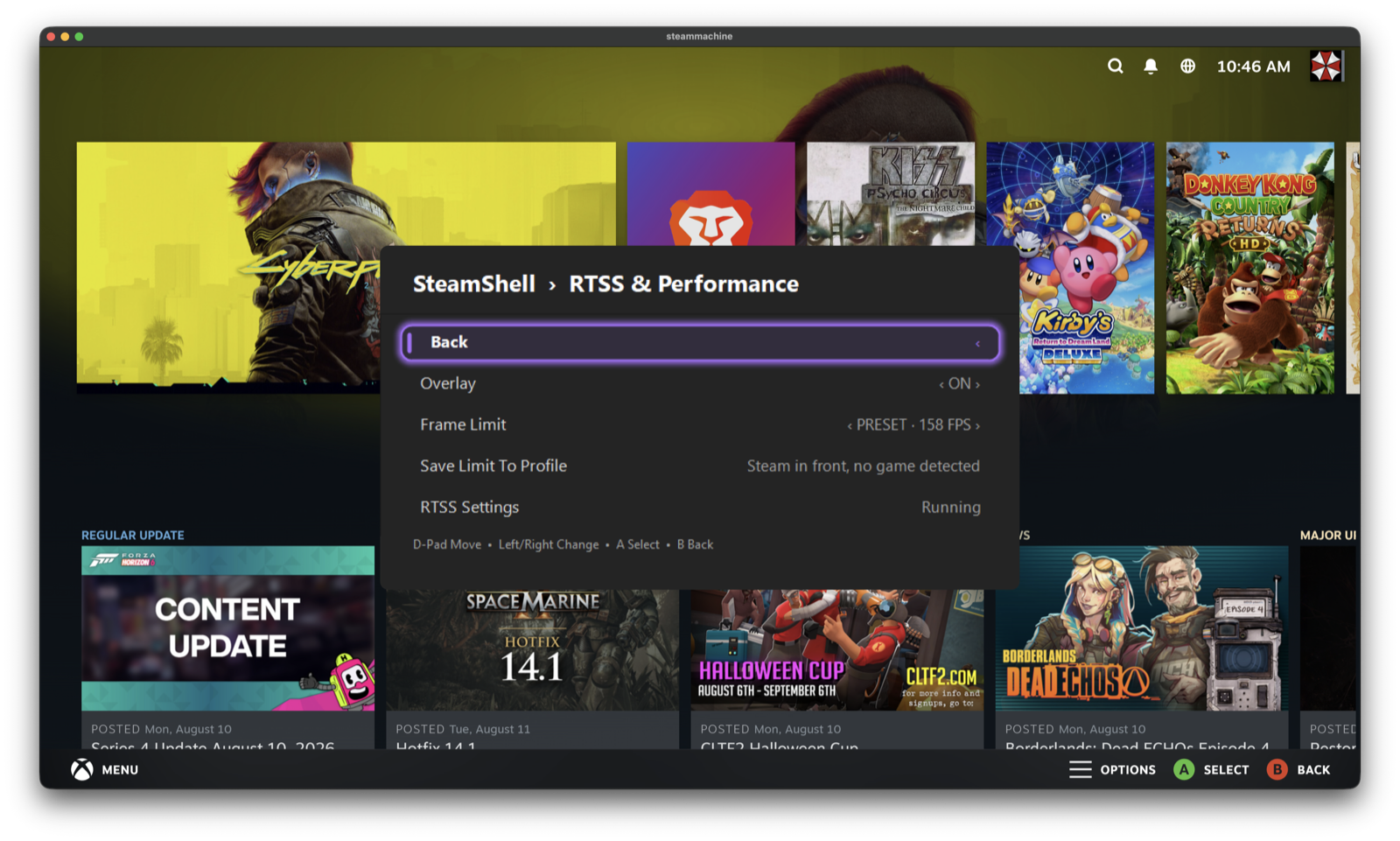
Overlay on/off and the frame limit, driven through RivaTuner Statistics Server. Save Limit To Profile writes the cap to the foreground game's own RTSS profile — the status text tells you what it would target right now.
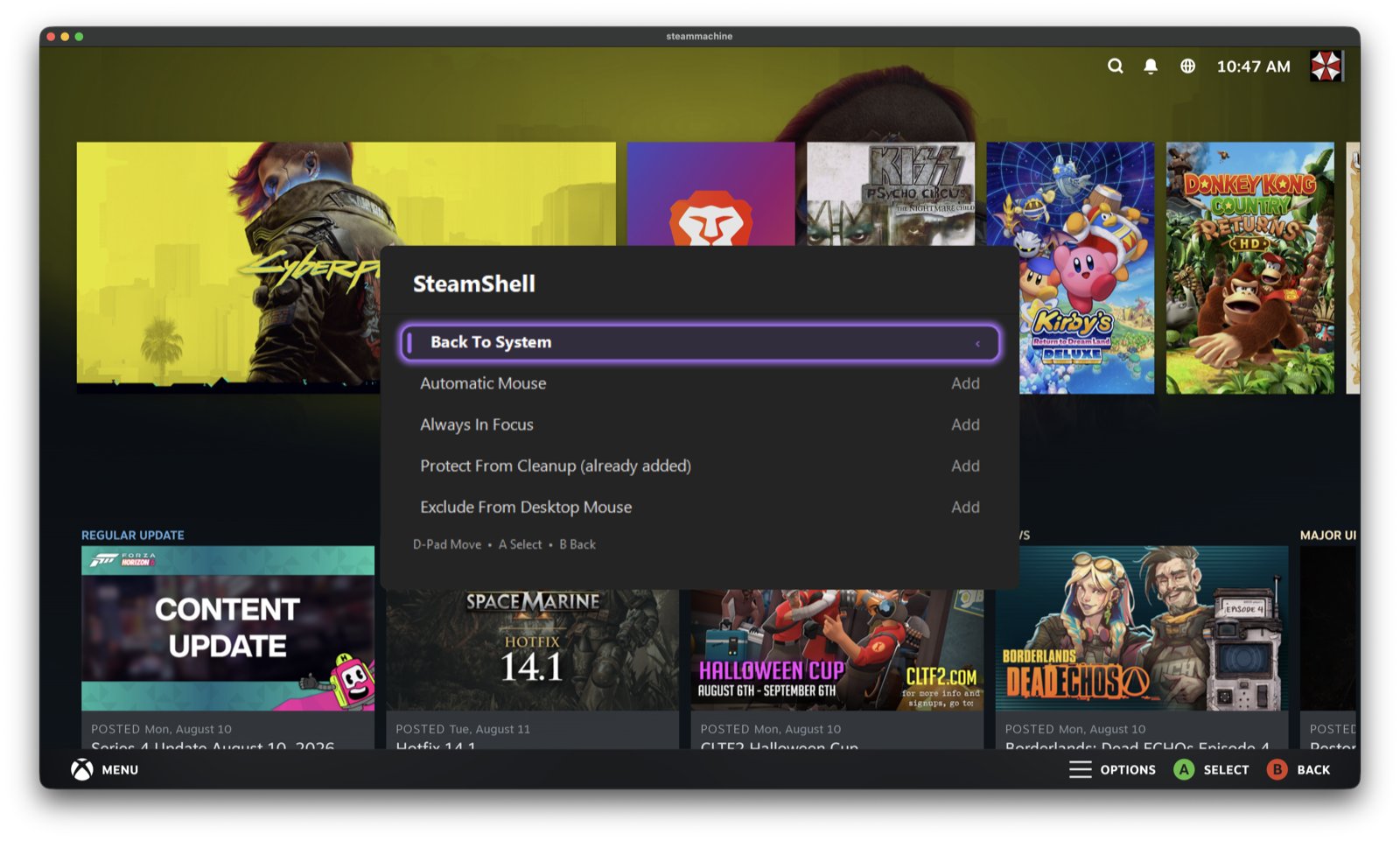
Per-application actions for whatever was in front when the menu opened: add it to automatic mouse mode, keep it always in focus, protect it from Launcher Cleanup, or exclude it from desktop mouse mode.
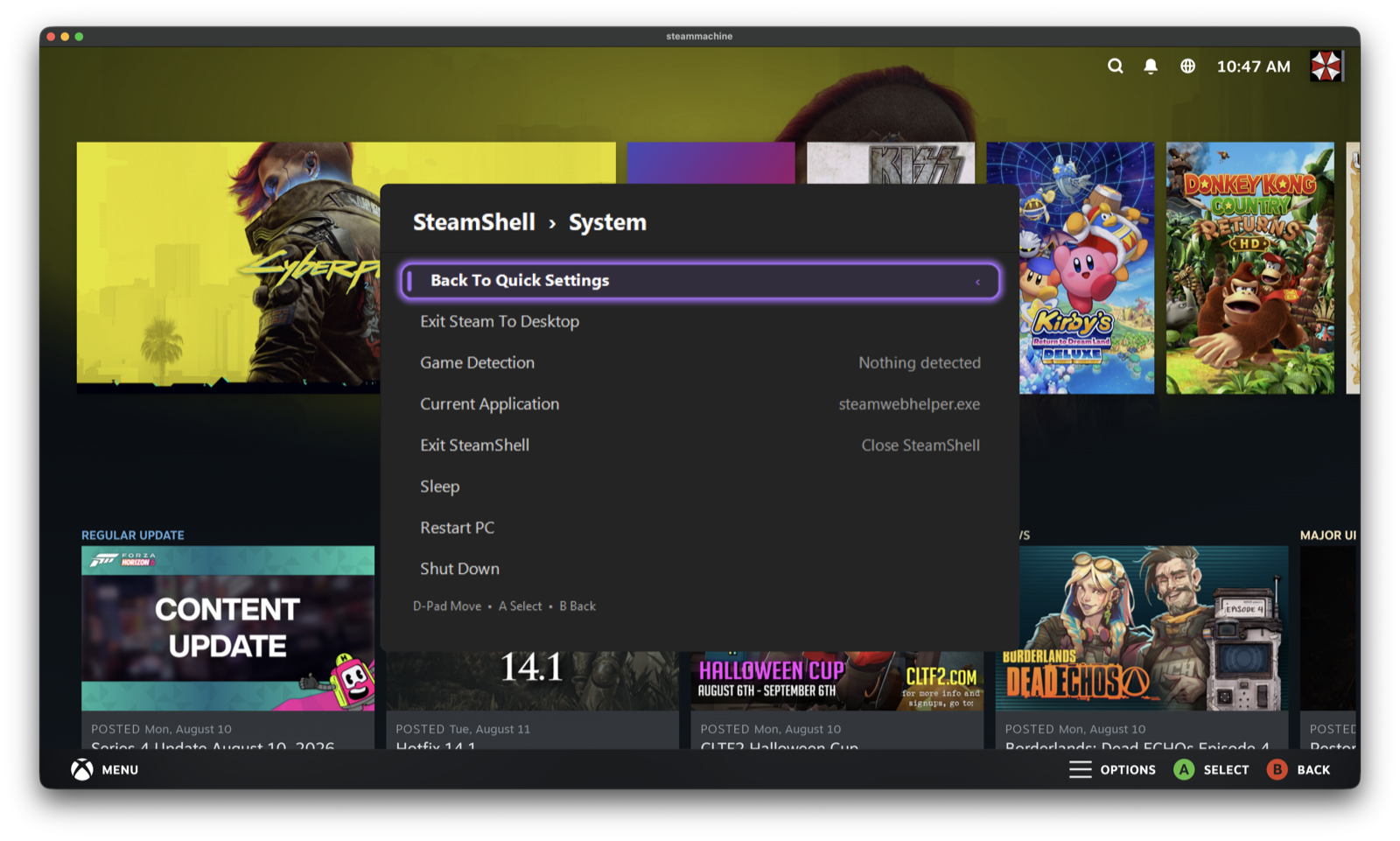
Exit Steam to the desktop, see what the window engine currently scores as a game, close SteamShell, or sleep, restart and shut down the machine.
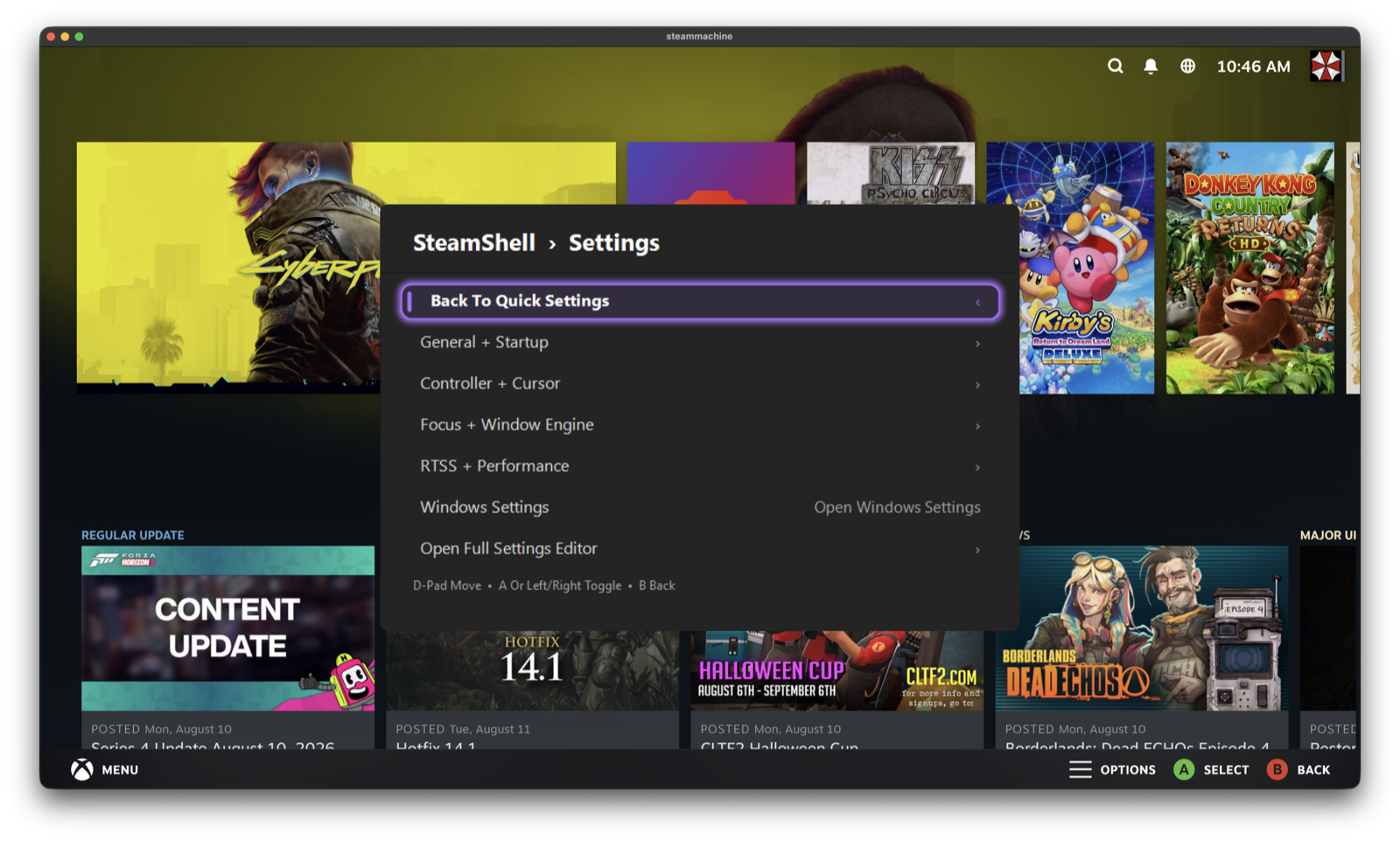
The settings a controller can reach without a keyboard, grouped the same way the desktop editor is. Open Full Settings Editor hands off to the desktop window when you need a key that is not here.
Startup splash, taskbar hiding and the black desktop background. Rows that only take effect on the next boot say so rather than pretending to apply now.
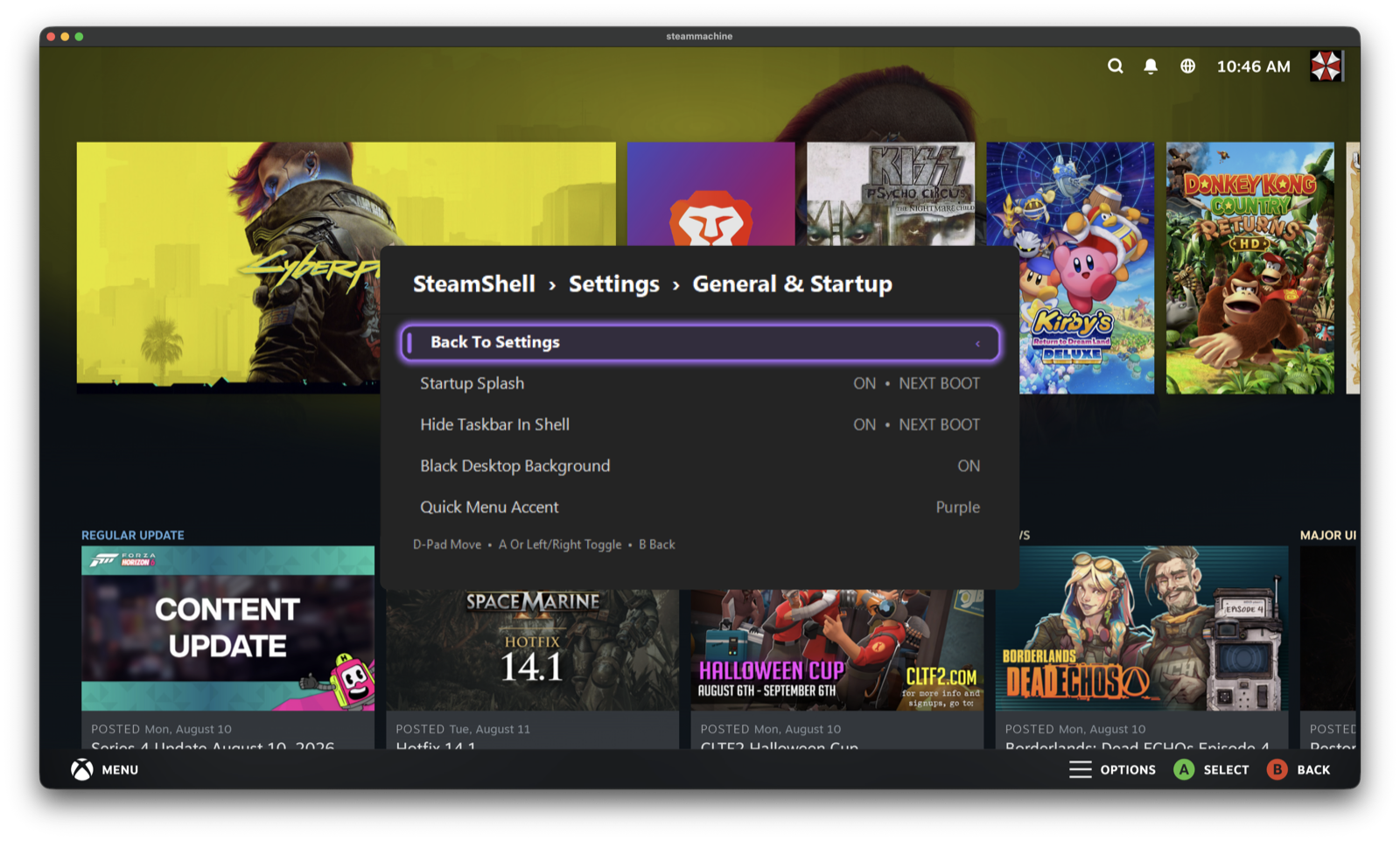
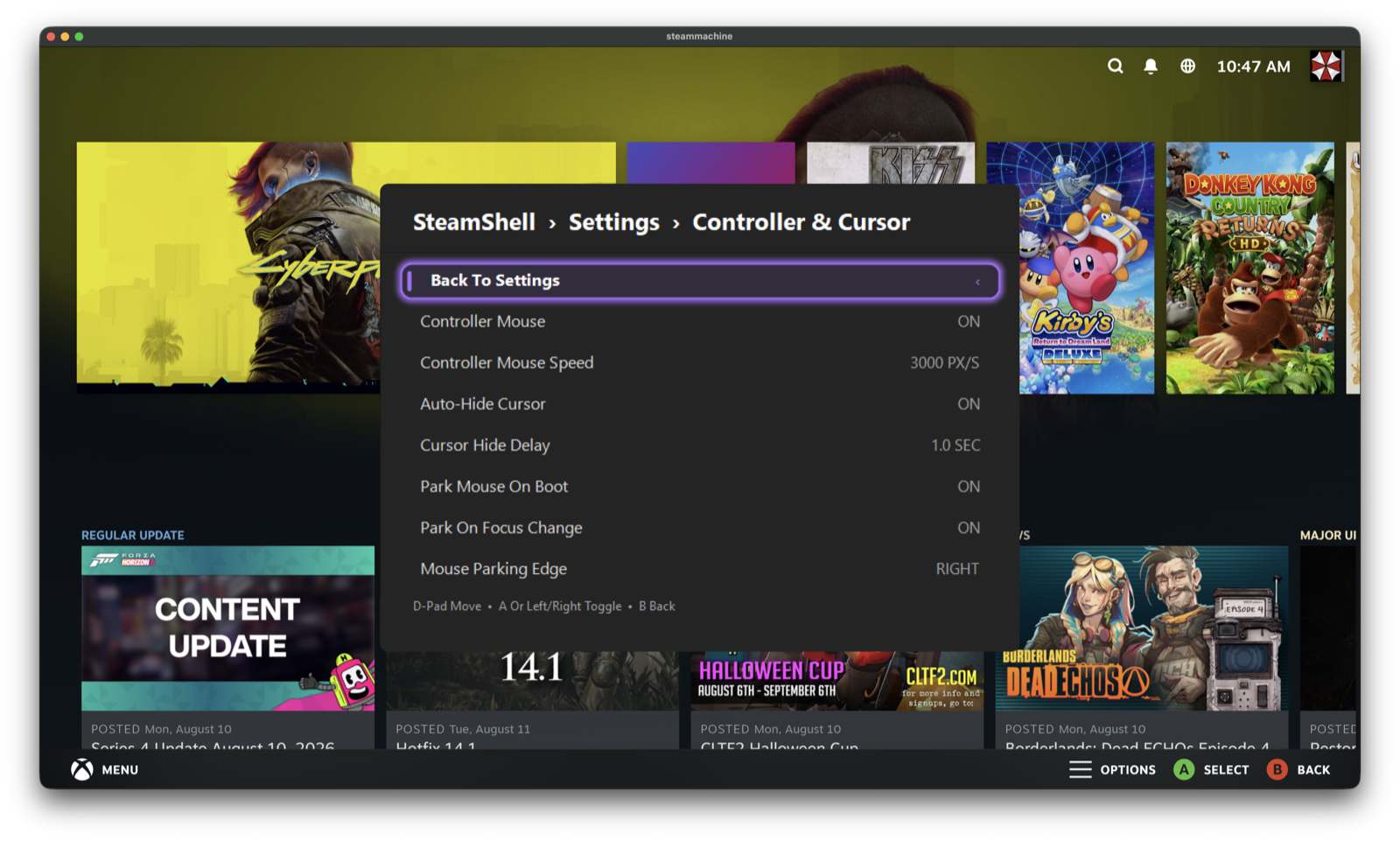
Controller mouse mode and speed, cursor auto-hide and delay, and where the pointer parks when it gets out of the way.
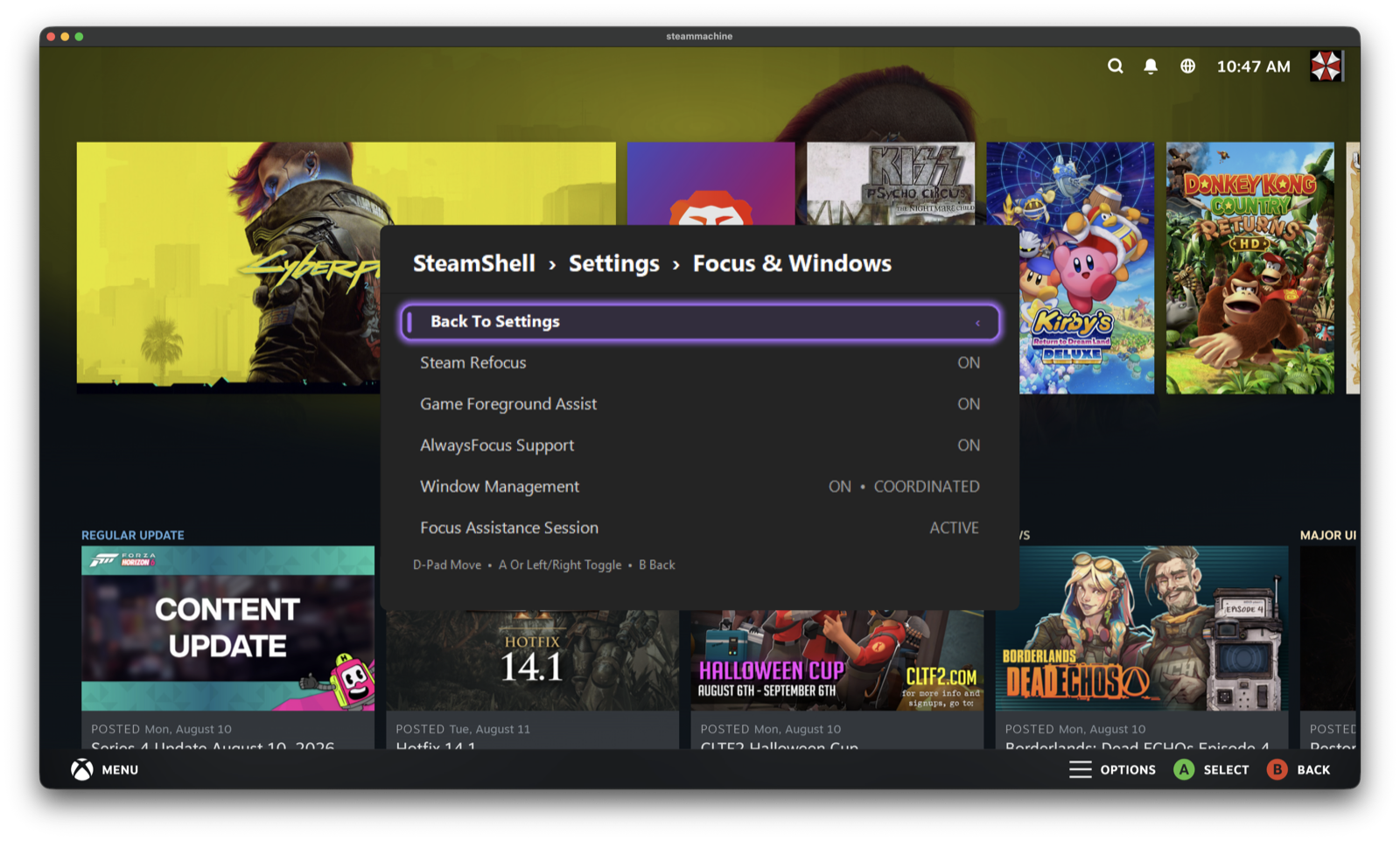
The shell half: Steam refocus, Game Foreground Assist, AlwaysFocus and the coordinated window engine, with the live state of the current focus-assistance session.
Whether RTSS integration is on, how the overlay and limiter controls are bound, and the preset frame cap the Quick Menu offers.