PacketLossTest by OpenPacketLoss™ | Rust Server
OpenPacketLoss™ is a modern, open-source network diagnostic tool built to measure raw packet loss directly from any web browser.
Unlike throughput tests that hide packet drops behind TCP retransmission, or legacy CLI tools like ping and traceroute that rely on rate-limited ICMP, OpenPacketLoss uses WebRTC Data Channels configured with ordered: false and maxRetransmits: 0, delivering unreliable, unordered SCTP datagrams that behave like raw UDP. The result is a true, protocol-accurate measurement of network stability as experienced by latency-sensitive applications like Zoom, Discord, and online gaming.
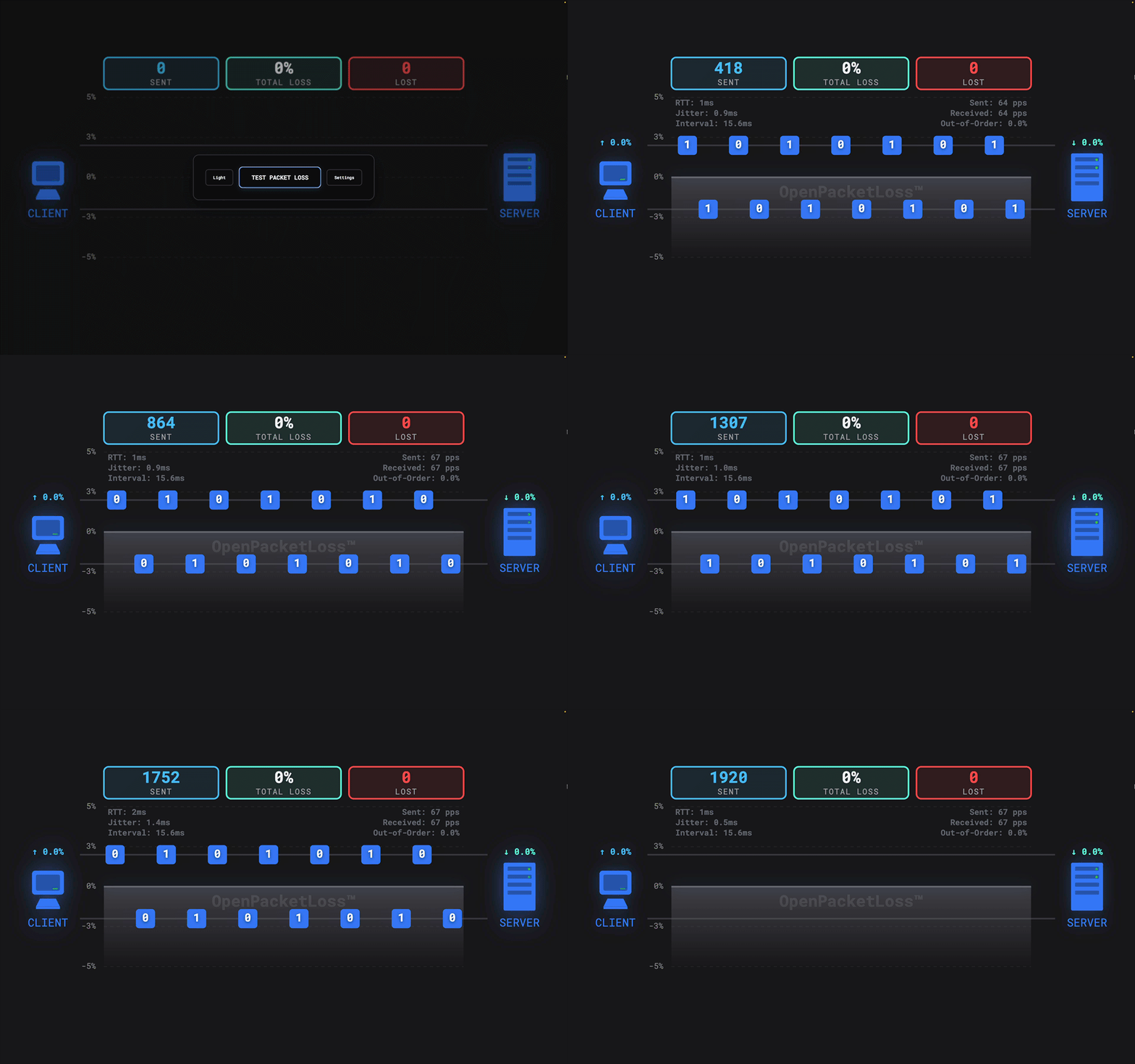
Full self-hosting guide: openpacketloss.com/selfhosted-server
Deploy your own packet loss testing server with full control over infrastructure, performance, and privacy.
- High-Performance WebRTC: Built on Rust and Tokio for high concurrency and low overhead.
- Built-in STUN: Includes an integrated STUN server (port 3478) for zero-dependency ICE candidate gathering.
- Self-Generating Config: Automatically creates a
.envfile with sensible defaults on the first run. - Directional Analysis: Supports both Client-to-Server and Server-to-Client testing.
- Security: Built-in limits for concurrent connections and per-IP rate limiting.
The server acts as a WebRTC endpoint that echoes back data sent via DataChannels. By configuring the DataChannel with ordered: false and maxRetransmits: 0, it simulates UDP-like behavior. The client transmits sequence-numbered packets, and the server increments a receive counter before echoing them back, allowing for precise measurement of network stability.
Compatible frontend: OpenPacketLoss WebApp
git clone https://github.com/openpacketloss/OpenPacketLoss-Server.git
cd openpacketloss-serverEnsure you have the Rust toolchain installed.
cargo run --releaseThe server will automatically generate a .env file with default settings on its first run.
Configure your server by passing these environment variables to the Docker container or setting them in your .env file.
| Variable | Default | Description |
|---|---|---|
PLATFORM_MODE |
self |
'web' (public service) or 'self' (self-hosted with flexible limits). |
PORT |
8080 |
HTTP server port for signaling. |
STUN_PORT |
3478 |
Built-in STUN server UDP port. |
STUN_URL |
auto |
STUN URL (auto, explicit stun:ip:port, or none). |
NAT_1TO1_IP |
- |
Public/External IP for NAT environments (SDP mangling). Auto-detects LAN IP if empty. |
MAX_CONNECTIONS |
500 |
Maximum total concurrent connections. |
MAX_CONNECTIONS_PER_IP |
10 |
Maximum concurrent connections per unique client IP. |
ICE_PORT_MIN |
- |
Minimum UDP port for WebRTC ICE candidates (optional). |
ICE_PORT_MAX |
- |
Maximum UDP port for WebRTC ICE candidates (optional). |
ICE_GATHERING_TIMEOUT_SECS |
2 |
Seconds to wait for ICE candidate gathering. |
OVERALL_REQUEST_TIMEOUT_SECS |
30 |
Maximum time for the entire SDP handshake process. |
STALE_CONNECTION_AGE_SECS |
120 |
Maximum age in seconds for inactive connections. |
PERIODIC_CLEANUP_INTERVAL_SECS |
5 |
Interval to scan and clean up stale connections. |
RUST_LOG |
info |
Logging verbosity (trace, debug, info, warn, error). |
- OpenPacketLoss-Server: Core WebRTC server implementation (this repository).
- OpenPacketLoss-Server-Docker: Containerized deployment for easy hosting.
- PacketLossTest: The web-based testing interface.
This project is licensed under the MIT License. See the LICENSE file for details.
Maintained by OpenPacketLoss.com