Releases: real-limitless/ansible-flow-mcp
Release list
v0.1.3 — ansible-core dep, catalog expand, lab blank/WinRM

What’s new
ansible-coreis a pip dependency —pip install ansible-flow-mcpputsansible/ansible-playbookon PATH (ansible.posixstill via Galaxy)- Expanded catalog — larger allowlist, gallery, and full module schemas for
get_module_schema - Lab
manual.sh --blank— true empty hub (wipe volume, no init/join/opencode until you init) - Ansible targets + opt-in WinRM lab — register non-spoke hosts; dockur Windows compose path
- Slimmer Docker build context
Upgrade
pip install -U ansible-flow-mcp
ansible-galaxy collection install ansible.posix
Package version 0.1.3.
v0.1.2 — copy-paste spoke join from TUI
What’s new
After invite in the operator TUI, you get a full copy-paste join command for the spoke host (not just the raw token).
- Fields: name, ttl, hub (
mcp-join@…), public_addr ccopies the command (clipboard, orlast-join-command.shunder the hub dir)- CLI:
hub issue-tokenJSON now includesjoin_command
Upgrade
pip install -U ansible-flow-mcpPackage version 0.1.2.
v0.1.1 — hub init works without sudo
Fix
hub init no longer requires root on a normal user install.
If /var/lib/ansible-flow/hub is not writable, state defaults to:
~/.local/share/ansible-flow/hub
~/.local/share/ansible-flow/spoke
Override anytime with ANSIBLE_FLOW_HUB_DIR / --hub-dir (same for spoke).
Upgrade
pip install -U ansible-flow-mcp
ansible-flow-mcp hub init --name ctrl-01
Package version 0.1.1.
v0.1.0 — Give agents Ansible. Not the keys.
AI can run your fleet. It should not own your fleet.
ansible-flow-mcp is now public.
It lets AI assistants use Ansible the way a careful operator would — with guardrails — so automation moves faster without handing the model the keys to production.
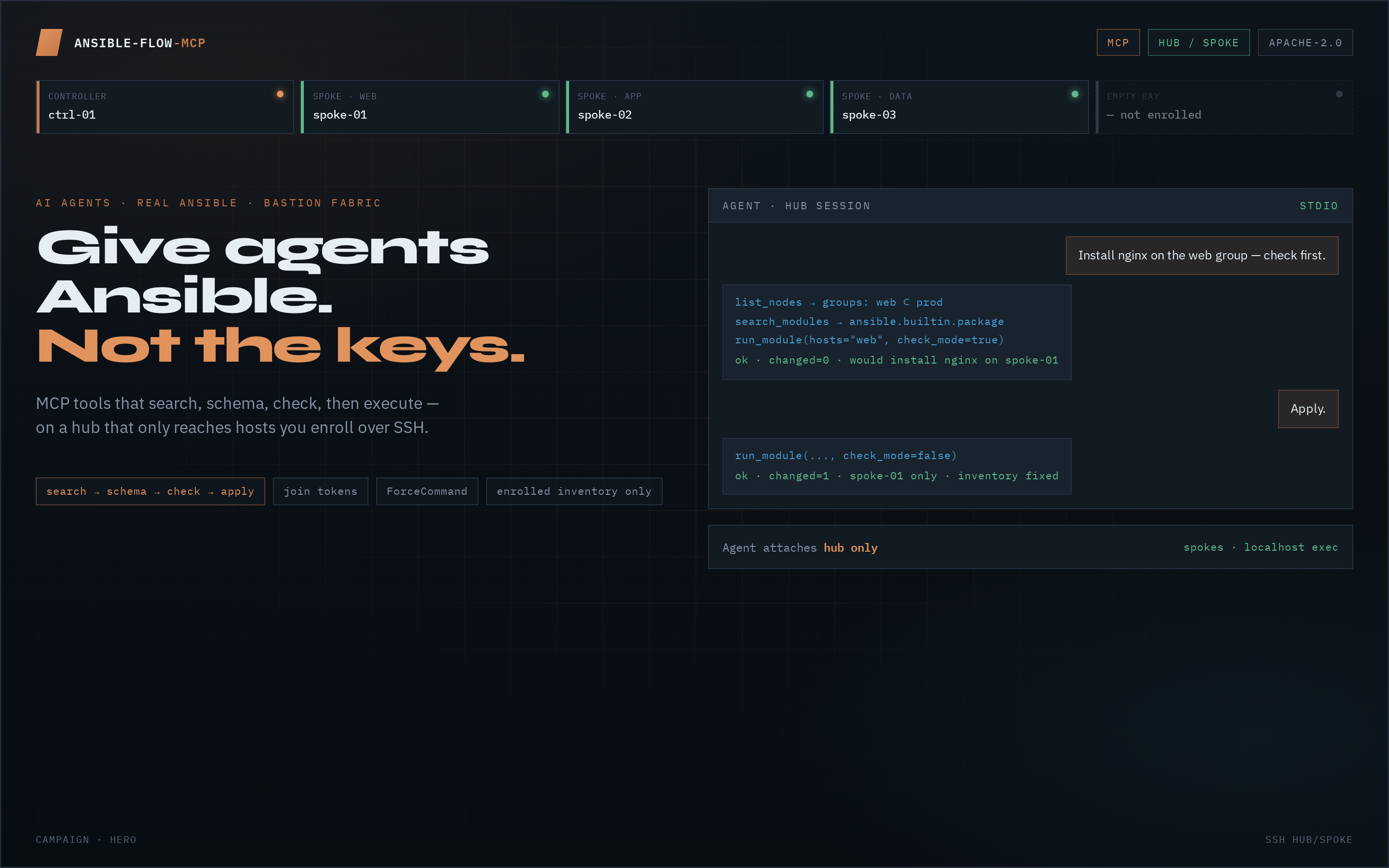
The problem leaders already feel
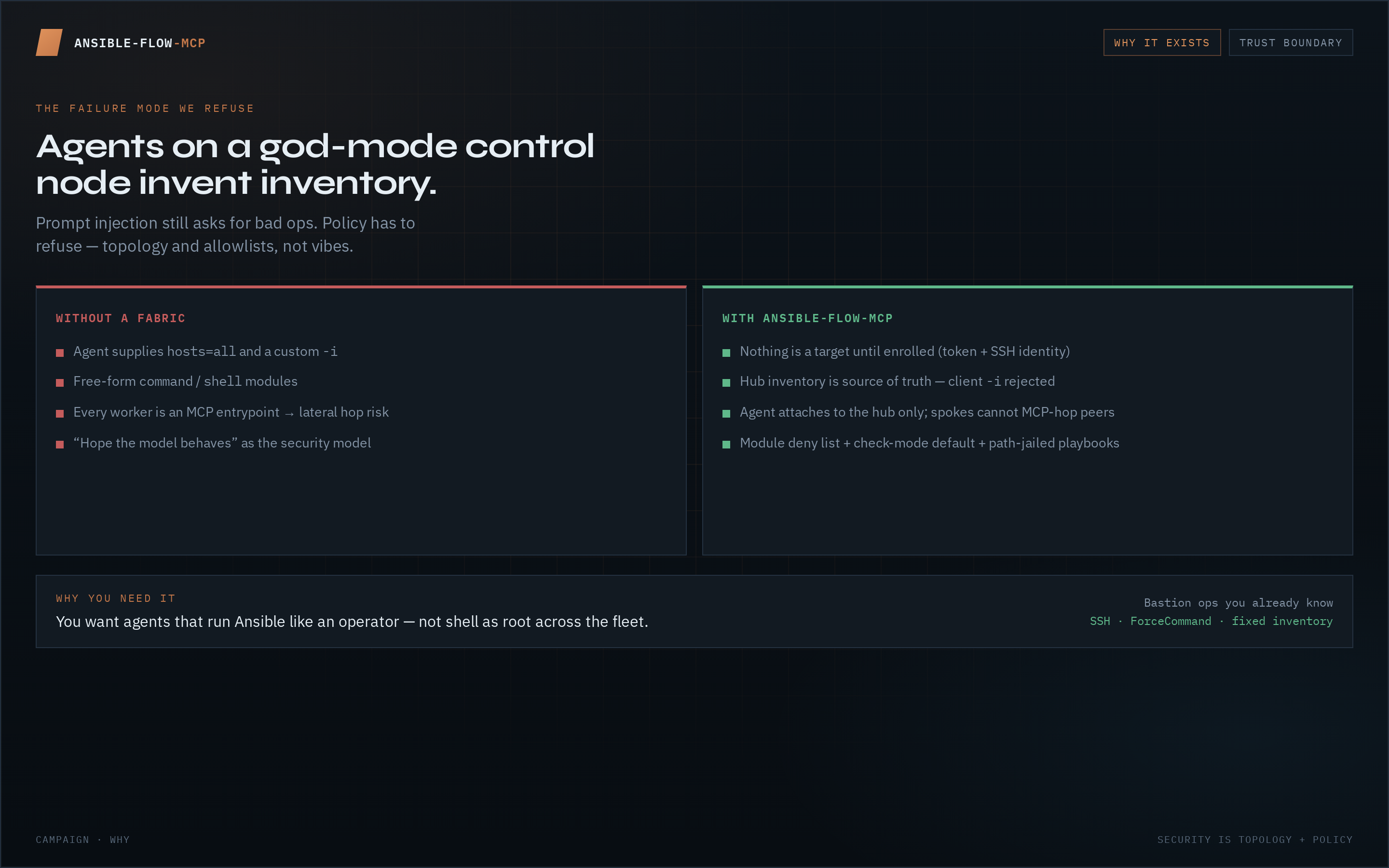
AI coding tools are excellent at suggesting work. The moment they can execute across servers, three things go wrong:
- Too much power — one compromised session or a bad prompt becomes a path across the estate
- No clear perimeter — every machine starts to look like a control plane
- No safe default — “just run it” beats “preview the change first”
That is not a tooling gap. It is a governance gap.
What this product is
A bridge between AI agents and the automation you already trust (Ansible) — designed so:
- Agents work through a single, controlled entry point
- Machines only become targets after they are explicitly enrolled
- Changes prefer preview first, apply second
- Dangerous freestyle execution is refused by design, not by hope
Think of it as: the AI gets a disciplined runbook seat — not root on every host.
Two ideas, one story
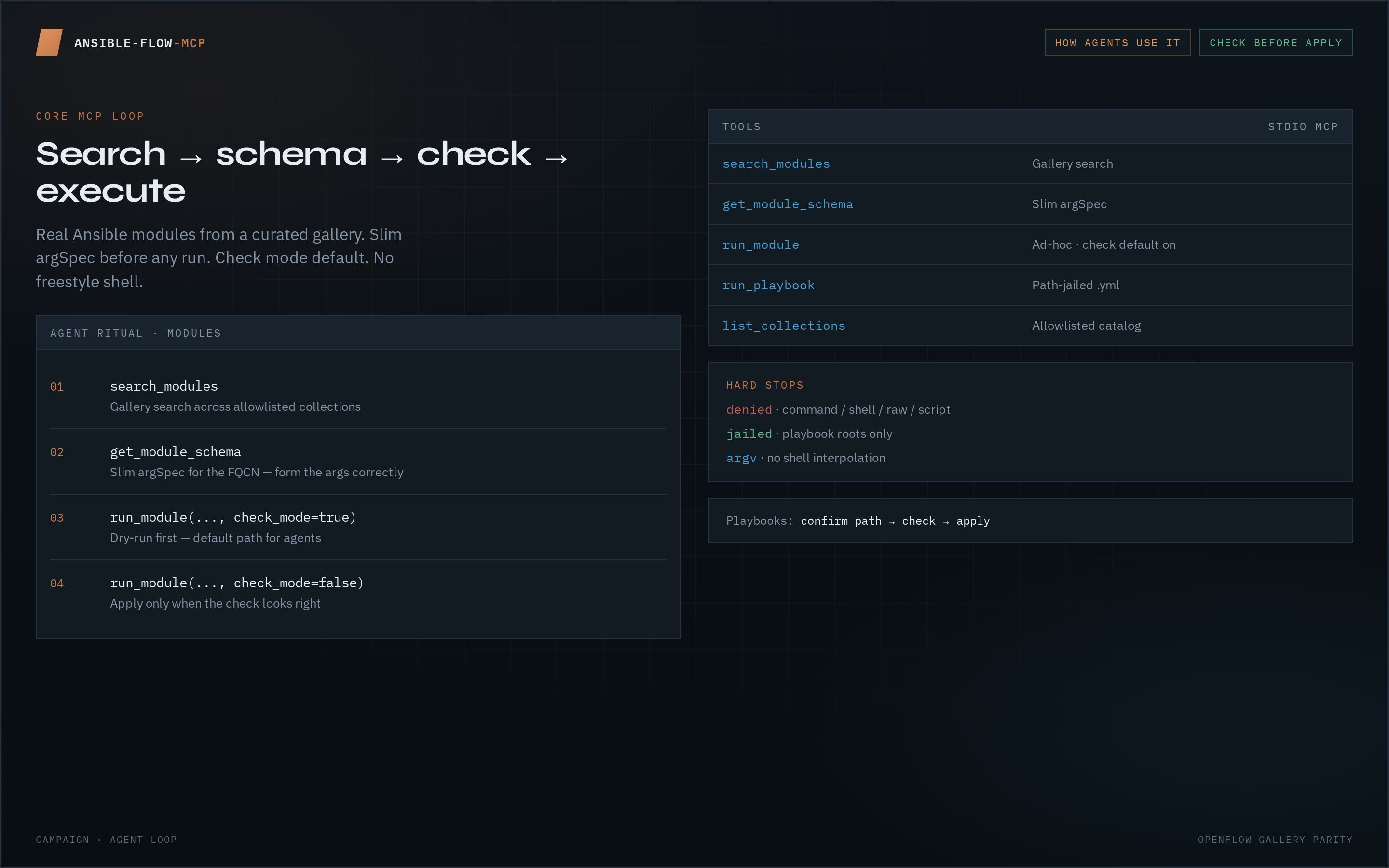
For the agent: a disciplined loop
Discover the right capability → understand the inputs → dry-run → only then change the world.
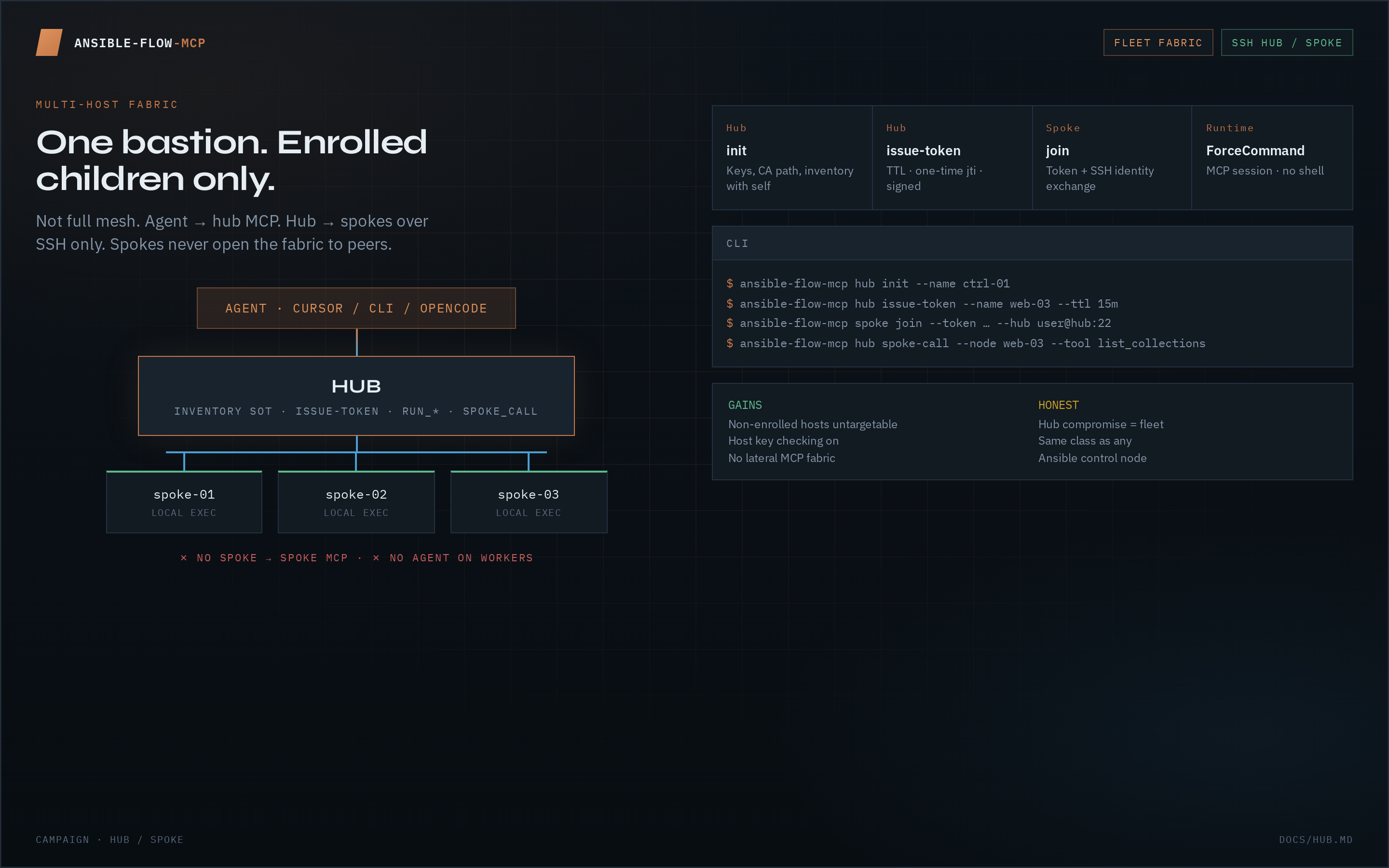
For the fleet: one bastion, enrolled workers
The AI talks to the hub. The hub reaches machines over the path ops already understands. Workers do not become a hop plane for lateral movement.
| Old instinct | This release |
|---|---|
| “Give the model the control node” | Give the model a governed seat |
| “Any host can be the brain” | One hub. Everything else is enrolled |
| “Mesh everything” | Bastion model you can explain to security |
| “Trust the prompt” | Policy and topology refuse the bad ask |
Who it is for
- Platform / SRE leaders who want AI in the loop without a new mesh OS
- Security-minded CTOs who need a story: entry point, enrollment, least privilege
- Teams already on Ansible who refuse to throw away that investment for a chatbot
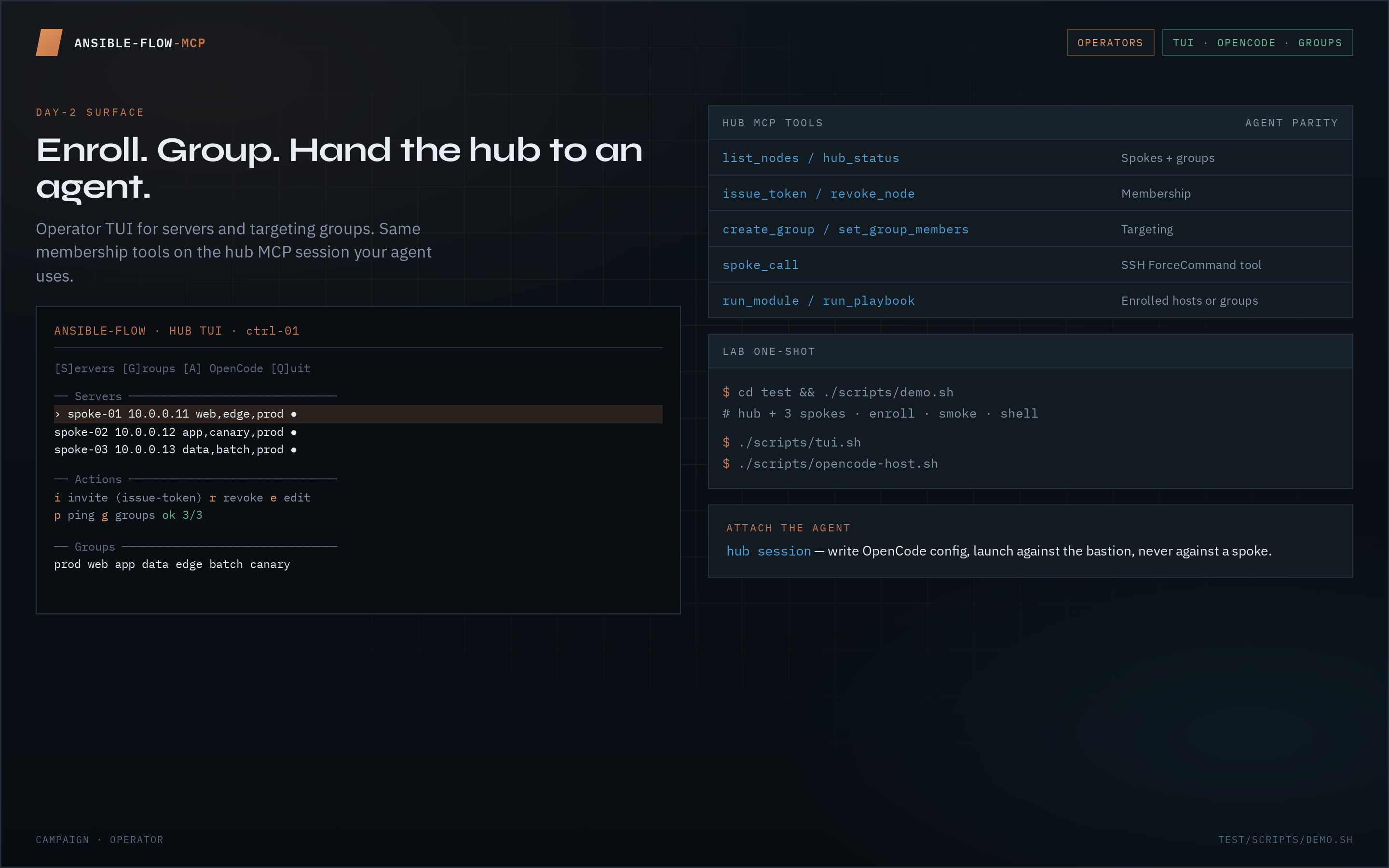
Operators keep a simple day-two surface — inventory, groups, invites, hand-off to the AI client.
Why this first release matters
This is not a demo wrapper around a shell.
It is the first version of a product thesis:
Agents should accelerate operations.
They should not redefine your trust boundary.
v0.1.0 ships that thesis as installable software — open source, Apache-2.0, on PyPI.
Try it
pip install ansible-flow-mcpProduct story and visuals: README
How the fleet model works: Hub guide
Threat model: Security
Part of the same long game as OpenFlow — agentic automation with a real control plane, not vibes.
Not affiliated with Red Hat or the Ansible project beyond use of the public tools and documentation.