#Fluency Test (Offline first with Realm and audio player/visualizer for Android using Kotlin)
Demonstration in portugueses: https://www.youtube.com/watch?v=q2tnKfnsy2A
Demonstration in english: https://www.youtube.com/watch?v=is28NfRz65I
Tested in: Galaxy Nexus API 30, Samsung A10 and Moto G 7 Plus
APP MADE FOR ANDROID PLATFORM WITH:
Language: Kotlin Local Database: Realm Network: Retrofit Architecture: MVVM
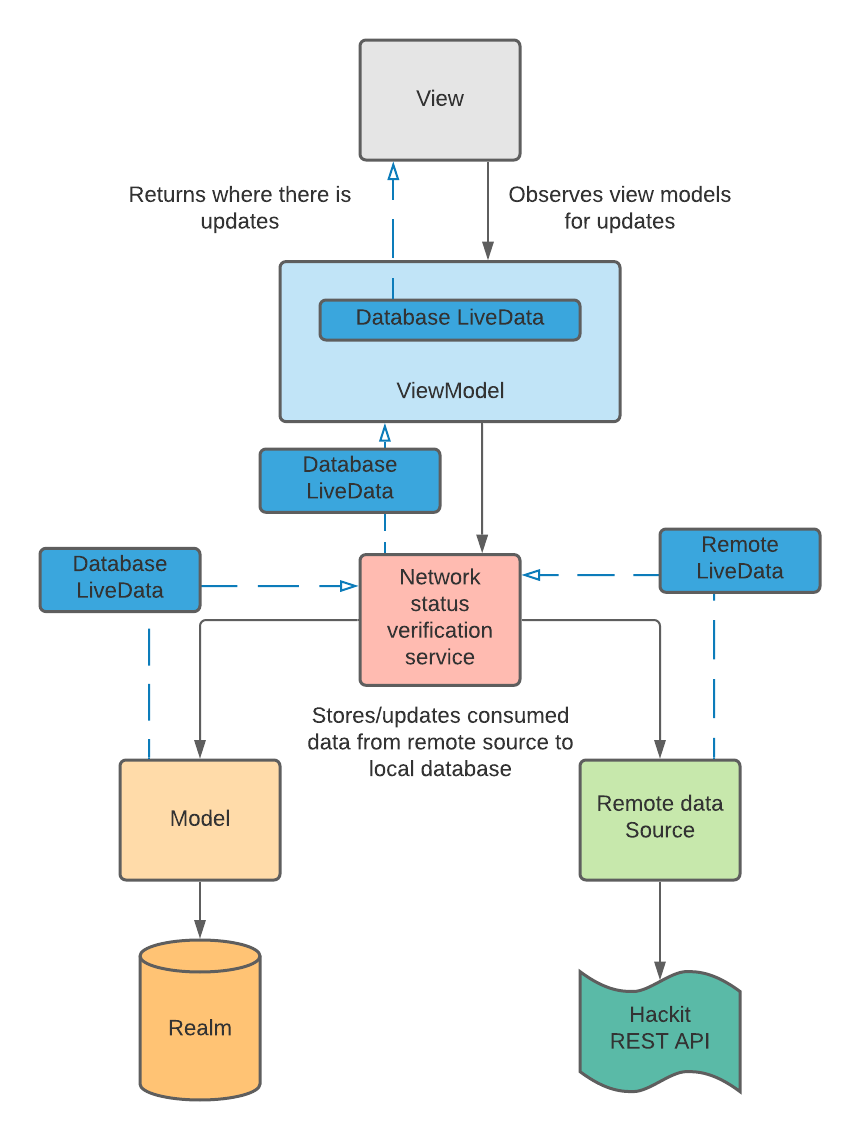
Offline first strategy: The app asks for user login and permissions, after both authentication and permissions are given, the app checks if there is something in Realm Database, 3 possibilities where predicted:
OBS: Activities are always consuming the local database.
-
There is nothing in the database and app has internet connection Solution: the application consumes using Retrofit the given REST API (https://dev.hackit.app/webapi), first it asks for the user's deck route, then asks for deck's cards, while the application observes the LiveData and when results return both deck and deck's cards are storage to the Realm local database.
-
There is things in the database Solution: the application consumes the local database
-
There is nothing in the database and app has NO internet connection Solution: the application warns the user that the app must go online at least once
The local database Realm is consumed by observing LiveData entity results, if there is any changes in the database, the activity RecycleView and adapters are updated.
But how does the app updates the database? The app has network state change service, and if there is NO internet connection, it uses the local database, but if there IS internet connection, the app syncs the database with modified data consumed from REST API.
(OBS: I USED TO DO THIS STRATEGY WITH ROOM, THIS WAS MY FIRST TRY WITH REALM BECAUSE THE TEST ASKED FOR IT)
Offline audio strategy: Audio player library: android.media.MediaPlayer Audio visualizer library: rm.com.audiowave.AudioWaveView
The archives .mp3 are first downloaded to the environment DOWNLOAD folder as .mp3 files, and then played as Byte[]. Even if the app is offline, it plays the storage audios from each card.