Releases: sjh9714/routinekit
Release list
v0.2.0

RoutineKit 0.2.0
Capture a successful tool workflow, save it as a named tool, and replay it with fresh inputs and human approval.
Added
- Explicit local stdio MCP connections with an installed executable, a tool allowlist, and a connection review. No automatic sibling-server configuration or credential import.
- Save as Tool: typed
routine_saved_*tools; scoped registration in DSH and dynamic tool discovery in MCP. - Basic input/argument forms, result-field success checks, binding review, and a SKILL.md + routine.json ZIP download.
- A self-contained MCP Apps workbench. Tested in a browser with the official AppBridge SDK; individual desktop-host support is not claimed.
- A real filesystem MCP demo: write a note, read it back, change the file/content inputs, and check the returned content.
- Official MCP Registry metadata and a manually dispatched GitHub OIDC publishing workflow.
Verification
28 unit/integration tests and 9 browser E2E tests passed locally. The package was installed into an isolated environment, its real MCP stdio server and App resource were loaded, and official DSH 0.1.2-rc.1 installed, opened, discovered tools, and removed the packed plugin using an isolated DSH_HOME/profile/workspace. No existing user profiles or package-age exceptions were changed.
The source CI runs Node 22/24 on Windows/macOS/Linux, with official DSH installation verification on Node 22. Check the linked source run for the exact results.
The GIF/MP4 are actual workbench recordings with scripted calls to the official filesystem MCP server, not autonomous-model task-success claims.
Limits
Reviewed linear workflows and exact scalar bindings only. The workbench is loopback-only. Upstream MCP support is local stdio with structured JSON or one text result, not HTTP/OAuth/sampling/roots/elicitation forwarding. Upstream processes are trusted OS-user code, not sandboxed. Stop waits for the directly launched server to close; independently spawned grandchildren are not guaranteed to stop.
Fresh human approval remains mandatory. An exported routine does not include credentials, existing permissions, example input values, or raw recorded outputs; literal arguments can still contain private data. Review before sharing. DSH-native replay retains host guards; the launch may still use a host model, while the replay engine makes zero model calls.
Install
dsh plugin --profile web add routinekitNode 22.19+ and DSH 0.1.2-rc.1 are the tested baseline. Wait for your configured package-age window after this release; do not lower it or accept a generated exception. See the README for standalone/MCP usage and the temporary-files tutorial.
RoutineKit v0.1.0 — keep a successful workflow
RoutineKit v0.1.0 — keep a successful workflow
Your agent did it once. Make it a tool you can run again.
RoutineKit captures explicitly selected, successful tool calls, turns them into a reviewed linear routine with named inputs and references to earlier results, and replays it against live tool contracts with fresh approval.
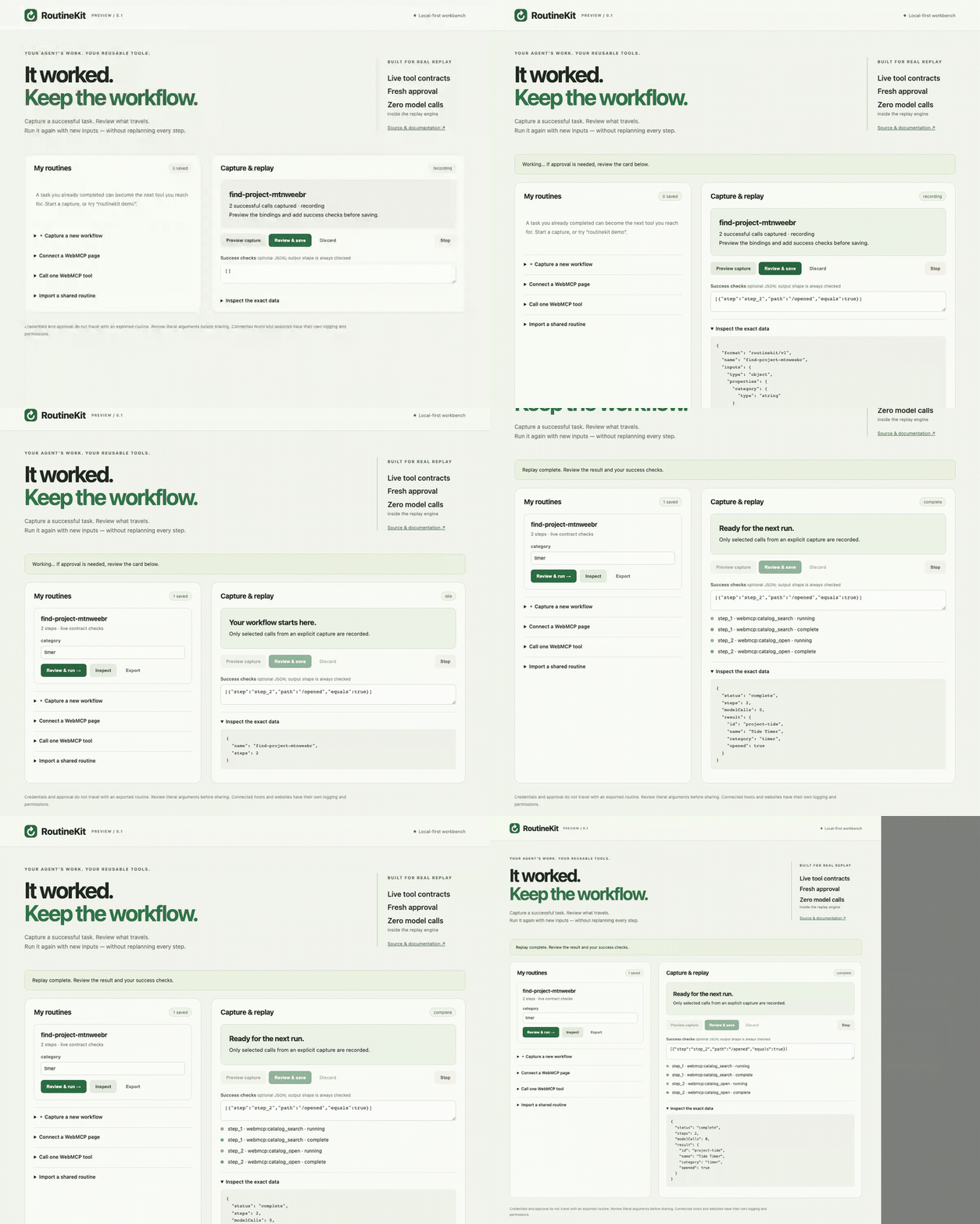
This recording is a disclosed scripted tutorial through a real native-WebMCP browser, not an autonomous-model demonstration. The replay uses a changed input and the newly returned result id.
Try it
npx routinekit doctor
npx routinekit demo
In DeepSeek Harness:
dsh plugin --profile web add routinekitUse Node 22.19+ and DSH 0.1.2-rc.1 for this preview. The browser tutorial requires current Chrome/Edge or Playwright Chromium with native WebMCP. No account, API key or GPU is required for the tutorial. Keep package-age policies intact if a newly published package is not yet eligible.
First-day installation note: npm published 0.1.0 at 2026-09-05 05:43:52 UTC. With a 24-hour package-age policy, wait until 2026-09-06 05:43:53 UTC or your longer configured window before registry installation. In an isolated test, pnpm 11.24.0's built-in non-strict default automatically added an exception for this new version; that is not counted as a policy-preserving install. Do not lower your policy or add an exception for this preview. A separate fresh npm install and its real-browser doctor check passed. The three-OS official DSH CI installs the identical packed release, not an aged registry package.
Included
- DSH tools and a local web sidebar workbench; native replay stays in the host's scoped tool and approval pipeline.
- Standalone workbench and MCP stdio server; MCP actions require human form elicitation.
- Native WebMCP discovery and execution in a fresh browser context.
- Review/import/export, companion
SKILL.md, result references, explicit success checks, contract-drift stops, and cancellation.
The replay engine makes zero model calls. Launching a saved native routine from the DSH panel queues a host request and may use the host model.
Validation and limits
25 unit/integration tests, native-browser changed-input workflows, actual workbench interactions, MCP protocol flows, isolated package installation, and official DSH installation/workspace/panel/tool-discovery/removal checks. See the exact release-source CI and the source tests.
This is an early developer preview, not a general computer-use agent or a hostile-plugin sandbox. Linear exact-value bindings only: no inferred loops, branches, transformations, arbitrary website support, or silent fallback. A SKILL.md does not transfer credentials or approval. Raw recording outputs are not saved by RoutineKit; reviewed literal arguments can still contain private data. Earlier side effects cannot be rolled back automatically. Native DSH tools must cooperate with cancellation, and MCP clients control their own approval UI dismissal.
The README covers setup, storage, browser restrictions, compatibility, and prior work. MIT licensed.