


Fast image dithering for Python, written in Rust. One call, sane defaults, every classic algorithm:
- Error diffusion — Floyd–Steinberg, Jarvis–Judice–Ninke, Stucki, Atkinson, Burkes, Sierra, Two-Row Sierra, Sierra Lite, False Floyd–Steinberg — with optional serpentine scanning.
- Ordered (Bayer) — 2×2 to 16×16 generated matrices, or bring your own threshold matrix.
- Random (white noise) — seedable.
- Palettes — dither straight to any color set (
["#0f380f", "#306230", ...]), not just black & white. - Multi-level — quantize to N gray/color levels per channel, not just 2.
- Gamma-correct mode —
linear=Truedoes the math in linear light and preserves perceived brightness (most libraries get this wrong). - Ergonomics — numpy in → numpy out, PIL in → PIL out, alpha channels preserved, forgiving names (
"fs","Floyd-Steinberg","BAYER8X8"all work, andordered_dithertakes the matrix size as an int), typed stubs, helpful error messages. - Fast — the hot loops release the GIL; ~550 MP/s ordered and ~120 MP/s Floyd–Steinberg on an M-series laptop.
pip install ditheringWheels are published for Linux (glibc + musl), macOS and Windows — one abi3 wheel per platform covers CPython 3.9 and everything newer. PyPy installs from the source distribution (needs a Rust toolchain).
from PIL import Image
import dithering

img = Image.open("photo.jpg")

# Classic black & white Floyd-Steinberg (the default):
bw = dithering.dither(img)

# Ordered dithering with an 8x8 Bayer matrix:
retro = dithering.dither(img, "bayer8x8")

# Dither to a Game Boy palette:
gameboy = dithering.dither(img, "atkinson", palette=["#0f380f", "#306230", "#8bac0f", "#9bbc0f"])

gameboy.save("gameboy.png")
Everything also works directly on numpy arrays (2-D grayscale or H×W×C uint8), and returns arrays in that case:
import numpy as np
import dithering

arr = np.asarray(Image.open("photo.jpg"))
out = dithering.error_diffusion(arr, "stucki", serpentine=True, levels=4)| Original | Floyd–Steinberg | Atkinson |
|---|---|---|
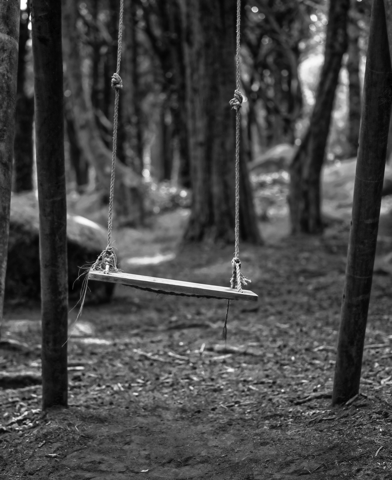 |
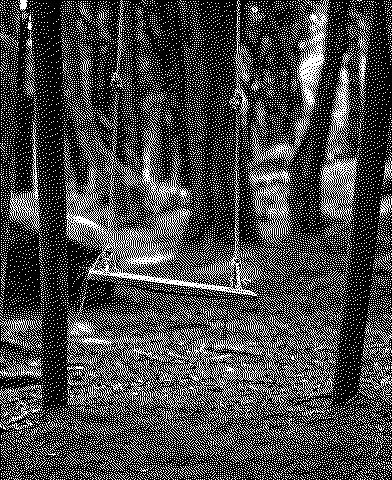 |
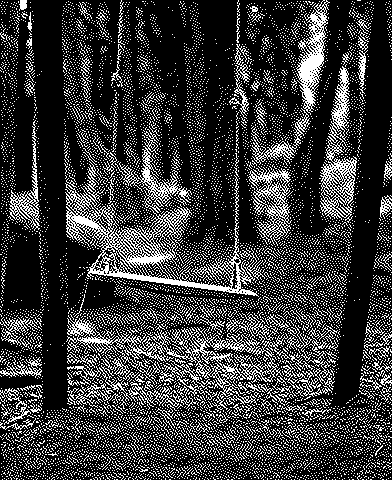 |
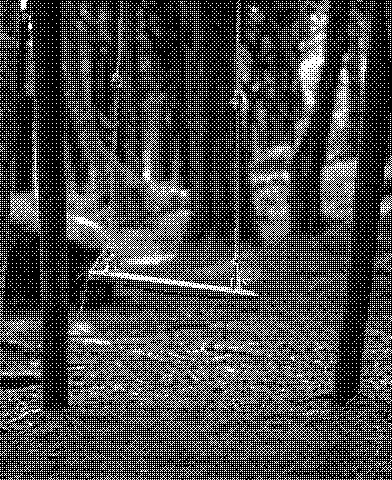
| Bayer 2×2 | Bayer 8×8 | Random |
|---|---|---|
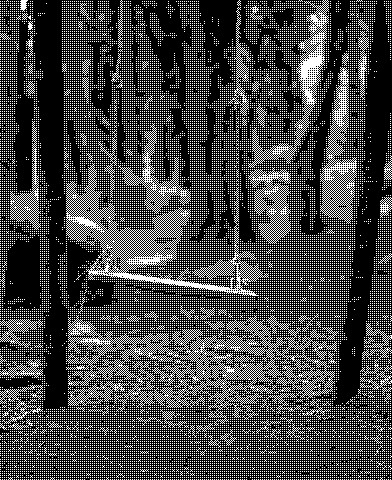 |
 |
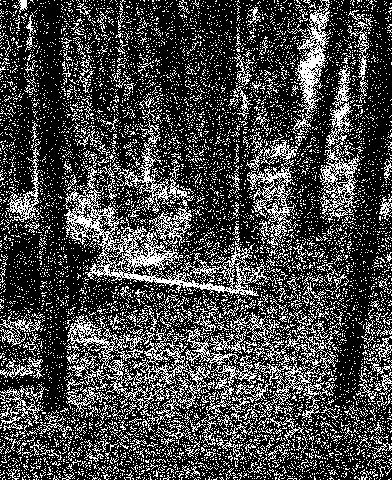 |
| RGB Floyd–Steinberg | Game Boy palette | 16-color palette, Bayer 8×8 |
|---|---|---|
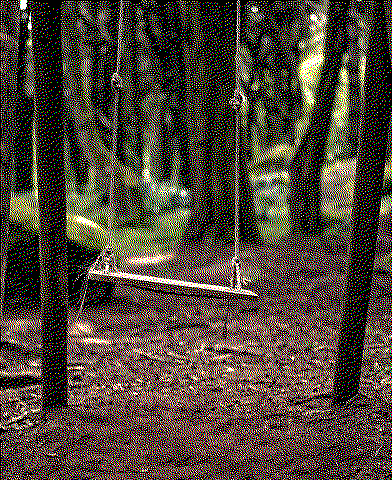 |
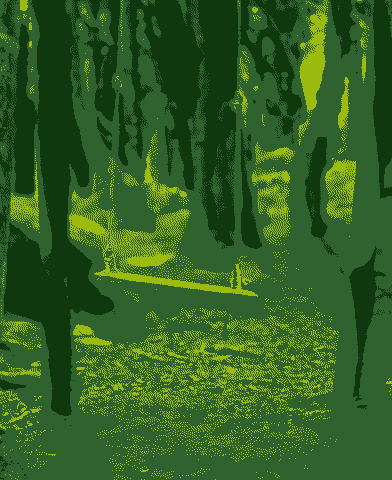 |
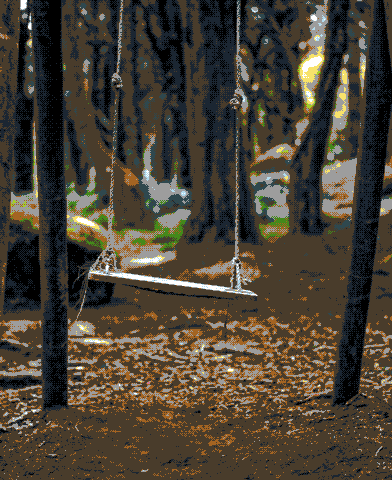 |
The one-stop entry point dispatches on the method name:
dithering.dither(image, method="floyd_steinberg", *, levels=2, palette=None,
                 serpentine=False, seed=None, strength=1.0, linear=False,
                 preserve_alpha=True)
Or call the specific functions — same parameters, minus the ones that don't apply:
| Function | Methods |
|---|---|
error_diffusion(image, method, ...) |
floyd_steinberg (alias fs), false_floyd_steinberg (ffs), jarvis_judice_ninke (jjn), stucki, atkinson, burkes, sierra (sierra3), sierra_two_row (sierra2), sierra_lite |
ordered_dither(image, matrix, ...) |
bayer2x2 … bayer16x16, the size as an int (8), or a custom 2-D numpy matrix (integer dtype = Bayer-style indices, float dtype = thresholds in [0, 1]) |
random_dither(image, ...) |
white noise; pass seed= for reproducible output |
All names are case-insensitive and -/_ are interchangeable. available_methods() and available_matrices() list the valid names at runtime.
Common parameters
| Parameter | Default | Meaning |
|---|---|---|
levels |
2 |
Output levels per channel. 2 = black & white; 4 gives 0/85/170/255, etc. |
palette |
None |
Dither to these exact colors instead of gray levels. Hex strings ("#fff", "#0f380f") or (r, g, b) tuples. Needs an RGB(A) image. |
serpentine |
False |
(Error diffusion) alternate the scan direction each row; reduces directional "worm" artifacts. |
strength |
1.0 |
0.0 = plain quantization, 1.0 = full dithering. |
linear |
False |
Do the math in linear light (gamma-correct). sRGB 50 % gray is only ~21 % linear light — with linear=True the dithered result keeps the perceived brightness of the original instead of coming out too bright. |
preserve_alpha |
True |
For LA/RGBA inputs, pass the alpha channel through untouched instead of dithering it. |
Input/output contract
- Accepts uint8 numpy arrays — 2-D grayscale or 3-D (H, W, C) — and PIL images (any mode; exotic modes are converted to RGB first).
- Returns a new uint8 array of the same shape, or a PIL image if you passed one. The input is never modified.
- Float arrays are rejected with a hint (
(img * 255).clip(0, 255).astype(np.uint8)), invalid names raiseValueErrorlisting the valid ones.
2048×2048 grayscale (4.2 MP) on an Apple M-series laptop:
| Operation | Time | Throughput |
|---|---|---|
ordered_dither, Bayer 8×8 |
~8 ms | ~550 MP/s |
random_dither |
~7 ms | ~570 MP/s |
error_diffusion, Floyd–Steinberg |
~34 ms | ~120 MP/s |
error_diffusion, Stucki + serpentine |
~38 ms | ~110 MP/s |
Pillow convert("1") (Floyd–Steinberg, the only dither it has) |
~18 ms | ~240 MP/s |
Pillow's single hard-coded binary-grayscale Floyd–Steinberg loop is still faster than our general engine — but it can't do other kernels, serpentine, levels, palettes, strength or linear light. Pure-Python libraries are typically 100–1000× slower. The hot loops release the GIL, so other Python threads keep running.
- Bayer thresholds use the mean-preserving
(index + 0.5) / n²convention: a 50 % gray dithers to exactly 50 % white pixels, solid black stays black, solid white stays white. - Error-diffusion kernels are the canonical published coefficients; error falling off the image edge is discarded.
- Atkinson intentionally diffuses only 6/8 of the error — deep shadows and highlights clip to solid black/white. That's the classic Mac look, not a bug.
- The test suite (44 Rust + 82 Python tests) asserts mean preservation, palette exactness, alpha preservation and reproducibility for every algorithm.
cargo test                                    # Rust unit tests
maturin develop --release                     # build into the active venv
pytest tests/ -v # Python end-to-end testsContributions are welcome! Fork the repository, create a branch from main, make your changes (please add tests), and open a pull request.
MIT — see LICENSE.
Questions, suggestions, feedback: open an issue on GitHub or email patrik@tensorhead.com.