Media Gallery
This gallery shows Pico I/O Bridge running on RP2040 and RP2350 boards, from the hardware itself to automatically selected web panels, instrument-control software, and service discovery on desktop and mobile devices.
Click any image to open it at full resolution.
 Adafruit Feather RP2040 USB Host BleuIO connected to the PIO USB host port. |
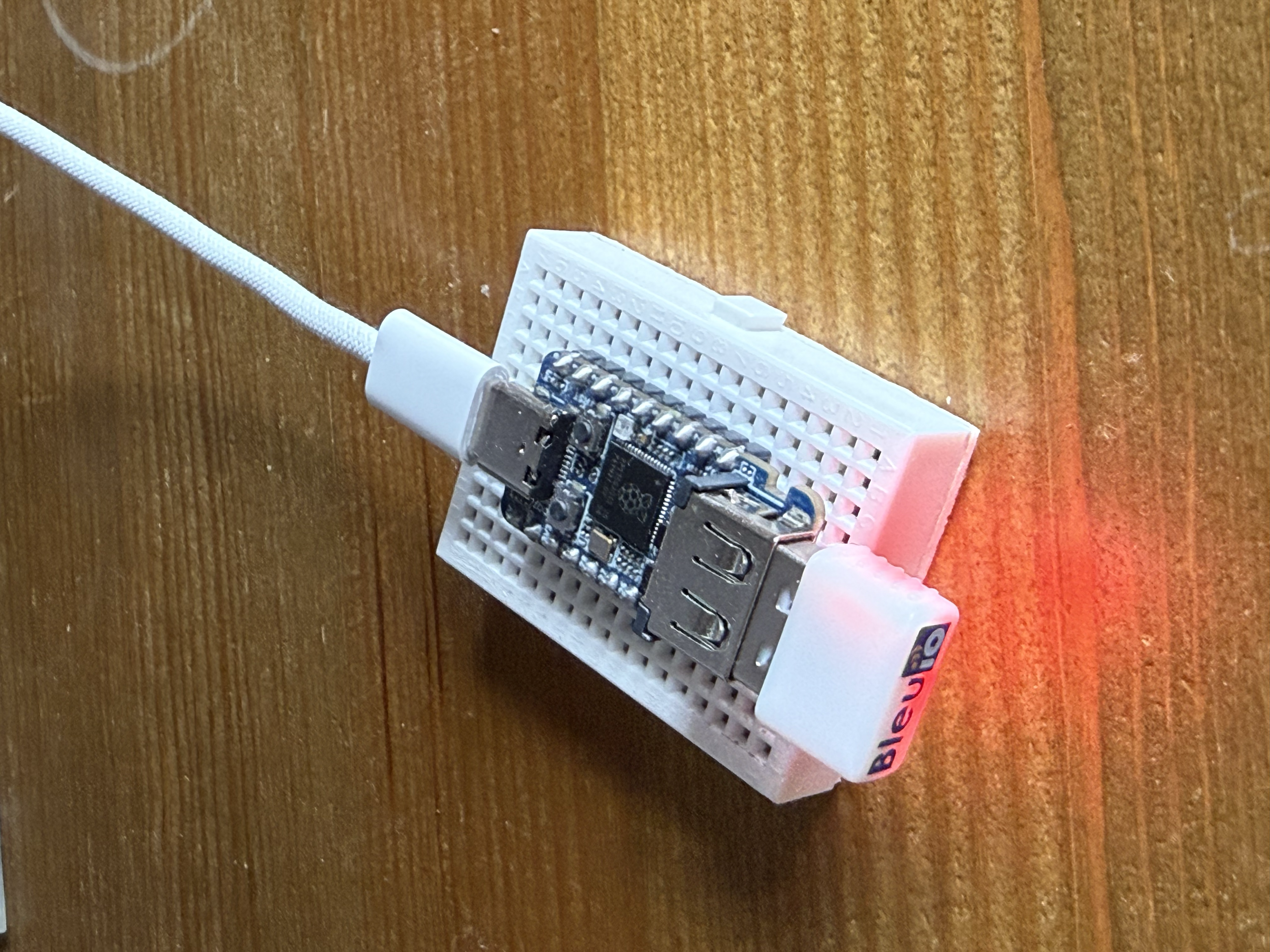 Waveshare RP2350-USB-A The same BleuIO integration running on RP2350. |
With a BleuIO dongle attached, Pico I/O Bridge starts a managed BLE scan and automatically presents discovered HibouAir environmental sensors. The same data is also available through SCPI, while the raw BleuIO connection remains accessible on TCP port 7000.
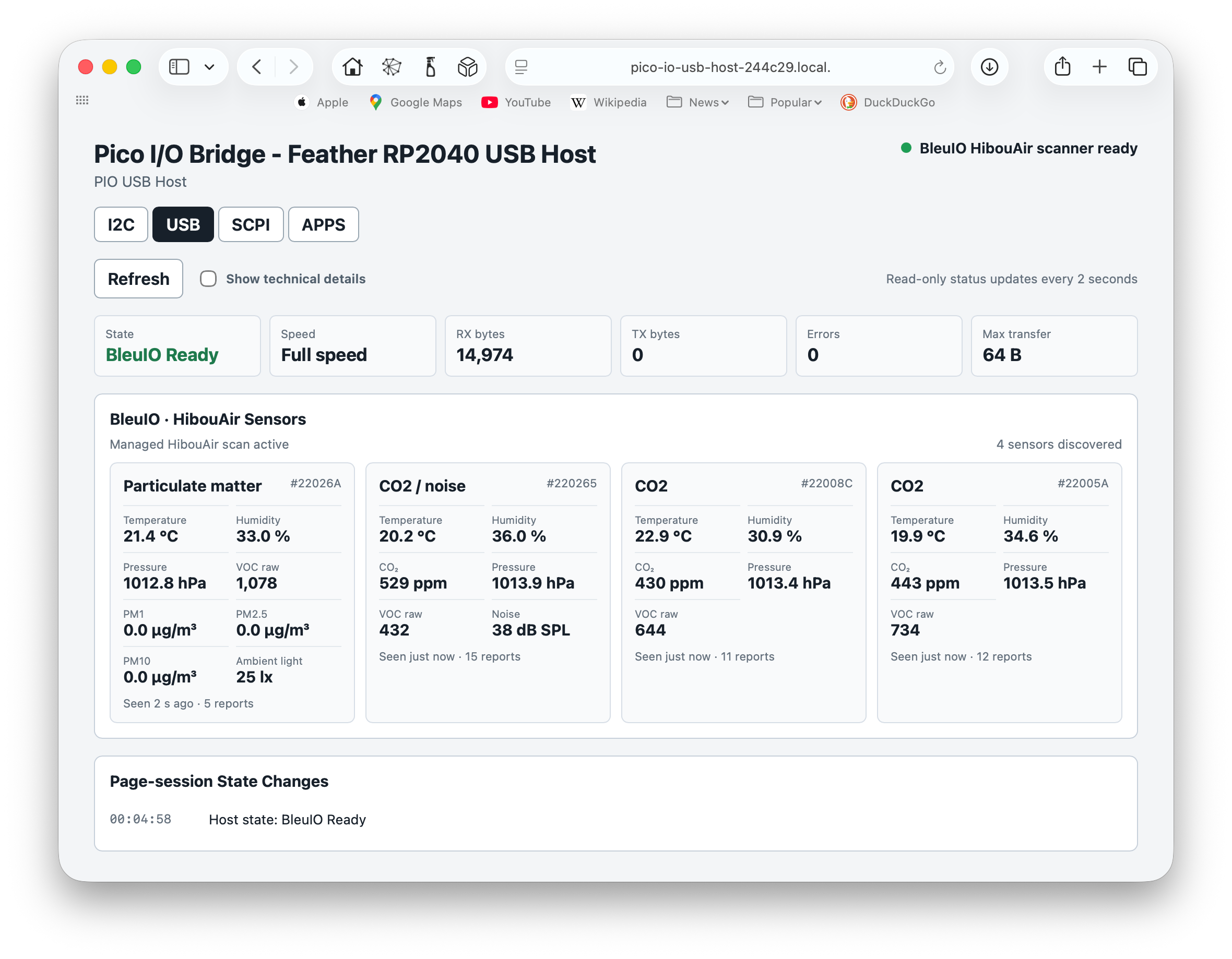
Four HibouAir sensors displayed in the responsive desktop dashboard.
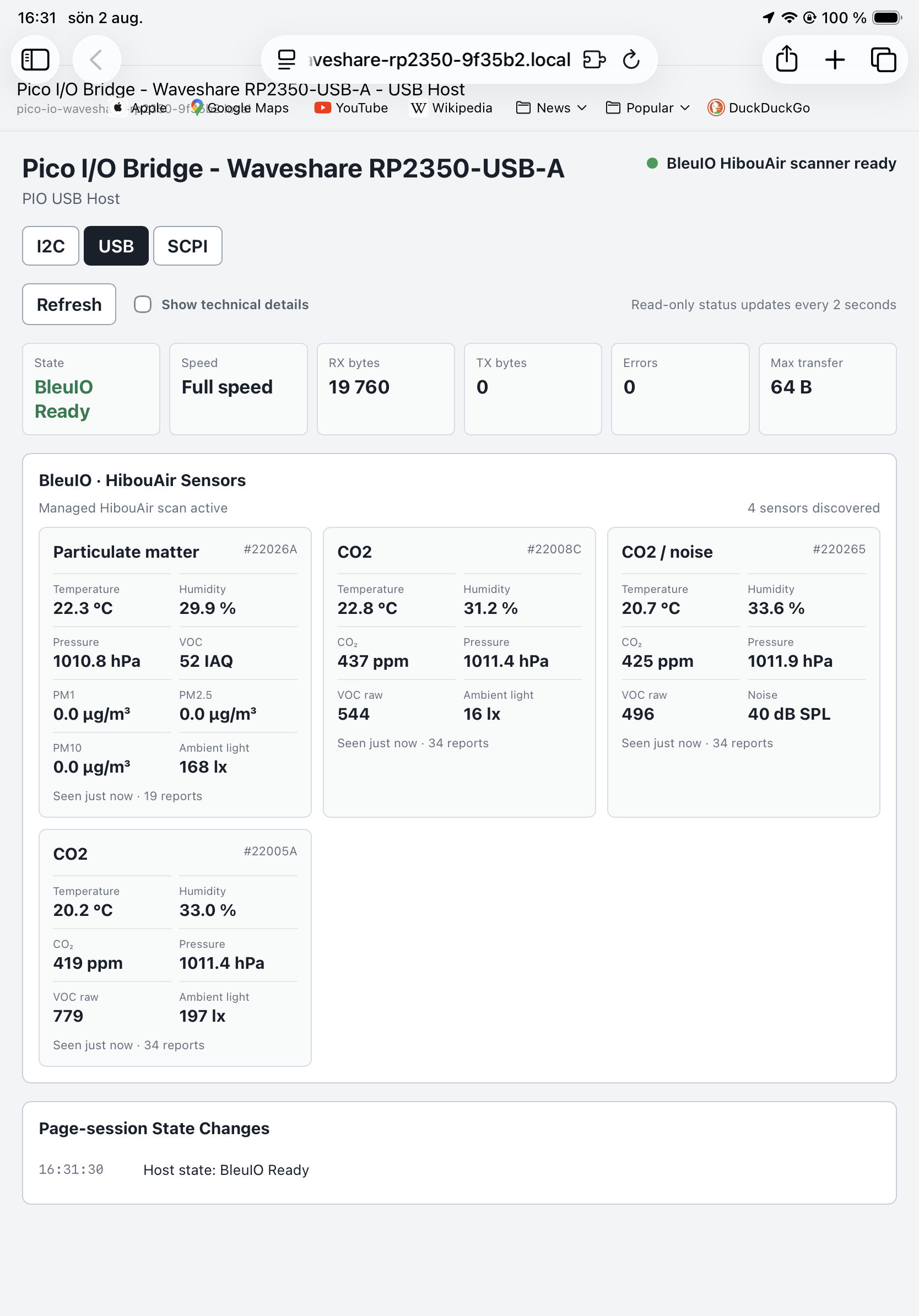
The same live sensor catalog on an iPad, served directly by a Waveshare RP2350-USB-A.
Connecting a first-generation low-speed Wi-Spy automatically replaces the generic USB view with a live 2.4 GHz spectrum display.
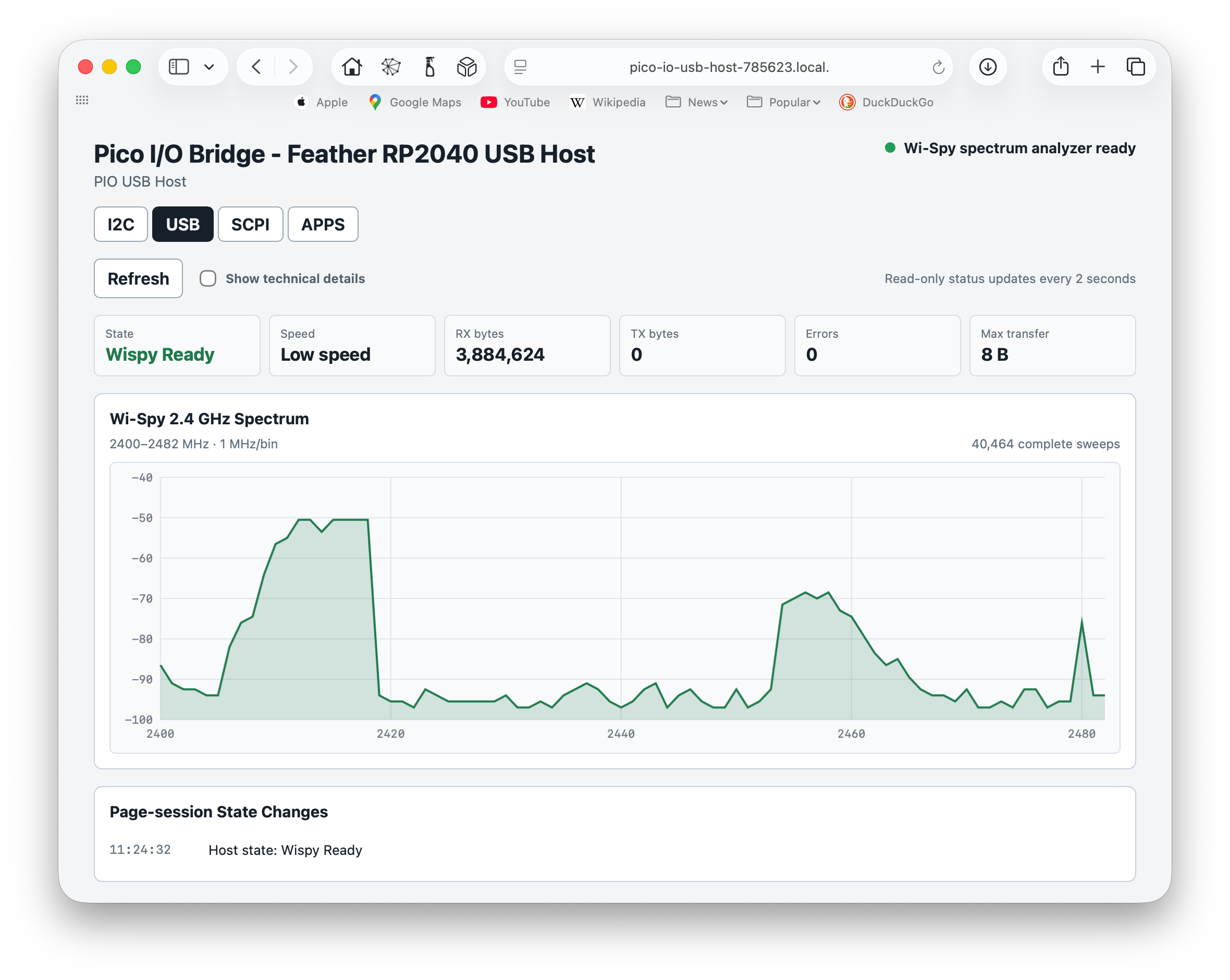 Desktop browser |
 iPad in dark mode |
Audio from a USB Audio Class measurement microphone is captured isochronously by the PIO host. PCM snapshots are sent to the browser, where a 4096-point FFT produces a responsive logarithmic audio spectrum.
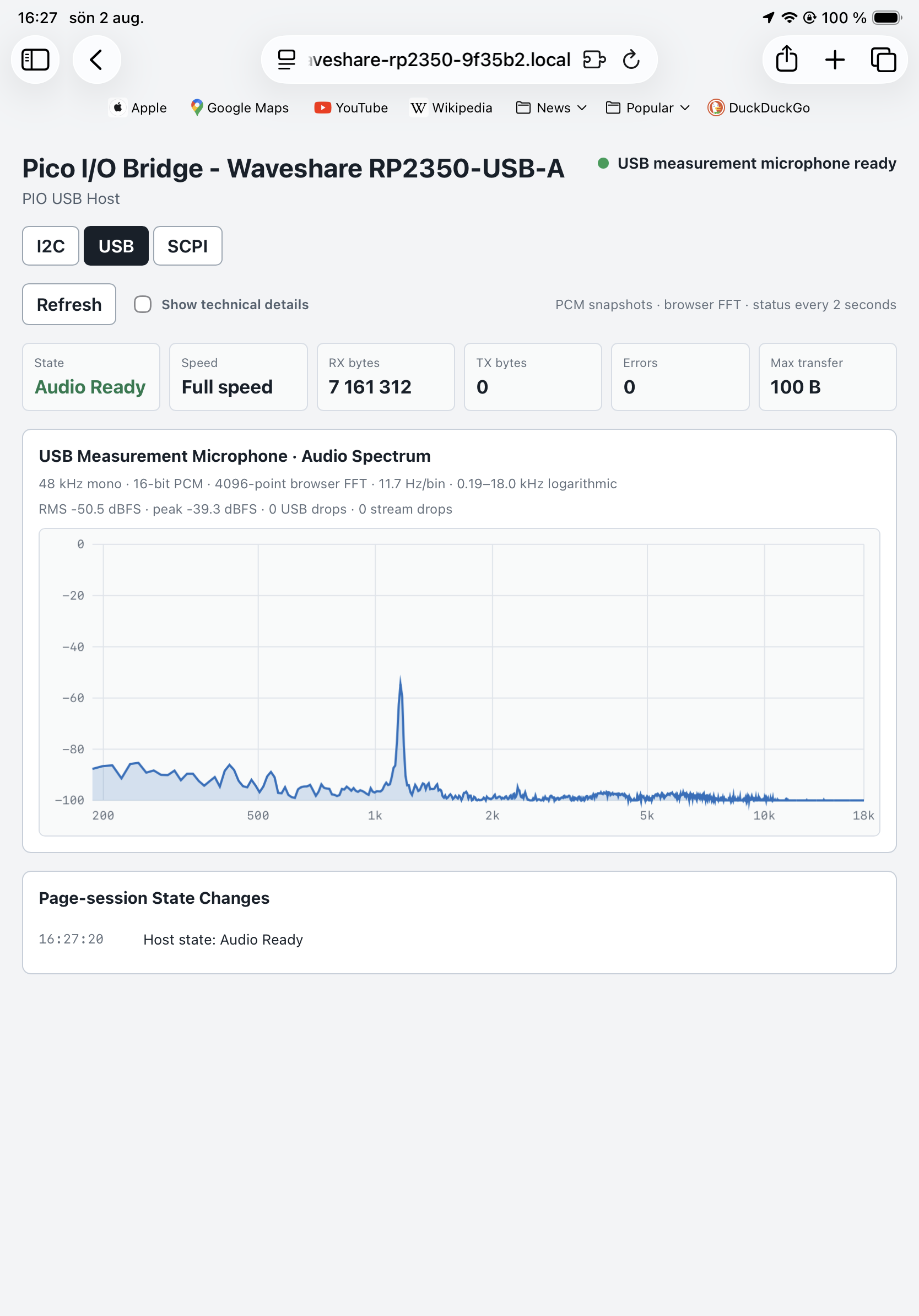
Live browser FFT on an iPad, served by a Waveshare RP2350 board.
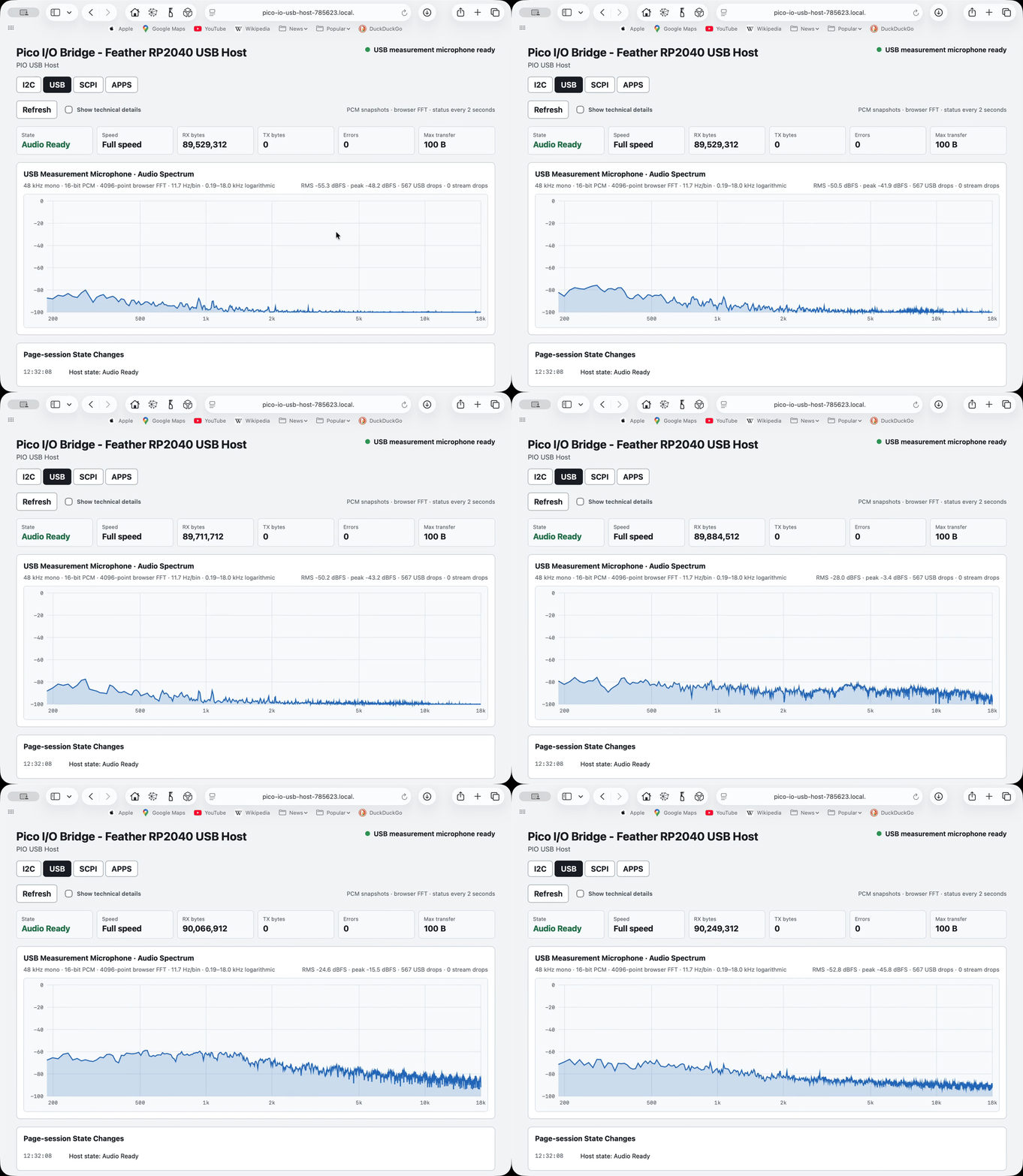
Animated spectrum capture. A higher-quality MP4 version is also available.
Vendor-specific FTDI serial adapters can be exposed as a raw network serial port on TCP port 7000. Baud rate configuration and live transfer statistics are available from SCPI and the web interface.
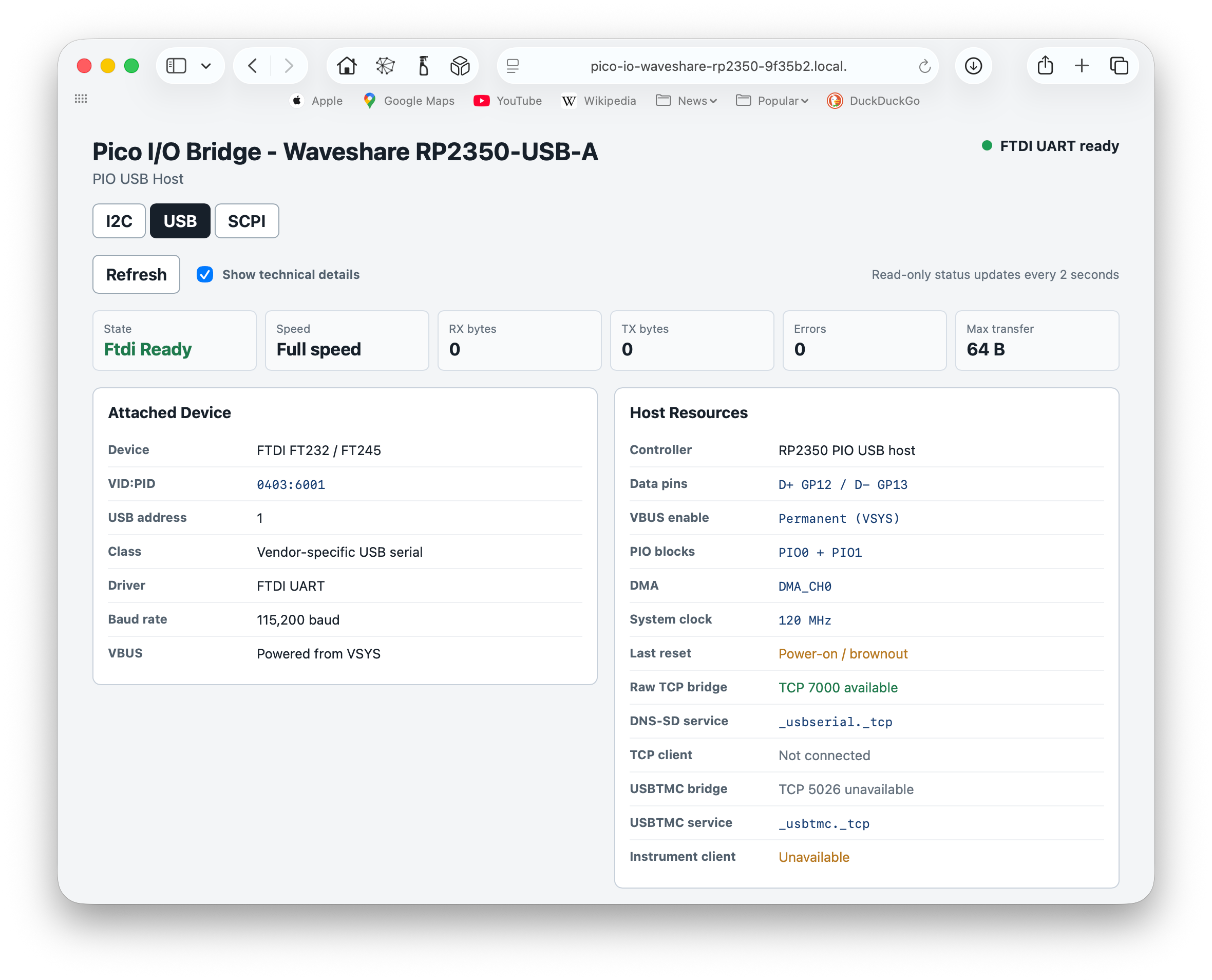
An FTDI adapter running at 115200 baud on the Waveshare RP2350-USB-A.
Pico I/O Bridge exposes its own SCPI socket on TCP port 5025. USBTMC instruments attached to the PIO host can additionally be bridged to TCP port 5026.
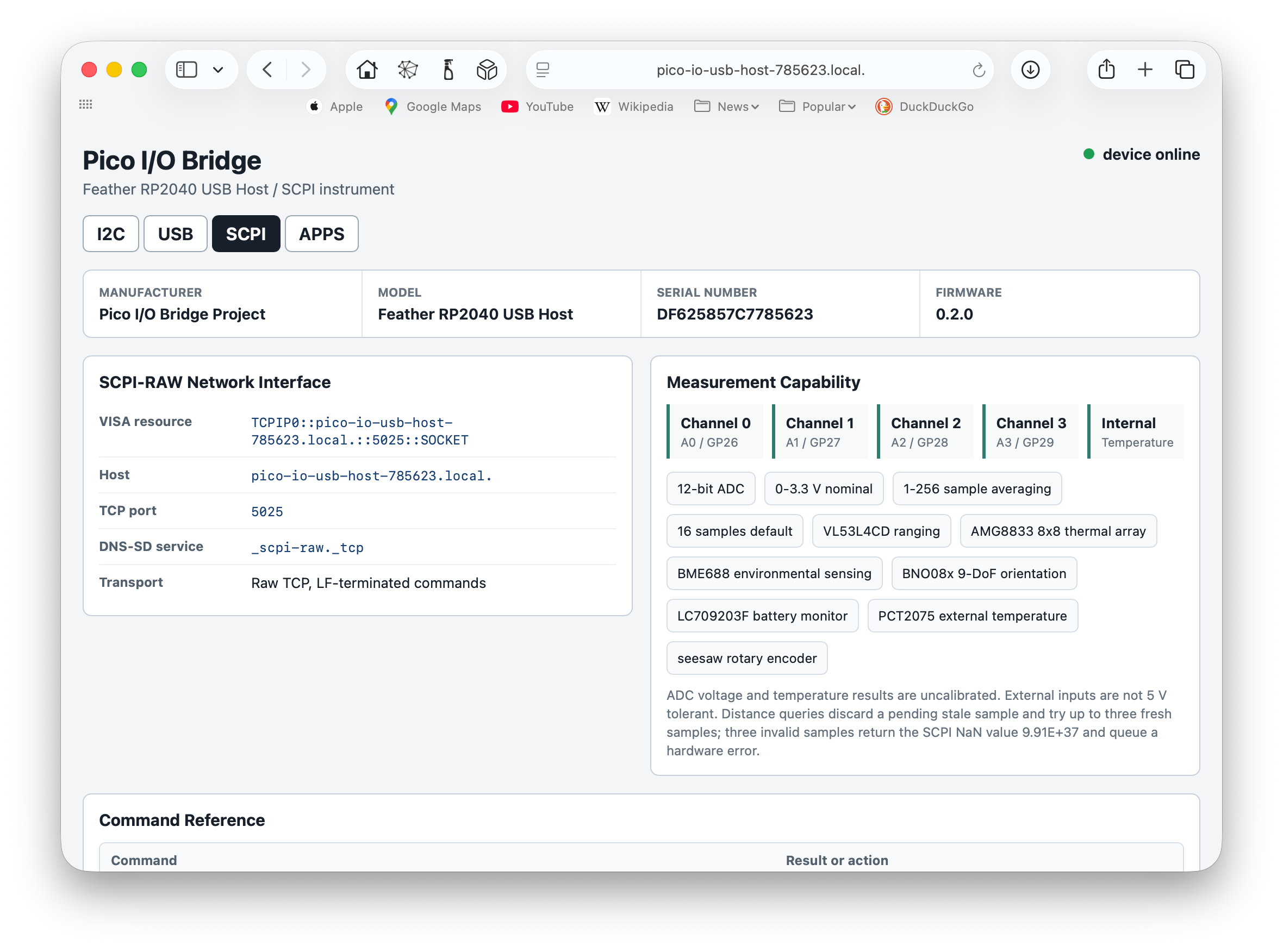
The built-in SCPI reference and connection information.
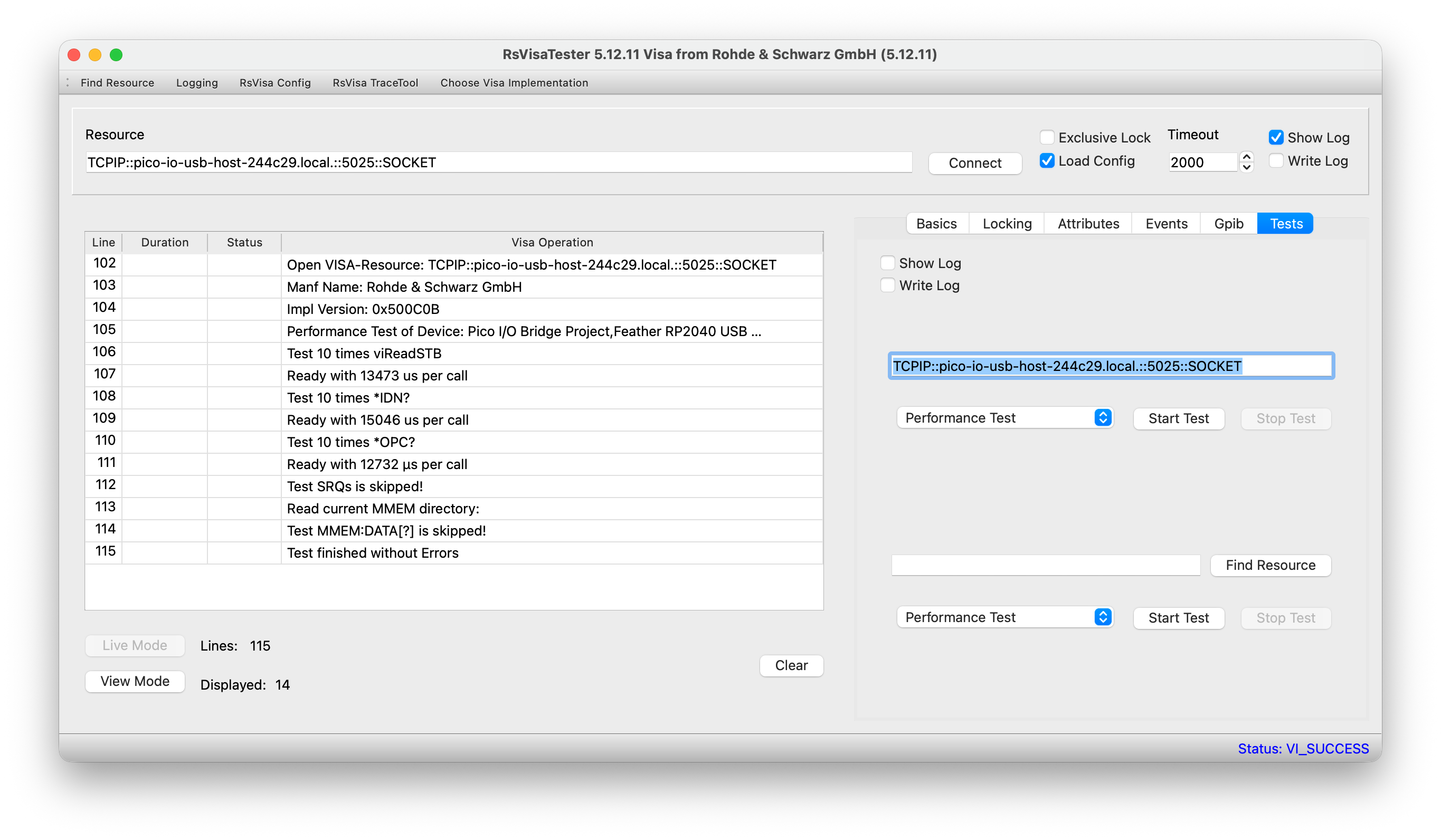
Rohde & Schwarz VISA Tester using a TCP/IP socket resource. The performance test completed without errors.

SCPI Commander on an iPhone connected to an RP2040 CAN Bus Feather.
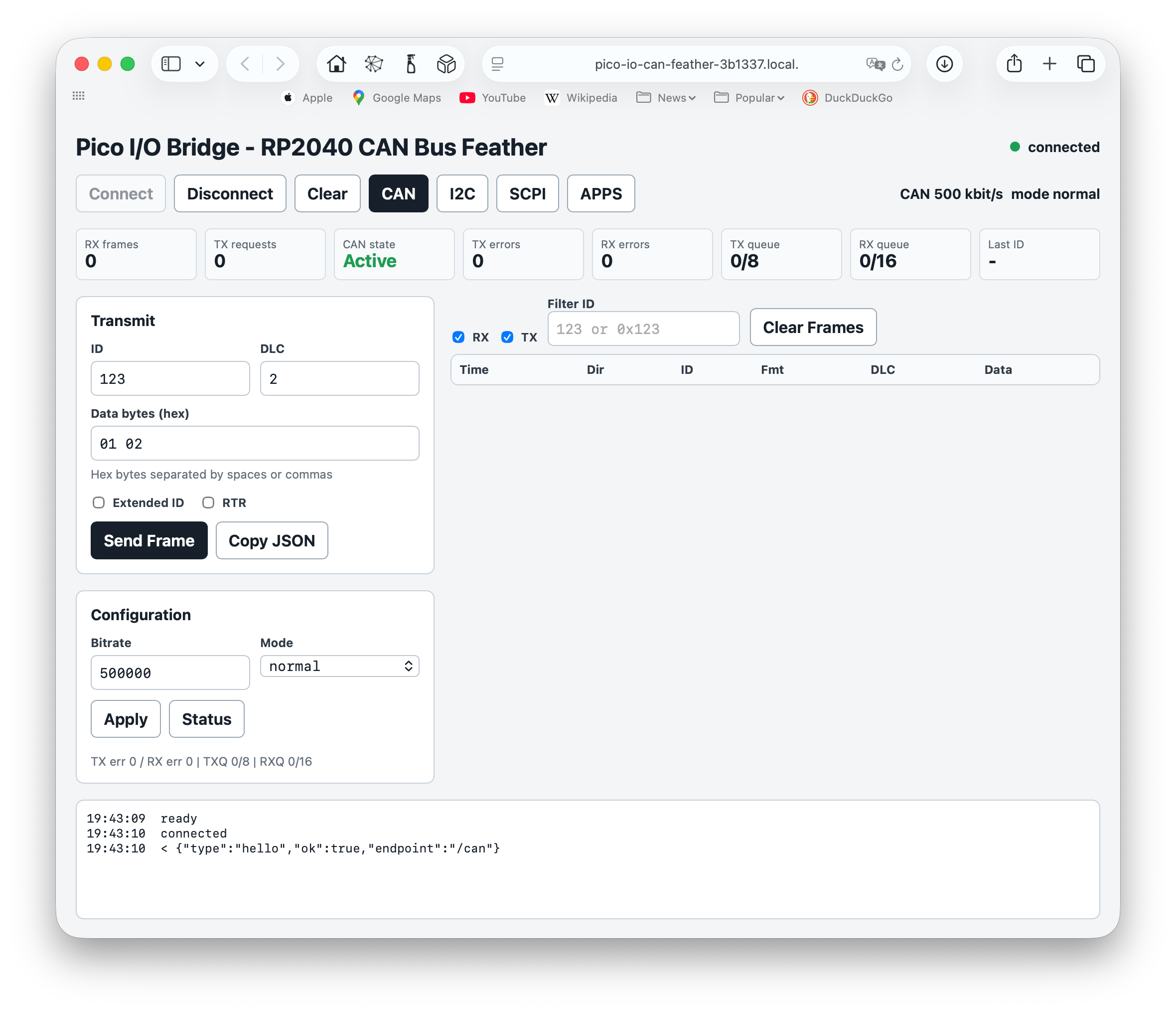
The interactive CAN bus console on an Adafruit RP2040 CAN Bus Feather.
Boards with sufficient flash can reserve a LittleFS partition for self-contained local HTML applications. Apps are uploaded and launched from the browser and automatically use the board that served them, avoiding hard-coded host names.
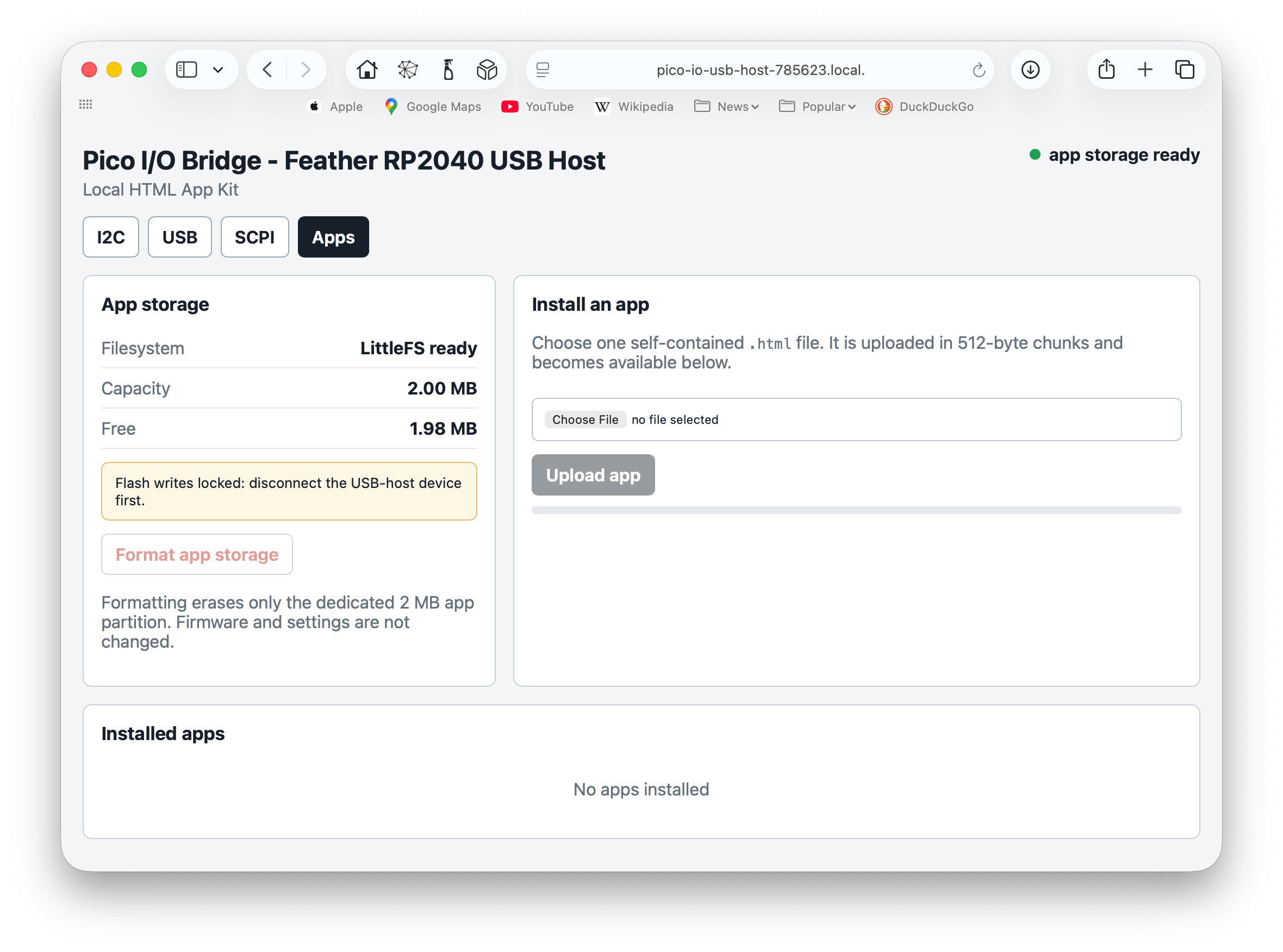
The App Kit file manager with a 2 MiB LittleFS partition.
Every board derives a unique host name and DNS-SD instance name from its silicon ID. Multiple Pico I/O Bridges can therefore be connected to the same computer without name collisions.
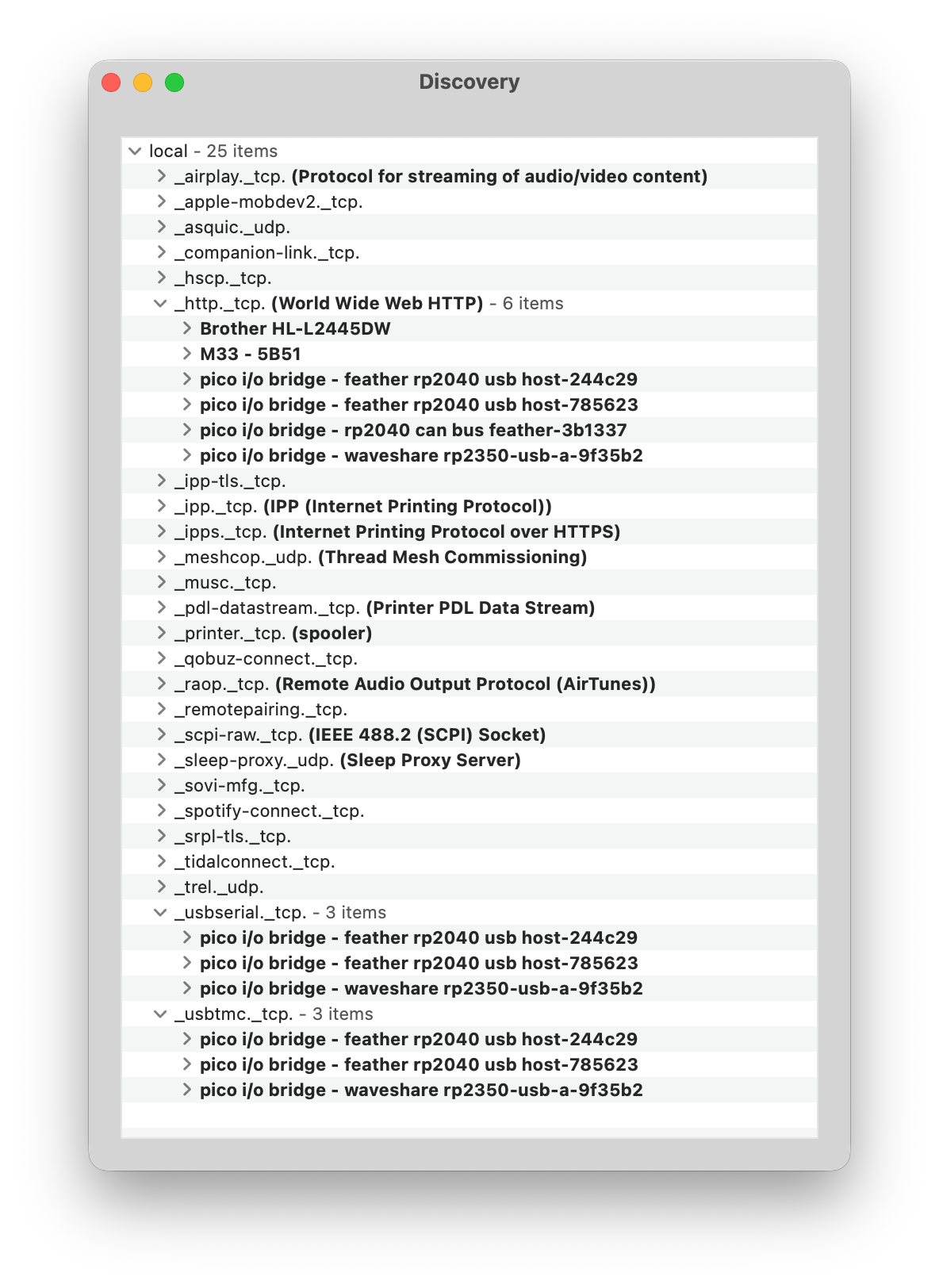 Discovery for macOS HTTP, raw USB serial, and USBTMC services from four boards. |
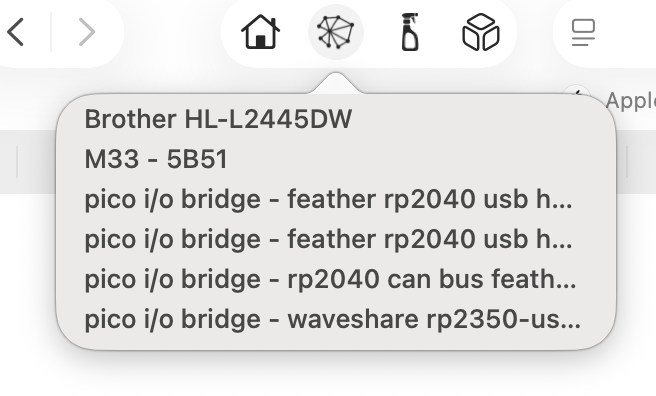 Safari Bonjour browser Opening a board directly from its advertised HTTP service. |