04_Block Module Design
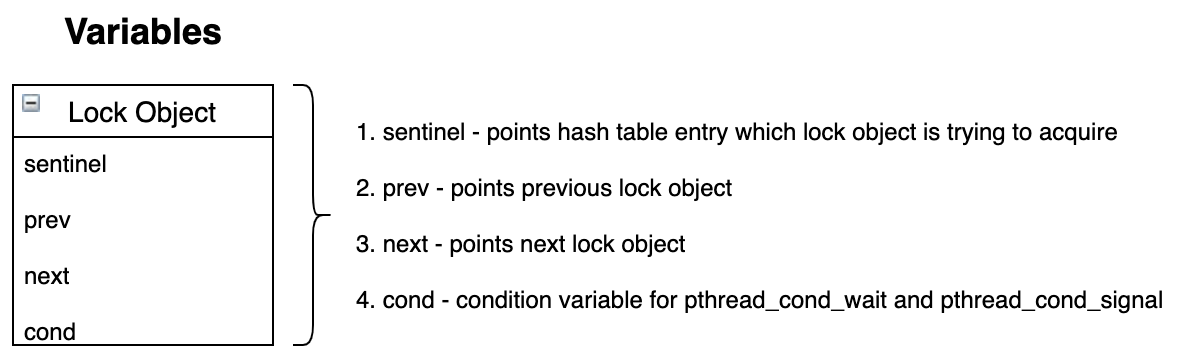
struct lock_t {
	hash_table_entry * sentinel;
	lock_t * prev;
	lock_t * next;
	pthread_cond_t cond;
};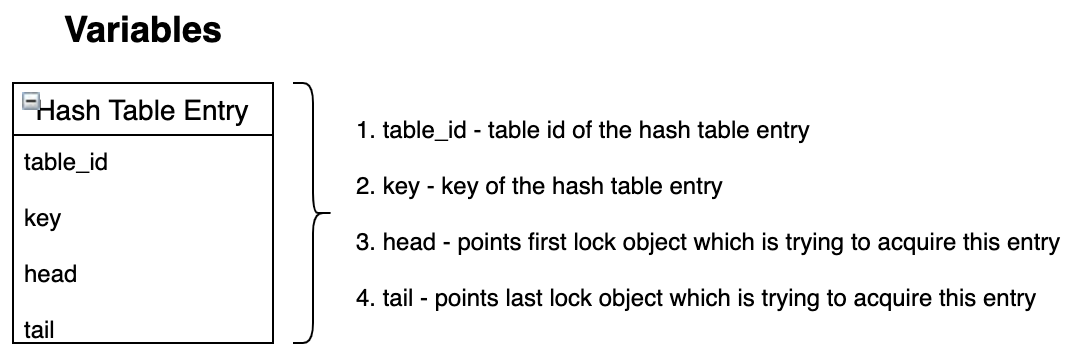
struct hash_table_entry {
	int table_id;
	int64_t key;
	lock_t * head;
	lock_t * tail;
};unordered_map is used for hash table.
Access to hash table entry by table_id and key.
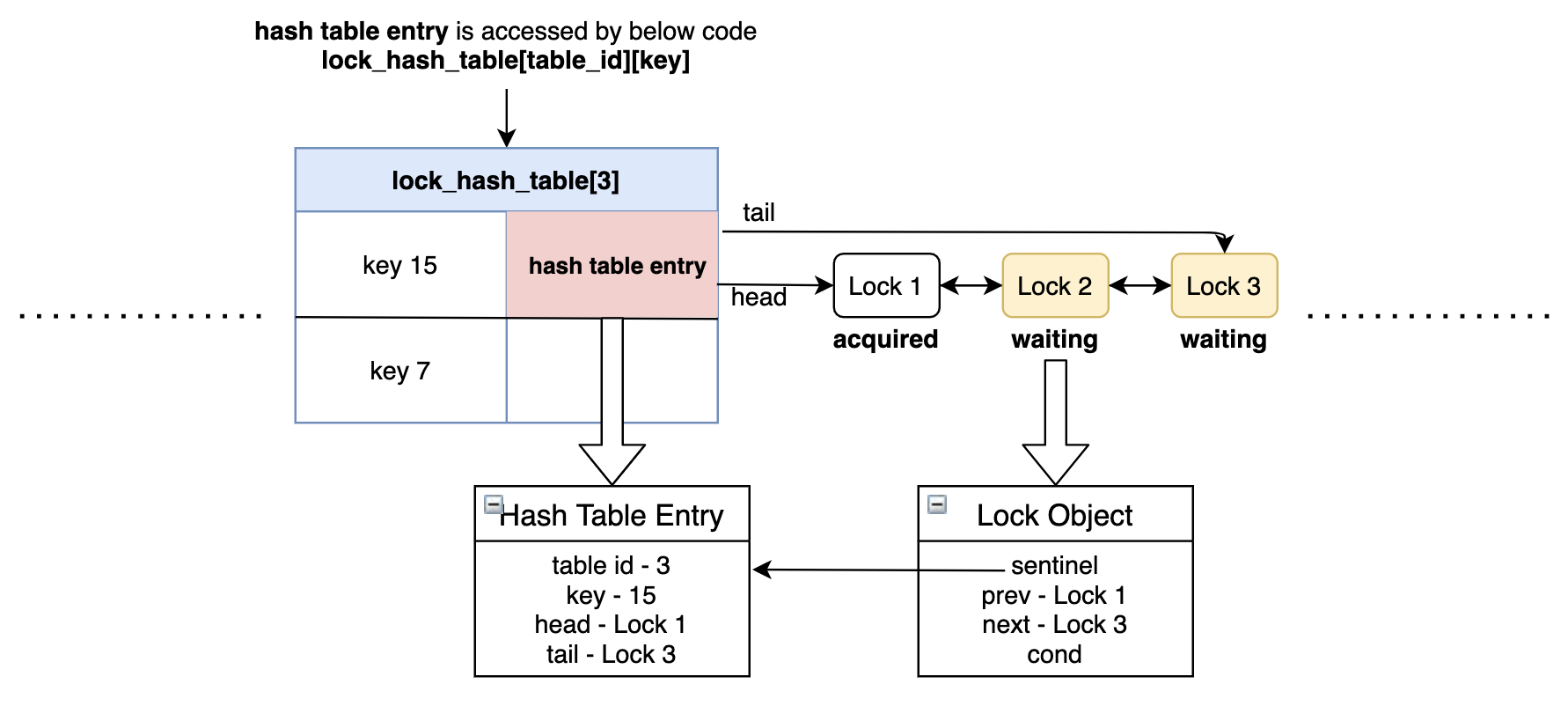
unordered_map< int, unordered_map<int64_t, hash_table_entry> > lock_hash_table;Initialize global mutex.
Global mutex is used to handle simultaneous requests to lock table sequentially.
So from now, it is called latch.
// lock_table_latch is global mutex
int init_lock_table() {
	pthread_mutex_init(&lock_table_latch, NULL);
	return 0;
}Initialize hash table entry and new lock object.
Add new lock object to lock list.
In this case, condition variable is not initialized. Because, new lock object does not wait to acquire the entry.
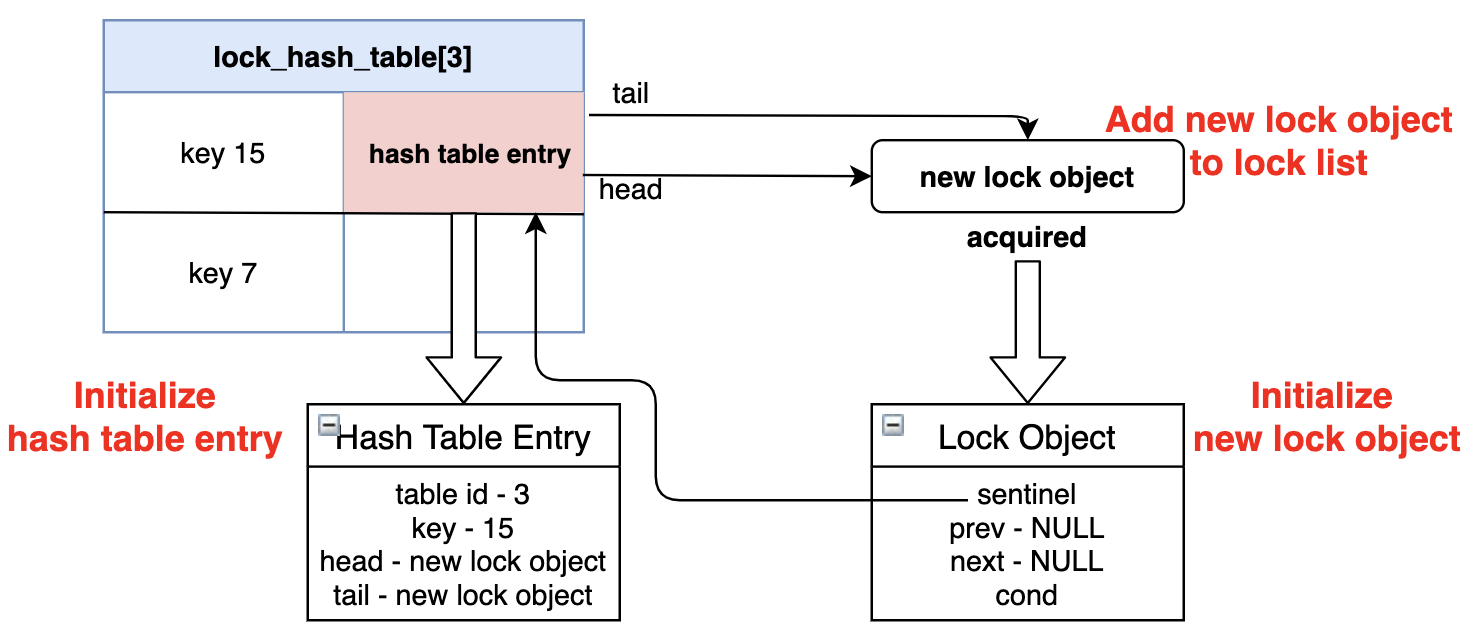
Initialize new lock object.
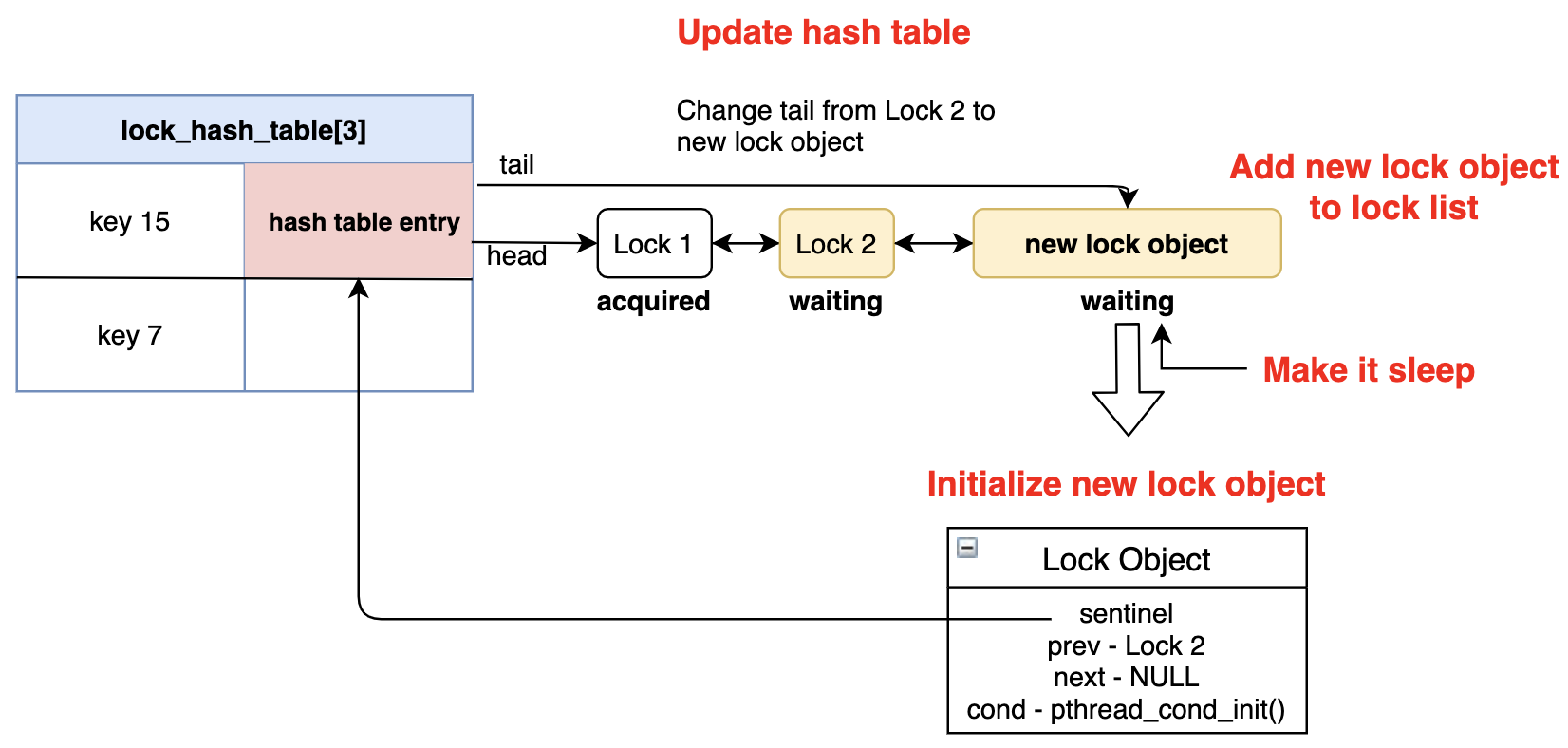
In this case, condition variable must be initialized to wait until its turn.
Update hash table.
Add new lock object to lock list.
Make new lock object sleep until the predecessor to release its lock by pthread_cond_wait(&lock_obj->cond, &lock_table_latch).
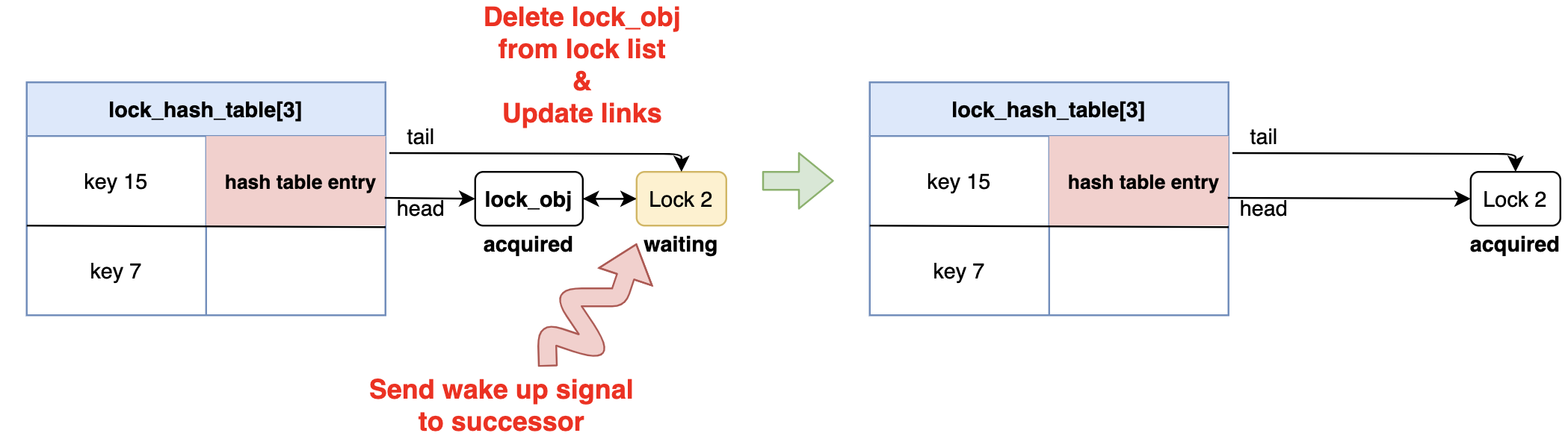
Delete lock_obj from lock list and update links.
Free lock_obj.
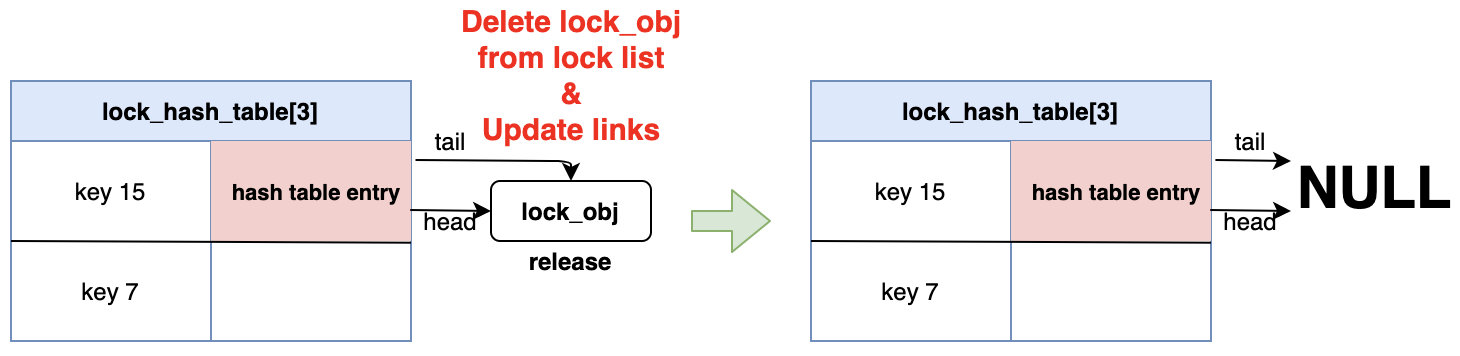
Delete lock_obj from lock list and update links.
Send wake up signal to successor.
Free lock_obj.