
Take back control, at your pace.
A private, judgment-free companion for understanding or changing cornography use.


StopCorn helps adults create some distance between an urge and a decision, notice patterns without shame, and make progress toward a goal they choose for themselves. There is no account, no feed, no advertising, and no monitoring of browsing activity. The information entered in the app stays on the device by default.
Important
StopCorn is a self-help and self-observation tool. It is not a medical device, diagnosis, or treatment. If distress or loss of control persists, support from a qualified professional may be helpful.
- Immediate support when an urge appears. Choose a guided pause, launch a personal backup-plan action, or try another concrete idea.
- Goals that fit real life. Start with observation, reduction, abstinence, or contexts you specifically want to protect.
- A journal without moral scoring. Bring voluntary events, completed support sessions, check-ins, general contexts, and private notes into one timeline.
- Descriptive progress, not promises. Explore trends, helpful strategies, check-in markers, and the active goal while keeping missing data in context.
- Short offline learning modules. Nine bilingual modules explain urges, habits, shame, environments, emotions, self-monitoring, setbacks, and sustainable change, each with per-section takeaways and cited sources.
- Optional encouragement. A non-punitive daily “harvest” recognizes useful actions without turning abstinence into a competition.
Everything important remains available for free. Optional financial support does not unlock essential features.
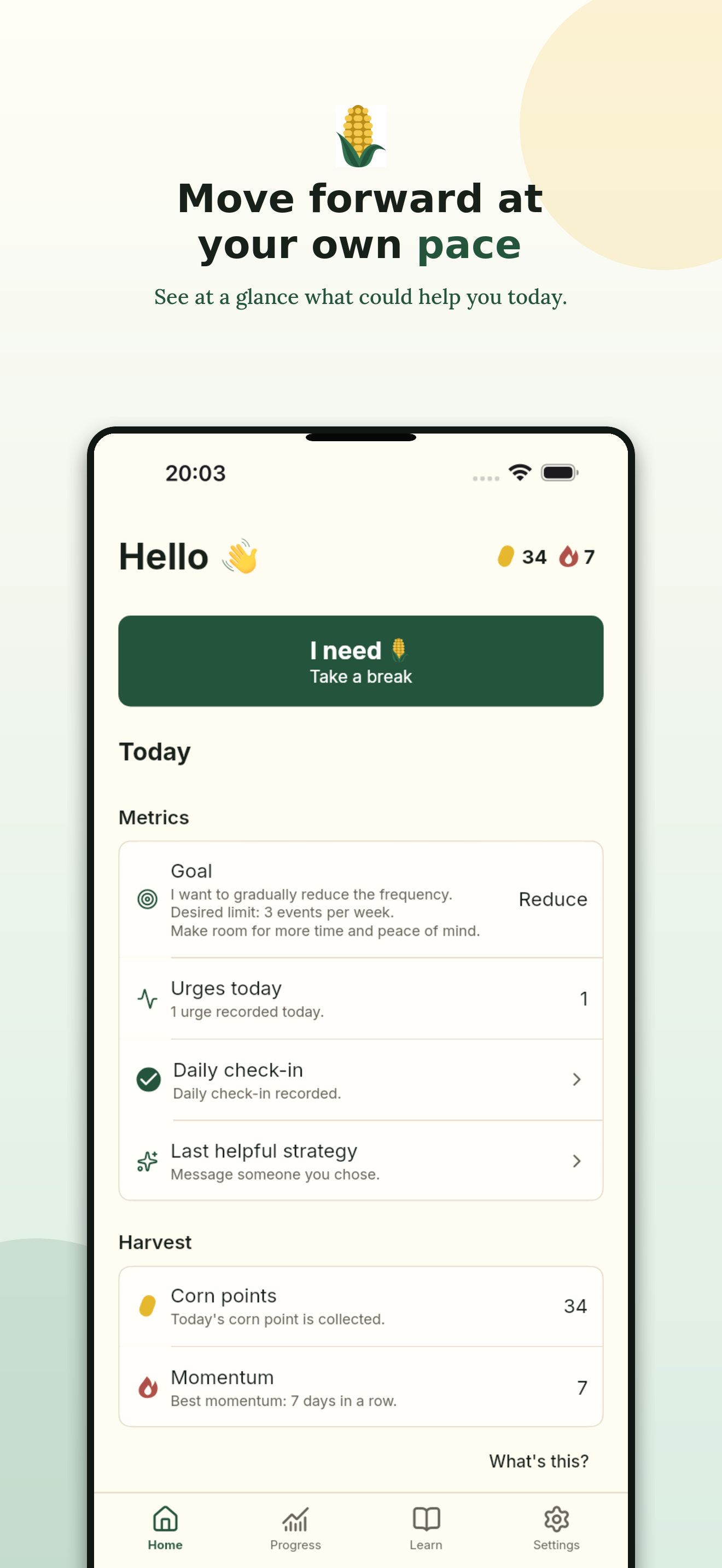
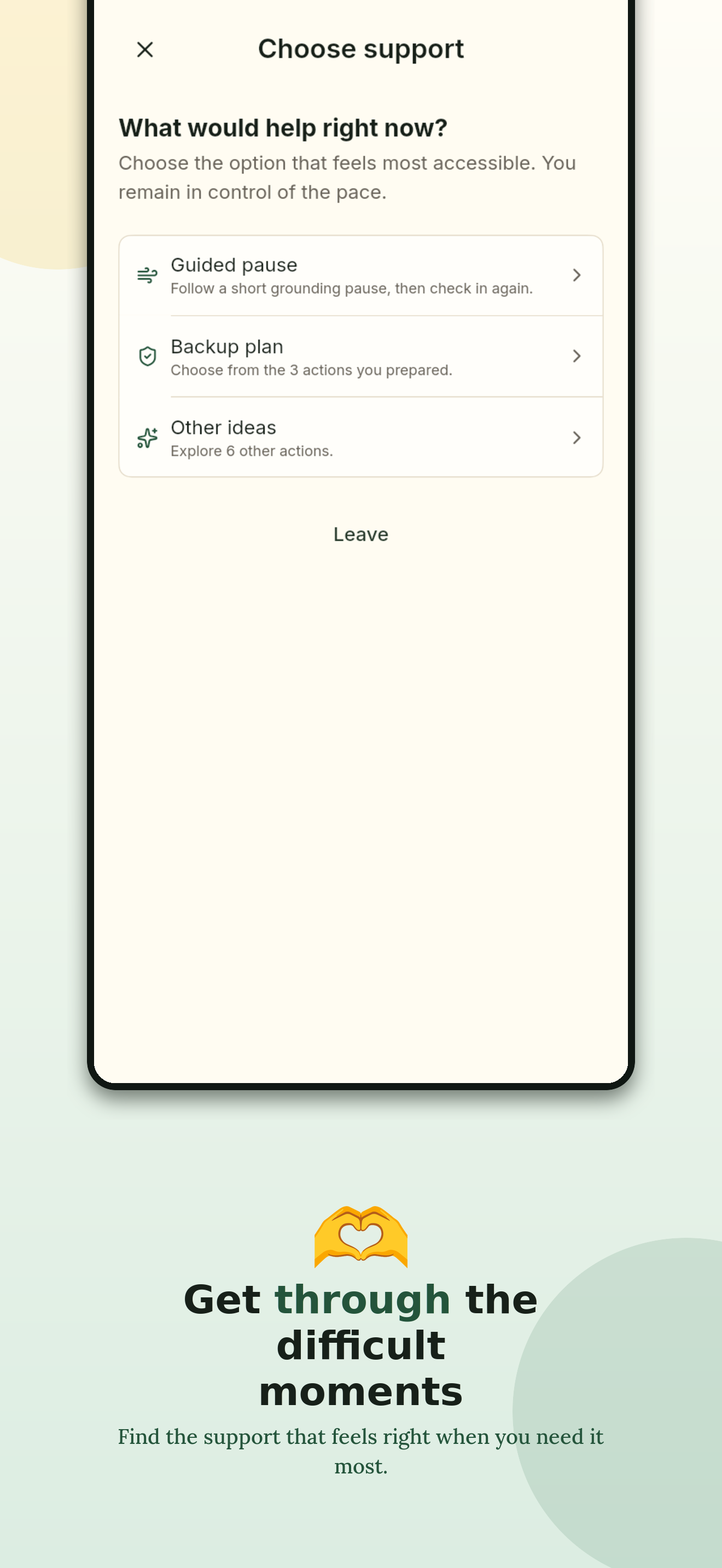
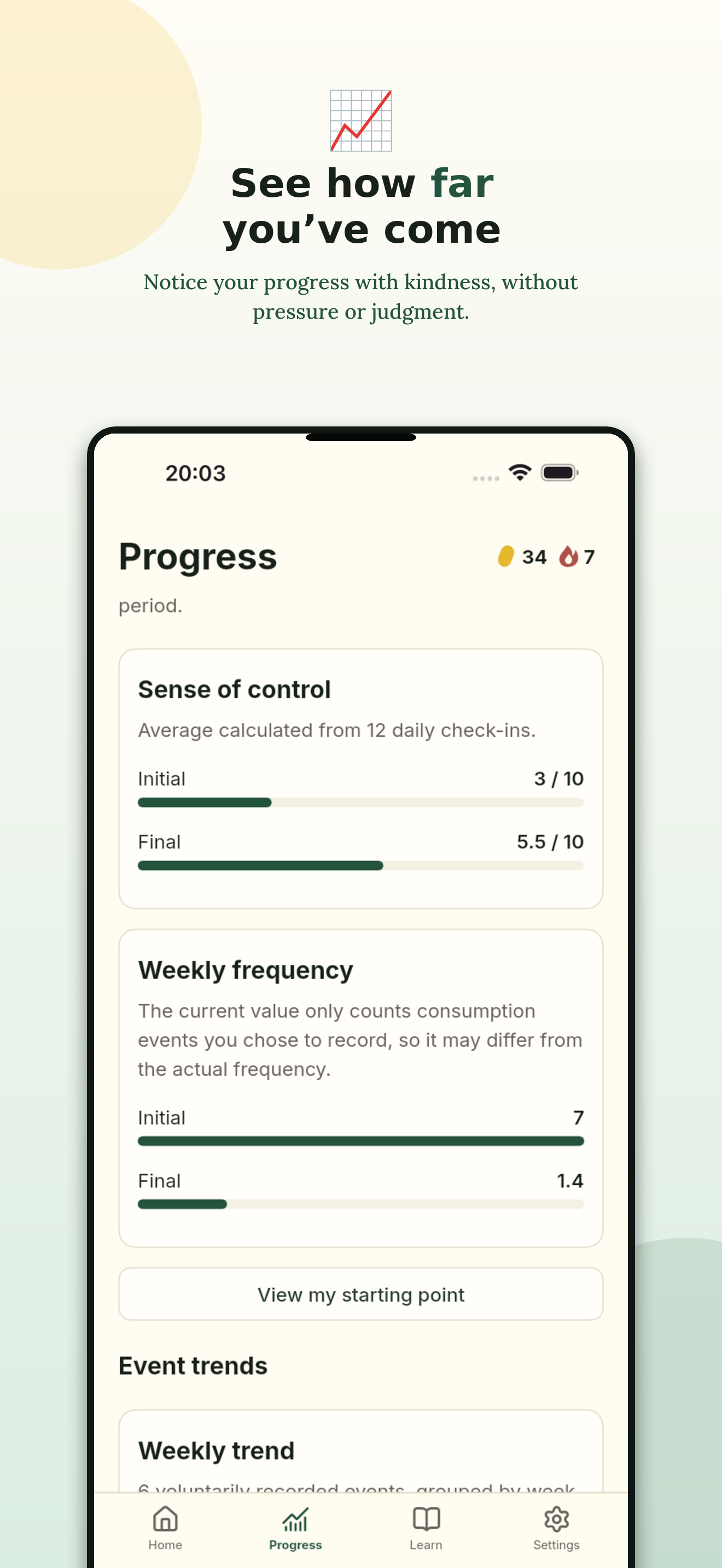
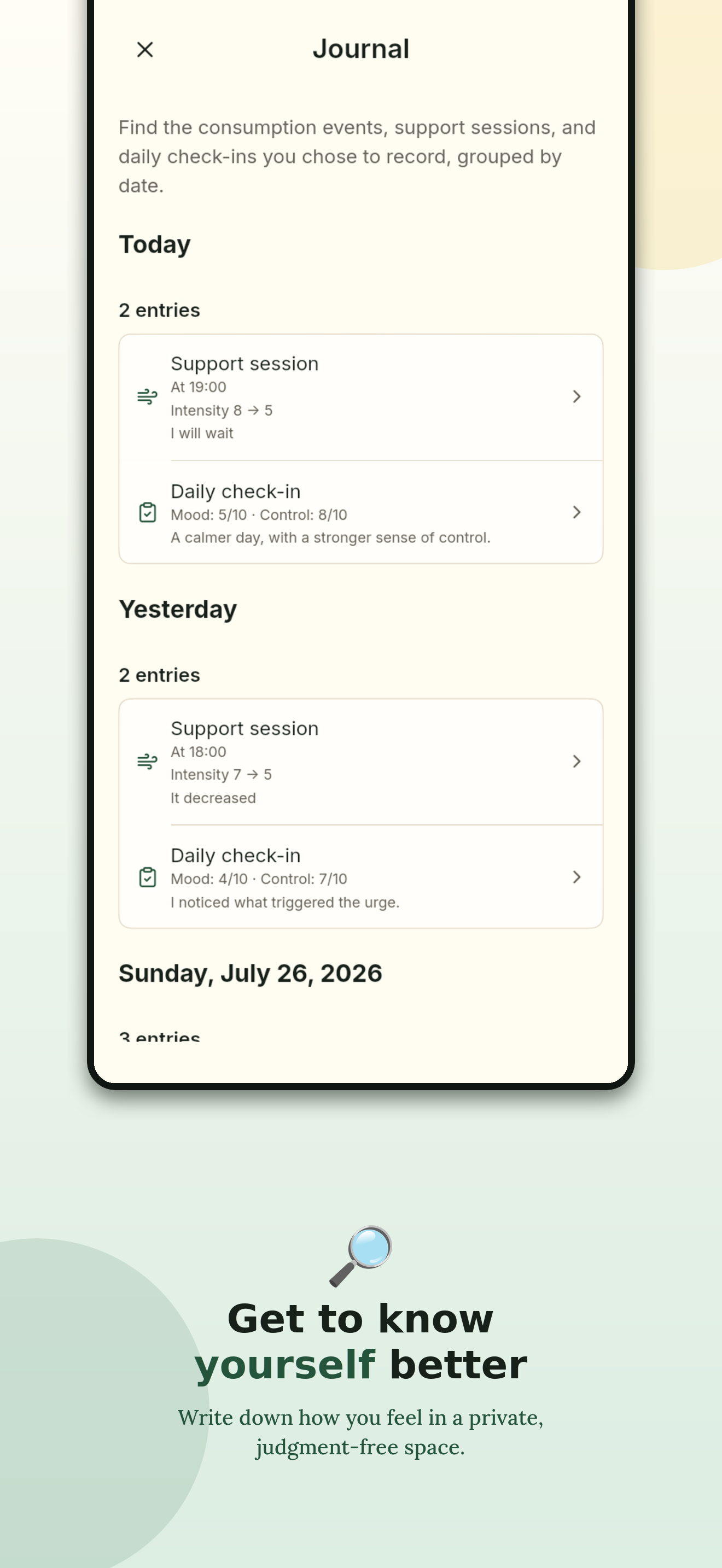
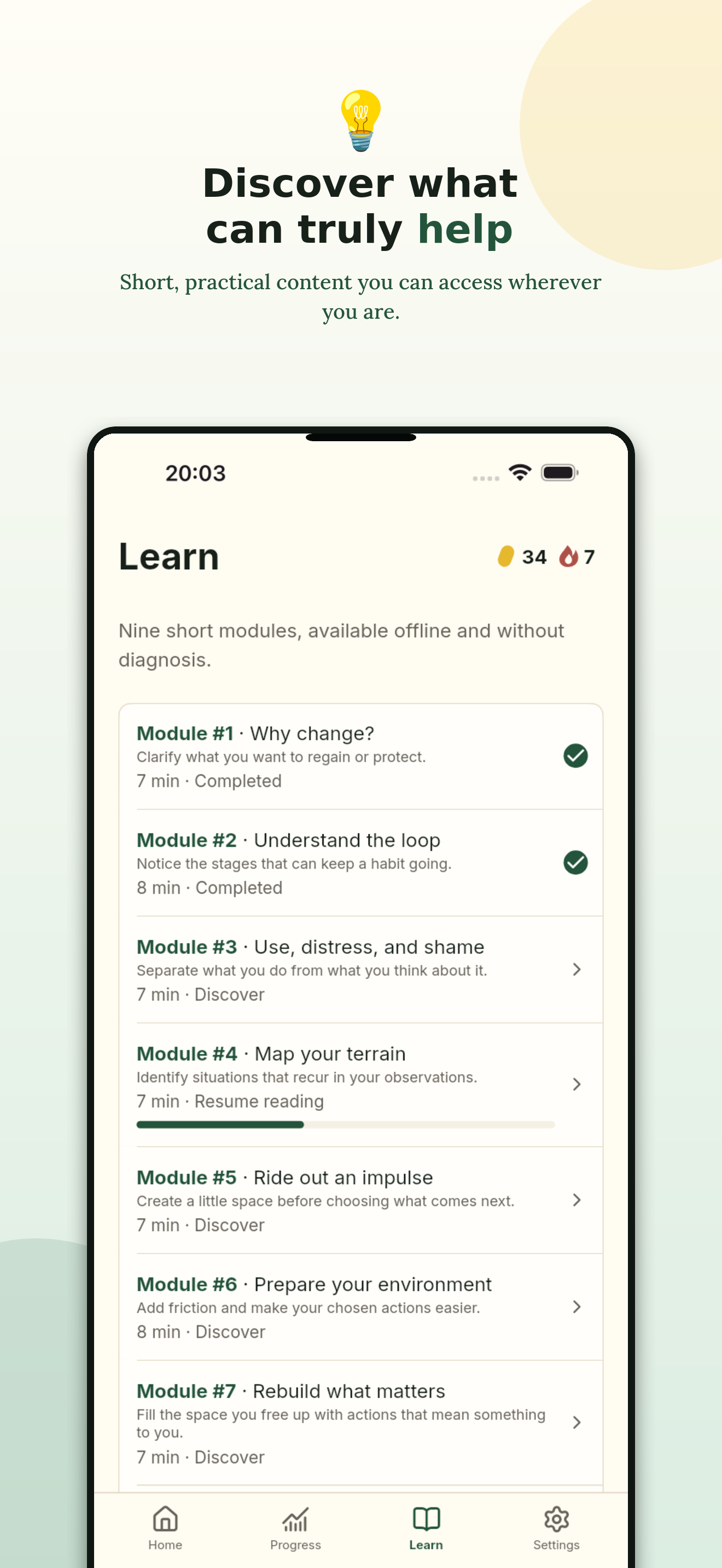
Home · Urge support · Progress · Journal · Learn
The screenshot files are intentionally not committed: the website pipeline
generates them from deterministic Flutter widget tests, processes them, and
publishes them under the stable URLs used above. The app and this README share
the tracked logo at assets/branding/logo.svg.
- No StopCorn account or remote journal synchronization.
- No advertising, audience analytics, or behavioral-tracking SDK.
- Anonymous crash reports are sent through Sentry so failures can be fixed. They carry the technical error and where it happened, never a goal, journal record, note, or database value, and a switch in Settings turns them off completely.
- No URL, search, browsing-history, screenshot, contact, location, or network traffic collection.
- Optional daily reminders are scheduled entirely on the device and contain no check-in data.
- Nothing reaches RevenueCat until the optional support paywall is opened deliberately: displaying Settings stays local. Once it has been opened, the supporter entitlement is checked on later launches so a purchase can be acknowledged. Opening the paywall also involves the device's app store; StopCorn never attaches journal content or private notes.
Note
Exports are not encrypted yet. Device system backups may include app data depending on platform settings.
Official App Store and Google Play links have not been published yet. Follow GitHub Releases or the project website for availability. Developers can already run the complete application from source.
- At least Flutter 3.44 stable, or a compatible release;
- at least Dart 3.12, or a version allowed by
pubspec.yaml; - the Android or iOS toolchain for the target platform.
Check the local environment:
flutter doctor
flutter --version
Install dependencies:
flutter pub getCreate .env. Empty values simply disable the feature they belong to: no
support paywall without a RevenueCat key, and no crash reporting without a
Sentry DSN.
REVENUECAT_ANDROID_API_KEY=
REVENUECAT_IOS_API_KEY=
REVENUECAT_TEST_API_KEY=
REVENUECAT_OFFERING=
REVENUECAT_ENTITLEMENT=
SENTRY_DSN=
Generate translations and source code, then run the app:
dart run build_runner build
flutter run
Android builds use android/key.properties, which is intentionally excluded
from version control. Create it before building, including for a debug build:
storeFile=/absolute/path/to/stopcorn.jks
storePassword=…
keyAlias=…
keyPassword=…dart format --set-exit-if-changed .
flutter analyze
flutter testTests use an in-memory Drift database and isolated preferences. They cover the onboarding flow, reminder scheduling, all support paths, journaling, contextual goals, check-ins, progress statistics, learning, sample data, export, complete deletion, repository failures, crash-report scrubbing, enlarged text, and narrow layouts.
StopCorn is a feature-first Flutter application:
lib/
  app/                 startup, routing, theme, shared widgets
  core/                database, preferences, diagnostics, constants, time
  features/
    onboarding/
    home/
    urge/
    journal/
    consumption/
    check_in/
    goals/
    progress/
    harvest/
    learning/
    settings/
    data_export/
  i18n/                English and French source translations
assets/
  branding/            shared tracked logo
  learning/            offline module catalog and descriptors
docs/                   bilingual static Nuxt website
tool/                   artwork, screenshot, website, and audit tooling
Presentation widgets communicate with generated Riverpod controllers. Controllers use repositories and services; widgets do not access storage directly. The main dependencies are:
- ForUI and low-level Flutter widgets for the interface;
go_routerfor navigation and onboarding redirects;- Riverpod code generation for state and dependency injection;
- Drift for relational and queryable local history;
SharedPreferencesAsyncfor simple StopCorn-owned preferences;- Slang for typed English and French localization;
flutter_local_notifications,flutter_timezone, andtimezonefor daylight-saving-safe local reminders;- RevenueCat Purchases and Paywalls for optional project support;
- Sentry for anonymous, scrubbed, and disableable crash reports;
- Nuxt, TypeScript, and Bootstrap Vue Next for the static bilingual website.
The support card in Settings always exposes the project website and source
repository, and it does so without any network call: RevenueCat is not
configured, and no entitlement is read, as long as nobody presses the support
button. That button is the explicit opt-in. It stores the
project_support_checks_enabled preference, presents the current RevenueCat
Offering with its attached Paywall, and from then on the anonymous supporter
entitlement is checked when Settings opens, so an earlier purchase is still
acknowledged on the next launch. Complete deletion clears that preference along
with the rest, which returns the application to its offline default.
RevenueCat Paywalls require Android API 24 or newer. On iOS, the native paywall
is available from iOS 15. Create the apps, products, Offering, and Paywall in
RevenueCat, then add everything to .env:
REVENUECAT_ANDROID_API_KEY=your_google_public_key
REVENUECAT_IOS_API_KEY=your_apple_public_key
REVENUECAT_TEST_API_KEY=your_test_store_public_key
REVENUECAT_OFFERING=your_offering_identifier
REVENUECAT_ENTITLEMENT=your_entitlement_identifier
Envied reads these values during code generation and writes
lib/core/env/env.g.dart. Regenerate after a change:
dart run build_runner buildRelease builds deliberately ignore the Test Store key and select the public key
for the target platform. Never generate a release with a Test Store key. The
public SDK keys are not secret server credentials, but .env and generated
environment code remain outside version control. Without a matching key,
StopCorn stays fully usable and shows a localized configuration message.
StopCorn disables RevenueCat diagnostics and advertising-identifier collection. The SDK is initialized the first time someone opens the support paywall, and on later launches only if that already happened; the app does not send goals, journal records, notes, or browsing data with that status check or with a purchase.
Crashes are reported to Sentry so they can be fixed, and reporting is on by default. Anyone can stop it entirely with Settings → Data → Anonymous crash reports; the choice applies to the next report, not to the next launch, and a declined choice means Sentry is never initialized at startup at all.
Two conditions gate reporting before the preference is even consulted, in
canReportErrors: debug builds never report, and neither does a build without
SENTRY_DSN, so running from source and forks stay completely offline.
What leaves the device is deliberately narrow, and
lib/core/diagnostics/sentry_privacy.dart is the single place that defines it:
- no personal information, screenshots, session data, or performance traces;
- navigation breadcrumbs keep the location path and drop its query string, because a StopCorn location can carry an event identifier or a check-in date;
- database exception messages are replaced by their error code, since a failed statement can quote the values it tried to write, and those values are notes and reflections;
- handled failures are reported with a stable operation key such as
check_in.save, never with the record that failed.
test/core/diagnostics/sentry_privacy_test.dart locks that behavior down.
Drift stores history and relationships:
- goals, including weekly limits and protected contexts;
- urge sessions and strategies used;
- voluntarily recorded consumption events and their selected goal contexts;
- daily check-ins and self-assessments;
- learning progress;
- the resumable onboarding draft.
SharedPreferencesAsync stores simple settings such as onboarding completion,
theme, language, selected backup-plan strategies, reminder state, progress
period, optional harvest visibility, whether the optional supporter status may
be checked online, and whether crash reports may be sent. Preference keys are
allow-listed.
Complete deletion clears StopCorn data, cached exports, and preferences, then
reseeds only the built-in strategies needed for a fresh launch.
English is the base and fallback locale; French is also supported. Translation
sources are split by namespace under lib/i18n/en/ and lib/i18n/fr/. Update
the same key in both locales and run:
dart run build_runner buildGenerated strings*.g.dart files must not be edited manually. Quantity-aware
copy uses Slang cardinal forms. English normally resolves zero through other;
French requires explicit zero forms anywhere 0 would otherwise use the
singular. test/i18n/pluralization_test.dart locks this behavior down.
Learning-module descriptors contain stable identifiers, order, translation
keys, and references. Each section lists its paragraph keys and may add optional
keyPointKeys rendered as takeaways. Reader-facing copy lives in one Slang JSON
file per module and locale. When the bundled catalog changes, increment both its
contentVersion and AppConstants.learningContentVersion.
Reading duration is not stored: learning_reading_time.dart derives it from the
word count of the translated sections, so each locale reports its own estimate
and the figure can never drift away from the copy.
Every reference must be a real, verifiable record: the citation carries a
resolvable DOI and the url points to its PubMed entry, or to doi.org when
the work is not indexed there. test/features/learning/learning_repository_test.dart
pins the audited list.
The static site lives in docs/ and requires Node.js 22.19+ with pnpm 11:
cd docs
pnpm install
pnpm check
From the repository root, this command generates localized Flutter screenshots and social artwork, then synchronizes them into the site's ignored public media directories:
tool/website/generate.shUse tool/website/generate.sh --process-only to reuse existing raw captures.
The site deploys English at /en/, French at /fr/, screenshots under
/screenshots/, and social previews under /social/.
Launcher icons are generated from the tracked SVG logo and the tokens in
tool/artwork/brand_artwork.dart:
./tool/icons/generate.shThis requires ImageMagick with SVG support. The Android notification icon is a hand-written vector and is not regenerated.
Bug reports and feature ideas are welcome in GitHub Issues. Issues are public: never include intimate notes, personal history, exported data, or other sensitive information.