Repository navigation
v1.4.0

Energy, complete — and one card for a room's lights. The energy flow is rebuilt on one energy model shared by every energy card, seven energy cards are new, and four are better: everything reads a house the way its meters do, and says only what it measures.
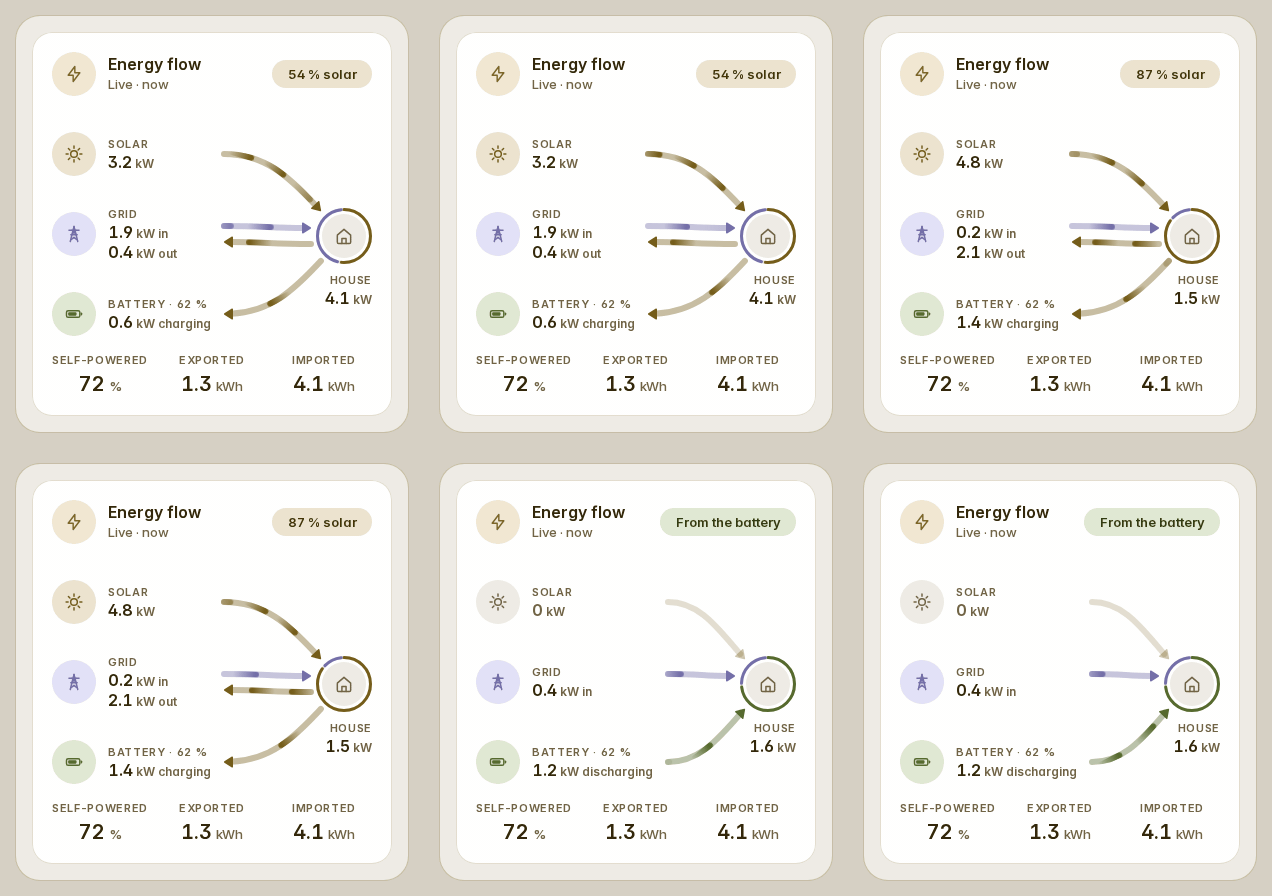
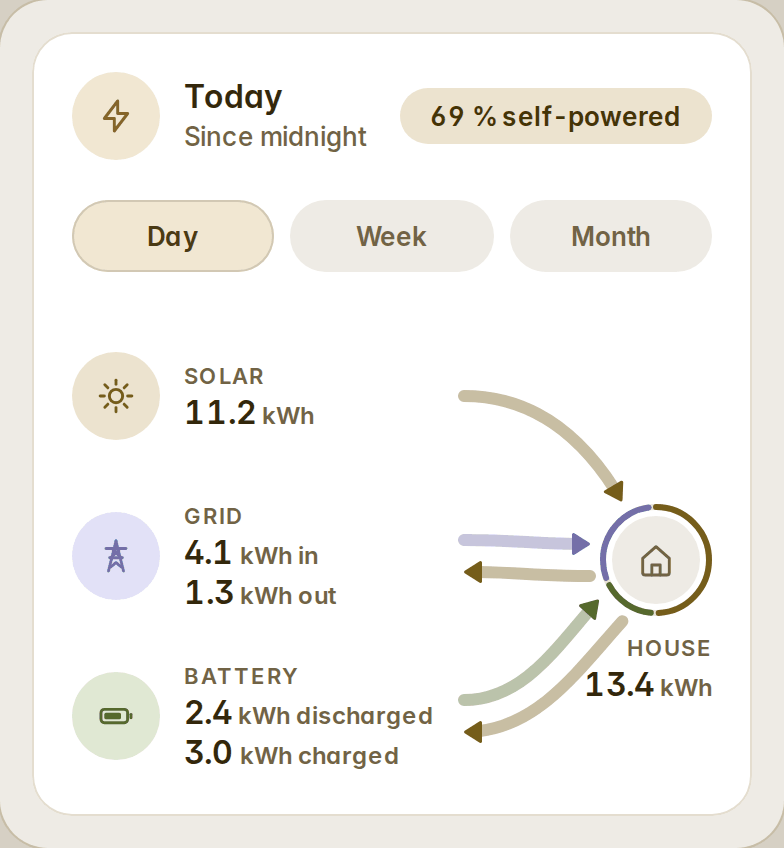
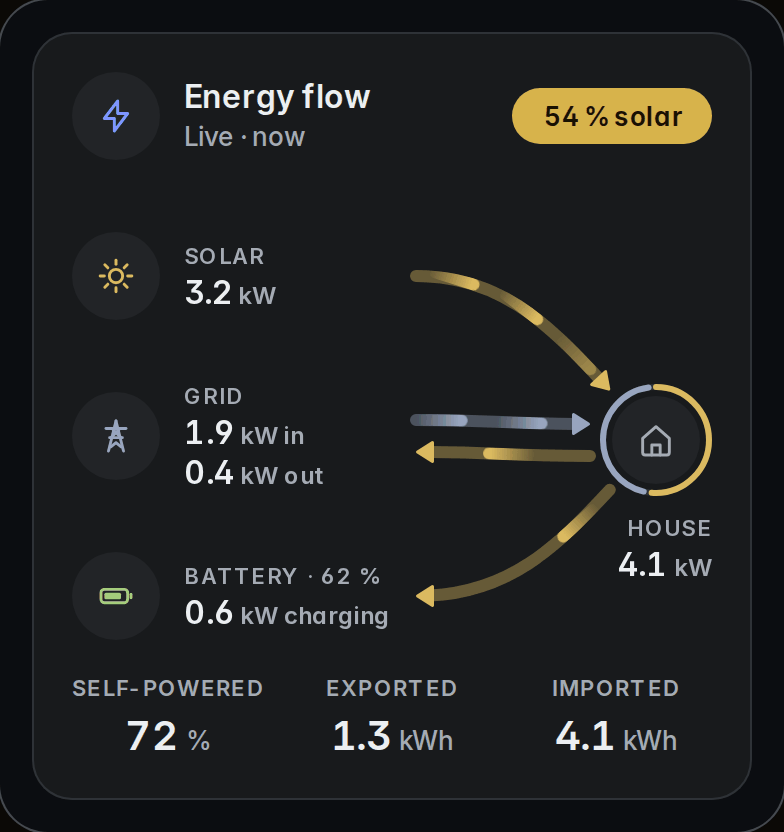
The energy flow, rebuilt
A source is read the way its meter is: one signed sensor, two sensors (what comes in and what goes out), or one sensor per phase summed per sign. A three-phase house that imports on two phases while the third exports now shows both flows at once, and the sun's share of the house is right again (#19). With no sources given, the card reads the Energy dashboard's own: every grid connection, array and battery, and a grid set up there with two power sensors keeps both.
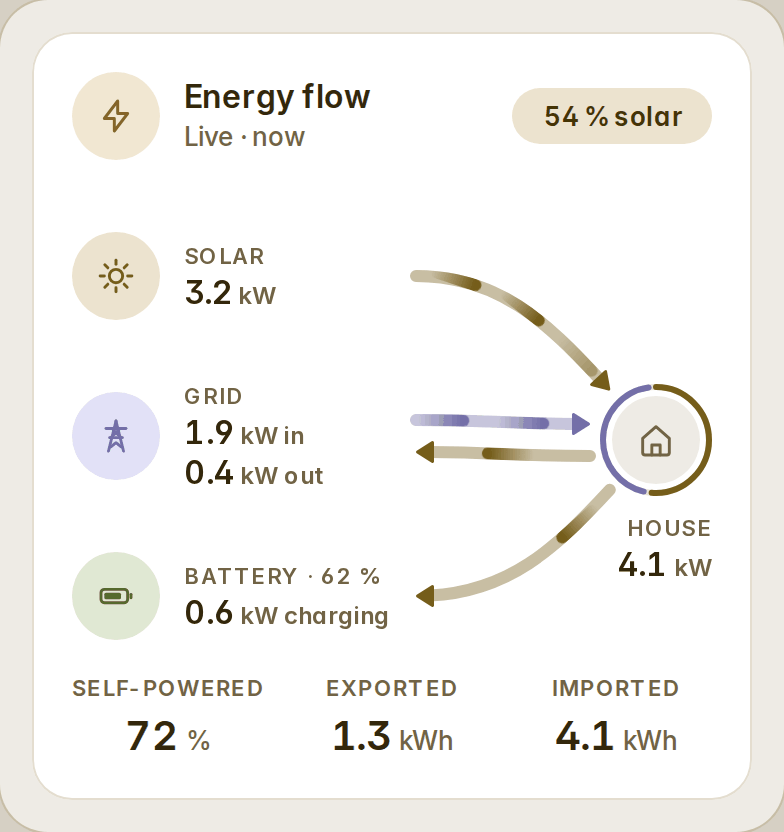
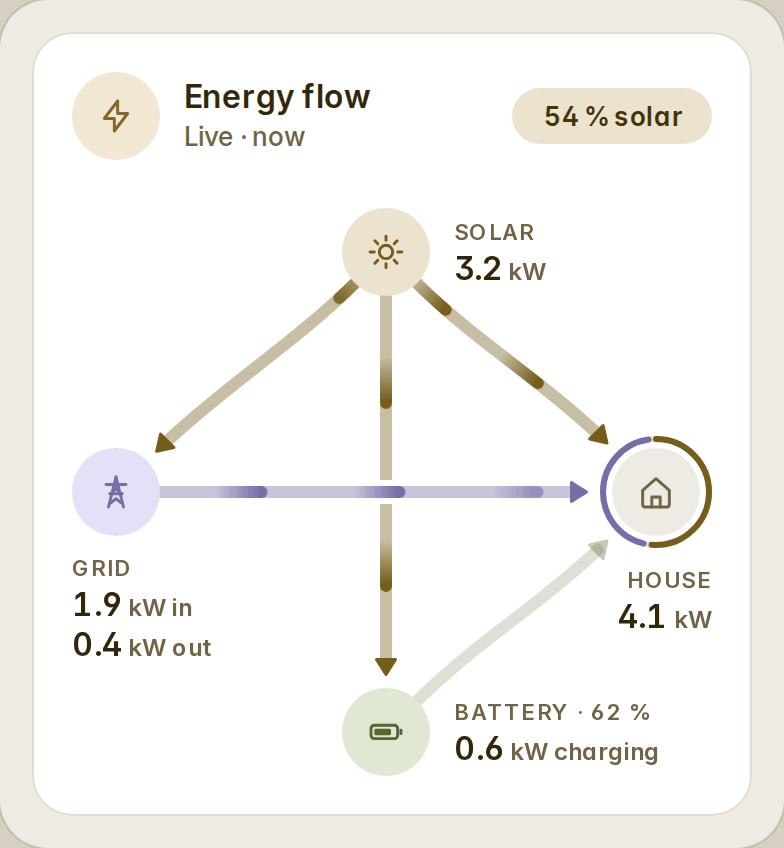
- Every lane in the colour of where its energy came from: the sun's surplus going to the grid is gold, the grid charging the battery is lilac.
- Solid arrowheads whose tip ends the lane; pulses of light at a steady 24–72 px/s, eight a card at most, paused off screen and in a hidden tab, none under reduced motion.
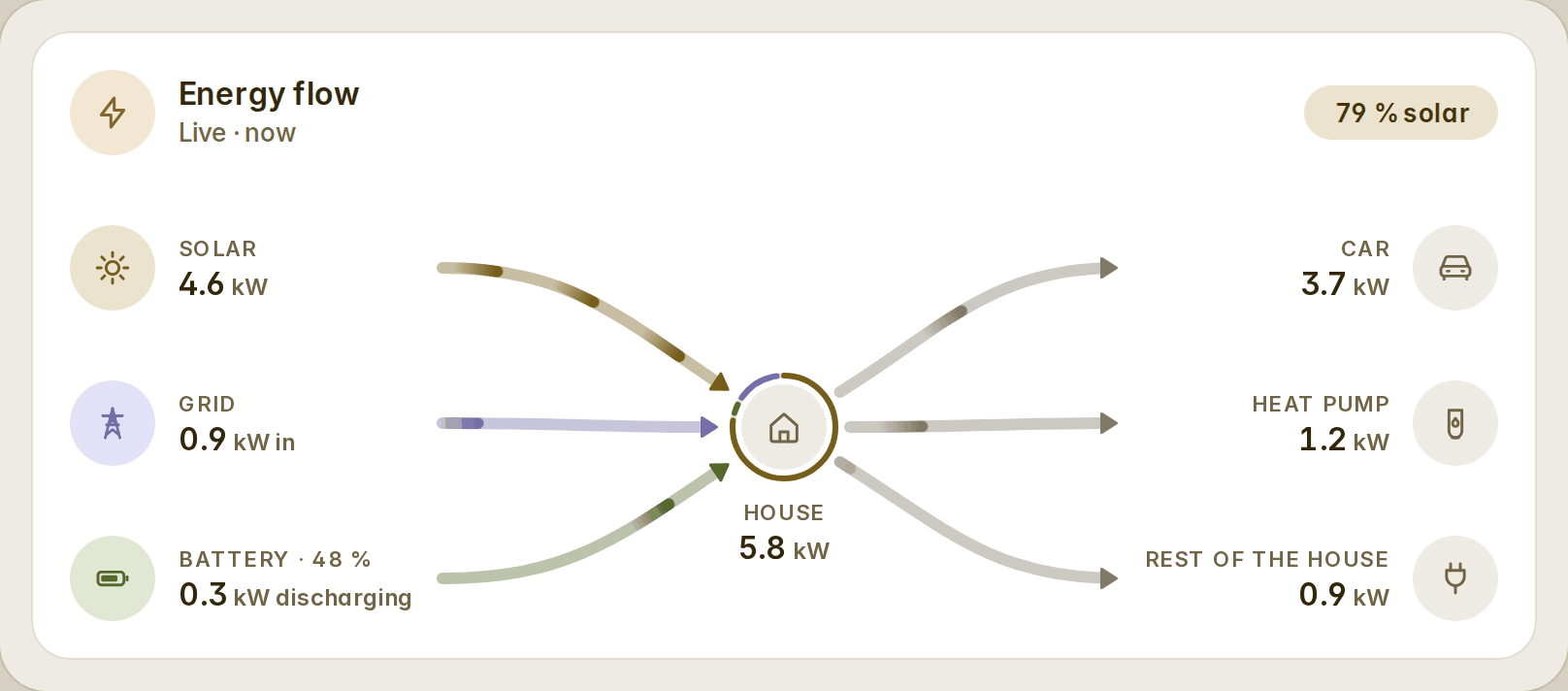
- Sources: solar, grid, battery, generator and a car that powers the house, several of each, each with its own name, icon, colour, threshold, arrows and when to show.
consumers: where the energy goes, beside the house on a wide card, as rows on a phone, with the rest of the house.- Variants
rows,crossandlist; stylesstream,legsandrail;motion: full | calm | off; the badge says the sun's share, the self-sufficiency or the grid's way. - A day, a week or a month from the statistics, allocated hour by hour the way the Energy dashboard does, so the figures match.
- Honest states: a flow below its threshold rests, stale readings say how old they are, an unreadable source is a dashed hairline and the house is never guessed.
Room lights
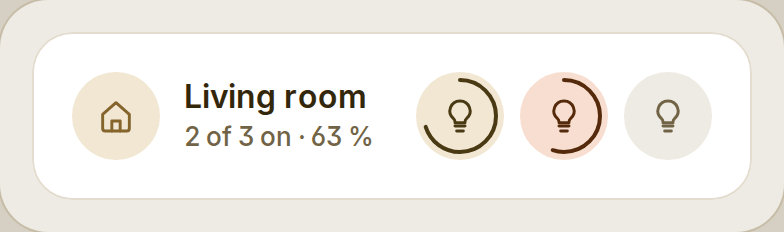
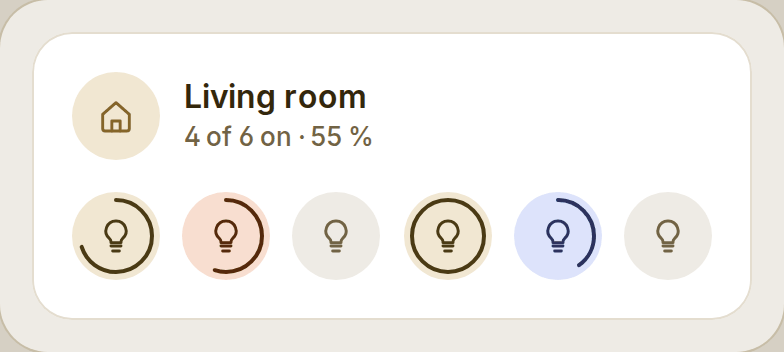
A room's lights on one card. Tap the card and the whole room turns on or off; each light is its own round beside the room's name — a tap turns it, a hold opens its details. A light that is on wears its bulb's colour and a ring of its level. Prefer names? variant: chips or tiles. show_brightness adds one brightness for the room, and the lights come from an area or your own list, each with its own name, icon and colour.
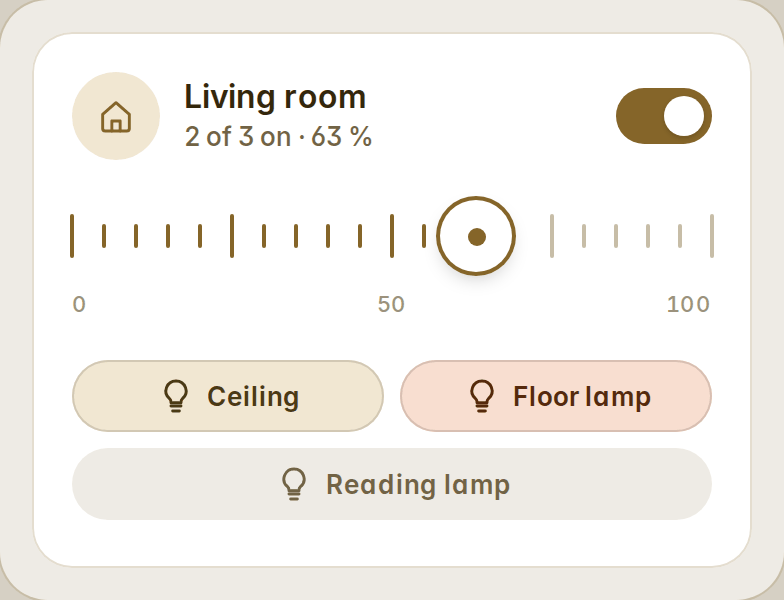
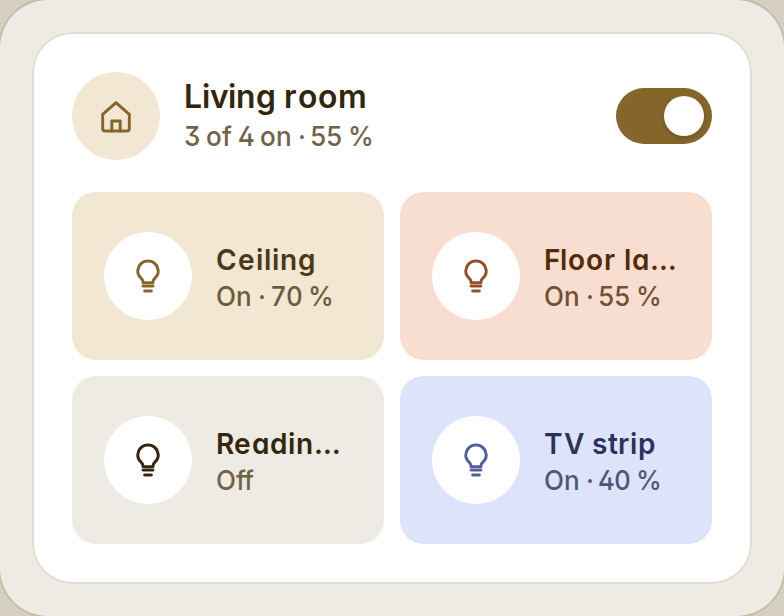
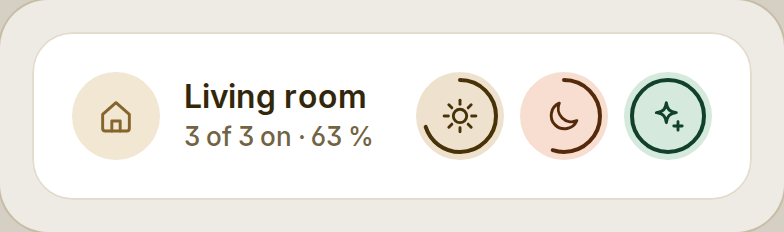
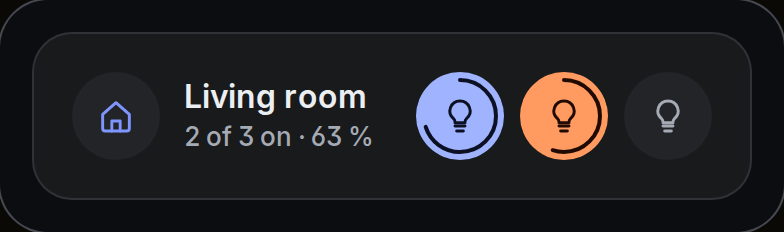
type: custom:fluvy-lights-card
area: living_room          # or lights: [light.ceiling, light.floor_lamp, …]
variant: row               # row · chips · tiles
show_brightness: false
New energy cards
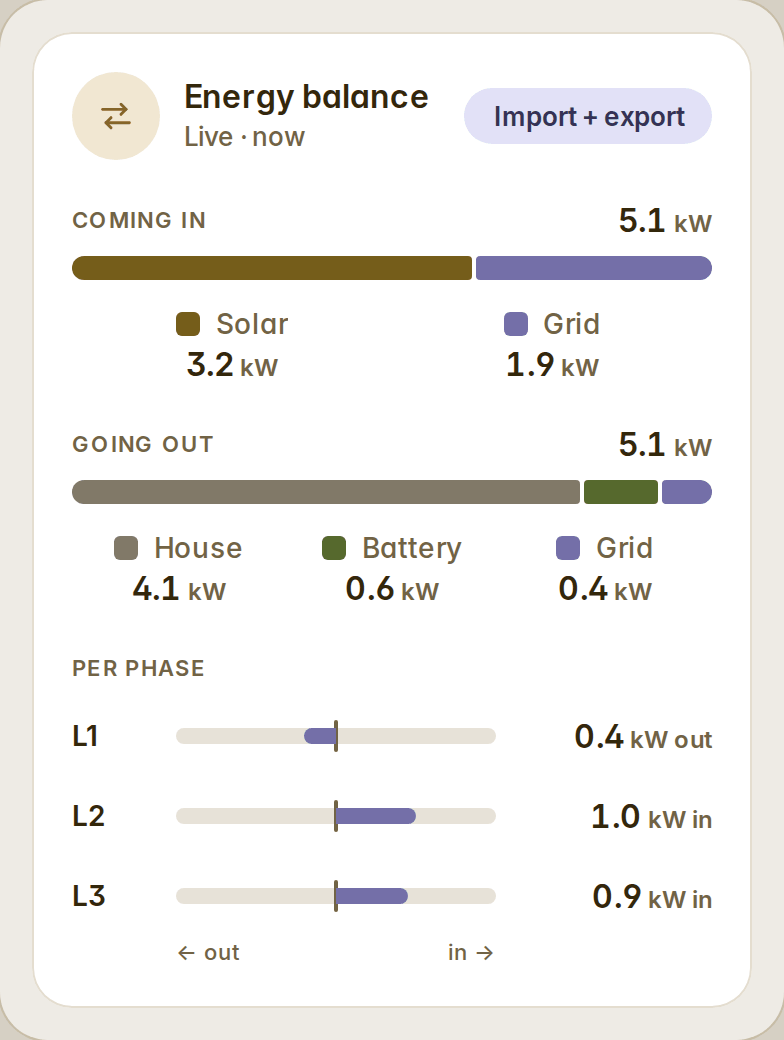
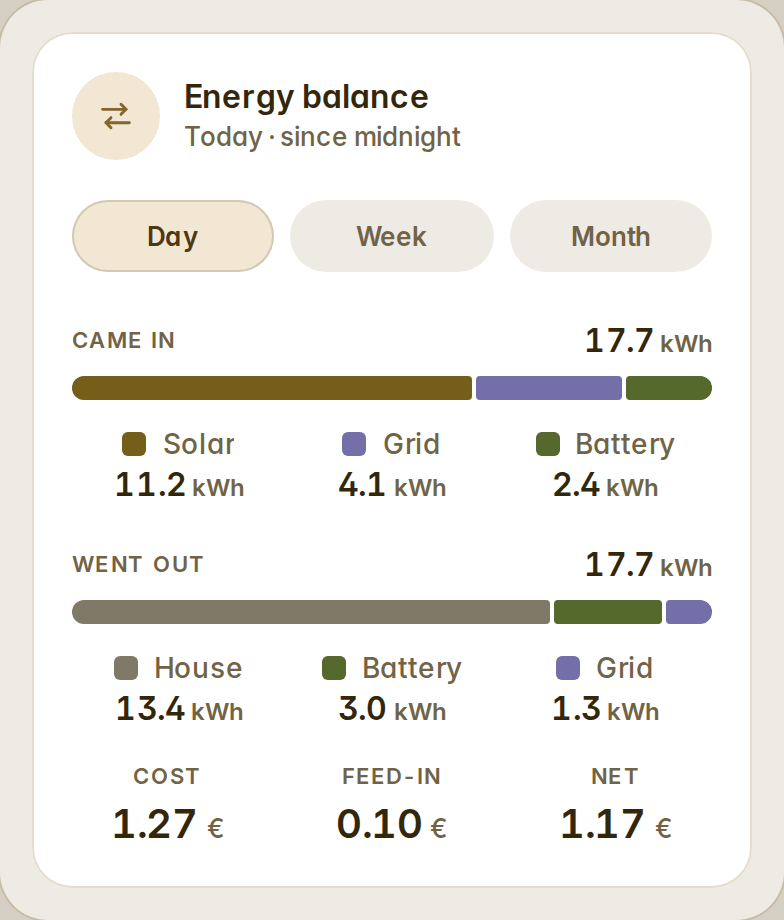
Energy balance — what comes in against what goes out, live or over a period, always adding up; the grid's phases under it; over a period, what it cost and what the feed-in paid.
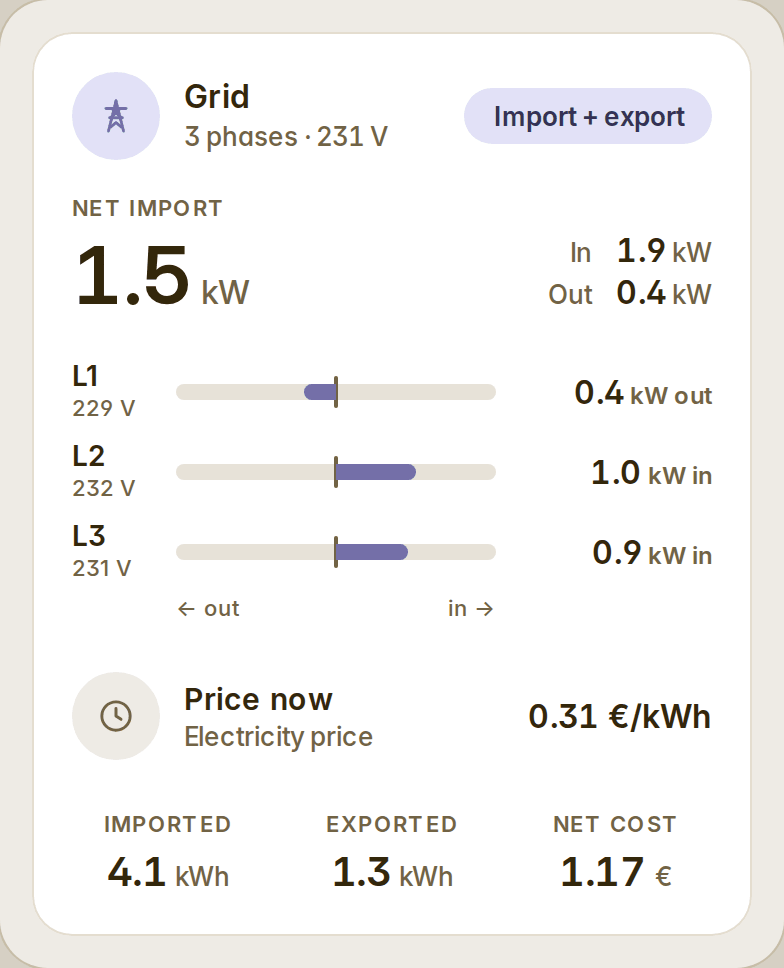
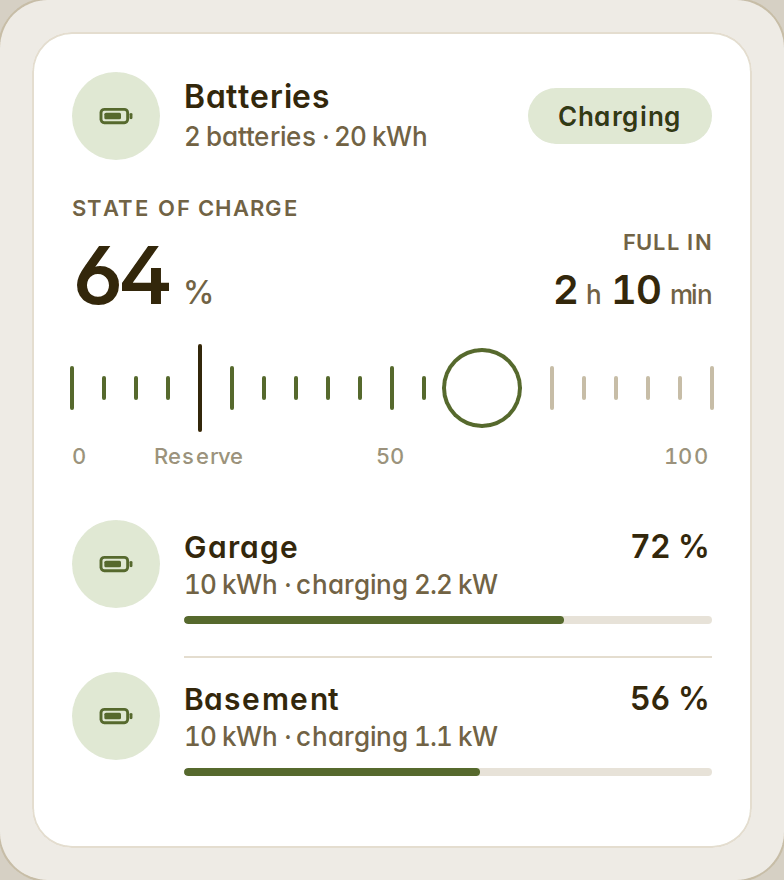
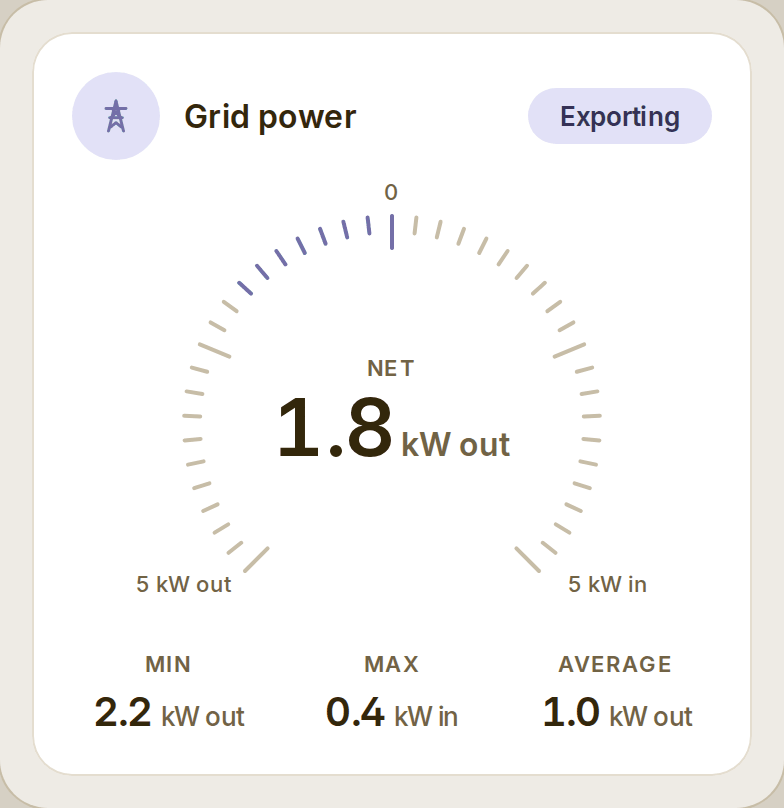
Grid — the net import or export, what comes in and goes out, each phase with its voltage, the price now, and today's import, export and cost. Batteries — one charge for several batteries (weighted by capacity), full in or empty in, the reserve, a row per battery and their mode.
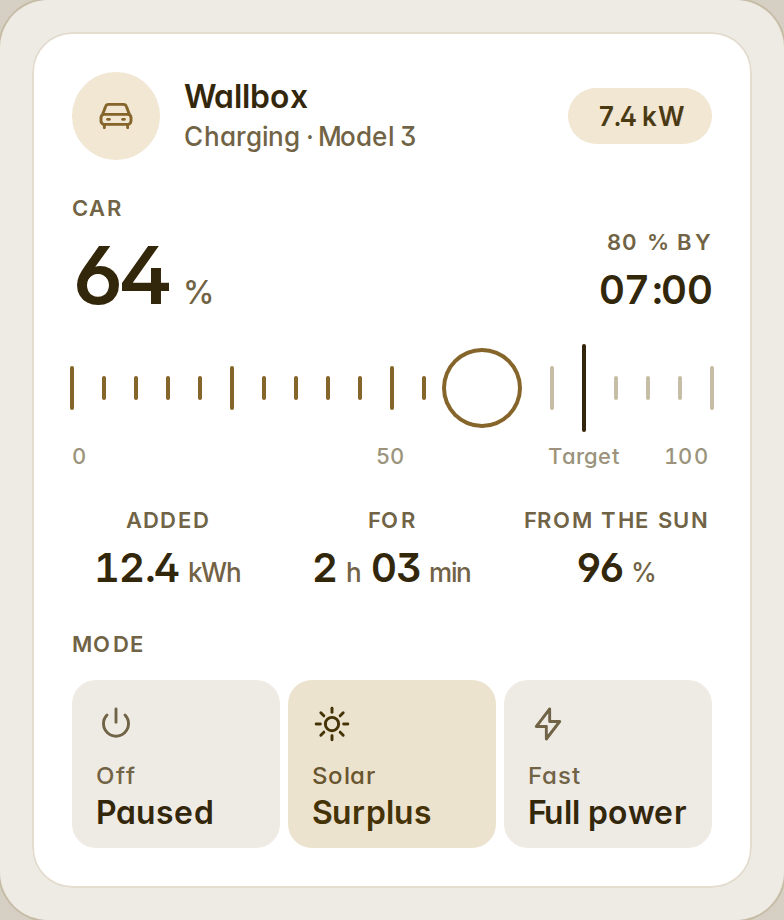
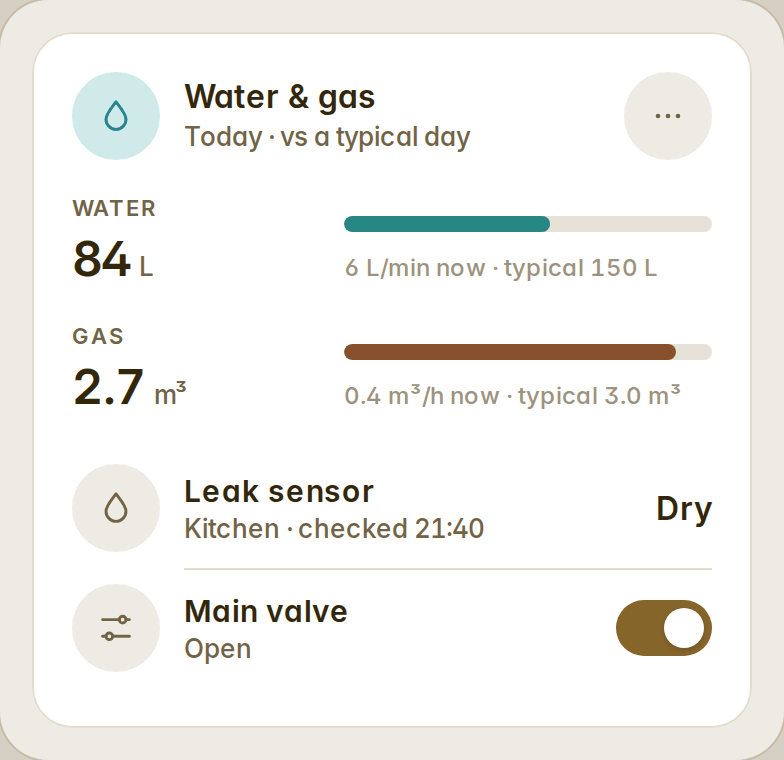
Car charger — the car's charge against its target and when it should be ready, what the session added, how much came from the sun, the charging mode. Water & gas — each meter's use today against a typical day, what flows right now, a leak sensor and a valve beside them.
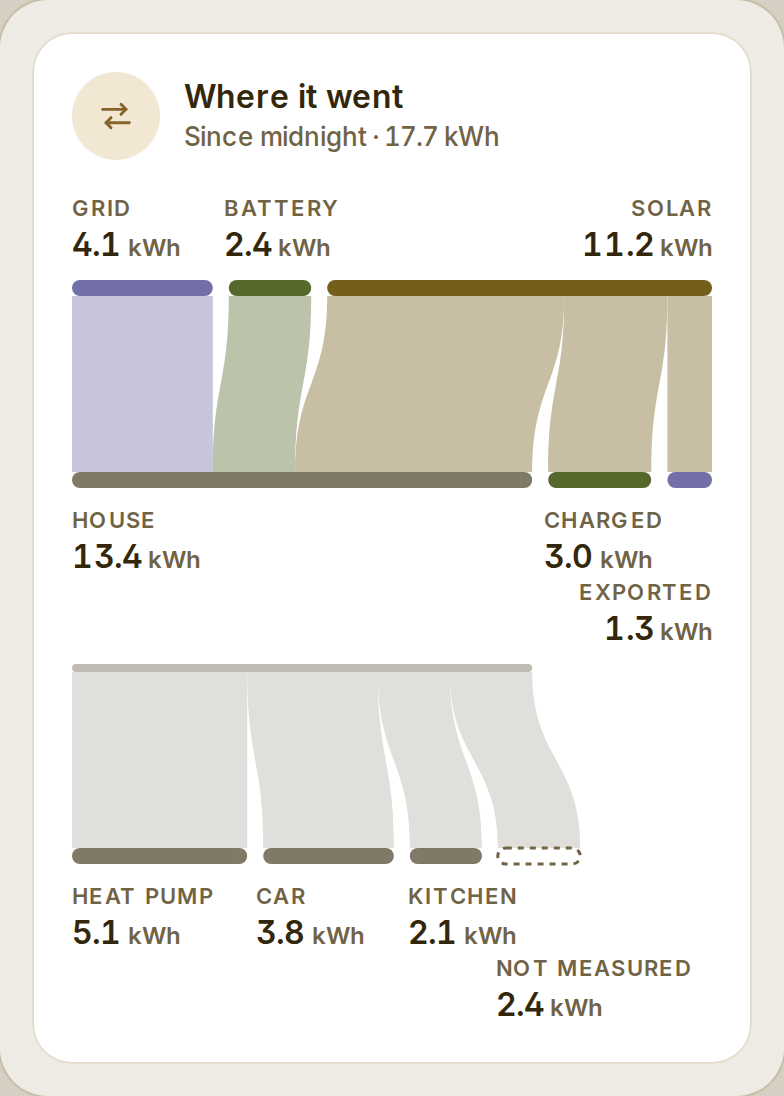
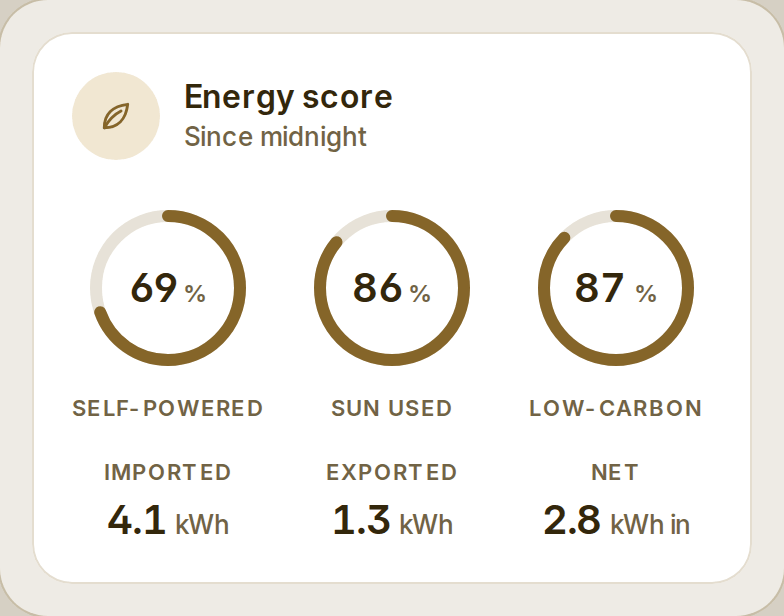
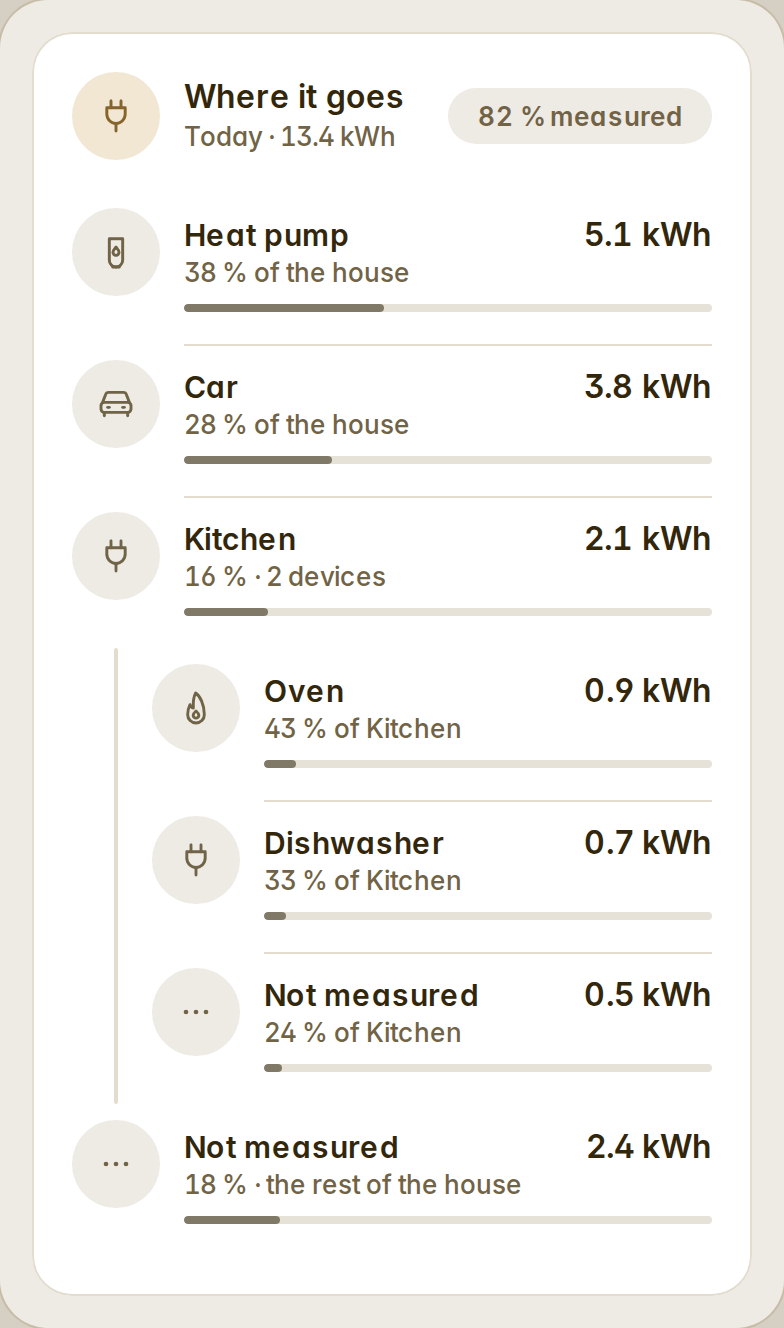
Where it went — a day, a week or a month from where to where, in true proportions, with what the house's devices took and what is not measured. Energy score — self-powered, the sun used and low-carbon, as the Energy dashboard's own gauges compute them.
Better cards
- Energy:
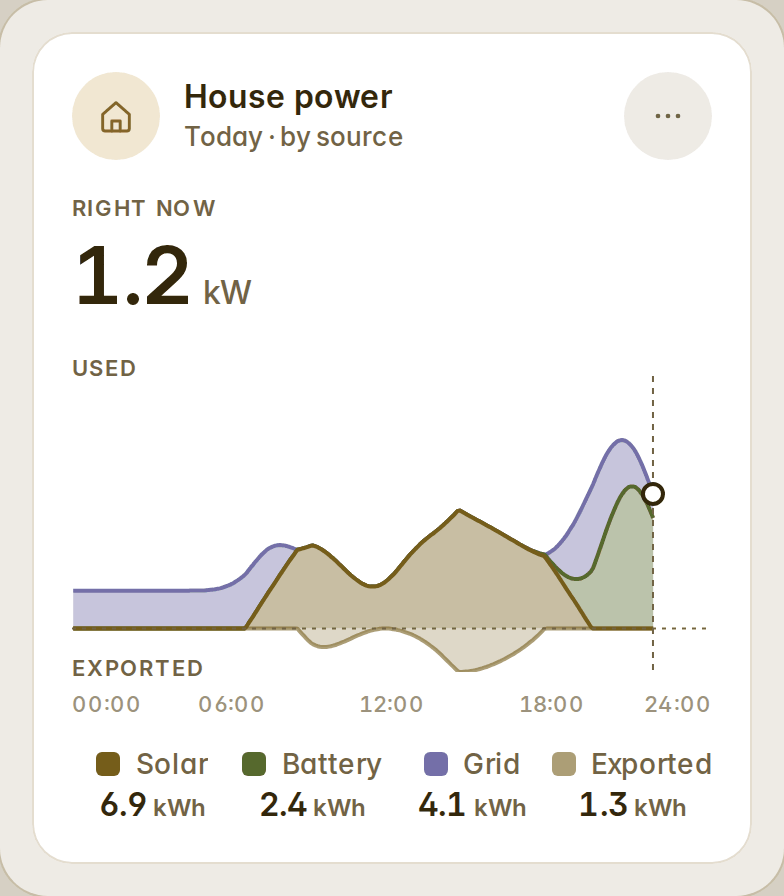
variant: sourcesdraws the house's power today by where it came from, with what went to the grid below the line. - Energy devices: rows nest (
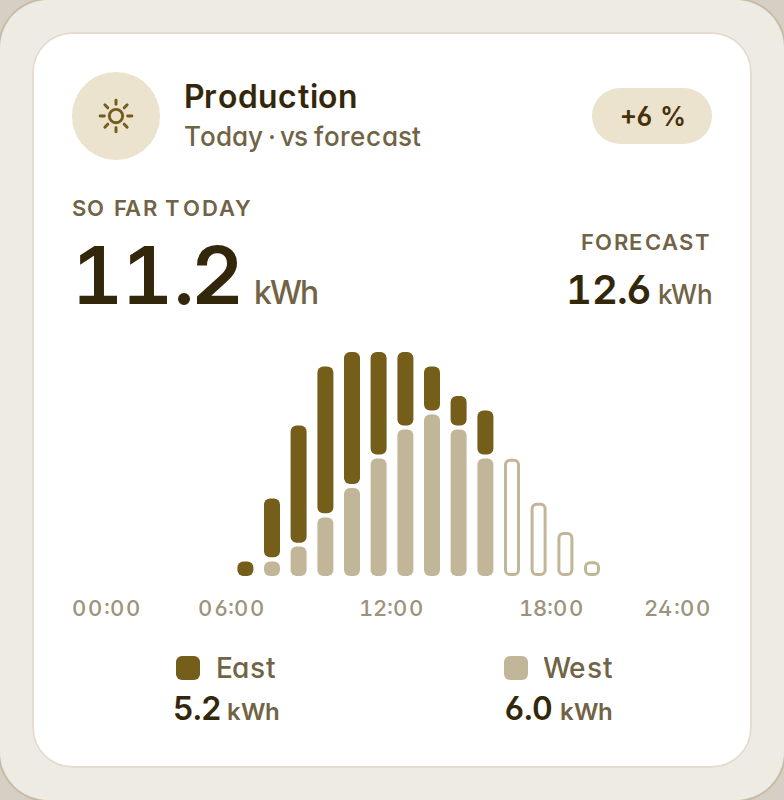
parent), and atotalmeter shows what is not measured at every level. - Production:
arraysstacks each array's hourly bars, and "today" is counted on the house's clock. - Gauge:
variant: signedfor a meter that can go negative, zero at the top. - Distribution:
total, the whole's own meter, shows what no source accounts for.
The automatic dashboards
They read the whole Energy dashboard — every grid connection, the battery's charge, water and gas — and the Energy template gains a Today view (the day's flow, where it went, the score) and a Water & gas view. A meter named for what leaves the house is now the grid's second sensor, never the grid itself, and grid meters named by phase are read per phase. In the Lights view, each room with two lights or more starts with its room lights card.
Upgrading
Nothing to change: 1.3's flow keys (solar_power, grid_power, grid_invert, battery_*, home_power, flow_style: ribbons) are still read. The energy cards now arrive as their own file, fetched as Fluvy starts, so a dashboard without energy on it never waits for them.
How the energy cards read a house, and every case: docs/energy.md. Every change: CHANGELOG.