Repository navigation
v1.7.0

Six issues from the first days of 1.6, and the narrow-column list that came out of its review. Thank you xoatrash, eduardoribeiro, dmsteel59-svg and svb91.
Colour on the light card (#32)
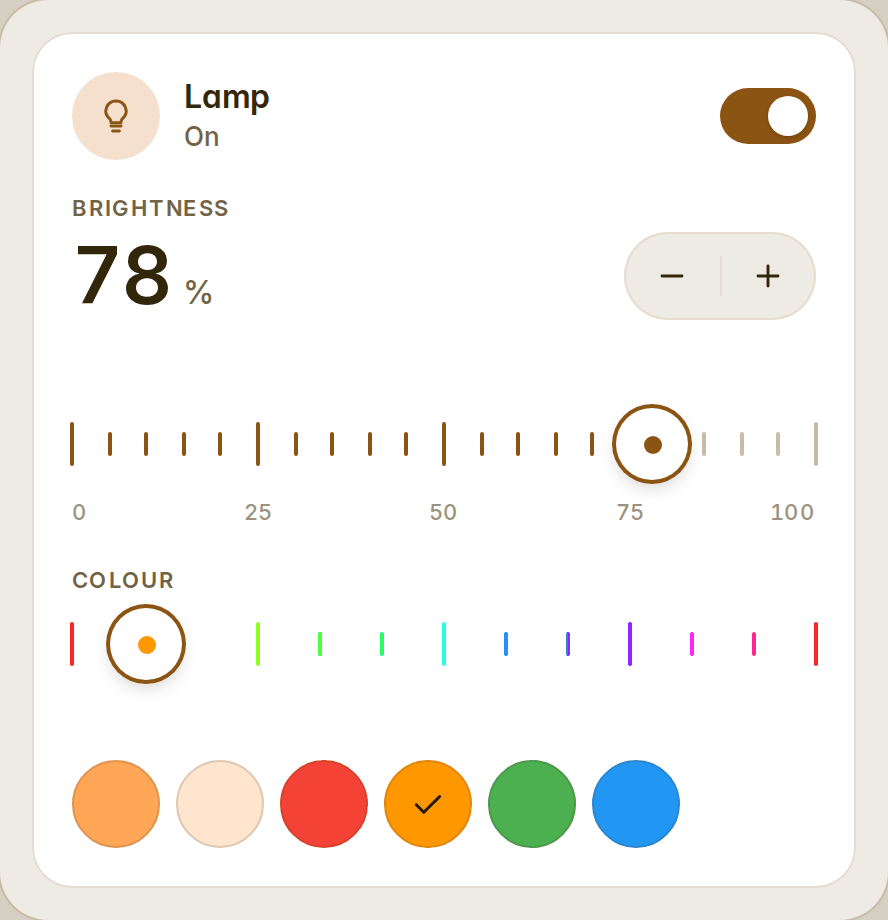
A colour bulb gets a row of quick colours under its ruler — two whites first where it has a temperature, then red, orange, green and blue — and a hue ruler takes the temperature ruler's slot while the bulb glows a colour; a white swatch brings the temperature ruler back. The card wears the bulb's colour: its icon, its switch and its brightness ruler take it. Your own list goes in colors (warm, cool, a Home Assistant colour name, #rrggbb or [r, g, b]); show_color: false is the white bulb's card.
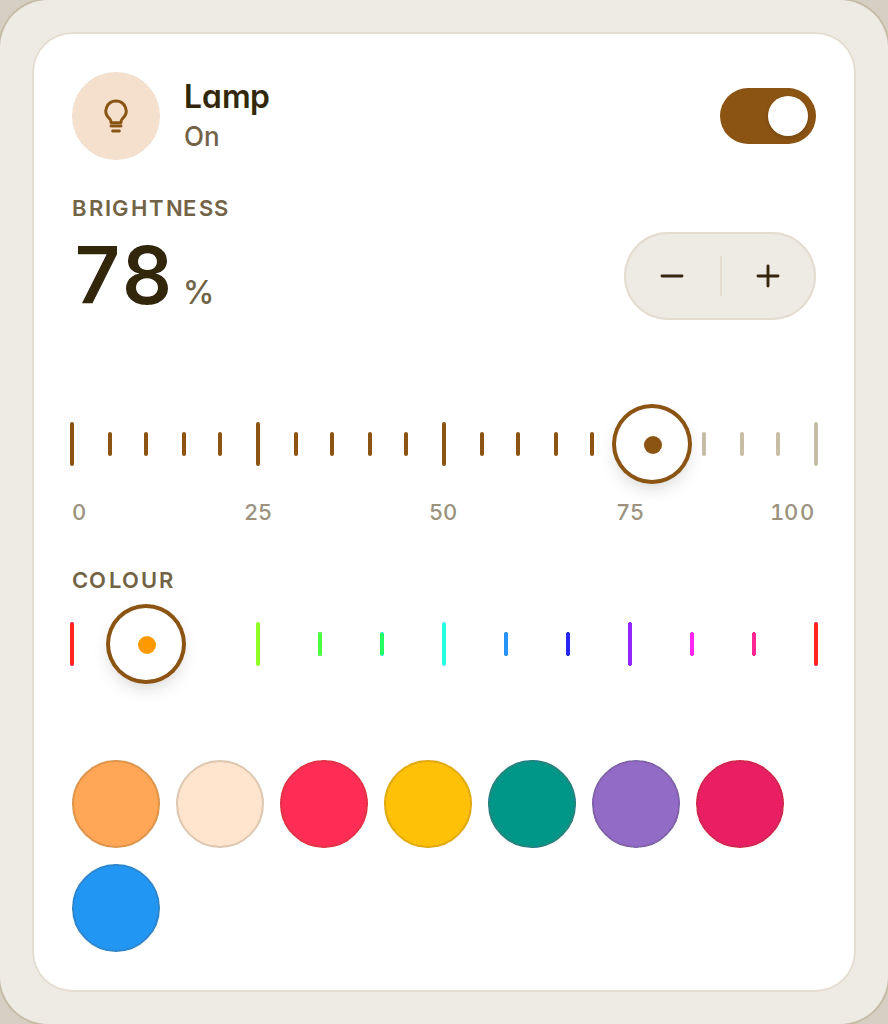
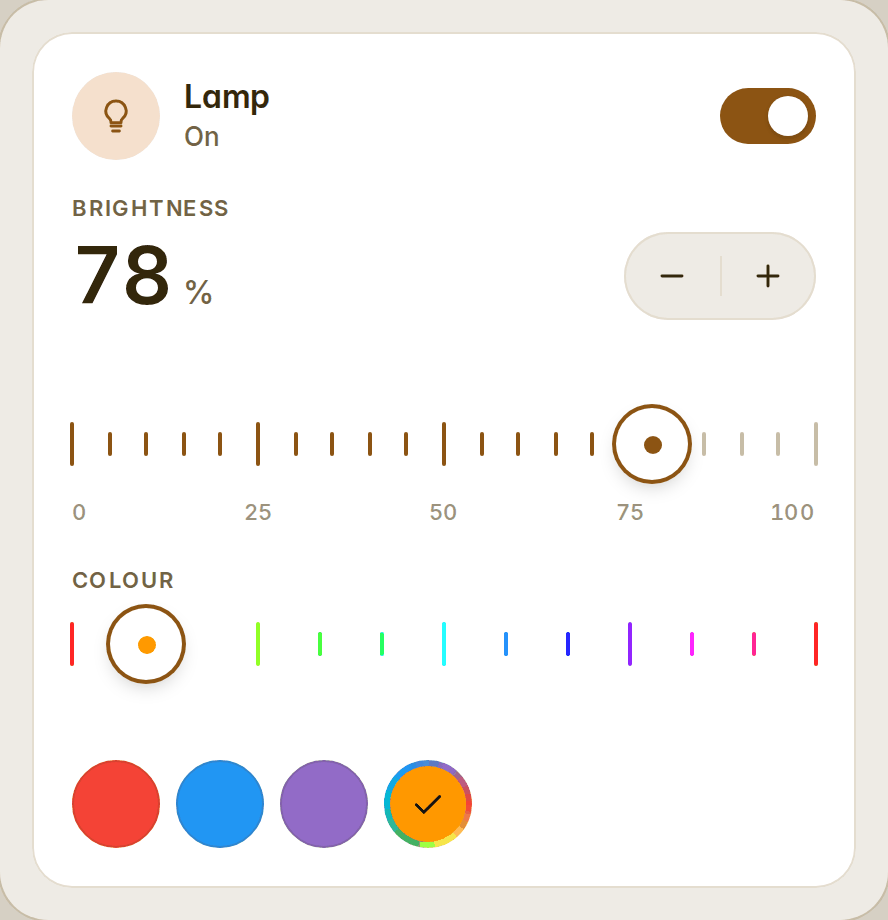
One of the rounds can be the colour picker: picker in the list is a round ringed in the hues that opens your browser's own colour picker, and it holds the bulb's colour, checked, whenever the bulb glows a colour none of the other rounds has — so colors: [red, blue, purple, picker] gives three favourites and any other colour.
A colour for the whole card (#34)
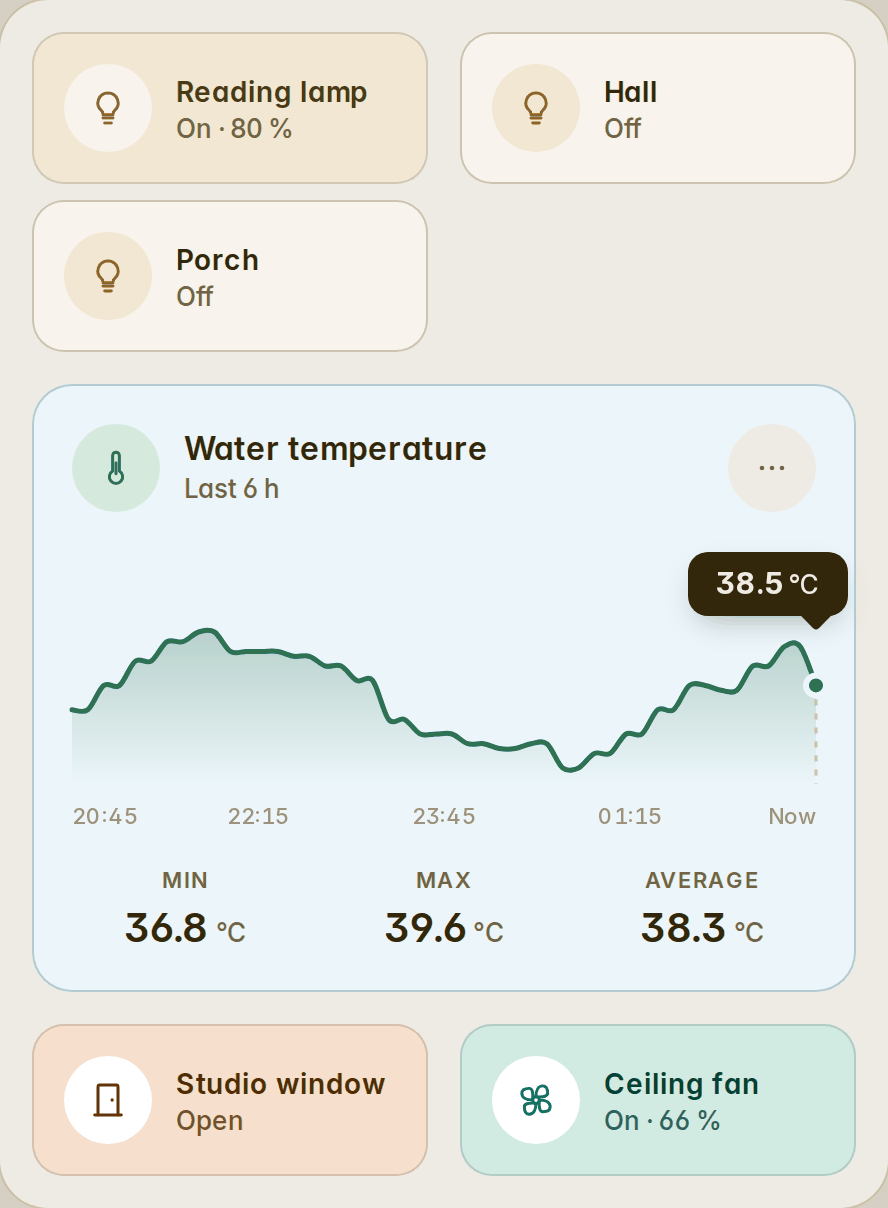
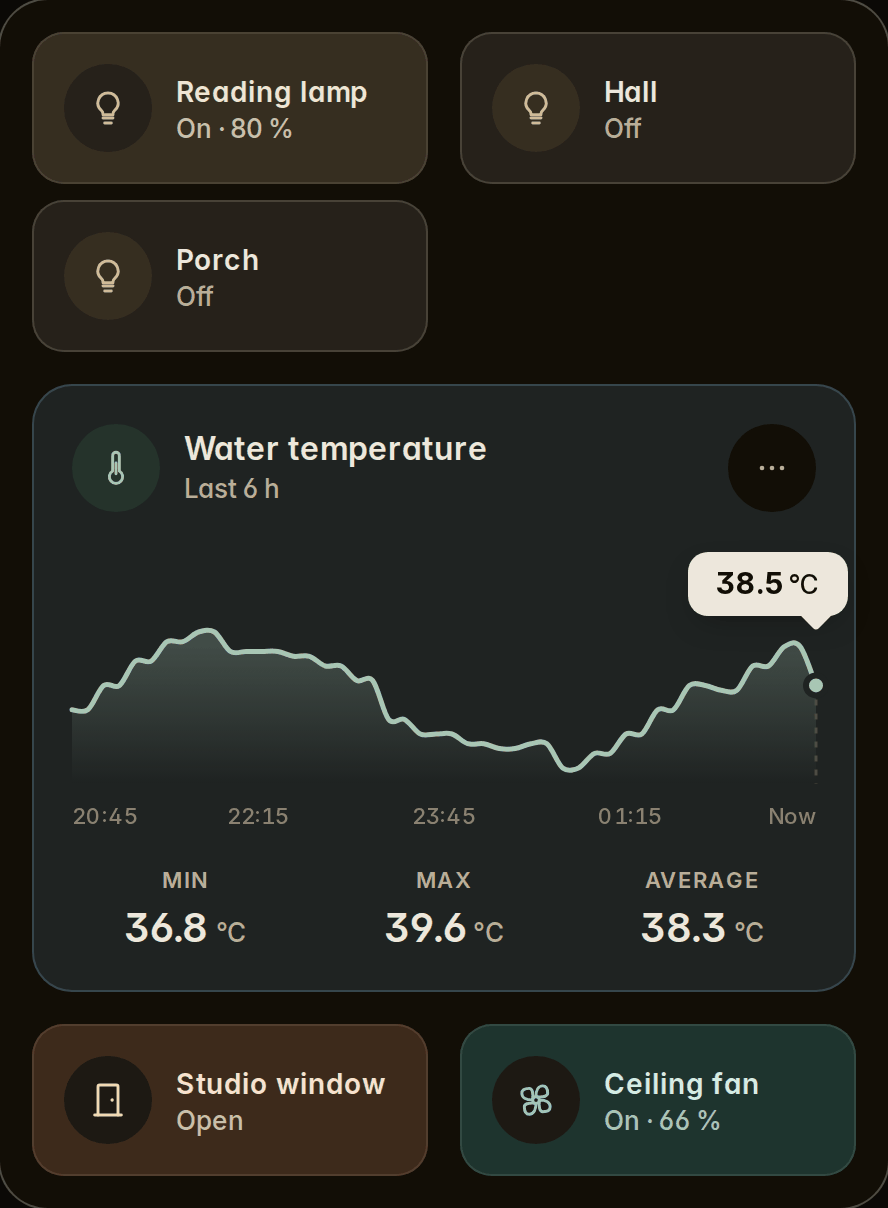
Every card that takes a color now also takes card_color (Card colour in the editor): a quiet wash of the colour as the card's own surface, its edge and dividers in the colour, independent of the accent inside — so all your lights can be warm and all your covers blue. The words keep full contrast on every palette, light and dark, and a card that is off or unavailable stays neutral.
The essentials while off (#31)
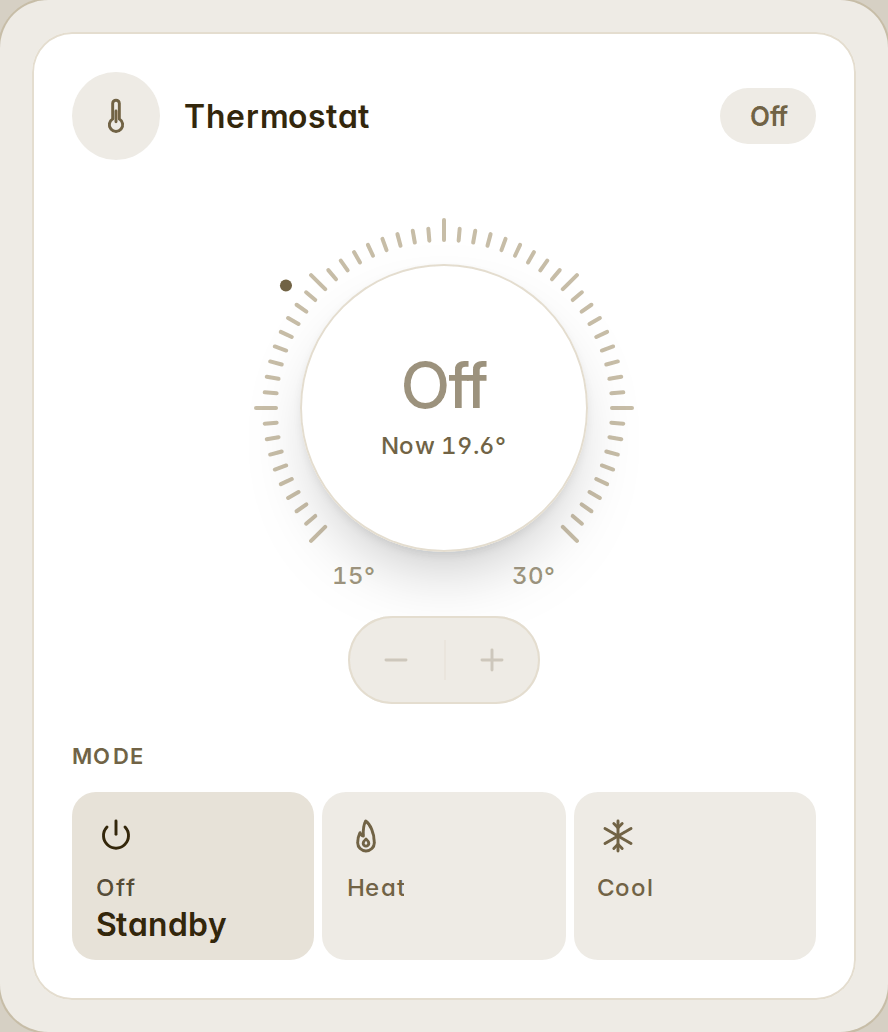
The thermostat and fan cards take when_off: essentials (When off → The essentials): while the device is off, only the head, the value and the mode selector stay; presets and fan speeds — oscillation and direction on the fan — come back the moment it is turned on, below what you tapped.
Nine printer integrations (#29, #30)
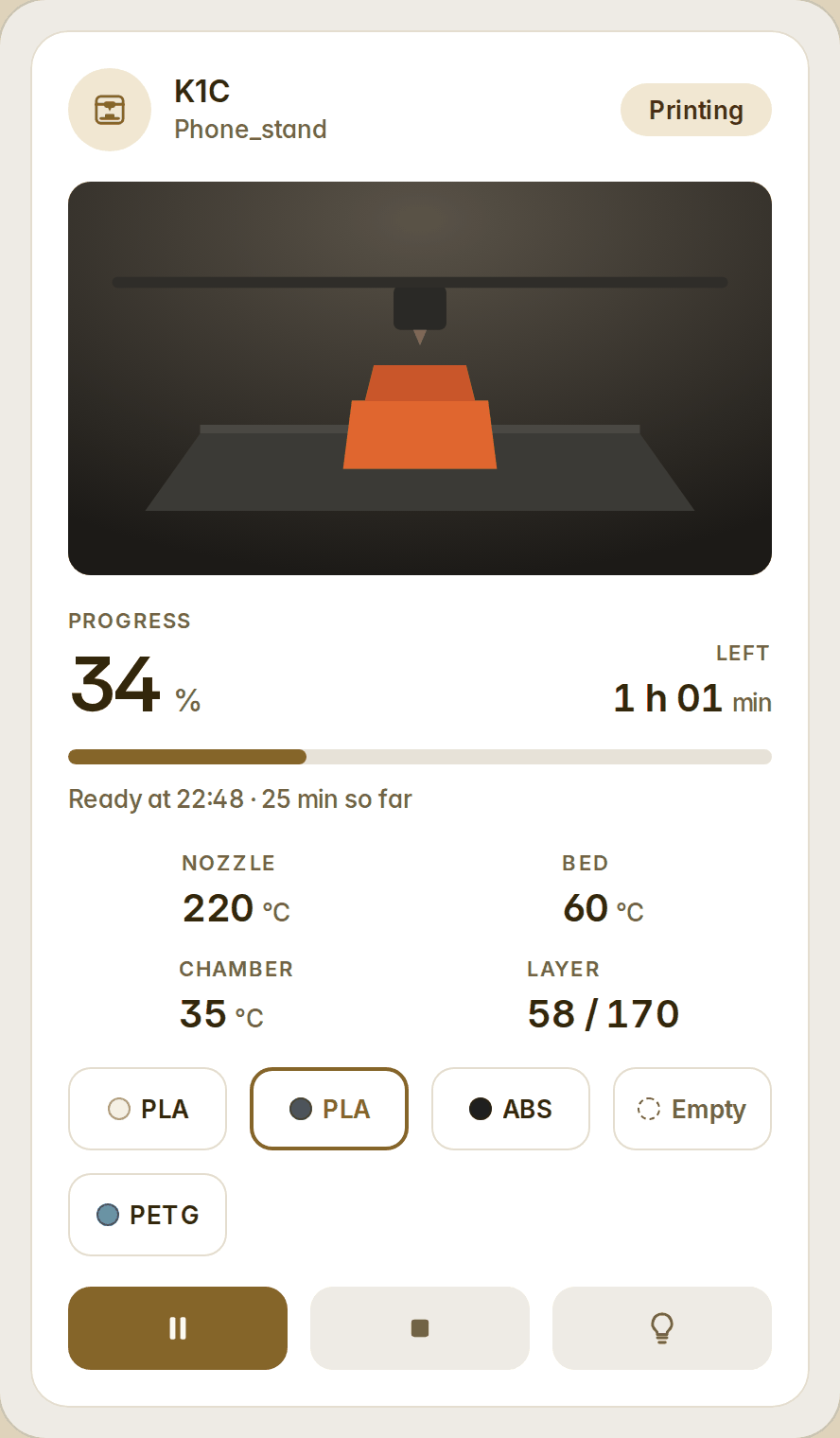
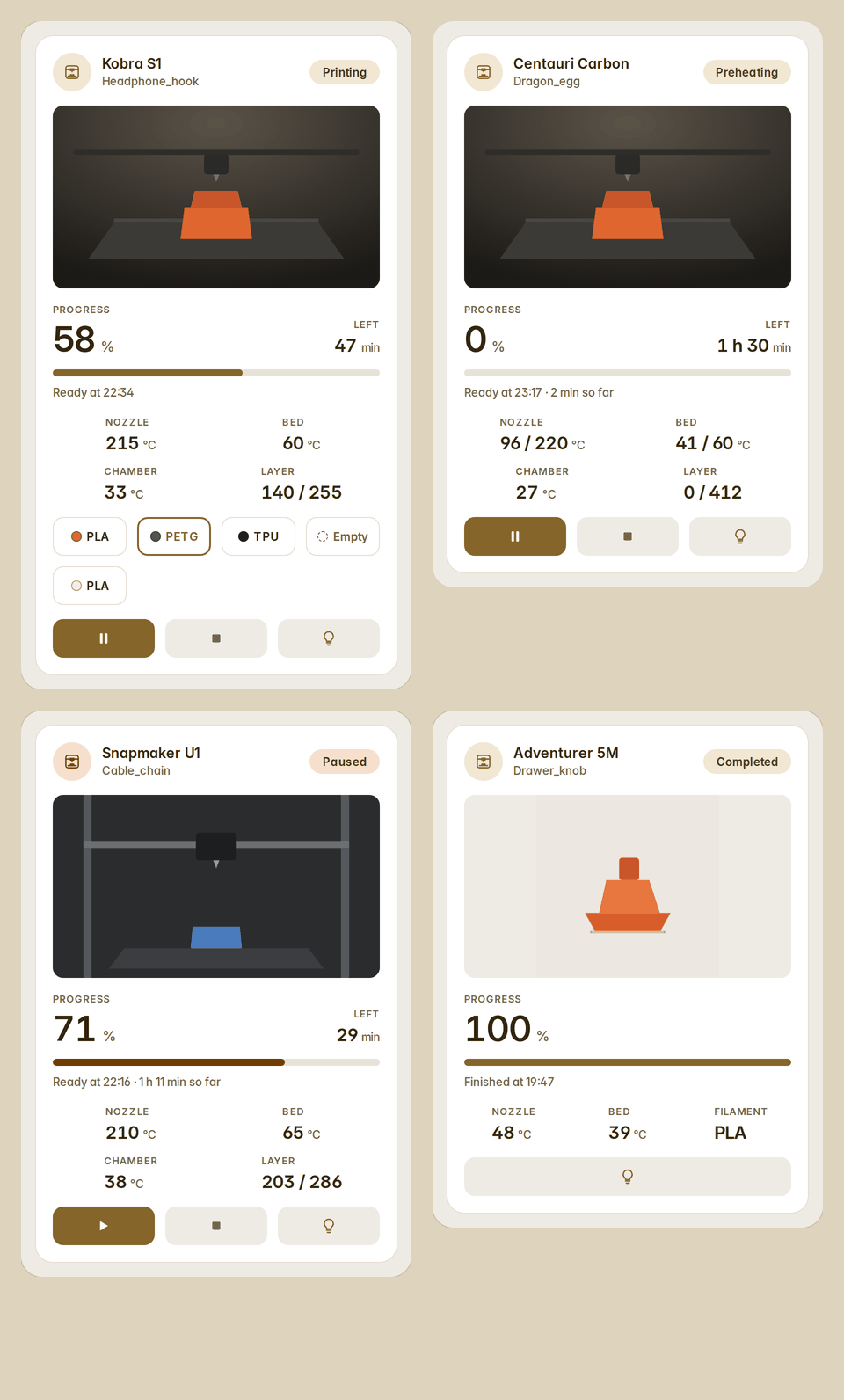
The 3D printer card now discovers Creality (ha_creality_ws), Elegoo, Anycubic (local, with ACE trays), Snapmaker U1 and the legacy Snapmaker integration, and FlashForge, beside OctoPrint, PrusaLink, Bambu Lab and Moonraker. A printer is known by what it has — a status, a nozzle or a bed, a job's measure — so a printer of an unknown integration still works given its device and roles. File names and error codes are read off the status sensor where an integration has no entity for them.
Sensor readouts by name (#28)
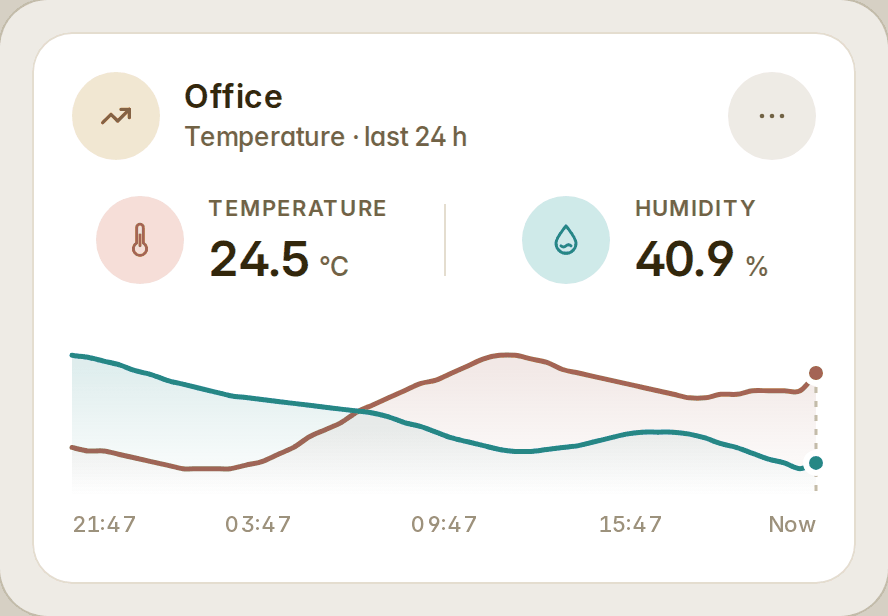
The card's own sensor takes a label under its readout when others share the chart, as an entry's name does. Left empty, a readout is called by its measure — "Temperature", "Humidity" — when no other sensor on the chart measures the same. An entry's color now paints its key and its curve.
Fixed
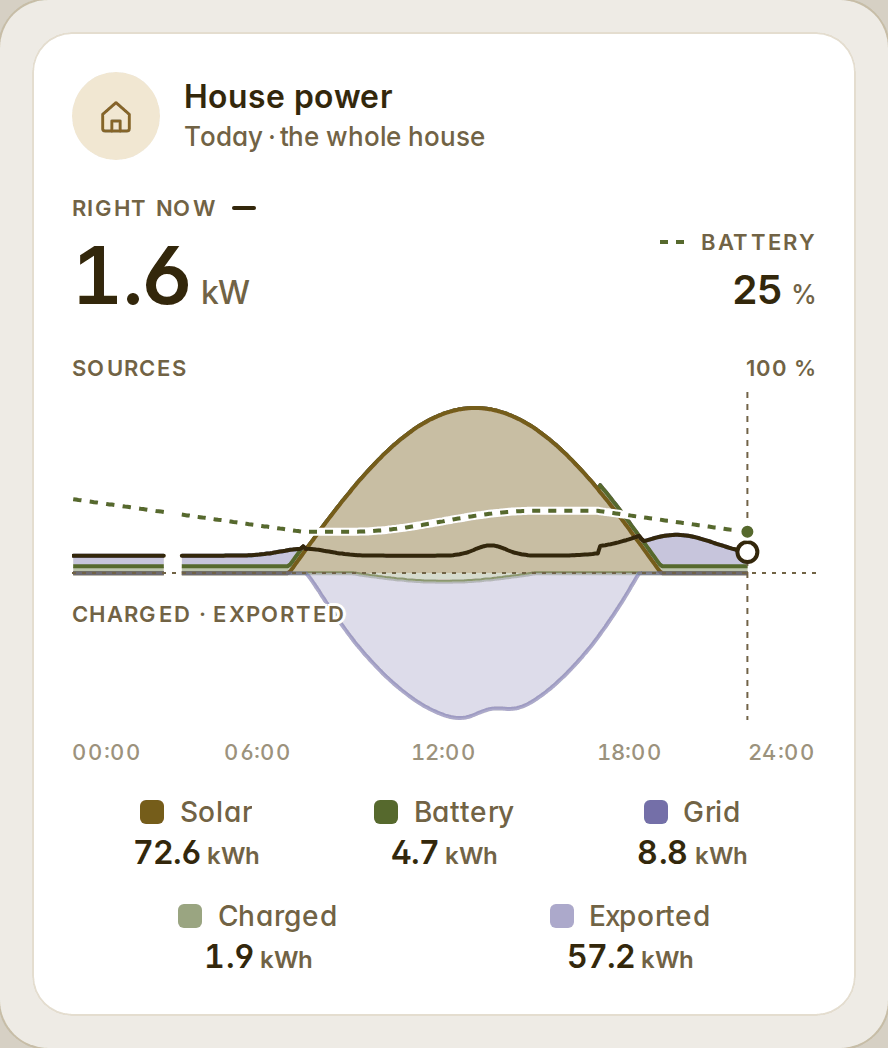
- The overview's state of charge keeps to the positive half: 0 % on the kW zero line, so a low battery on a day of heavy export never reads as an outflow (#28).
- The camera's live stream stays put: one stream element for the card's life, kept 45 s off screen, torn down for good when the mode or camera changes, retried after a failure — no more session churn on every scroll (#28).
- Narrow columns (the 1.6.1 list): at the widths a phone's zoom makes, mode tiles give way to chips rather than cut a word; a tile's foot shows one readout where two labels would overlap; the sensor's statistics take fewer columns where a label would not fit; the flow's dead-source line, the weather's context and the keypad's line give way in segments; the lock's slide hint hides where it would not fit; the camera's off text takes two lines; scene lines drop rather than cut; a room's head line and a map row's word fit their room; the energy card's rolling axis keeps its middle label only where it stands apart; a long panel tab keeps its words; a fold that hides an alert says so in the warning ink; a short age is read in full; the Spanish camera pill says "En directo".
Every page now loads 220.5 KB gzip (the budget rose from 220 to 222 KB for the light's colour wiring, the surface colour and the essentials); the light's colour controls come in their own 2.7 KB chunk, fetched by the first colour bulb. Fifty cards, eight languages, 1419 words each.