25 zicDrop
The zicDrop is a generative standalone synthesizer designed for algorithmic drum pattern generation, techno sub-kick crafting, and dynamic live performance. It pairs an algorithmic rhythm & variation generator ("Sequence Brain") with a dedicated sub-kick/rumble synthesis engine and a versatile texture/synth engine.
-
Algorithmic Rhythm Generator ("Sequence Brain"):
- Controlled syncopated ghost notes and phrase-end rumble rolls.
- Programmable synth trigger stepping and rate division.
-
Dedicated Techno Kick & Sub-Rumble Engine:
- Kick Body: Tunable base frequency, decay envelope, pitch sweep depth, sweep length, and VCO morphing.
- Transient & Drive: Adjustable click amount, click decay, and warm overdrive saturation.
- Sub-Rumble Tail: Dedicated techno rumble tail generator with adjustable level and gap timing.
-
Texture & Synth Engine:
- Morphable oscillator waveforms (Saw, Square, Noise) with waveshaping and filter morphing.
- Flexible modulation routing (Cutoff, Pitch, Waveform, Level) with LFO (Triangle, Sawtooth, Sample & Hold) and Envelope depth/speed controls.
- Built-in FM synthesis morphing and feedback delay effect with mix, time, and feedback controls.
-
Master FX & Output Controls:
- Master volume control, master fold distorter/waveshaper, and texture mix balancing.
-
32-Encoder Interface:
- Distinct color-coded parameter sections (Brain, Kick, Synth, Master) for intuitiveness on hardware encoders or desktop controls.
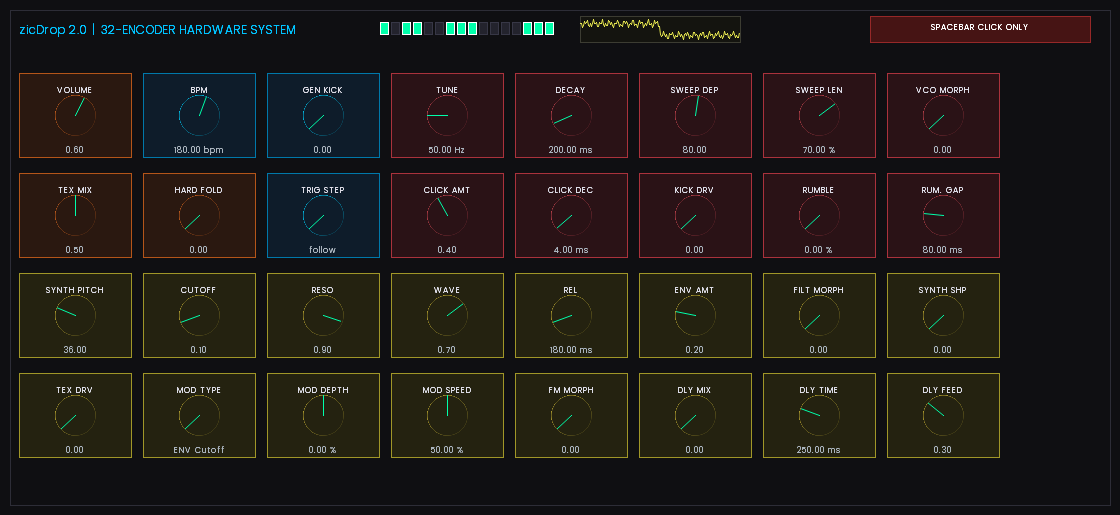
To compile and run zicDrop on desktop (Linux with SFML & ALSA installed):
cd zicDropV2
makeThe current zicDrop implementation is a proof of concept running as a standalone desktop application. In parallel, a smaller prototype has been developed and tested on the Electro-Smith Daisy Seed platform, demonstrating that the core synthesis and sequencing concepts can run successfully on embedded hardware.
The long-term goal is to turn zicDrop into a dedicated standalone hardware instrument based on the Daisy Seed platform. The planned hardware interface will feature 32 dedicated potentiometers, organized into the same functional sections as the software interface: Brain, Kick, Synth, and Master.
The dedicated hardware version is intended to provide a hands-on performance experience, allowing all major synthesis, sequencing, and effect parameters to be controlled directly without the need for a computer. The desktop version will continue to serve as a development and prototyping environment while the embedded version evolves toward a fully self-contained instrument.
To come soon (maybe :p)