Compatibility
About these figures: steady-state gameplay observations on a Steam Deck (1280×800); ranges shown where measured (avg over play, not peak). The first launch of any title is noticeably slower while the JIT (PPTC) and shader caches build - performance settles after that. Numbers tighten as more telemetry is gathered.
Tested on a Steam Deck (1280×800); fps figures are on-device with the performance overlay enabled. Compatibility is improving rapidly. Each title shows a representative on-device capture and a short note.
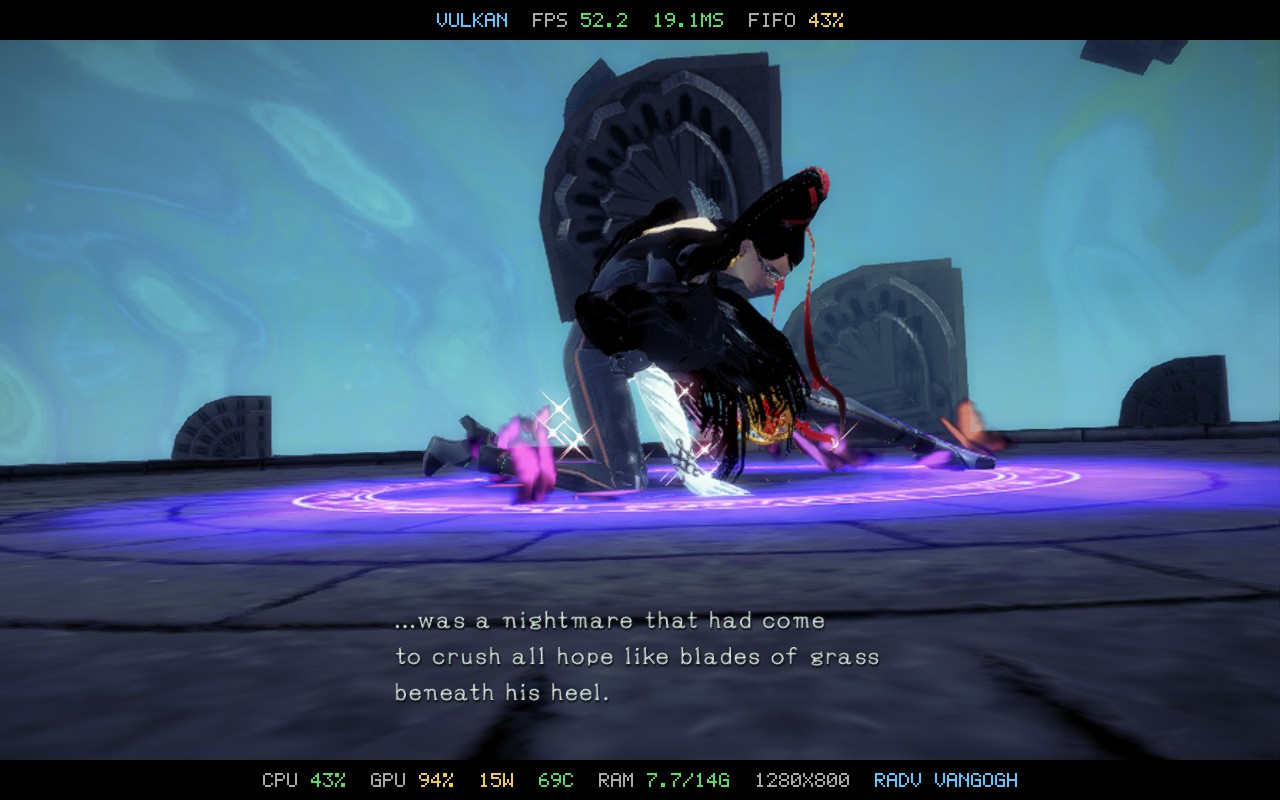
Runs great from a clean dump, holding a smooth framerate via the game's native dynamic resolution.
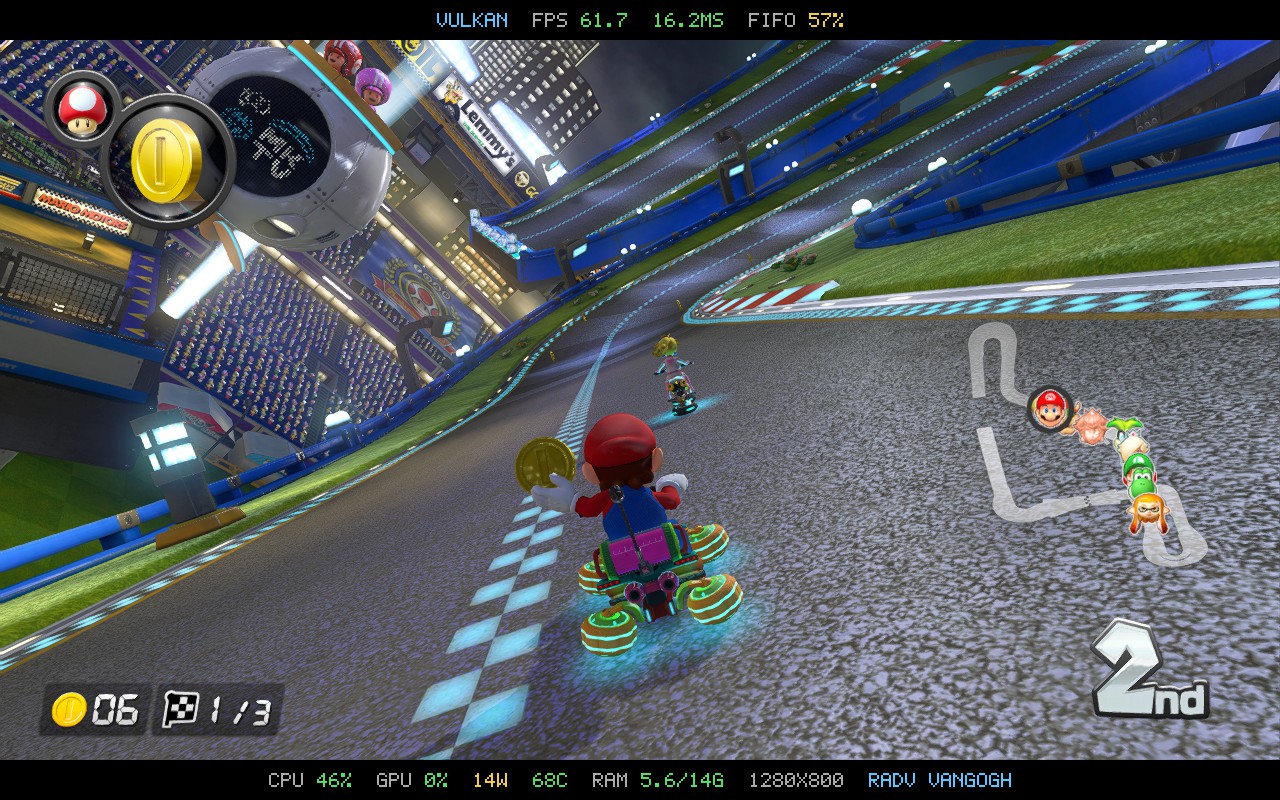
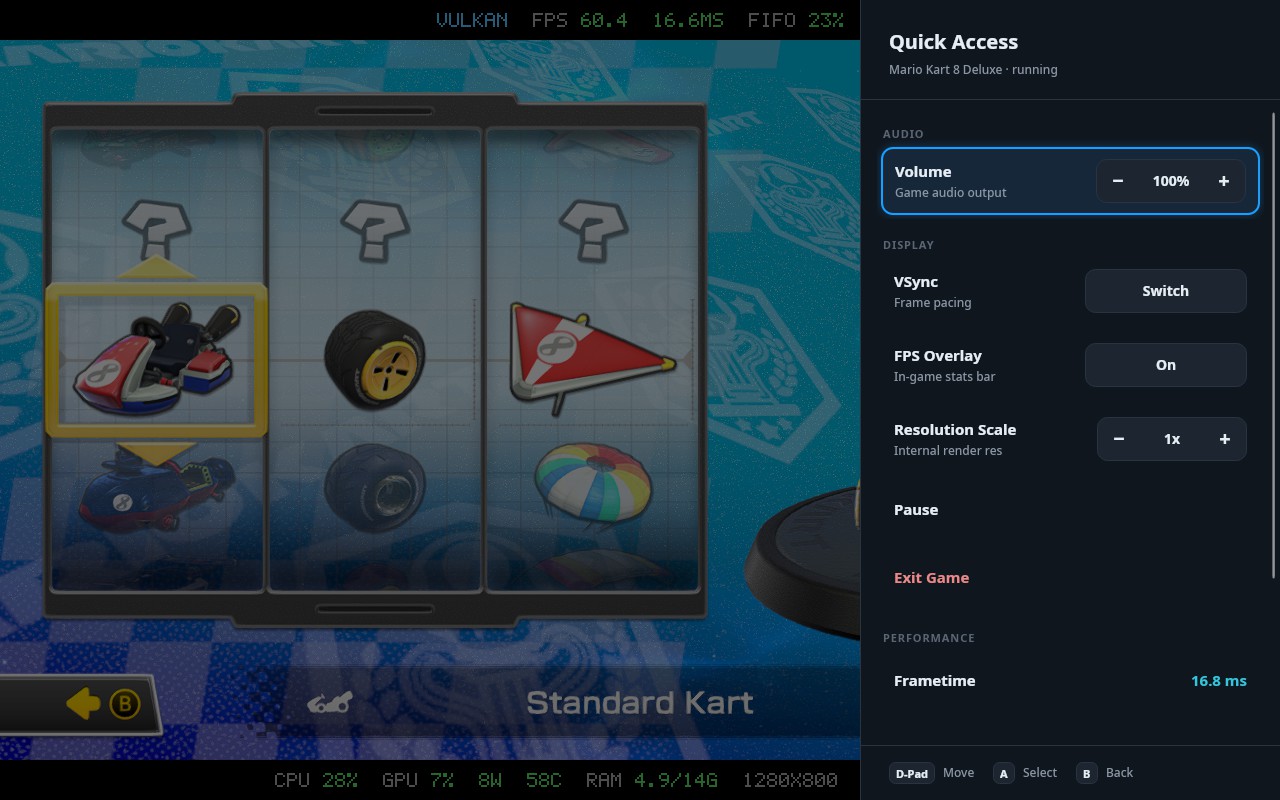
Runs great. Races hold roughly 50-62 fps with clean rendering across tracks.
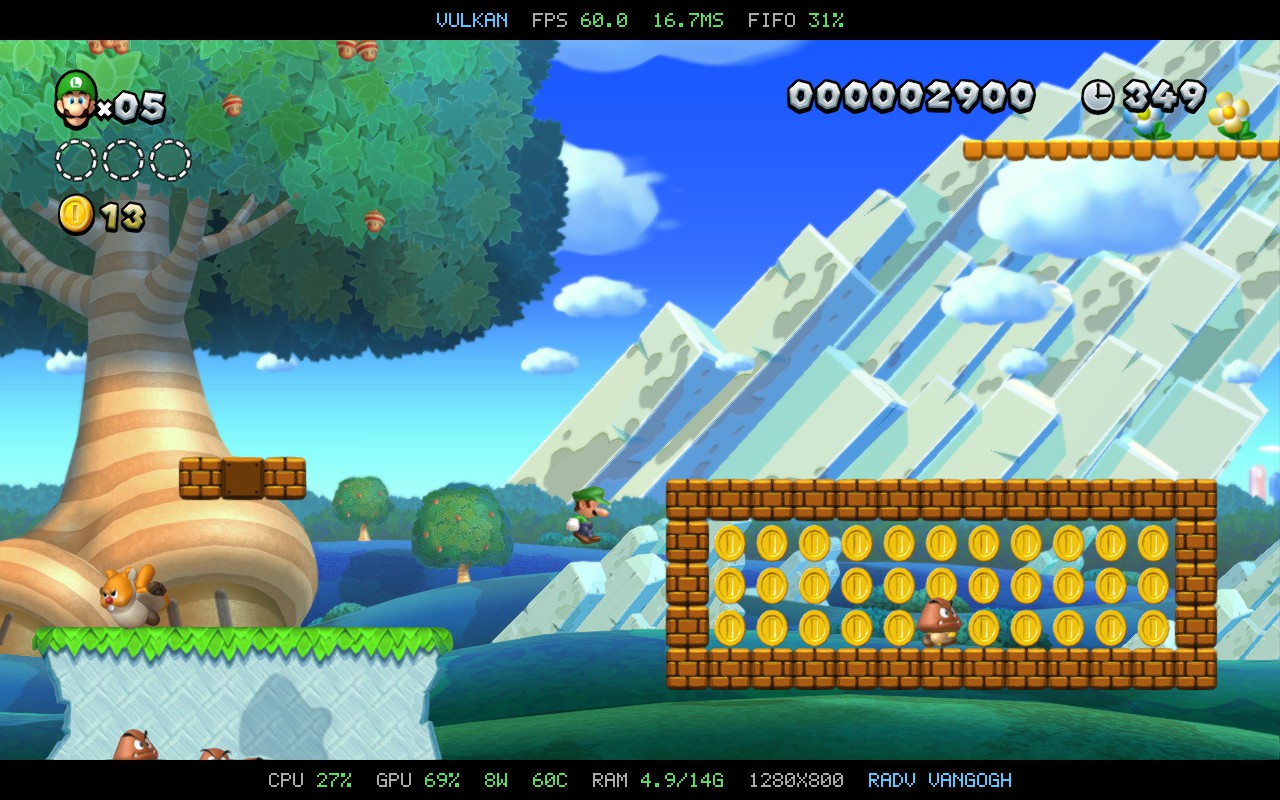
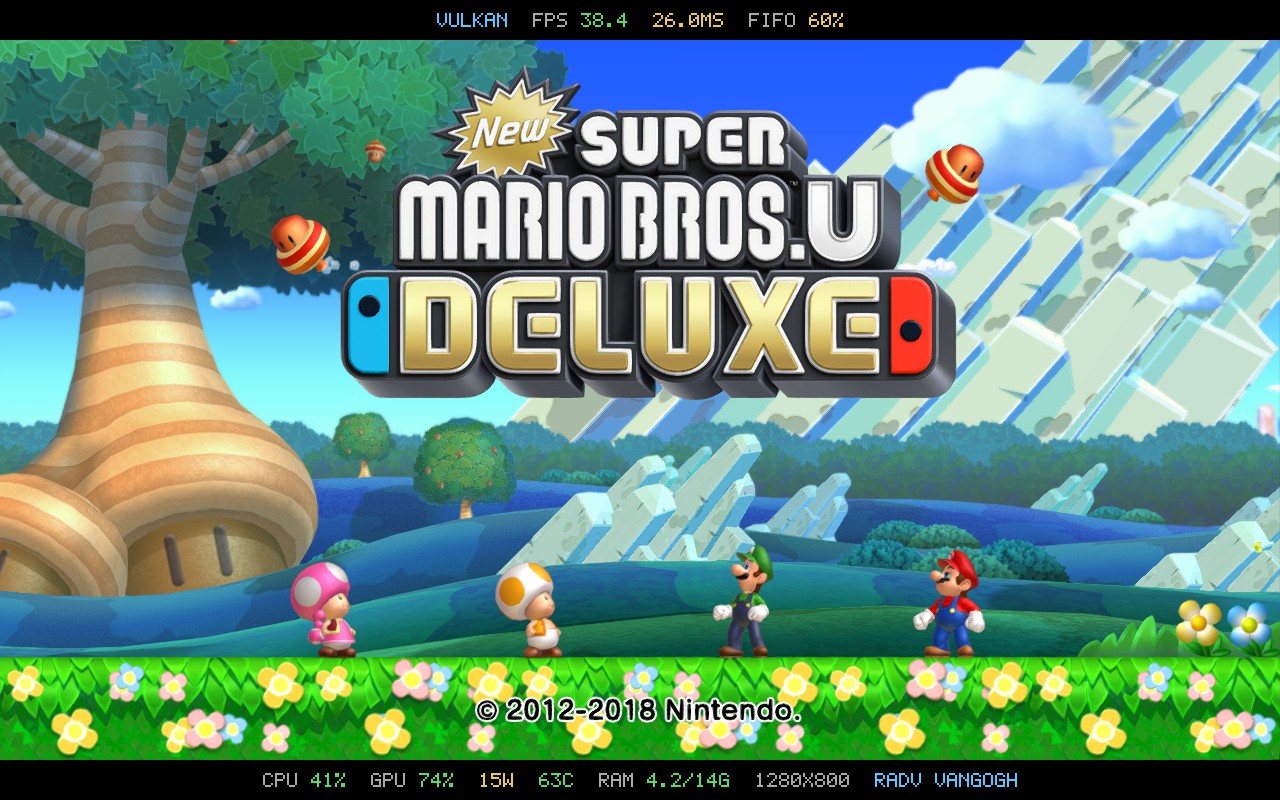
Perfect. Locked ~60 fps at resolution-scale ×4.
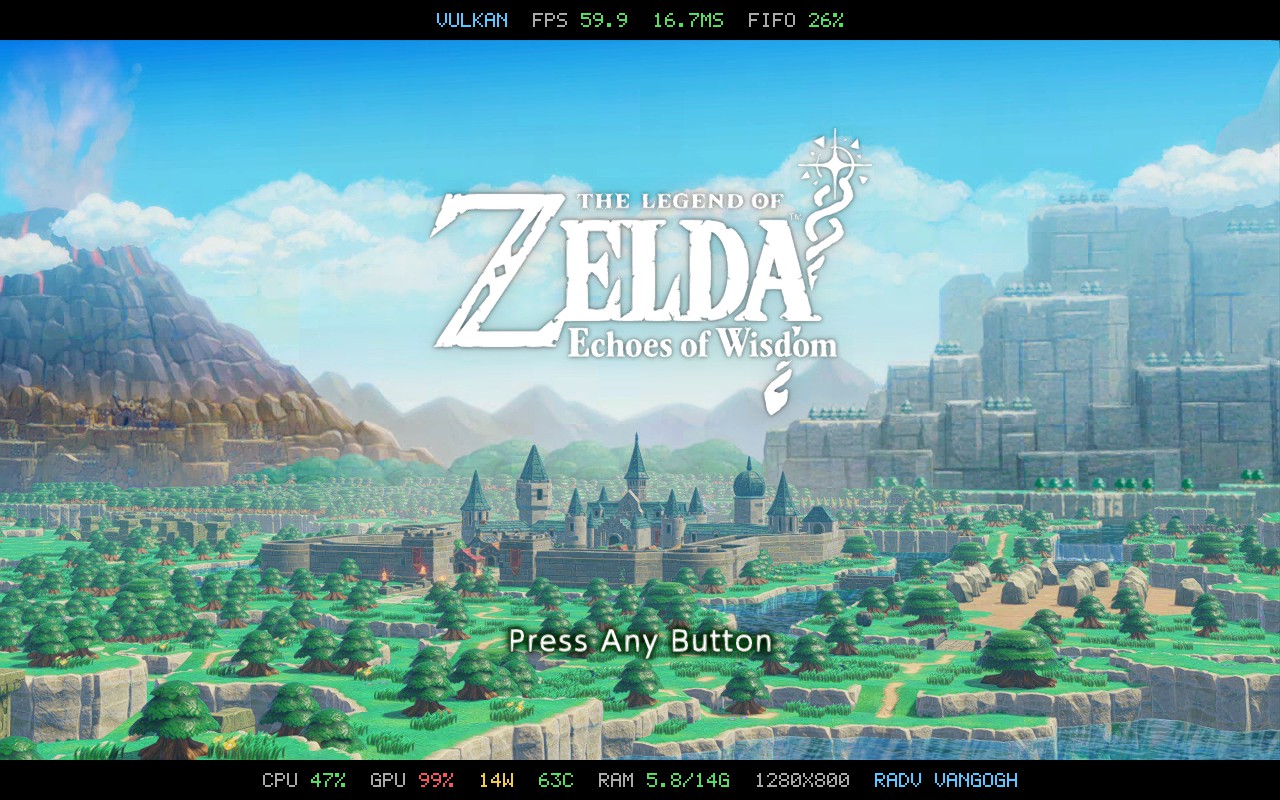
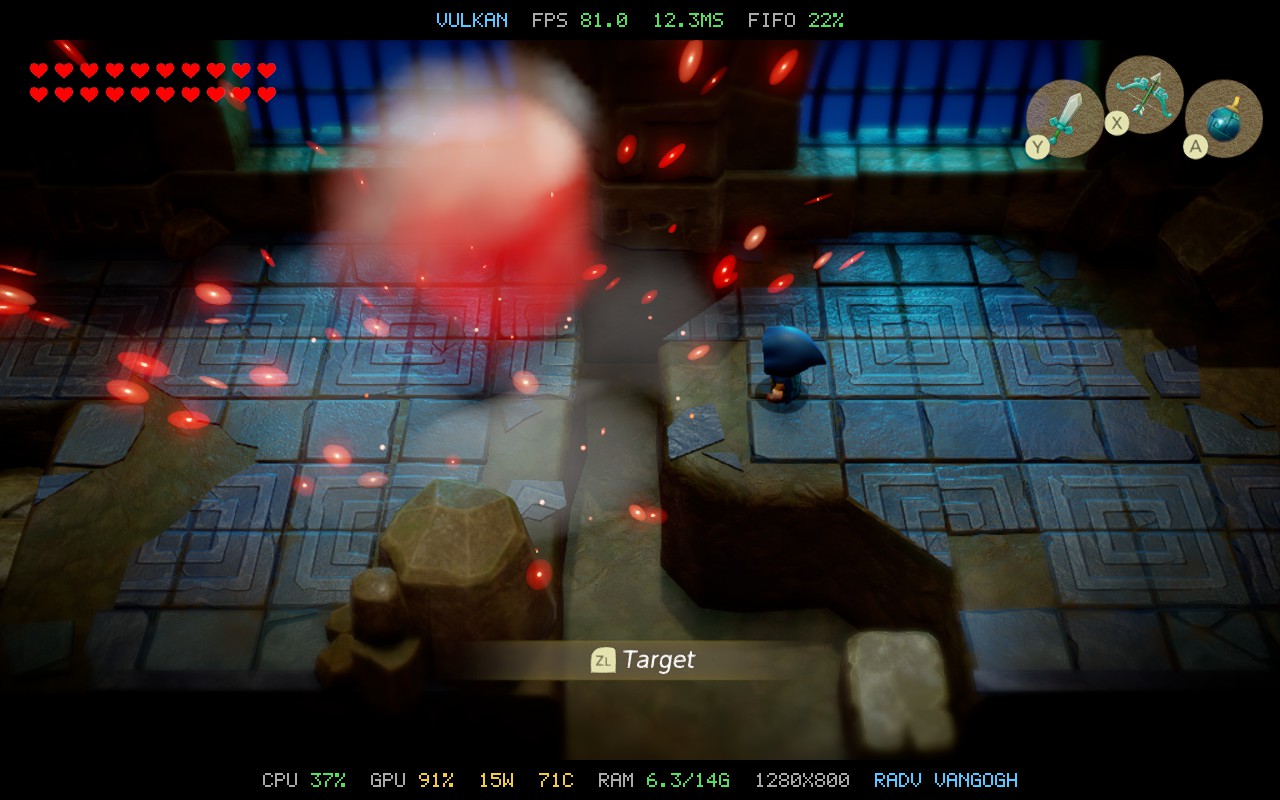
Version 1.0.1. Runs well uncapped (frequently 60+ fps in dungeons). Good at resolution-scale ×4; ×3 is the safer choice for steadier frame pacing.
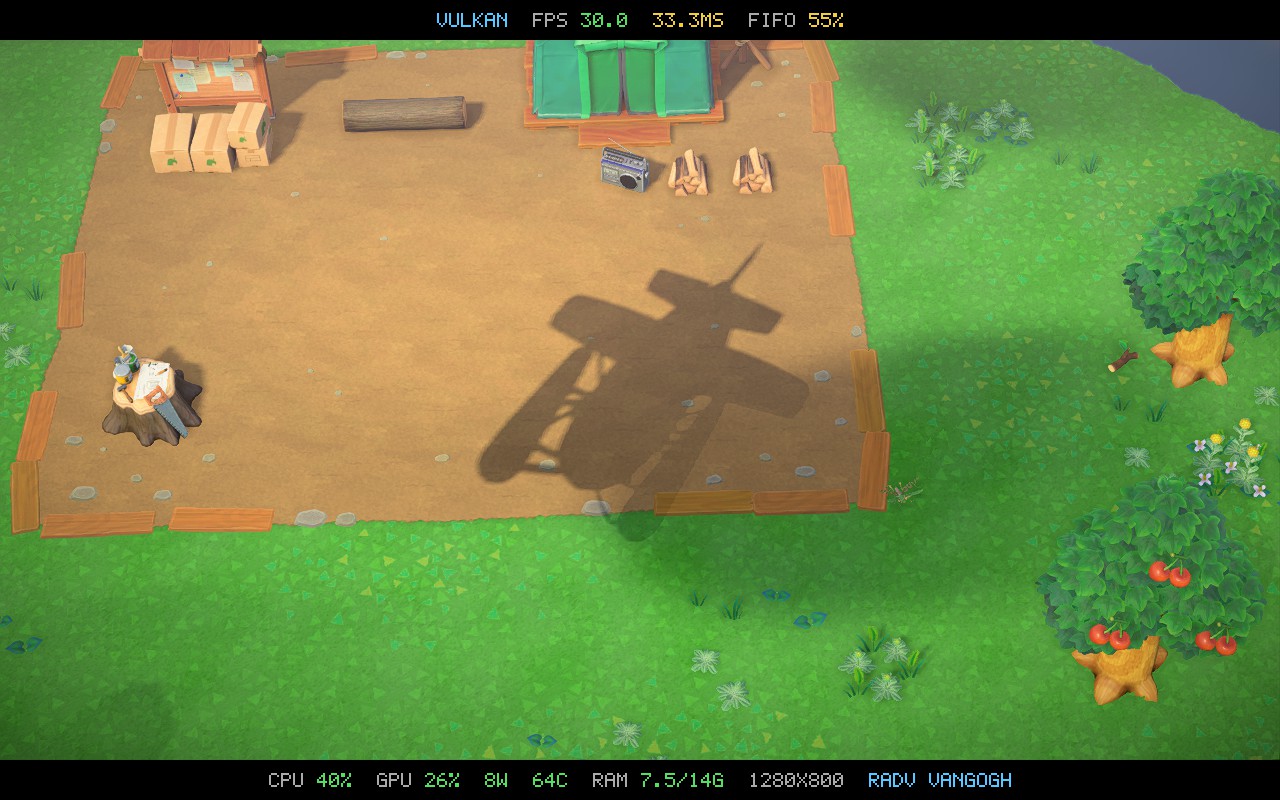
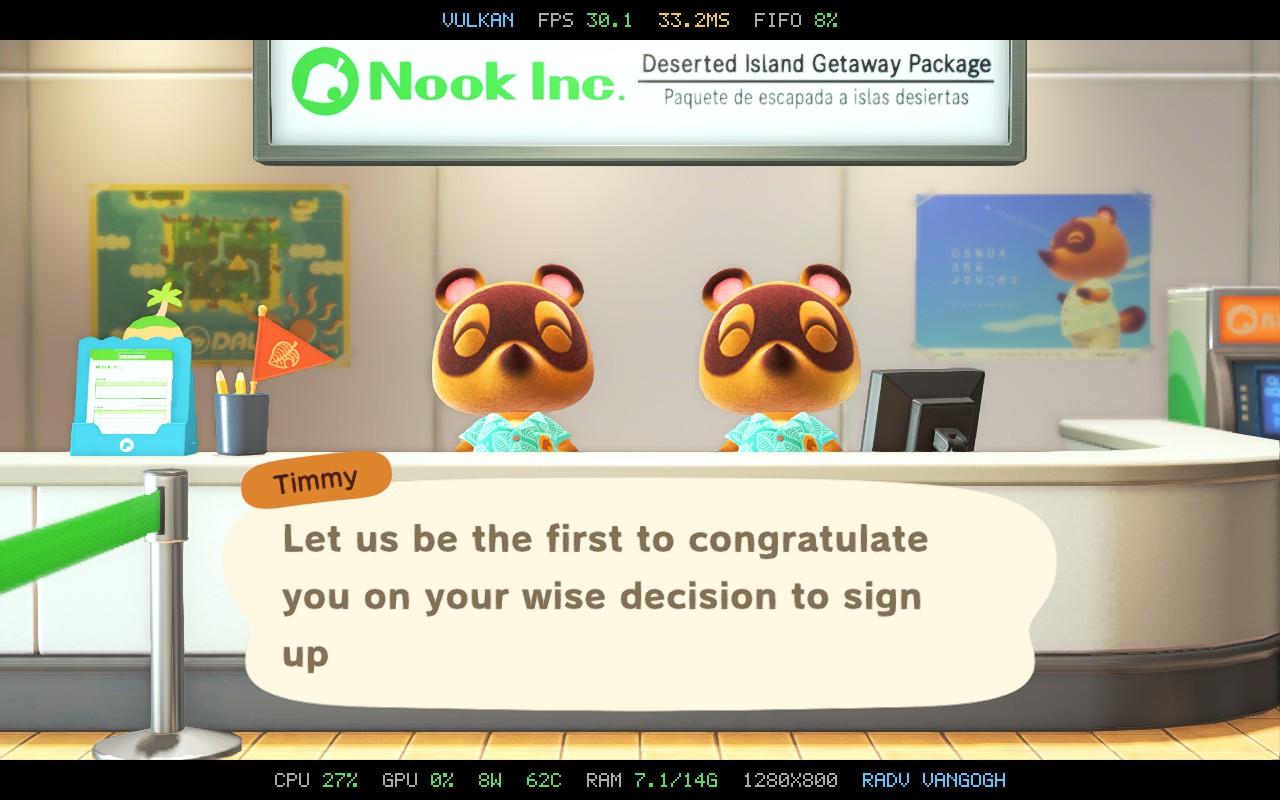
Runs great and handles resolution-scale ×4. Note: game speed is tied to frame rate - at high fps the game runs too fast (around 80 fps it is noticeably sped up) and high fps also breaks the audio. Best played with a 30 fps cap, which keeps timing and sound correct.
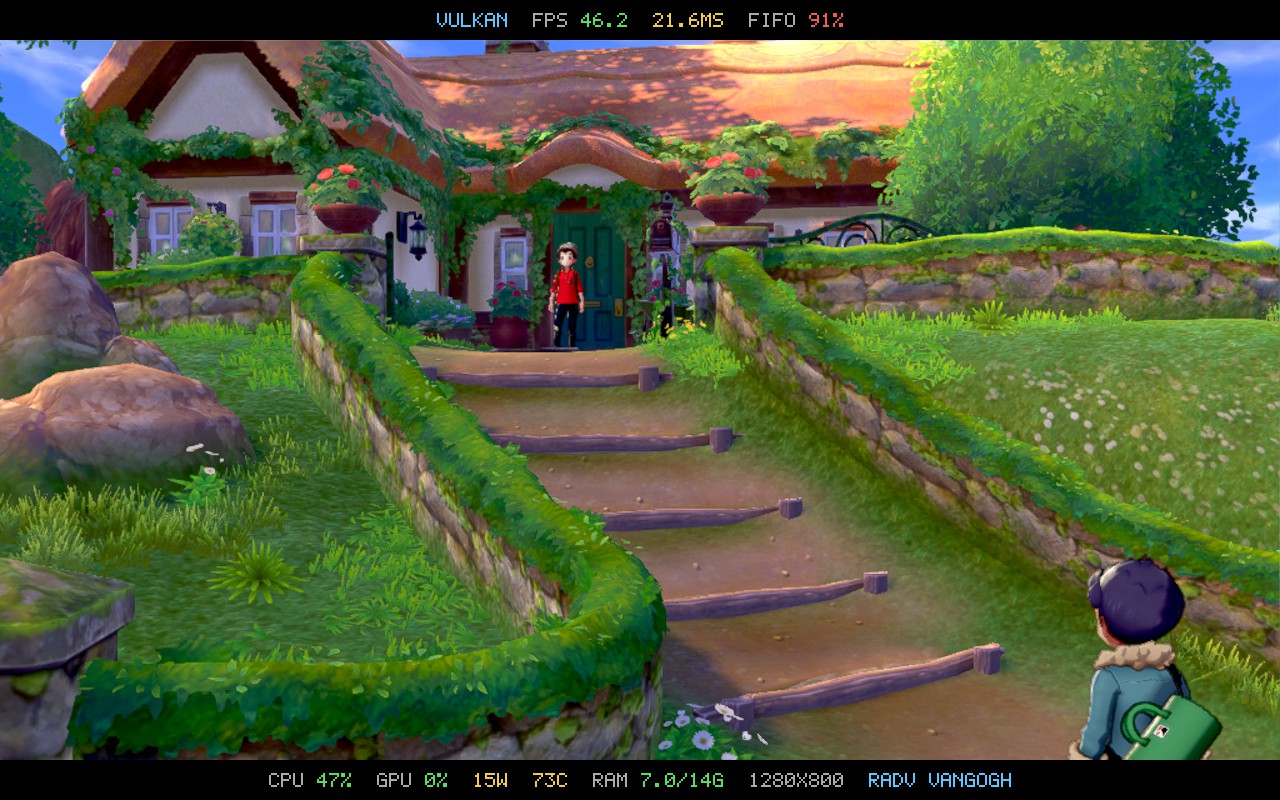
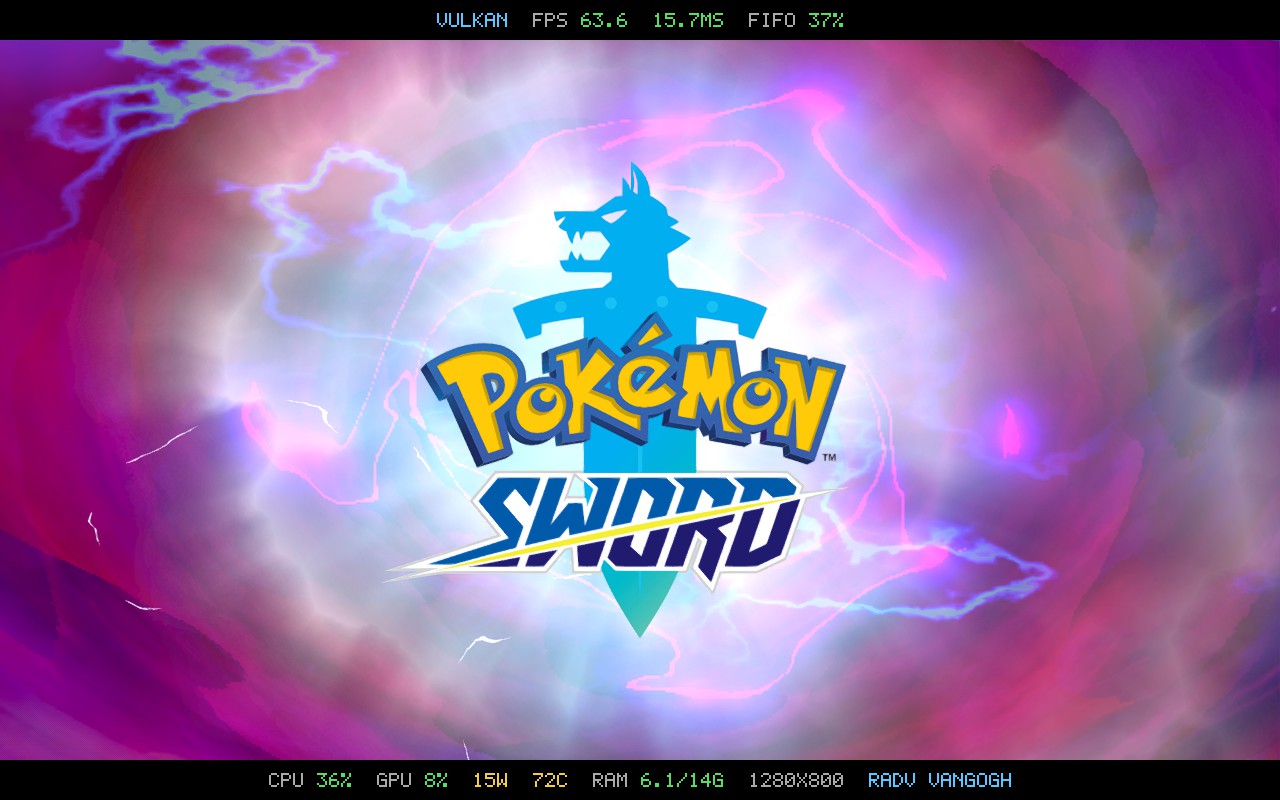
Works now. Game logic is tied to frame rate, so an appropriate cap is recommended; resolution-scale ×4 runs well.
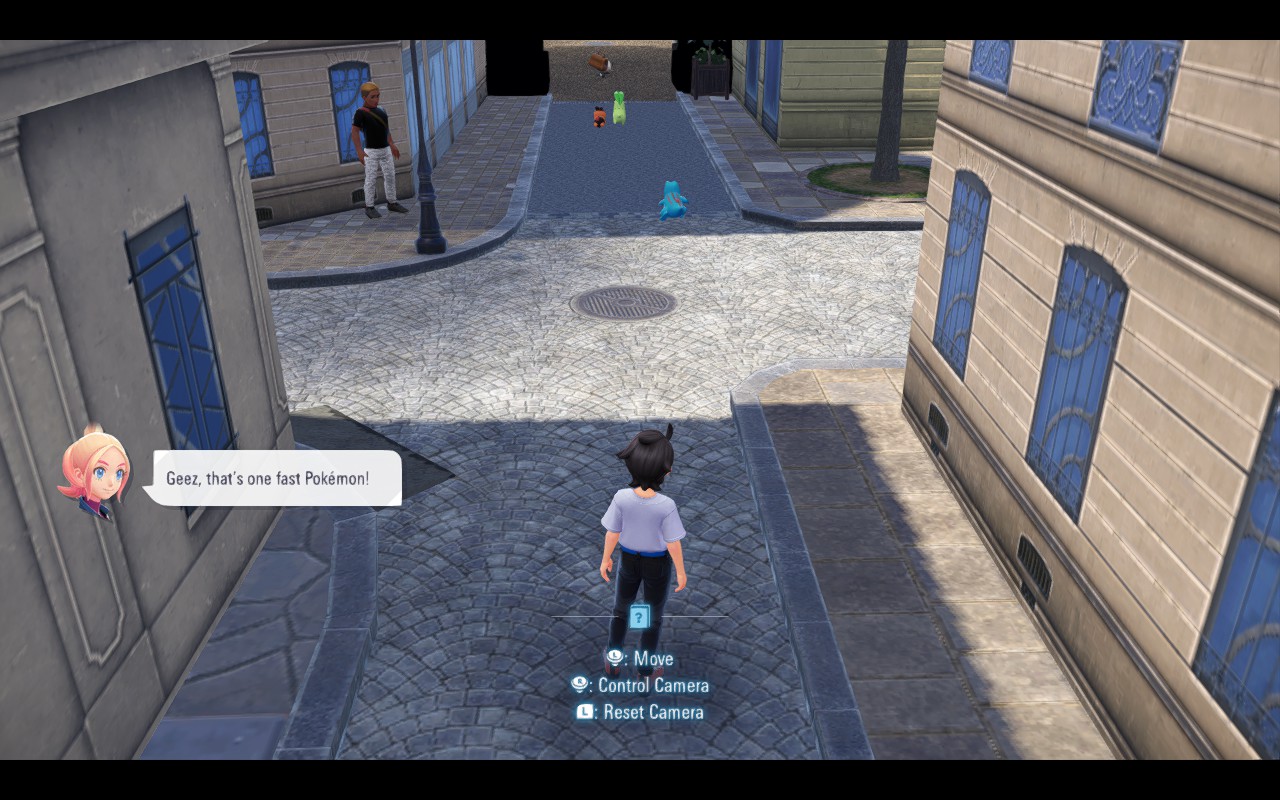
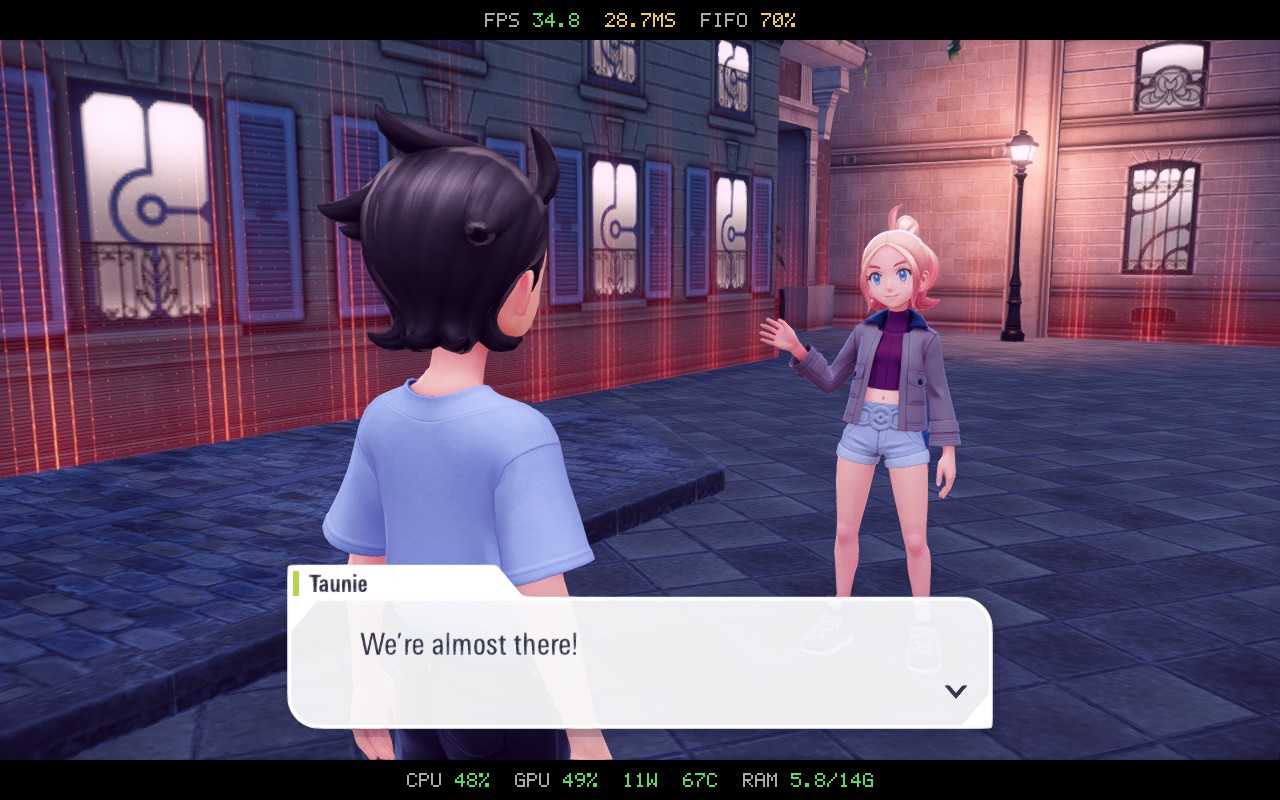
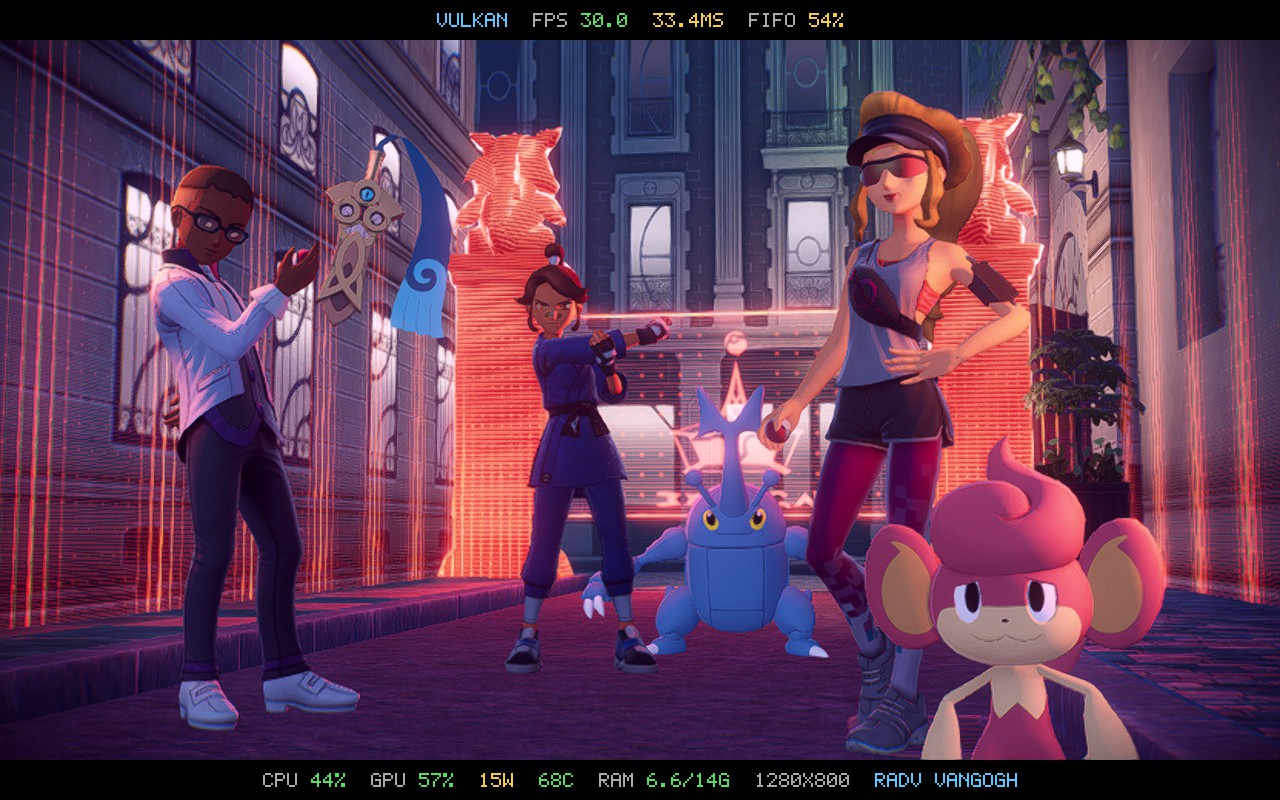
Version 2.0.2. Runs well (approximately 67 fps). Overworld exploration, dialogue, and battles render correctly.
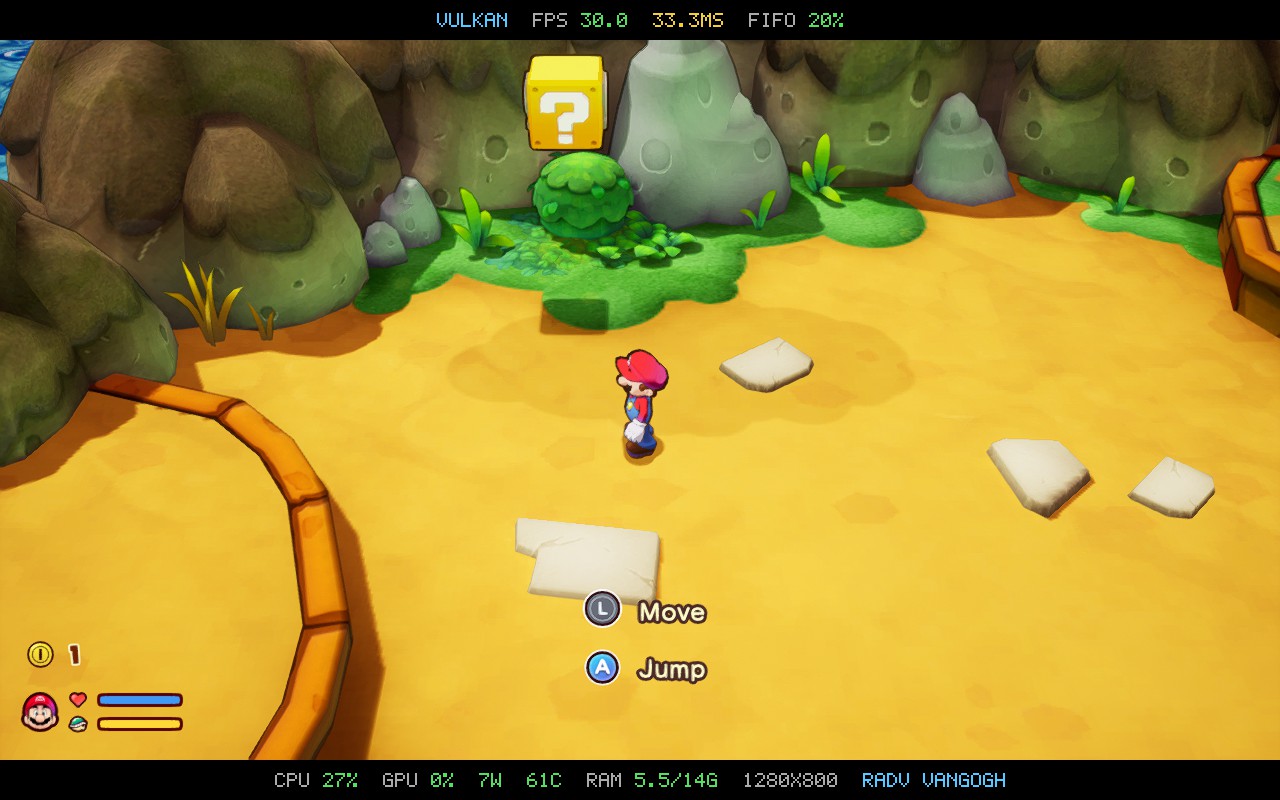
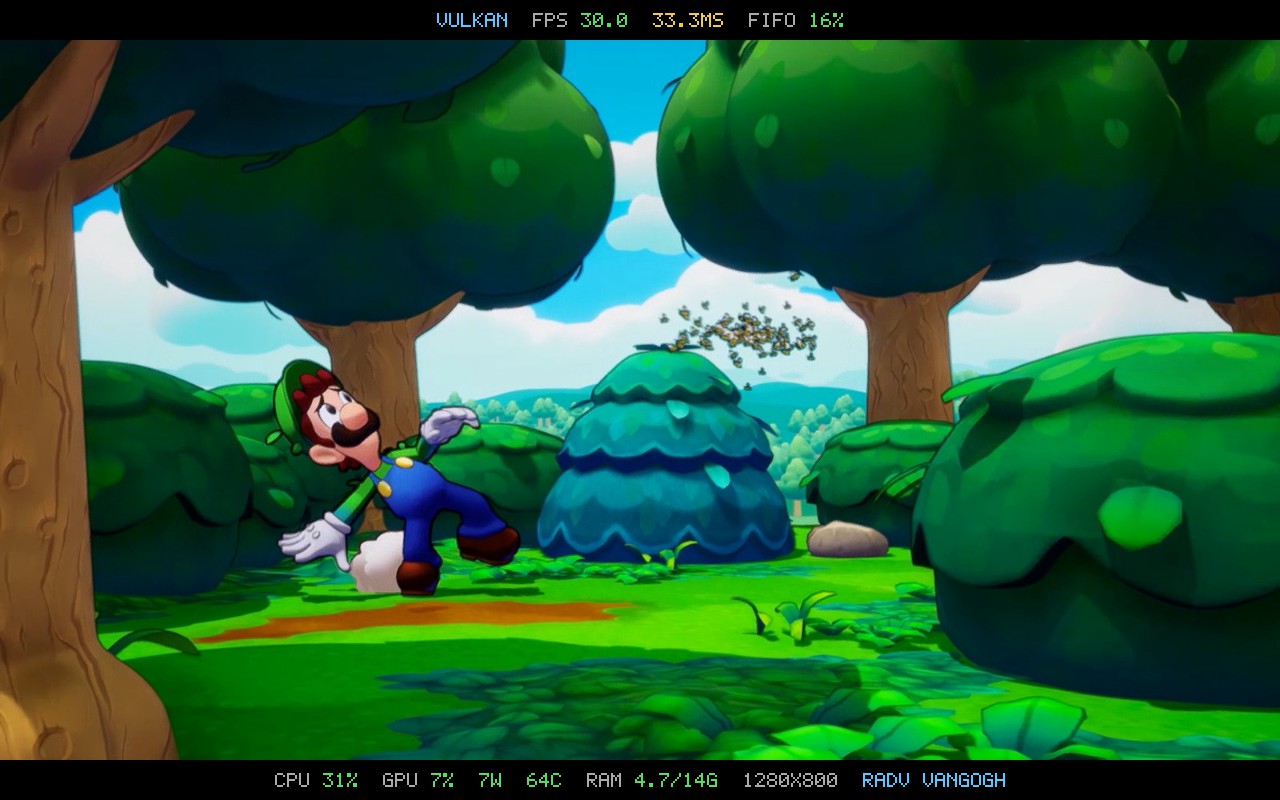
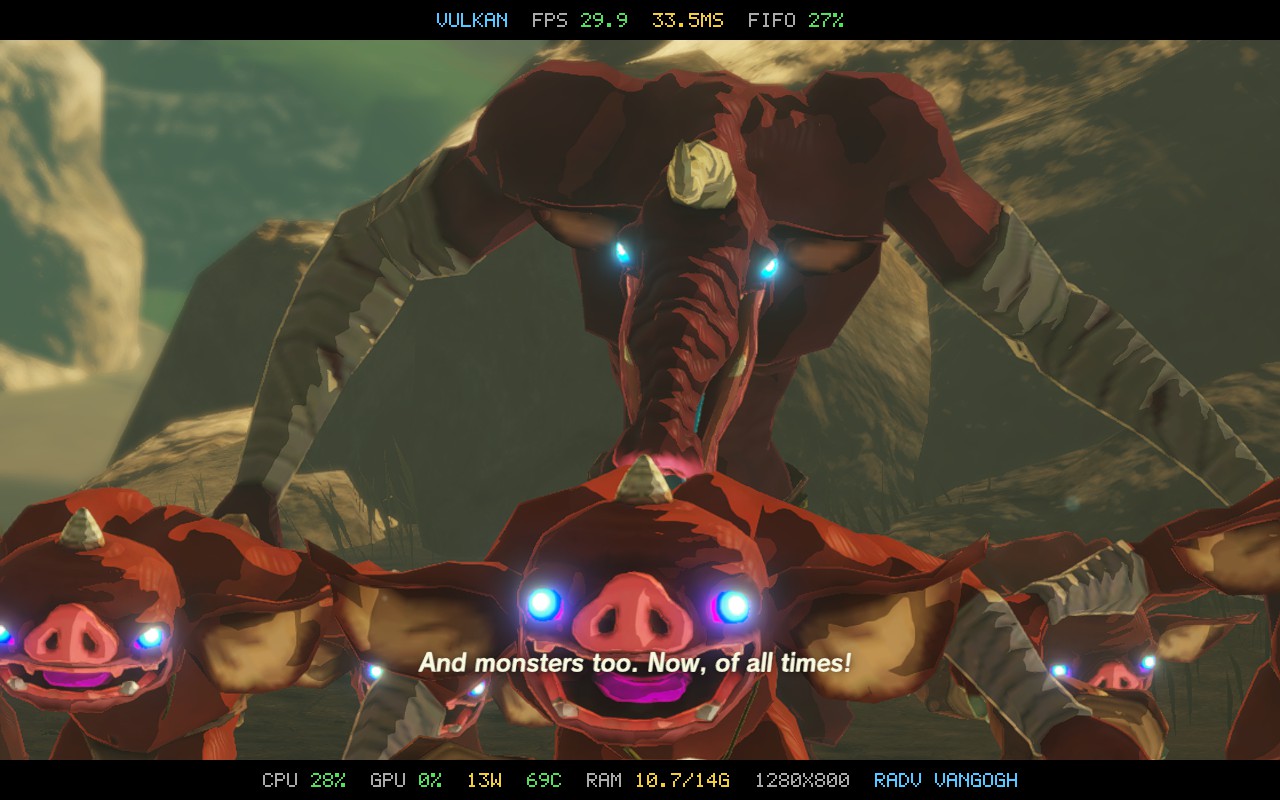
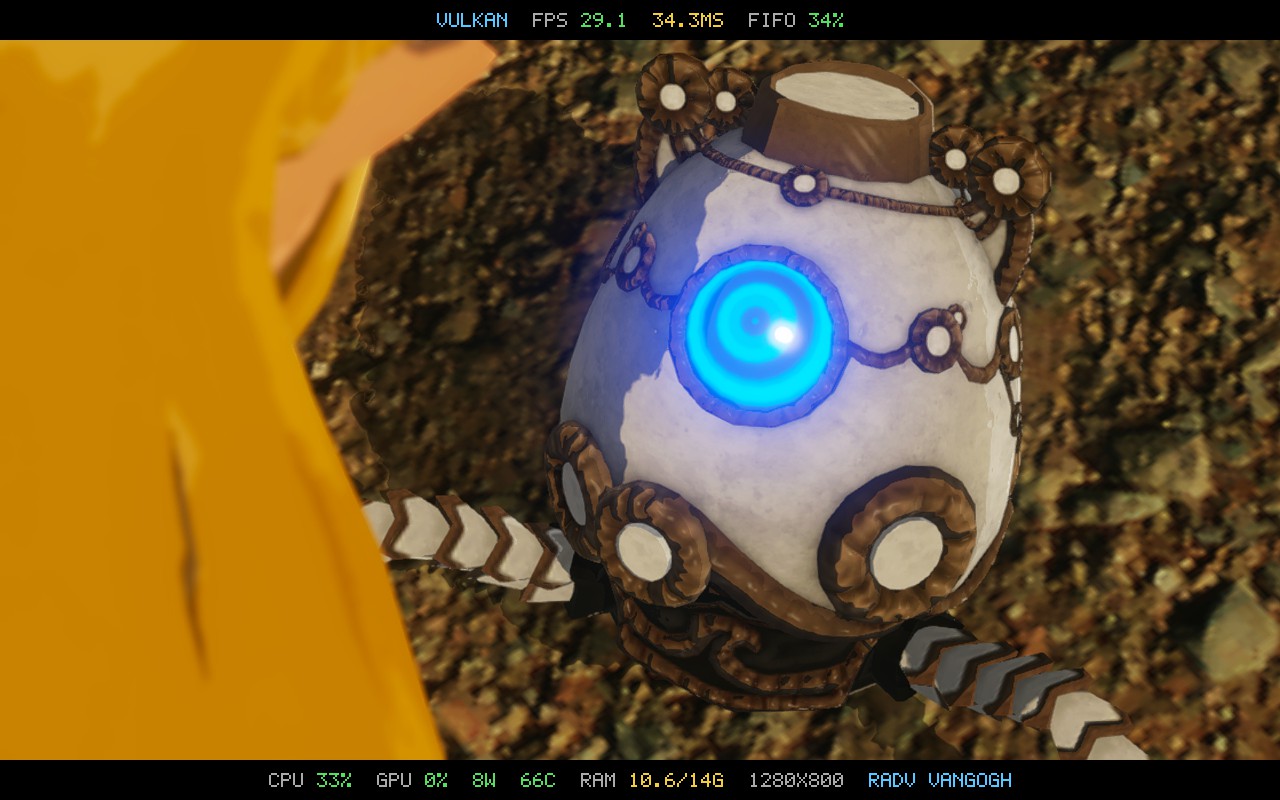
Version 1.0.0. Runs well - averages approximately 27 fps (11-30 range). Overworld, cutscenes, and battles render correctly.
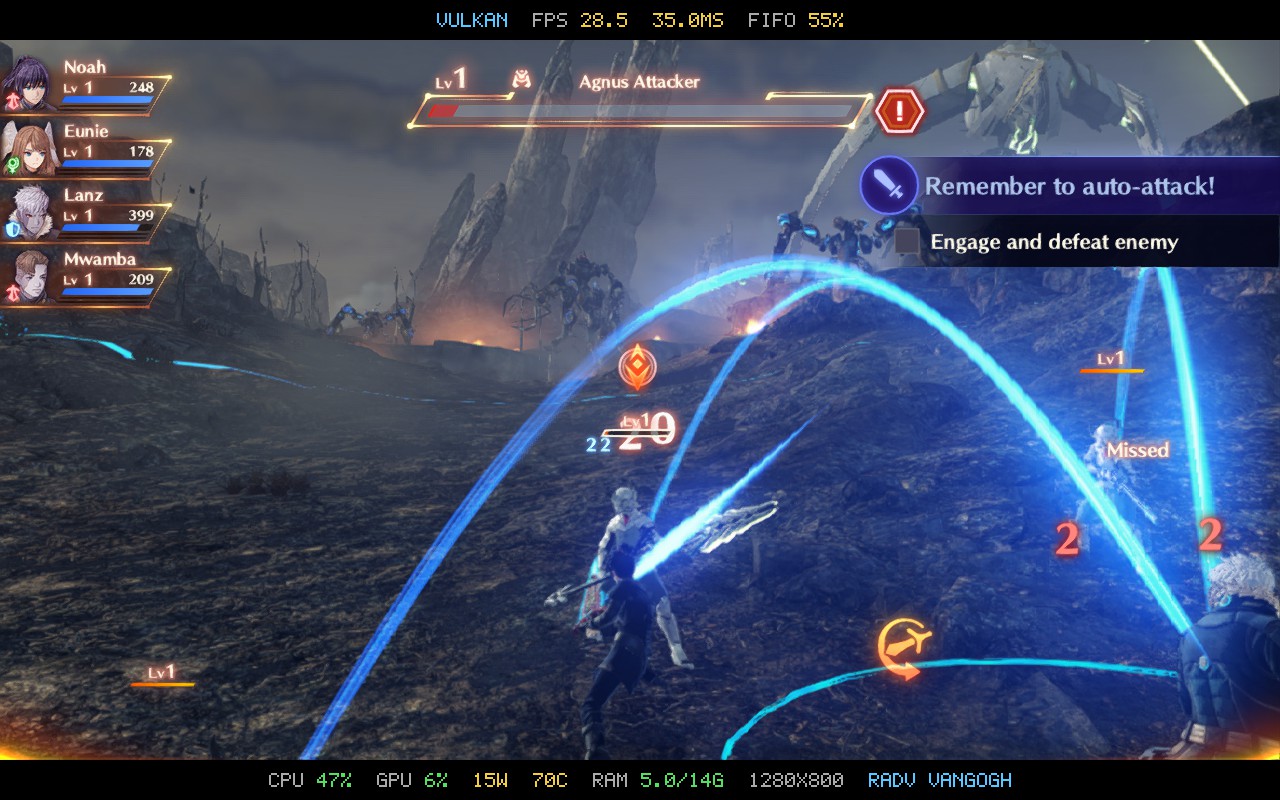
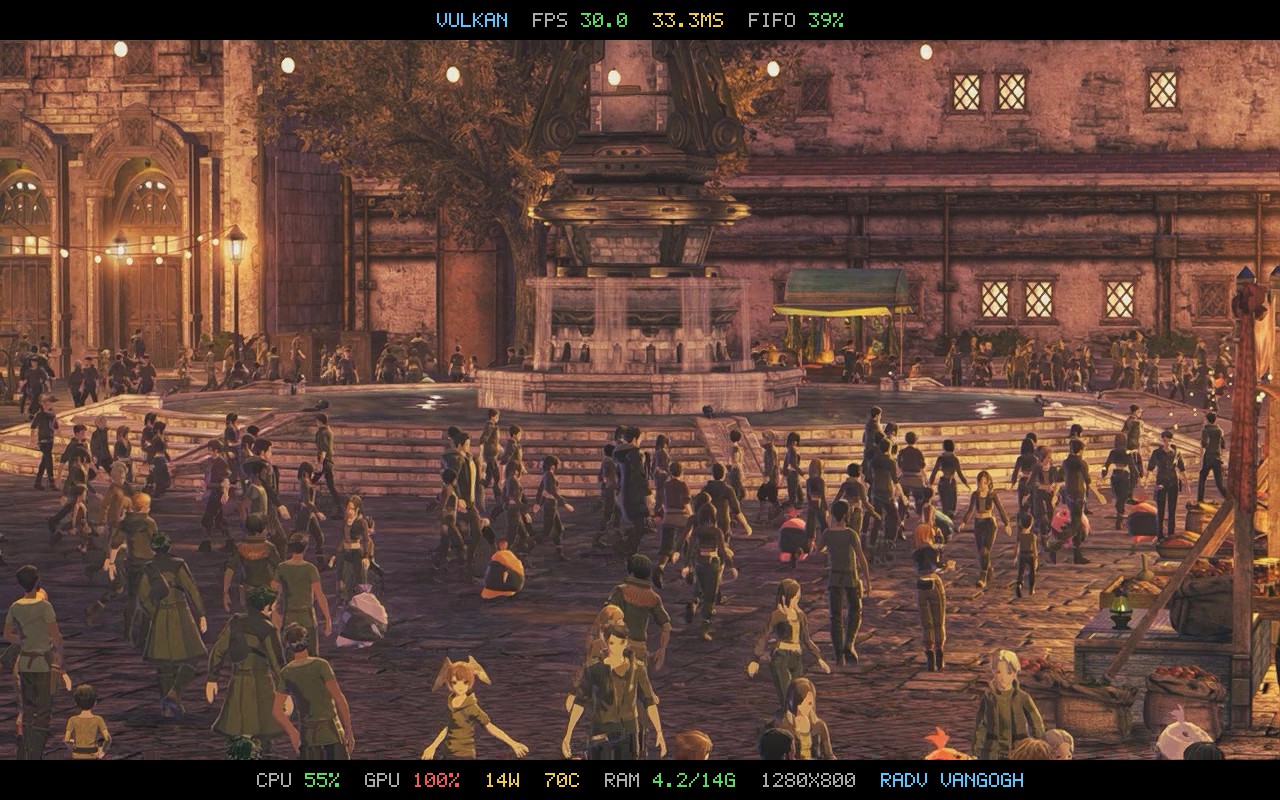
CPU/JIT-bound. Averages approximately 25 fps (12-30 range) and feels rough in the heavy crowd-combat scenes, which is the expected behavior for this engine on a handheld CPU. Renders correctly throughout.
Version 2.2.0. Decent but rough this session, which may be first-run shader compilation rather than steady-state performance - it should be re-measured after the shader cache settles. Battles and the crowded town hub render correctly.
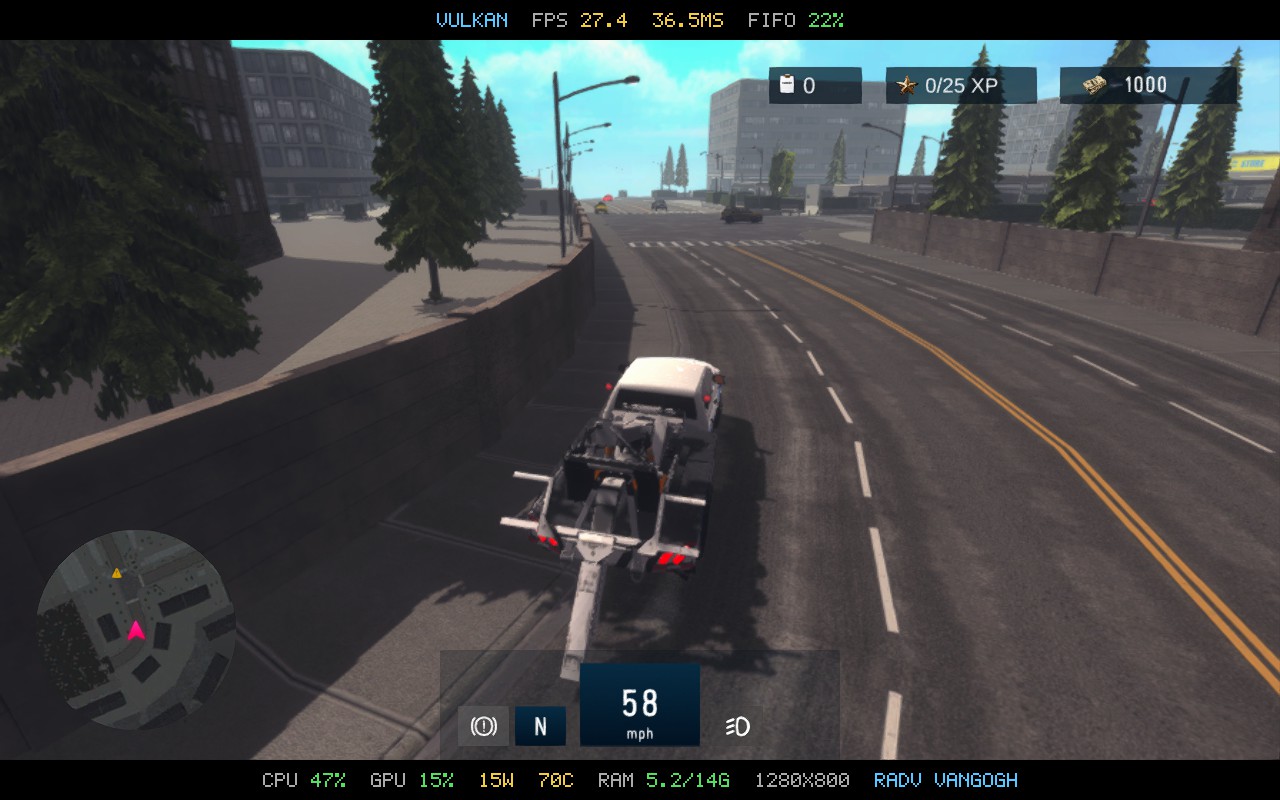
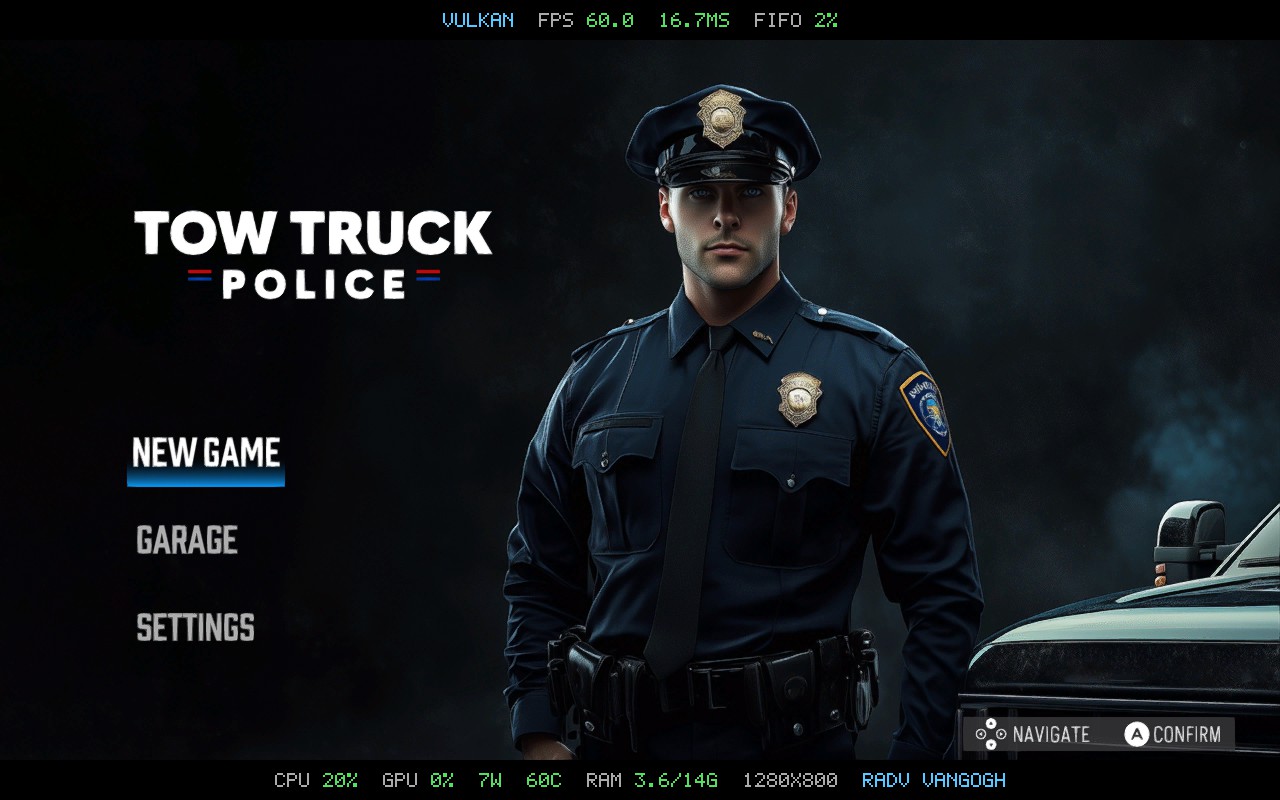
Runs cleanly. Loading briefly locks at 100% before proceeding into gameplay.
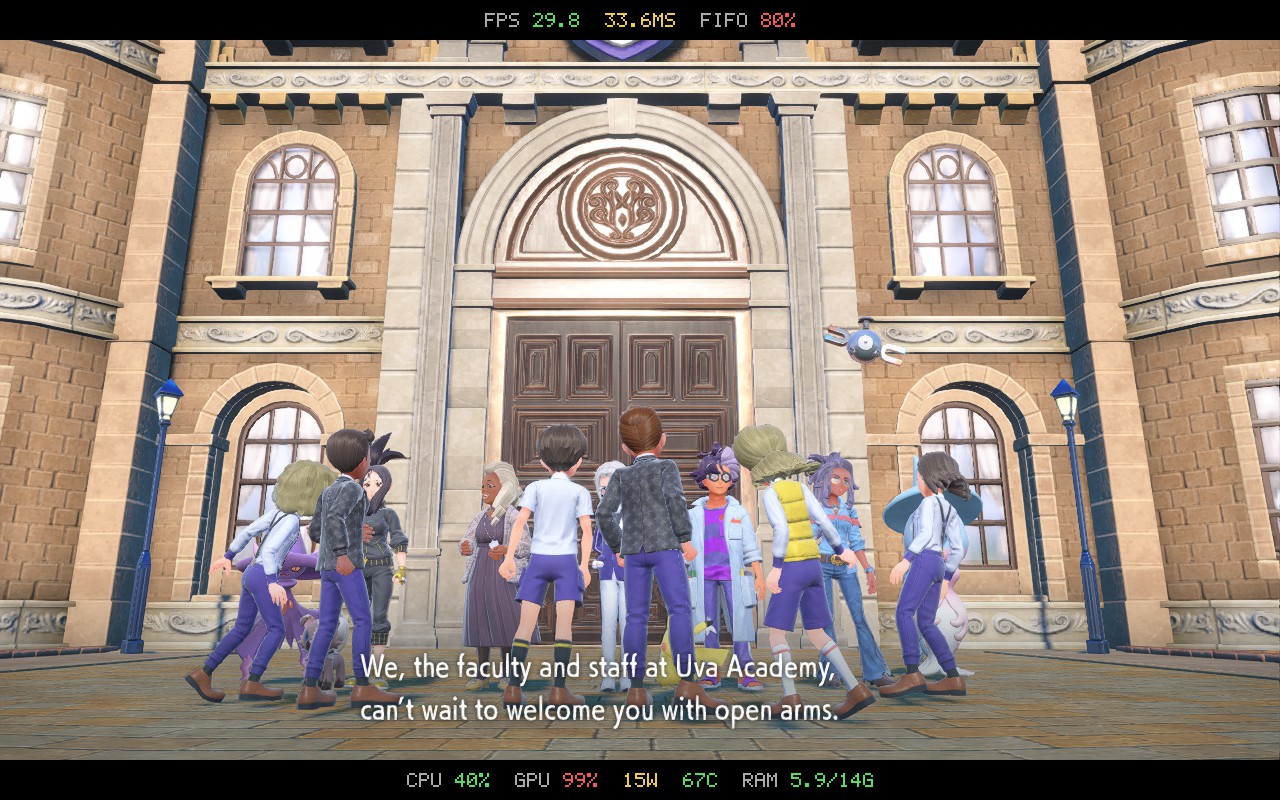
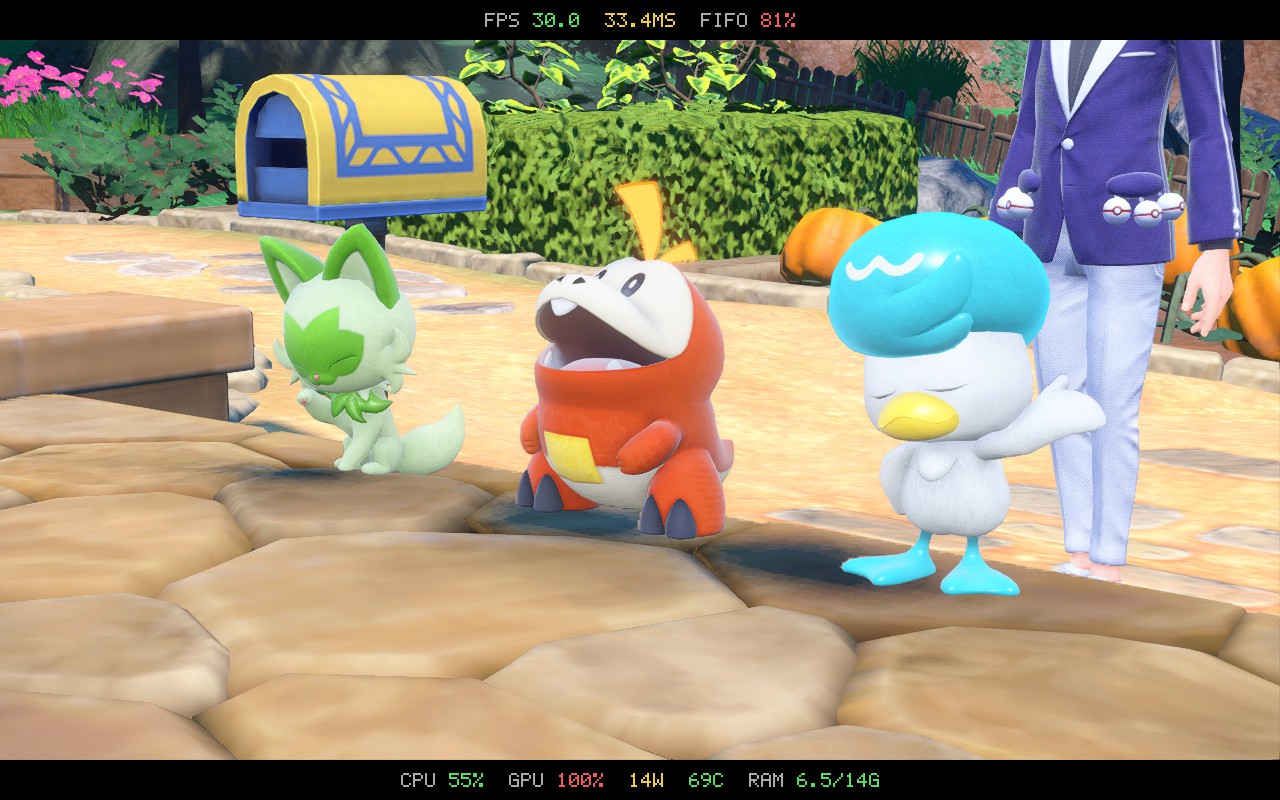
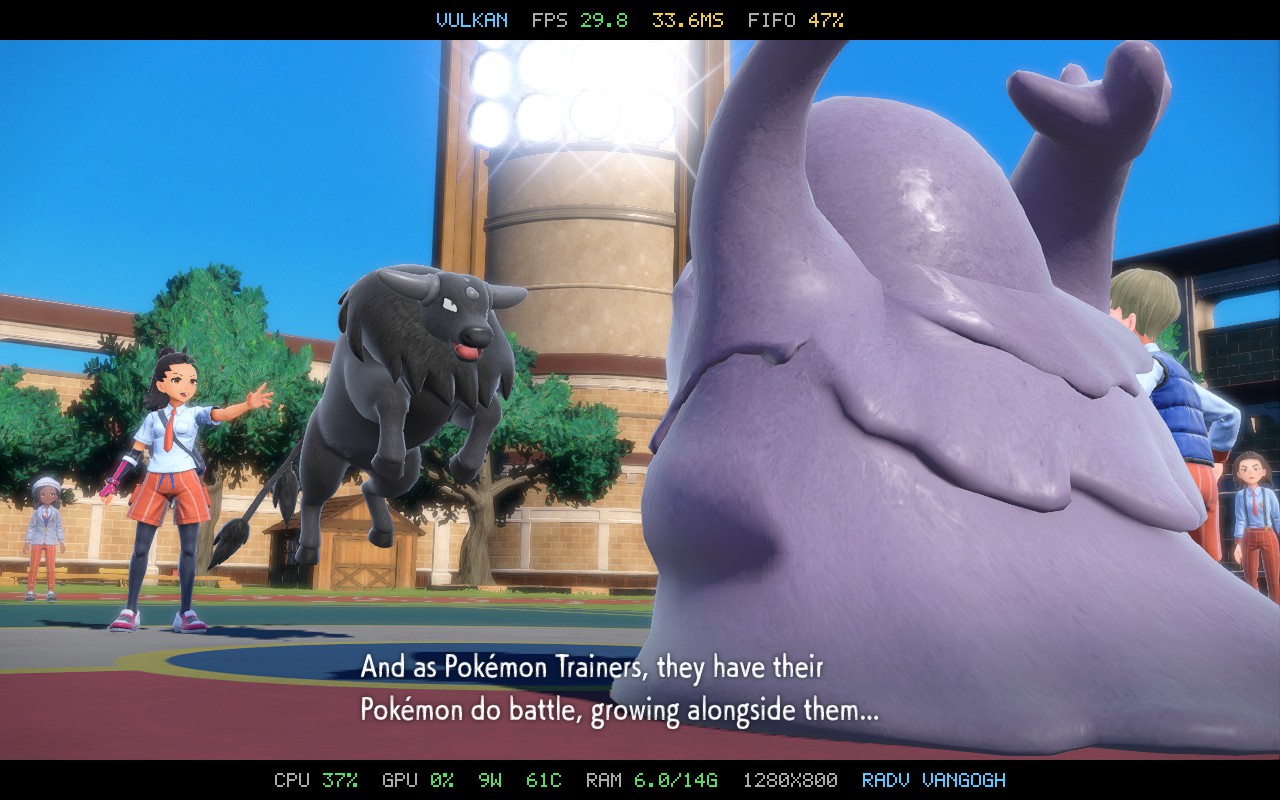
Runs at approximately 25-36 fps and is GPU-bound. A DEVICE_LOST crash observed during testing was traced to an excessive manual resolution-scale setting carried over globally, not to the title itself.
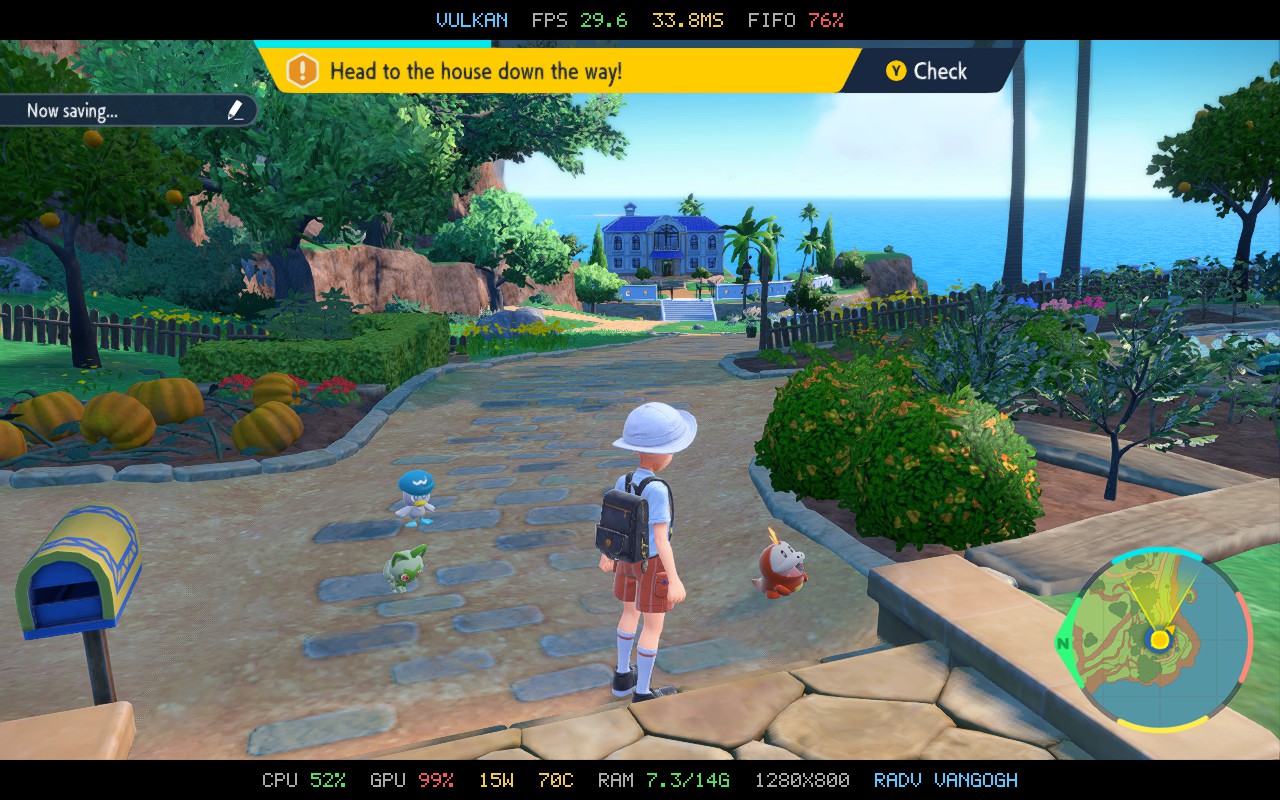
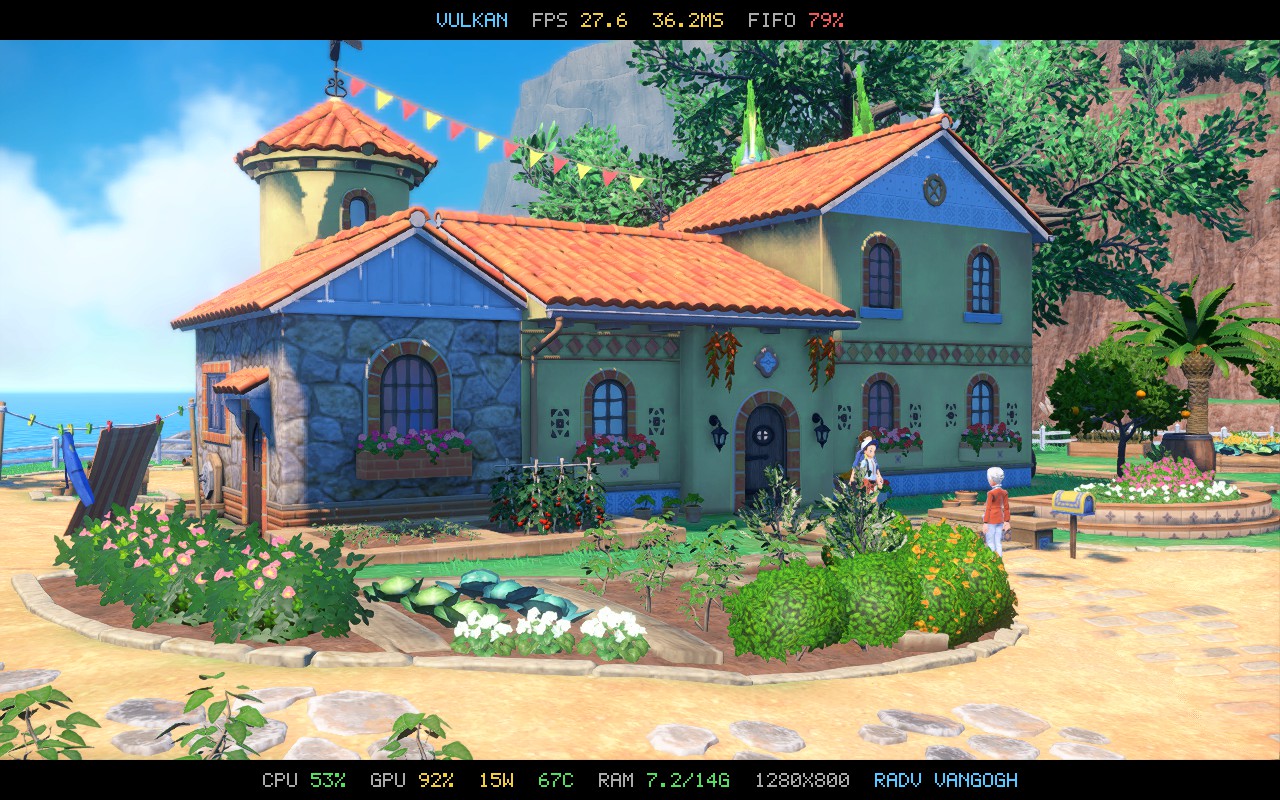
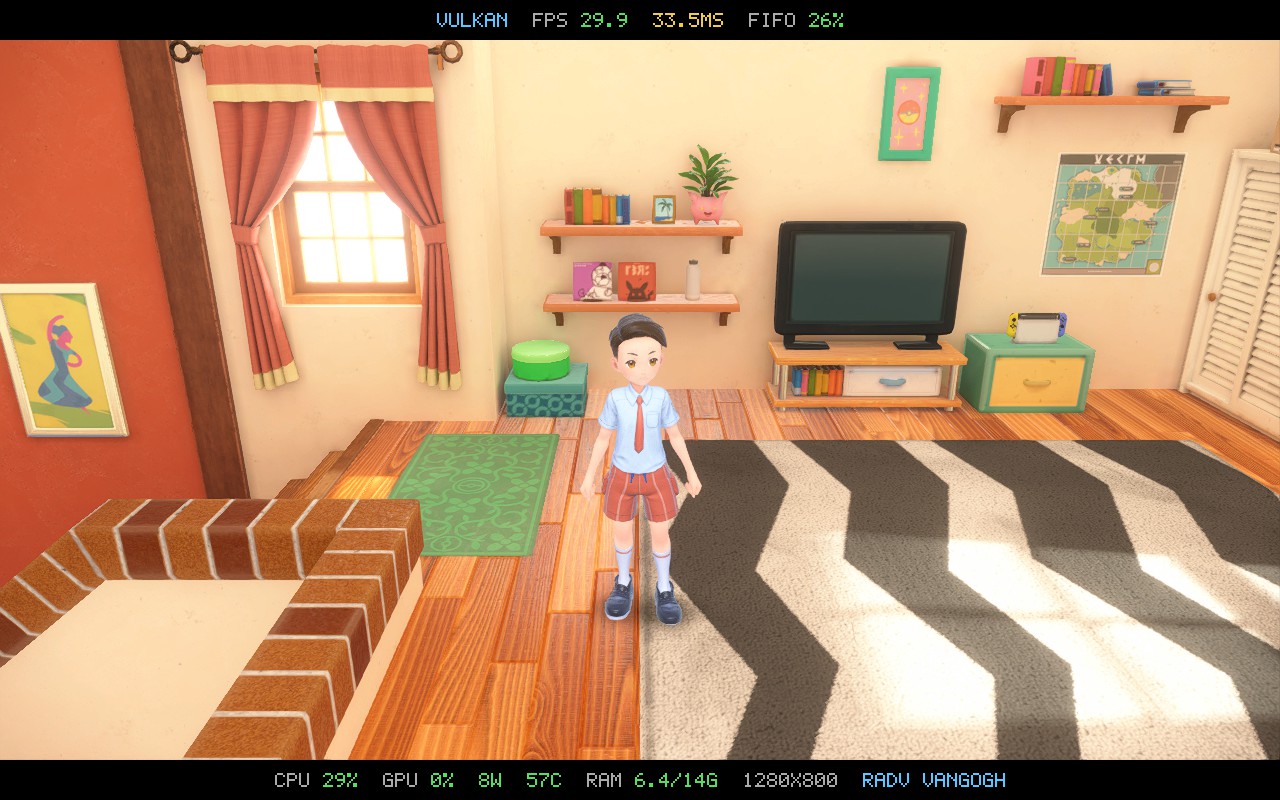
Runs at approximately 30 fps and is GPU-bound. Minor visual issues are known in some cutscenes and transitions and are under investigation; standard overworld play renders correctly.
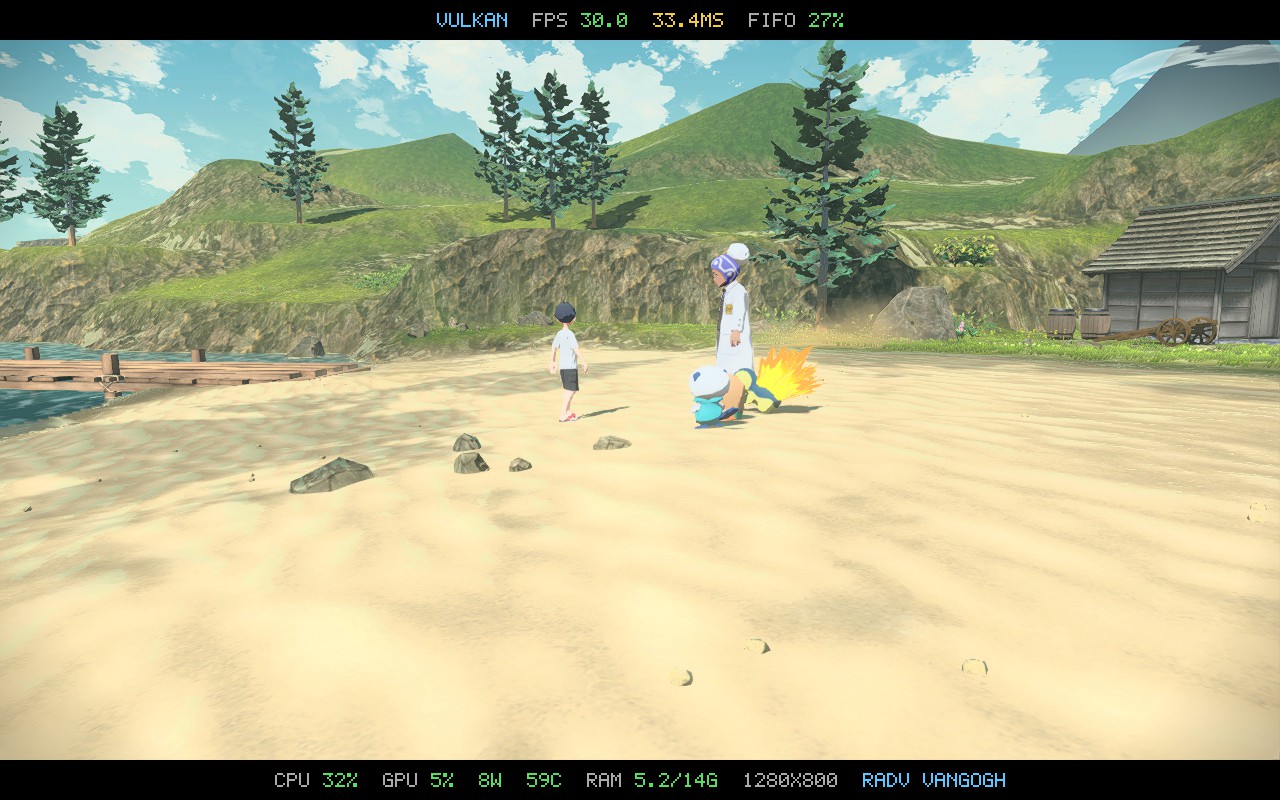
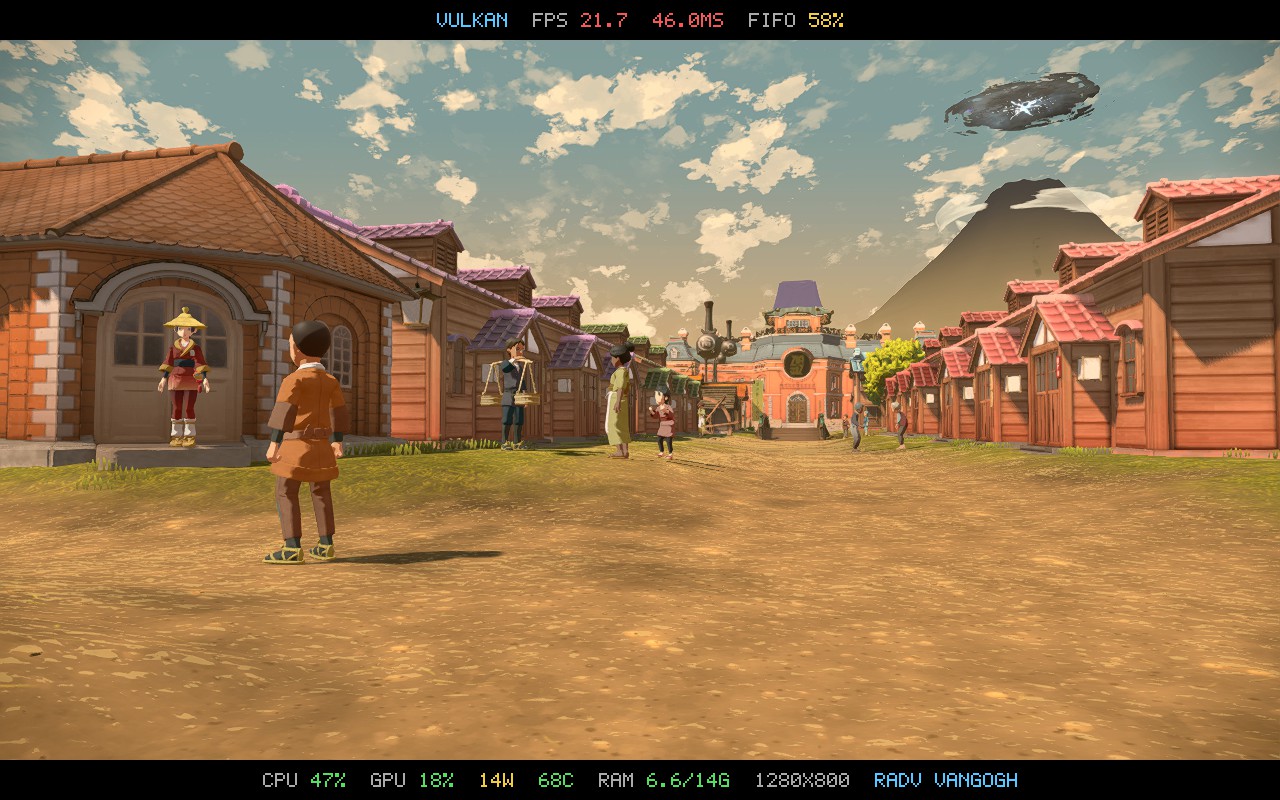
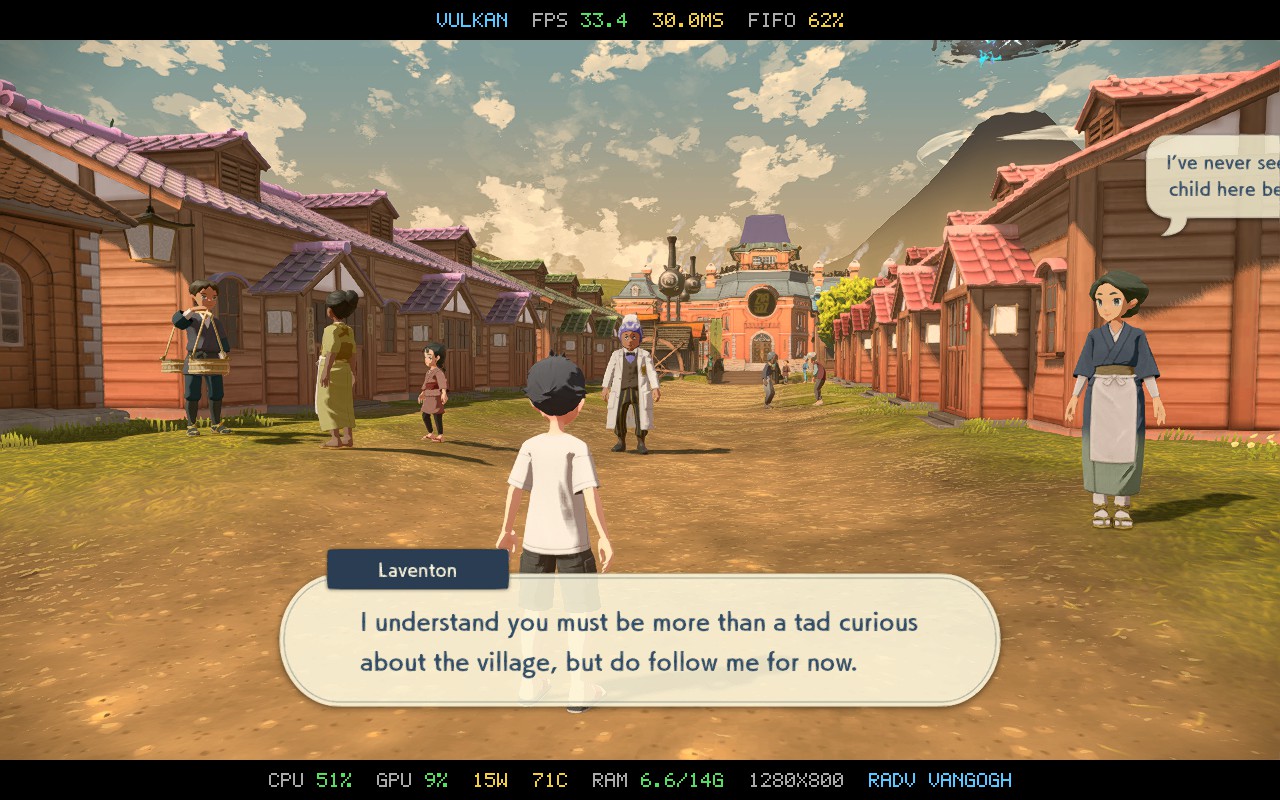
Runs at a steady approximately 30 fps and is GPU-bound (roughly 4% of frames below 25 fps). Plays past the introduction and into open-world gameplay.
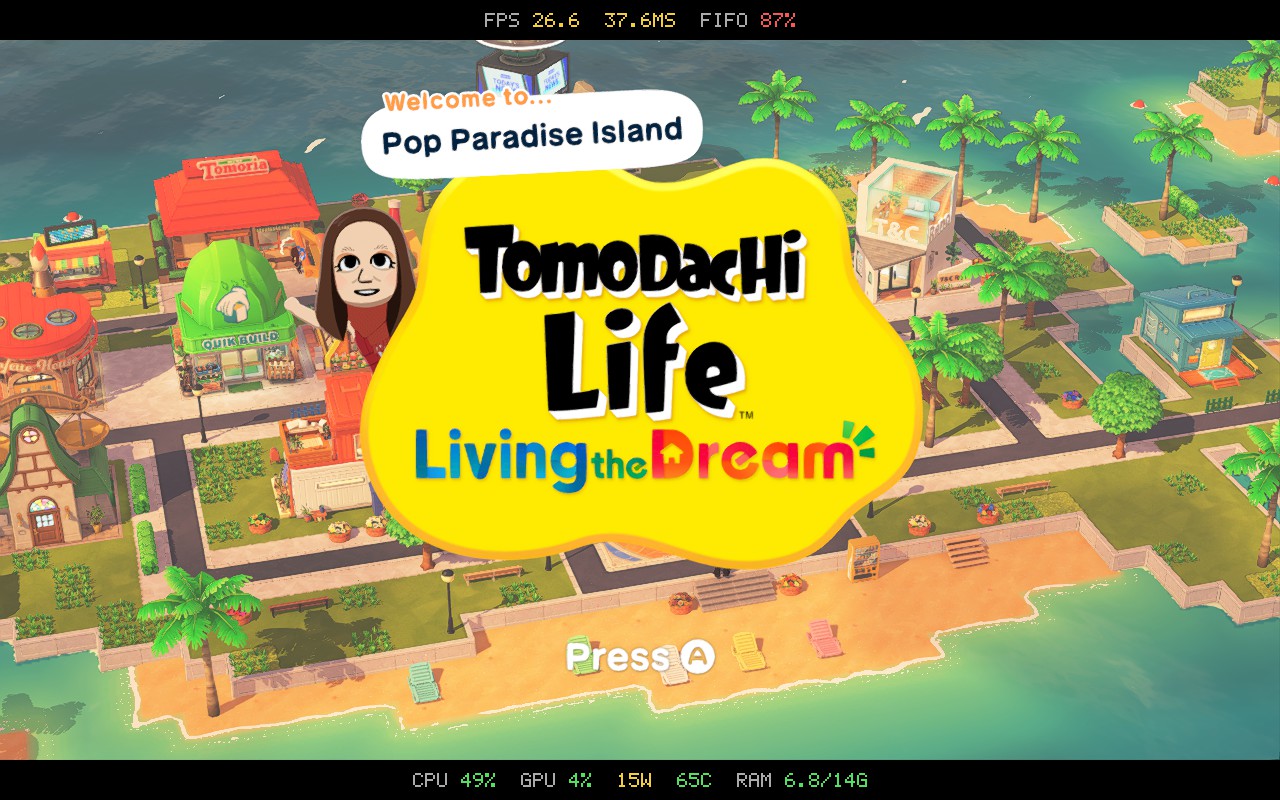
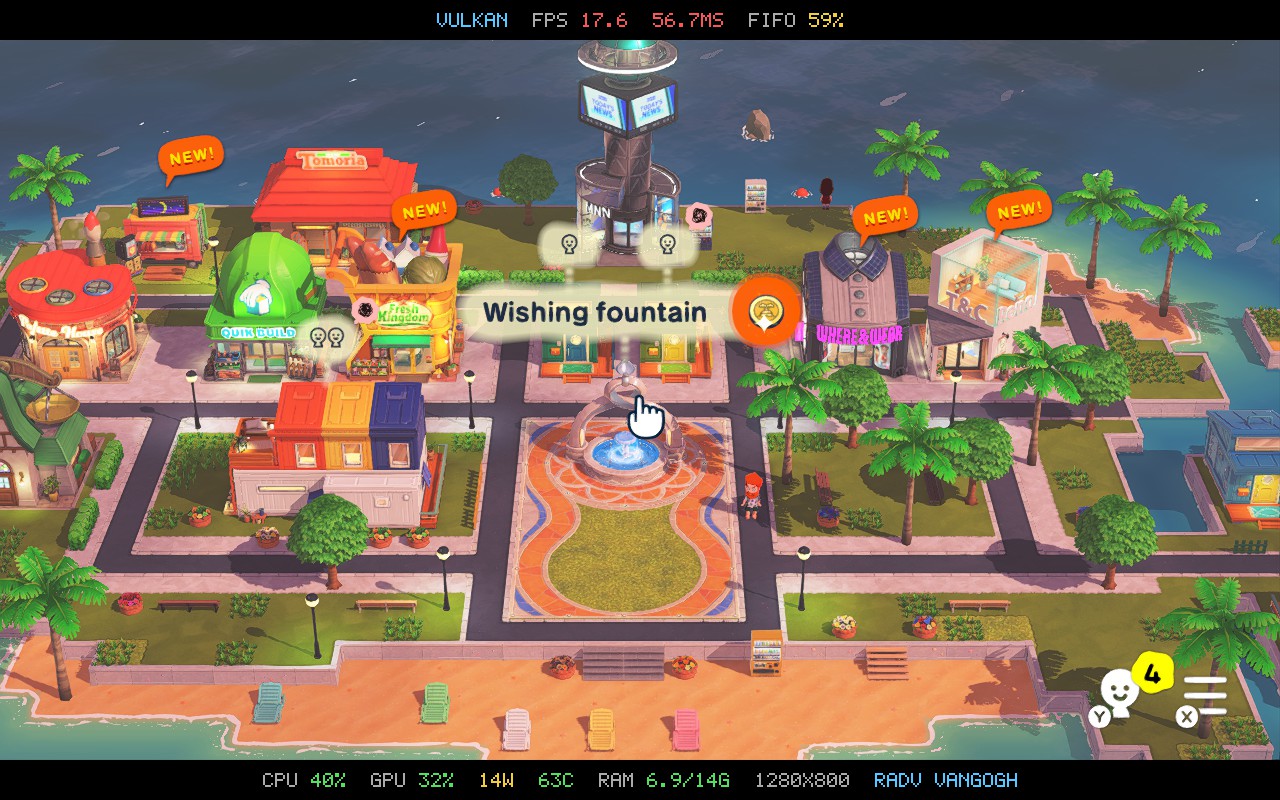
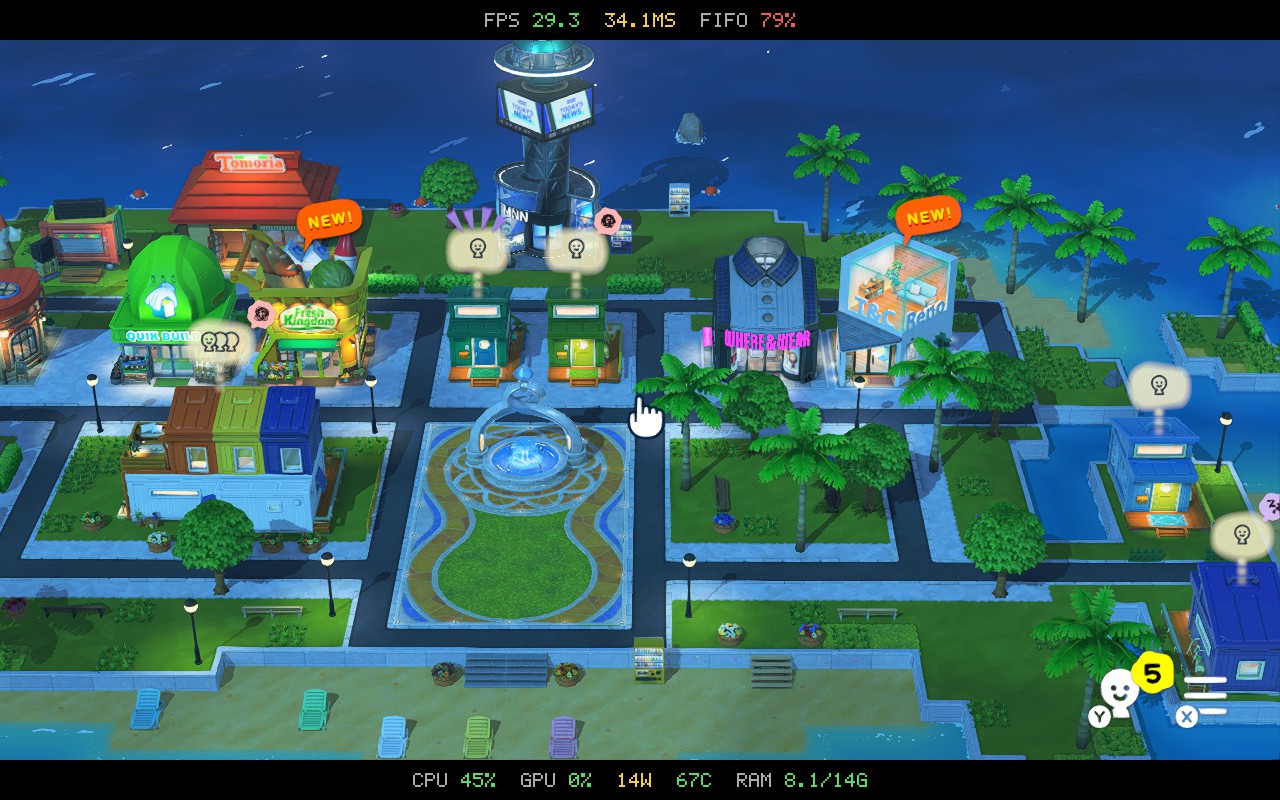
Runs at approximately 30 fps (24-37) and is GPU-bound. Renders correctly, with occasional dips during shader compilation.
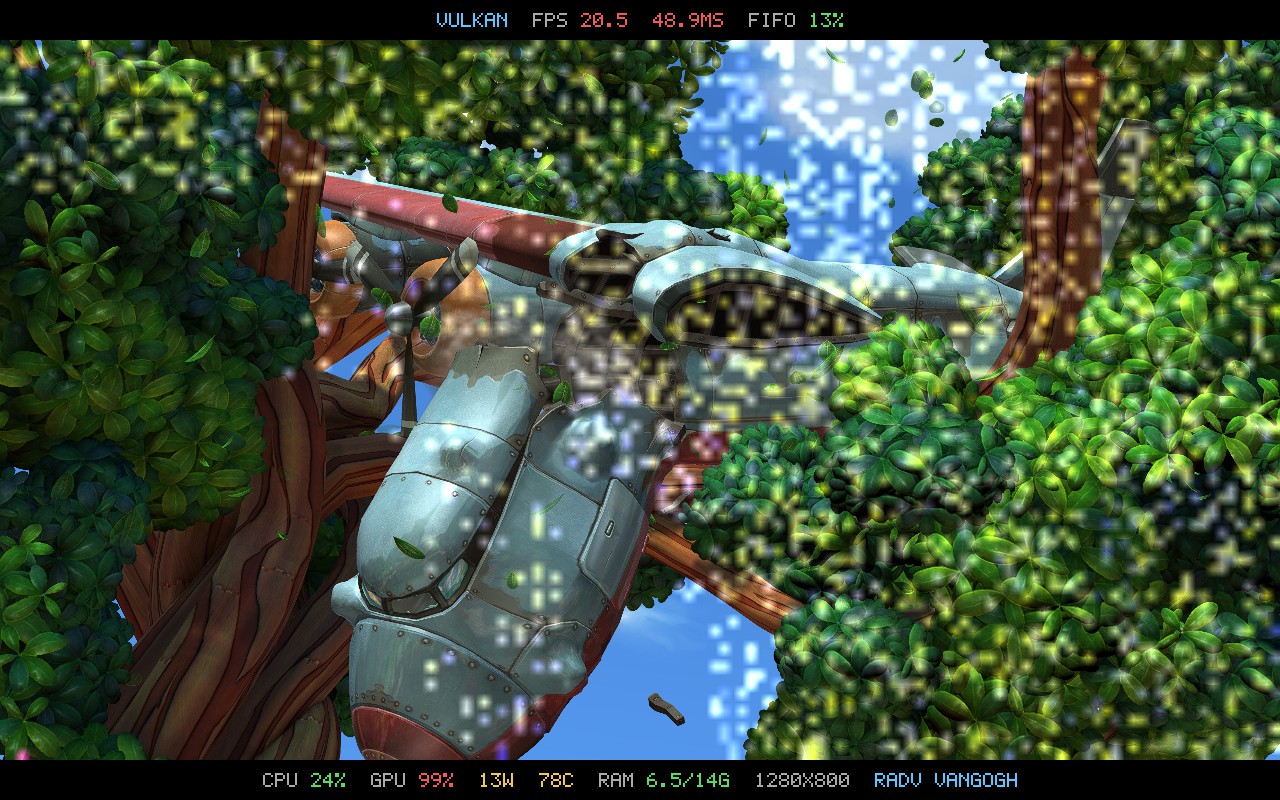
Known issue: at a high resolution-scale setting, scattered colored pixel-block artifacts appear over the scene (shown above) and the game-clock-tied logic runs slow when the GPU is overloaded. Playable at default settings. Some configurations require the title update to boot (see the Needs Game Update section).
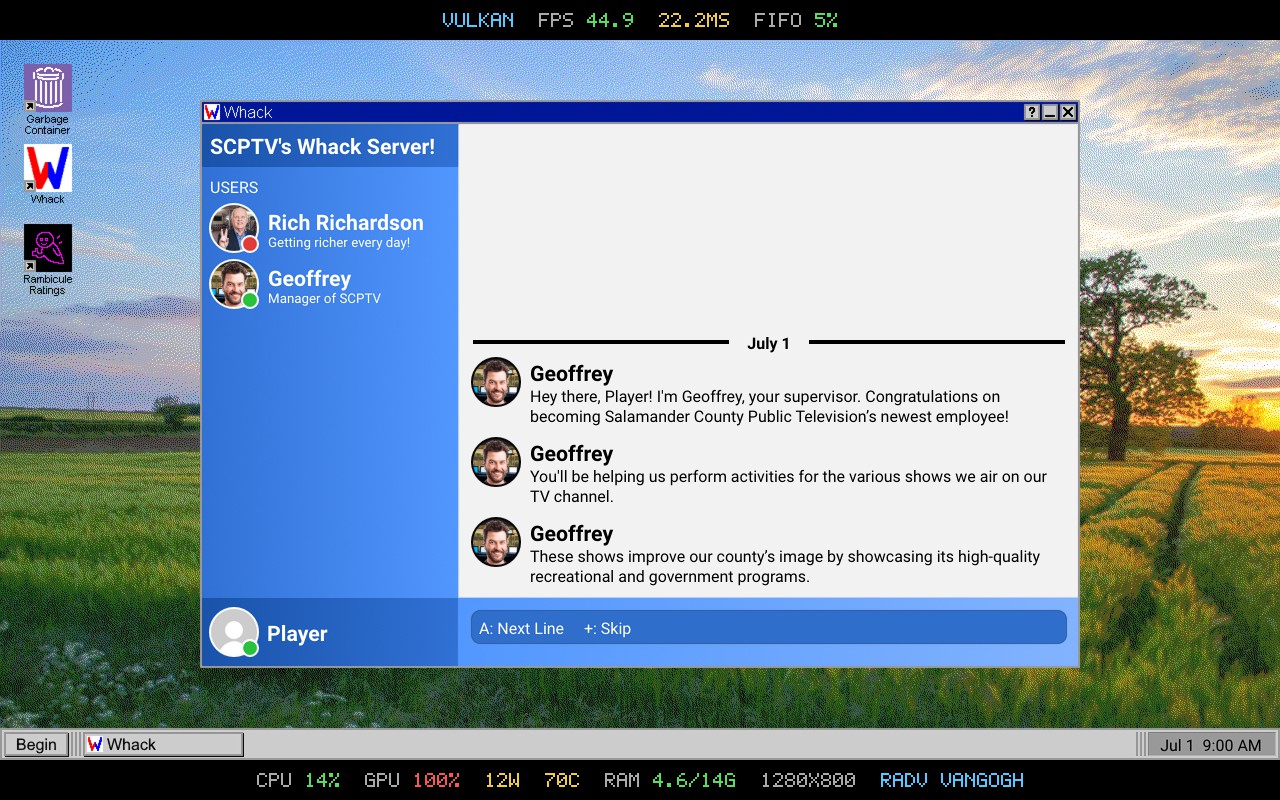
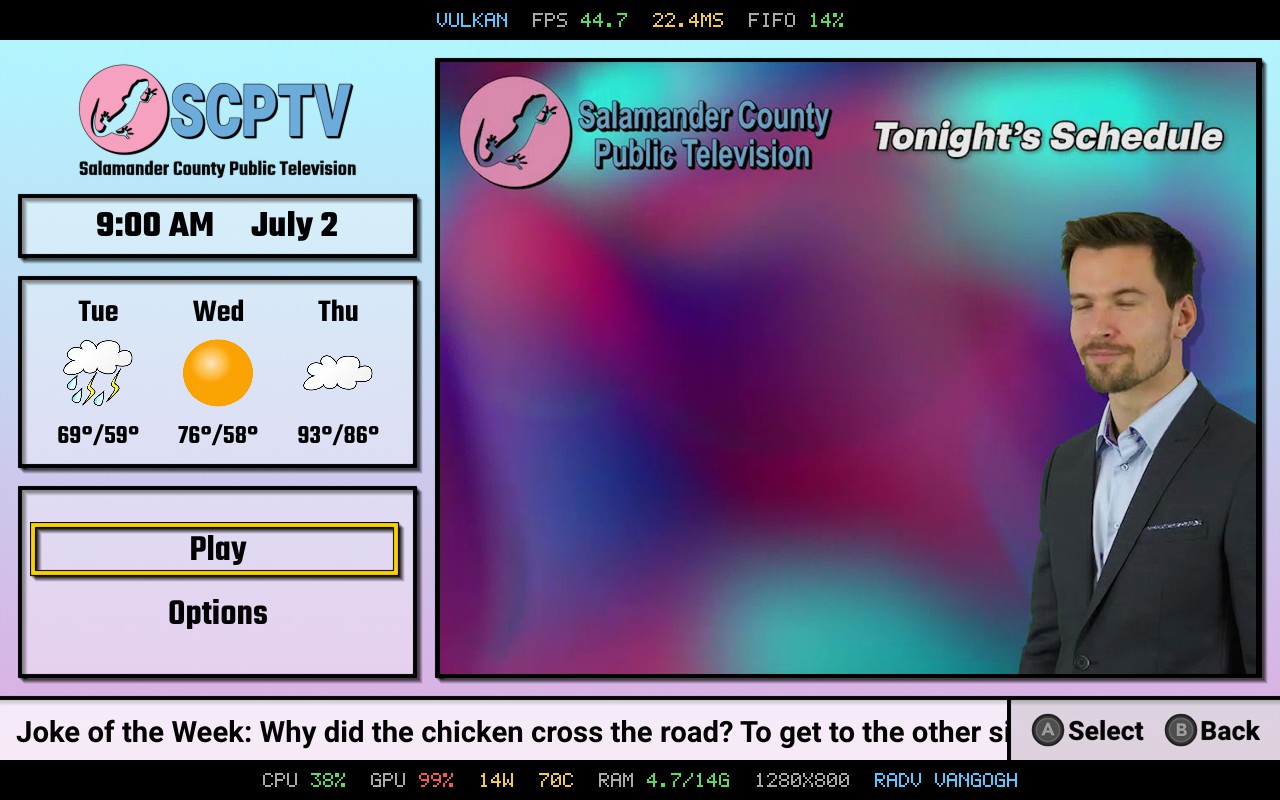
A light title; runs cleanly.
The base version 1.0.0 boot of these titles is blocked by a kernel/ASLR interaction. Installing the title update resolves it.
The base 1.0.0 boot crashes at boot due to a kernel/ASLR interaction; installing the title update resolves it.
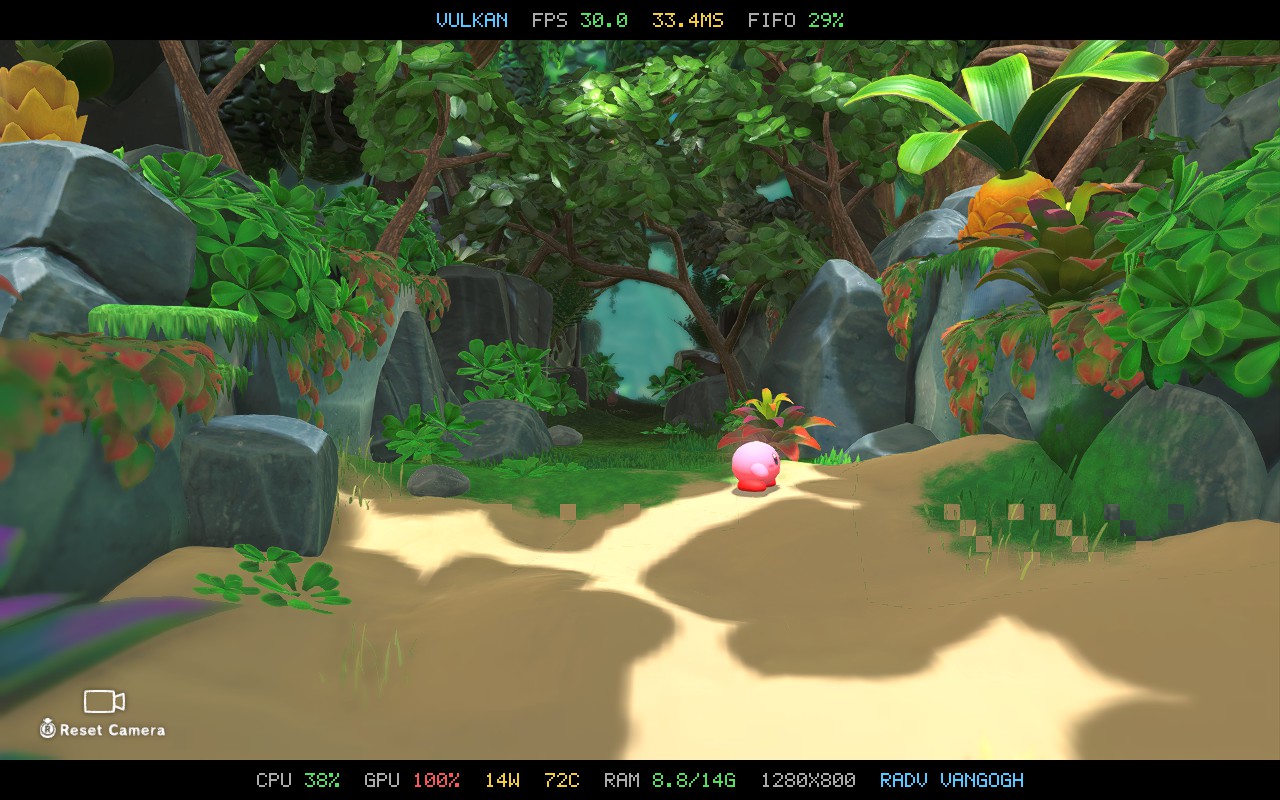
Runs at approximately 30 fps. Known issue: square-box artifacts and patches where the ground vanishes appear during play, most visibly in cinematics (shown above - note the missing squares in the sand). Under investigation.
Reaches the opening at approximately 28 fps, then crashes on the Mii creation screen (known issue, under investigation).
Known issue: crashes during boot/early play. The cause is async-shader related and is actively being fixed.
Known issue: crashes during loading before reaching the menu. Under investigation.
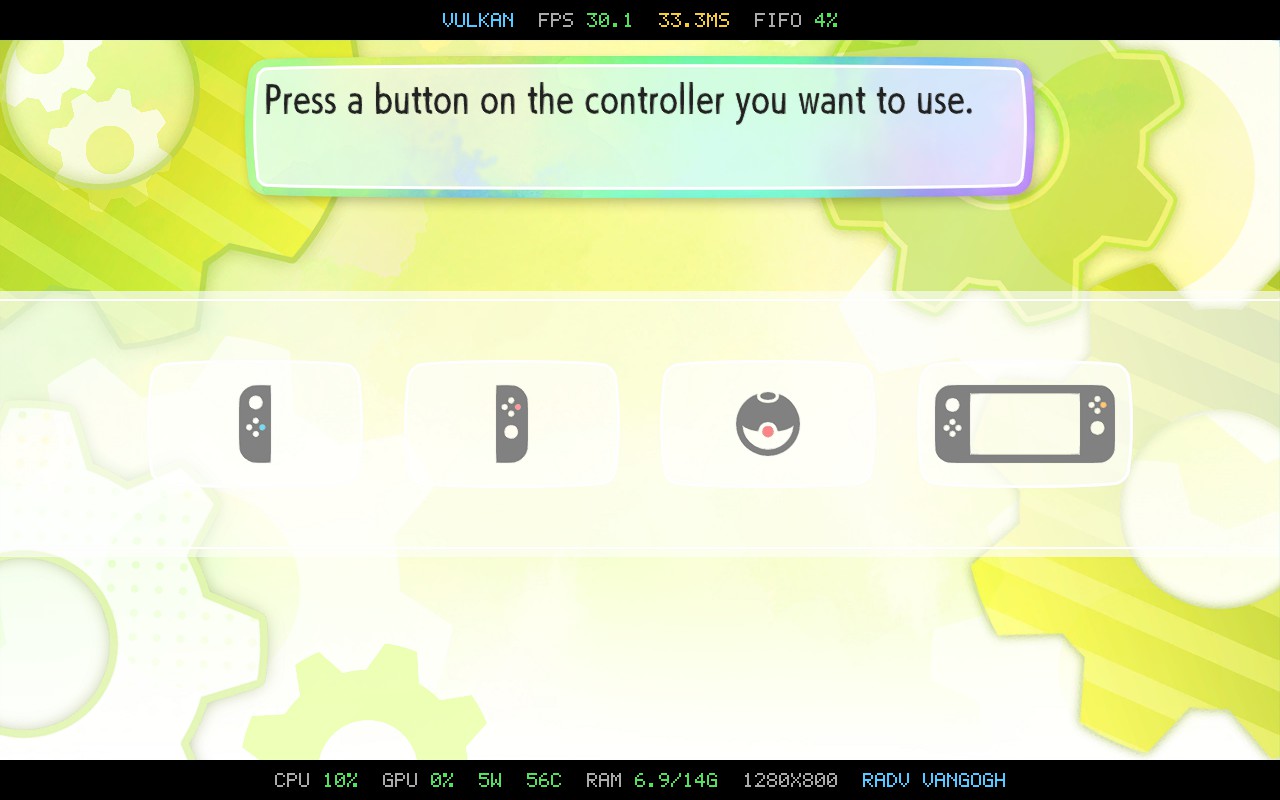
Known issue: the in-game control-select screen soft-locks (shown above). It requires touchscreen support to advance, which is not yet wired up.
