conductive rubber
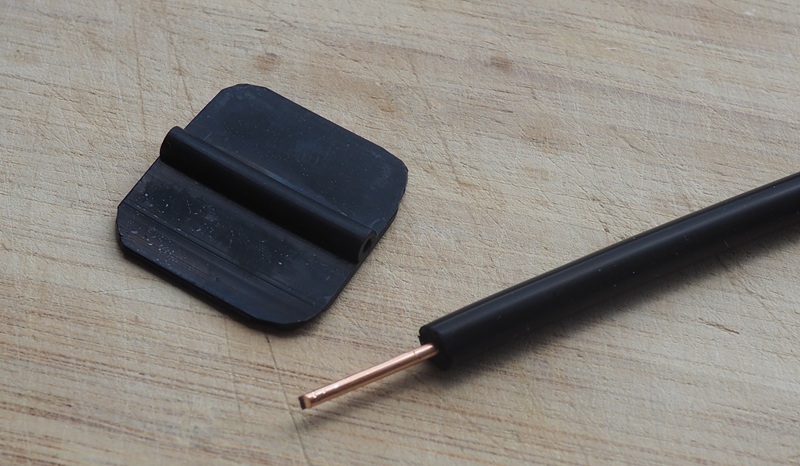
Conductive rubber electrodes are one of the cheapest electrodes available. They are made of silicone mixed with fine carbon dust.
Contact between aluminium and carbon-based electrodes results in strange electrical properties and should be avoided.
Inserting a metal wire greatly improves current distribution, especially with older rubber.
New 6mm round rubber from Joanne's shop has a resistance of about
This gives a volume resistivity of about
Marketed as 'omega rubber'.
New rubber measures
This gives a volume resistivity of
The resistivity of conductive rubber can be customized by adjusting the carbon content. Rubber with low carbon content is commonly used for ESD purposes. Semi-conductive rubber could be useful for some e-stim applications, but does not appear to be available.
Material is porous and difficult to sanitize. Recommended for external use only.
Over time, the rubber loses conductivity.
Loss of surface conductivity is one part of aging. Well-used rubber can reach a resistance from metal core to surface in the 100k-ohm range. The affected zone can be very small, 2 points located 5mm apart can have 100-fold difference in resistance.
Additional research is needed to figure out the mechanisms of aging.
Usual cleaning methods such as soapy water and isopropyl are not very effective at restoring conductivity. Hand-sanding is the only method I found that can restore surface conductivity to new-near condition. More sanding is needed than one would expect.
Aging also increases internal resistance. On a medium-used piece, I measured 3000 ohm per meter.