-
Notifications
You must be signed in to change notification settings - Fork 0
Effective Java ‐ Item 85⚠️
dnwls16071 edited this page Aug 16, 2025
·
1 revision
- 넓은 의미로 직렬화는 어떤 데이터를 다른 데이터의 형태로 변환하는 것을 말합니다.
- 이팩티브 자바에서 말하는 직렬화(
Serializable)란 바이트 스트림으로의 직렬화로 객체의 상태를 바이트 스트림으로 변환하는 것을 의미합니다. - 반대로 바이트 스트림에서 객체의 상태로 변환하는 건 역직렬화(
Deserializable)라고 부릅니다.
- 스트림은 데이터의 흐름입니다. 데이터의 통로라고도 이야기하는데요.
- 예를 들어, 웹 개발을 하다보면 클라이언트에서 서버에게 데이터를 보내는 일이 있습니다.
- 이처럼 스트림은 클라이언트와 서버같이 어떤 출발지와 목적지로 입출력하기 위한 통로를 말합니다.
- 자바는 이런 입출력 스트림의 기본 단위를 바이트로 두고 있고 입력으로는
InputStream, 출력으로는OutputStream라는 추상클래스로 구현되어 있습니다.
- 일단 자바에서 표현된 객체를 목적지에 보냈다고 했을 때 그 곳에서 아 이게 자바 객체구나~하고 바로 알 수가 없습니다. 목적지에서 객체를 알 수 있는 방법이 없습니다. 그래서 모두 다 알 수 있는 것으로 변환을 해줘야 합니다.
- 여기서 변환을 도와주는 방법이 직렬화이며 직렬화를 통해서 바이트 스트림으로 변환해줄 수 있습니다.
- 바이트인 이유는 컴퓨터에서 기본으로 처리되는 최소 단위가 바이트이기 때문입니다. 완전 최소 단위로 가면 비트로도 처리할 수 있겠지만 표현할 수 있는 방법이 0과 1로 너무 적어 하나의 단위로 묶었다고 합니다.
- 이렇게 바이트 스트림으로 변환해야 네트워크, DB로 전송할 수 있고 목적지에서도 처리를 해줄 수 있습니다. 쉽게 생각하면 '출발지와 목적지 모두 알아들을 수 있는 byte라는 언어로 소통할 수 있도록' 이라고 말할 수 있겠네요.
- 간단한 예시로 문자열을 서버로 보내는 TCP 클라이언트를 개발한다고 합시다.
- 이때 문자열 → 바이트 직렬화가 사용됩니다.
- 서버에 메시지를 보내기 위해 소켓에서
OutputStream(출력 스트림)을 가져와 출력하고 싶은 문자열(message)을 바이트로 바꿔 쓰게(write)됩니다.
Socket socket = new Socket();
socket.connect(new InetSocketAddress("localhost", 5001));
byte[] bytes;
String message;
OutputStream os = socket.getOutputStream(); // 출력 스트림
message = "이펙티브 자바 파이팅~";
bytes = message.getBytes(StandardCharsets.UTF_8); // 문자열 -> 바이트
os.write(bytes); // 출력 스트림에 바이트를 쓰고
os.flush(); // flush를 날리면 그 소켓으로 출력이 된다- 웹 개발에서 자주 사용하는 데이터 형태인 JSON도 문자열 직렬화가 사용됩니다.
- JSON 형태로 문자열 직렬화를 해줘야 합니다. Spring Boot에서는 Jackson2가 모두 해주고 있습니다.
@DisplayName("JSON 직렬화 테스트")
@Test
void jsonSerializable() {
Person person = new Person("bingbong", 21);
String json = String.format("{\"name\":\"%s\",\"age\":%d}", person.name, person.age);
assertThat(json).isEqualTo("{\"name\":\"bingbong\",\"age\":21}");
}- 객체에
Serializable이라는 인터페이스를 구현하면 됩니다. - 참고로
Serializable은 안에 아무것도 선언되어있지 않습니다. 이를 마커 인터페이스라고 부르는데요. - 말 그대로 직렬화를 할 수 있는 객체라고 알려주는 것입니다.
- 그리고 나서 목적지까지 가는 바이트 스트림에 writeObject를 사용해주시면 됩니다.
@DisplayName("Serializable을 구현한 Person 객체 직렬화 테스트")
@Test
void writeObjectTest() throws IOException {
Person person = new Person("bingbong", 21);
byte[] serializedPerson;
try (ByteArrayOutputStream baos = new ByteArrayOutputStream()) {
try (ObjectOutputStream oos = new ObjectOutputStream(baos)) {
oos.writeObject(person);
// 직렬화된 Person 객체
serializedPerson = baos.toByteArray();
}
}
// -84, -19, 0, 5, 115, 114, 0, 57, 99, 111, 109, 46, 98, 105, 110, 103, 98, 111, 110, 103, 46, 101, 102, 102, 101, 99, 116, 105, 118, 101, 106, 97, 118, 97, 46, 105, 116, 101, 109, 56, 53, 46, 83, 101, 114, 105, 97, 108, 105, 122, 97, 98, 108, 101, 84, 101, 115, 116, 36, 80, 101, 114, 115, 111, 110, -126, 113, -121, -86, 125, 92, 57, 9, 2, 0, 2, 73, 0, 3, 97, 103, 101, 76, 0, 4, 110, 97, 109, 101, 116, 0, 18, 76, 106, 97, 118, 97, 47, 108, 97, 110, 103, 47, 83, 116, 114, 105, 110, 103, 59, 120, 112, 0, 0, 0, 21, 116, 0, 8, 98, 105, 110, 103, 98, 111, 110, 103
assertThat(serializedPerson).isNotEmpty();
}
static class Person implements Serializable {
private String name;
private int age;
public Person(String name, int age) {
this.name = name;
this.age = age;
}
}@DisplayName("Serializable을 구현한 Person 객체 직렬화 후, 역직렬화 테스트")
@Test
void writeObjectTest2() throws IOException {
Person person = new Person("bingbong", 21);
byte[] serializedPerson;
try (ByteArrayOutputStream baos = new ByteArrayOutputStream()) {
try (ObjectOutputStream oos = new ObjectOutputStream(baos)) {
oos.writeObject(person);
// 직렬화된 Person 객체
serializedPerson = baos.toByteArray();
}
}
Person deSerializedPerson = null;
try (ByteArrayInputStream bais = new ByteArrayInputStream(serializedPerson)) {
try (ObjectInputStream ois = new ObjectInputStream(bais)) {
// 역직렬화된 Person 객체
deSerializedPerson = (Person) ois.readObject();
} catch (ClassNotFoundException e) {
e.printStackTrace();
}
}
assertThat(deSerializedPerson).isNotNull();
assertThat(deSerializedPerson.name).isEqualTo("bingbong");
assertThat(deSerializedPerson.age).isEqualTo(21);
}- 직렬화의 근본적인 문제는 공격 범위가 너무 넓고 지속적으로 더 넓어져 방어하기 어렵다는 점입니다.
- 직렬화를 하고 나서 역직렬화를 할 때 문제가 됩니다.
- 객체를 읽는 readObject 메서드는 클래스 패스에 존재하는 거의 모든 타입의 객체를 만들어낼 수 있습니다.
- 반환 타입이 Object입니다
- 바이트 스트림을 역직렬화하는 과정에서 해당 타입 안의 모든 코드를 수행할 수 있습니다.
- 객체를 아예 불러올 수 있으므로 모든 코드를 수행할 수 있습니다.
- 그렇기에 타입 전체가 전부 공격 범위에 들어가게 됩니다.
- 용량도 다른 포맷에 비해서 몇 배 이상의 크기를 가집니다
- 또한 역직렬화 폭탄을 맞을 수도 있습니다.
- 바이트 스트림으로 직렬화하는데는 시간이 별로 걸리지 않지만 역직렬화를 잘못하면 안으로 들어가서 hashCode 메서드를 계속 호출해야하기 때문에 시간이 엄청 오래걸립니다. 아래 예시가 있습니다.
@DisplayName("역직렬화 폭탄 테스트")
@Test
void deserializeBomb() {
byte[] bomb = bomb();
// 역직렬화를 하면 엄청 많은 시간이 걸린다.
deserialize(bomb);
assertThat(bomb).isNotEmpty();
}
static byte[] bomb() {
Set<Object> root = new HashSet<>();
Set<Object> s1 = root;
Set<Object> s2 = new HashSet<>();
for (int i = 0; i < 100; i++) {
Set<Object> t1 = new HashSet<>();
Set<Object> t2 = new HashSet<>();
t1.add("foo");
s1.add(t1);
s1.add(t2);
s2.add(t1);
s2.add(t2);
s1 = t1;
s2 = t2;
}
return serialize(root); // 직렬화 수행
}
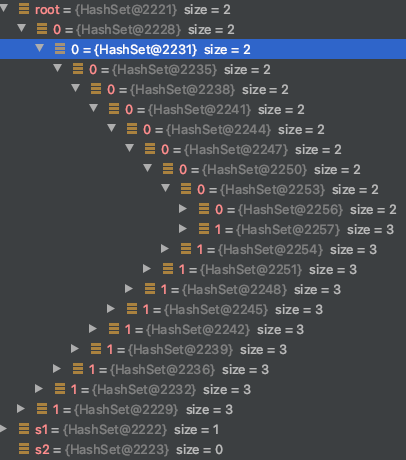
- 가장 좋은 방법은 아무것도 역직렬화하지 않는 것이라고 합니다. 직렬화를 피할 수 없고 역직렬화한 데이터가 안전한지 완전히 확신할 수 없다면 java 9에 나온 ObjectInputFilter를 사용하는 것도 방법입니다. 이는 데이터 스트림이 역직렬화되기 전에 필터를 적용해서 특정 클래스를 받아들이거나 거부할 수 있습니다.
- 이펙티브 자바
- 자바 직렬화(Serializable)
- Java - Class
- Java - Java Memory⭐
- Java ‐ Solving Concurrency Issues with Synchronized
- Java - synchronized
- Java ‐ Instance Variable & Local Variable vs final
- Java ‐ Object
- Java ‐ Immutable Object
- Java ‐ String
- Java ‐ Wrapper Class
- Java ‐ ENUM
- Java ‐ Nested Class & Inner Class & Local Class & Anonymous Class
- Java ‐ Generic
- Java ‐ ArrayList
- Java ‐ LinkedList
- Java ‐ List
- Java ‐ Set
- Java ‐ Hash
- Java ‐ HashSet
- Java ‐ Map & Stack & Queue
- Java ‐ Iterate & Sort
- Java - Process & Thread
- Java - Thread Creation & Execution
- Java - Thread Control & LifeCycle
- Java - Memory Visibility
- Java - Advanced Synchronization
- Java - Producer/Consumer Problem
- Java - Synchronization & Atomic Operation
- Java - Concurrent Collection
- Java - Thread Pool & Executor Framework
- Java - Character Encoding
- Java - I/O
- Java - File & Files
- Java - Reflection
- Java - Annotation
- Java - Lambda
- Java - Functional Interface
- Java - Lambda vs Anonymous Class
- Java - Method Reference
- Java - Stream API
- Java - Optional
- Java - Default Method
- Java - Parallel Stream
- Java - Functional Programming
- Java - JVM & GC & SOLID⭐
- Java - Data Storage and Memory Allocation: Primitive vs. Reference
- Java ‐ Static Keyword: Efficient Resource Management at the Class Level
- Java ‐ OOP
- Java ‐ Collection Framework Selection Standard
- Java ‐ Multi Threading & Concurrent Programming
- Java ‐ Exception Handling & Advanced Java
- Java ‐ Java 8+
- Java ‐ Java Application Performance Tuning
- Java - CAS
- Java - Virtual Thread⭐
- Kotlin - Variables, Types, and Operators in Kotlin
- Kotlin - Control Flow in Kotlin
- Kotlin - Object-Oriented Programming in Kotlin
- Kotlin - Functional Programming in Kotlin
- Kotlin - Key Features of Kotlin
- Kotlin - Generics in Kotlin
- Kotlin - Lazy Initialization and Delegation in Kotlin
- Kotlin - Advanced Functional Programming in Kotlin
- Kotlin - Operator Overloading and Kotlin DSL
- Kotlin - Annotations and Reflection in Kotlin
- Kotlin - Miscellaneous Topics in Kotlin
- Coroutine - Limitations of Thread-Based Work & the Emergence of Coroutines
- Coroutine - runBlocking
- Coroutine - CoroutineDispatcher
- Coroutine - Controlling Coroutines with Job
- Coroutine - Receiving Results from Coroutines
- Coroutine - Coroutine Context
- Coroutine - Structured Concurrency
- Coroutine - Exception Handling
- Coroutine - Suspended Functions
- Coroutine - Understanding Coroutines
- Coroutine - Advanced Coroutines
- Coroutine - Coroutine Testing
- Spring - OOP & Spring
- Spring - Spring Container & Spring Bean
- Spring - Singleton Container
- Spring - Dependency Injection
- Spring - Bean LifeCycle Callback
- Spring - Bean Scope
- Spring ‐ Web Server, Web Application server
- Spring ‐ Servlet
- Spring ‐ Servlet & JSP & MVC
- Spring ‐ MVC Framework
- Spring ‐ Spring MVC
- Spring - Thymeleaf
- Spring - Message & Internationalization
- Spring - Validation
- Spring - Bean Validation
- Spring - Cookie & Session
- Spring - Filter & Interceptor
- Spring - API Exception Handling
- Spring - Spring Type Converter
- Spring - File Upload
- Spring - Connection Pool & DataSource⭐
- Spring - Transaction⭐
- Spring ‐ Spring Exception Abstraction
- Spring - Database Access
- Spring ‐ Spring Transaction⭐
- Spring ‐ Spring Transaction Propagation⭐
- Spring ‐ Thread Local
- Spring ‐ Template Method Pattern & Callback Pattern
- Spring ‐ Dynamic Proxy
- Spring ‐ Spring Proxy⭐
- Spring ‐ Bean Processor
- Spring ‐ @Aspect AOP
- Spring ‐ Spring AOP
- Spring ‐ Spring AOP Application
- Spring - MyBatis
- Spring ‐ URL Encoding
- Spring - Cache Annotation
- Spring - Retry
- Spring Security - Initialization⭐
- Spring Security - Authentication Process
- Spring Security - Authentication Architecture
- Spring Security - Authentication Status Persistence Processing Mechanism
- Spring Security - Session Management
- Spring Security - Exception Handling
- Spring Security - Mechanisms for responding to Malicious Attacks
- Spring Security - Authorization Process
- Spring Security - Authorization Architecture
- Spring Security - Multiple Security Settings
- Spring Security - Redis Redundancy Settings
- Spring Security - Event
- Spring Security - Integration
- Spring Security - OAuth 2.0
- Spring Security - OAuth 2.0 Authorization Type
- Spring Security - Open ID Connect
- Spring Security - OAuth 2.0 Client
- Spring Security - OAuth 2.0 Client Fundamentals
- Spring Security - OAuth 2.0 oauth2Login
- Spring Security - OAuth 2.0 oauth2Client
- Spring Security - OAuth 2.0 Resource Server
- Spring Security - OAuth 2.0 Resource Server API
- Spring Security - OAuth 2.0 Verification
- Spring Security - OAuth 2.0 MAC & RSA Token Verification
- Spring Security - OAuth 2.0 Resource Server Permission Implementation
- Spring Security - OAuth 2.0 opaque()
- Spring Security - Authorization Server
- Spring Security - Authorization Server Main Domain Class
- Spring Security - Authorization Server Endpoint Protocol
- Spring Batch - Scheduler vs Batch
- Spring Batch - Batch Concept
- Spring Batch - Batch Domain
- Spring Batch - Job
- Spring Batch - Step
- Spring Batch - Flow
- Spring Batch - Chunk Process
- Spring Batch - ItemReader
- Spring Batch - ItemWriter
- Spring Batch - ItemProcessor
- Spring Batch - Retry & Error Handling
- Spring Batch - Multi Threads Processing
- [Spring Batch - Batch Event Listener]
- [Spring Batch - Batch Test]
- [Spring Batch - File Processing]
- [Spring Batch - Read and Write Operations in Relational Databases and NoSQL]
- [Spring Batch - FaultTolerant & ItemStream]
- [Spring Batch - Partitioning]
- Reactive Programming - Reactive System & Reactive Programming
- Reactive Programming - Fundamentals of WebFlux and Reactor
- Reactive Programming - Core Operators in WebFlux Reactor
- Reactive Programming - Practical Patterns in WebFlux
- Reactive Programming - WebFlux Patterns with Spring Boot
- Database - Database Introduction
- Database - Search & Sort
- Database - Data Processing
- Database - Aggregation & Grouping
- Database - Inner Join
- Database - Outer Join & Etc Join
- Database - Sub Query
- Database - UNION
- Database - CASE
- Database - Index
- Database - Data Integrity
- Database - Transaction
- Database - Why Database Design Matters
- Database - Concept Modeling
- Database - Logical Data Modeling
- Database - Identifying Relationship & Non-Identifying Relationship
- Database - Normalization
- Database - Physical Data Modeling
- Database - Common Code Design
- Database - Hierarchical Structure Design
- Database - Data Change History Design
- Database - SOFT DELETE
- Database - Statistics Table Design
- Database - Inheritance Relationship Design
- Database - Entity-Attribute-Value (EAV) Model
- Database - JSON Schema Design
- MySQL ‐ Solving Concurrency Problems using Database-Level Locking
- MySQL - Checking DB Metrics with SQL Queries
- MySQL - Data Modeling for Practical Service Development
- MySQL - Basic CRUD in MySQL
- MySQL - MySQL Horizontal Scaling
- MySQL - MySQL Fundamentals
- MySQL - Why You Should Use MySQL: JOIN
- MySQL - Must-Know SQL Anti-Patterns
- MySQL - Learning Data Modeling Through Practical Examples
- MySQL - Foreign Key & Strategic Patterns
- MySQL - Advanced Topics in MySQL
- MySQL - Multi Column Index
- MySQL - Covering Index
- MySQL - ORDER BY
- MySQL - INSERT
- MySQL - AUTO_INCREMENT_LOCK
- MySQL - MySQL LockType
- MySQL - DeadLock Case
- MySQL - NoOffset For Query Tuning
- Redis ‐ Redis
- Redis ‐ Redis Manual
- Redis ‐ Redis Cache Strategy
- Redis ‐ Redis Master-Slave
- Redis - Redis Cluster Mode
- Redis - Redis Cluster Example
- Redis - Redis Data Structure
- Redis - Redis pub/sub & streams
- Redis - Redis Server
- Redis - Reduce DB write load using Redis
- Redis - Solving Concurrency Issues (1)
- Redis ‐ Solving Concurrency Issues (2)
- Redis - Solving Concurrency Issues (3)
- Redis - Implementing Popular Searches
- Redis - API Rate Limiting
- Redis - Geospatial
- Redis - DAU Counting Application
- Redis - Session Management Application
- Redis - Redis Transaction ACID
- Redis - Redis Data Persistence
- Redis - Redis Keys Management
- Redis - Decoupling microservices with Redis Pub/Sub
- Redis - Redis Pipelining & RTT(Round Trip Time)
- Redis - Redis Streams
- Redis - Hash Slot Rebalancing
- JPA - Java Persistence API
- JPA - Entity Mapping & PK Strategy
- JPA ‐ JPA Association Mapping
- JPA - Proxy Association
- JPA - Value Type
- JPA - Dirty Checking vs. Merge: Understanding the Difference in JPA
- JPA - Cascading and Orphan Removal in JPA
- JPA - Introduction to Object-Oriented Query Languages in JPA
- JPA - Spring Data JPA
- JPA ‐ Solving Concurrency Issues with Pessimistic Locking
- JPA ‐ Solving Concurrency Issues with Optimistic Locking
- JPA - Lazy Loading and Performance Optimization in JPA
- JPA - ManyToOne Important Things
- JPA - OneToMany Important Things
- JPA - OSIV
- MicroService Architecture - DeComposition Patterns
- MicroService Architecture - Service Communications Patterns
- MicroService Architecture - API Gateway Patterns
- MicroService Architecture - Asynchronous Communications Patterns
- MicroService Architecture - Data Management Patterns
- MicroService Architecture - CQRS Patterns
- MicroService Architecture - Distributed Transactions
- [MicroService Architecture - Event-Driven Architecture]
- [MicroService Architecture - Resilience & Observability and Monitoring]
- [MicroService Architecture - Security Patterns]
- [MicroService Architecture - Testing Strategies]
- [MicroService Architecture - Scalability & Caching Patterns]
- [MicroService Architecture - Deployment Patterns]
- [MicroService Architecture - Serverless Architecture]
- [MicroService Architecture - GraphQL]
- [MicroService Architecture - Evolution of Distributed Systems and Their Drawbacks]
- [MicroService Architecture - Protocol Buffers]
- [MicroService Architecture - gRPC Communication Patterns]
- [MicroService Architecture - gRPC Optimization Strategies and Implementation]
- MicroService Architecture - 2PC
- MicroService Architecture - TCC
- MicroService Architecture - SAGA
- Apache Kafka - Kafka Introduction
- Apache Kafka - Kafka CLI
- Apache Kafka - Kafka Producer Application
- Apache Kafka - Kafka Consumer Application
- Apache Kafka - Idempotent Producer & Transactional Producer & Transactional Consumer
- Apache Kafka - Kafka Streams
- Apache Kafka - Kafka Topic/Producer/Consumer
- Apache Kafka - Producer Mechanism
- Apache Kafka - Consumer Mechanism
- Apache Kafka - Multi Node Kafka Cluster
- Apache Kafka - Producer & Consumer Serialization/DeSerialization
- Apache Kafka - Topic Segment Management
- Apache Kafka - KSQLDB Stream
- Apache Kafka - KSQLDB Table
- Apache Kafka - KSQLDB Application
- Apache Kafka - Group by & Mview
- [Apache Kafka - Join]
- [Apache Kafka - Time & Windows]
- [Apache Kafka - Connecting KSQLDB to Kafka Connect]
- [Apache Kafka - Kafka Connect]
- [Apache Kafka - JDBC Source Connector]
- [Apache Kafka - JDBC Sink Connector]
- [Apache Kafka - Debezium MySQL CDC Source Connector]
- [Apache Kafka - Schema Registry]
- Apache Kafka - Differences Between RocksDB and In-Memory KeyValueStore in GlobalKTable
- Apache Kafka - Kafka Streams
- [Apache Kafka - Kafka Connect]
- [Apache Kafka - Idempotent Producers and Transactional Producers & Consumers]
- [Apache Kafka - CDC(Change Data Capture)]
- [Apache Flink - Apache Flink Architecture]
- [Apache Flink - Stream Processing]
- [Apache Flink - Data Stream API & Window]
- [Apache Flink - State Management]
- HTTP - Internet Network
- HTTP - URI & Browser Request Flow
- HTTP - HTTP Basic
- HTTP - HTTP Method
- HTTP - HTTP Method Application
- HTTP - HTTP Status Code
- HTTP ‐ HTTP Default Header
- HTTP - HTTP Cache & Condition Request
- AWS - AWS CDK(Cloud Development Kit)
- AWS - Signed URL
- AWS - PreSigned URL
- AWS - Cognito
- AWS - Signed URL Logic
- Docker - Docker
- Docker ‐ Docker CLI
- Docker ‐ Docker Volume
- Docker - Dockerfile Image
- Docker ‐ Docker Compose Container Management
- Docker ‐ Deploy(feat. AWS ECR)
- Docker - Cloud Native Technology
- Docker - Docker Essentials(1)
- Docker - Docker Essentials(2)
- Docker - Docker Network and Storage
- Docker - Building and Managing Containerized Application
- Docker - Container Orchestration
- Docker - Docker Security
- Docker - Logging and Monitoring
- Docker - Advanced Docker Usage
- Docker - Container-to-Container Communication
- Kubernetes - Probe
- Kubernetes - ConfigMap & Secret
- Kubernetes - PV/PVC & Deployment & Service & HPA
- Kubernetes - Helm & Kustomize
- Kubernetes - Pod 1
- [Kubernetes - Pod 2]
- Kubernetes - Controller 1
- [Kubernetes - Controller 2]
- [Kubernetes - Object]
- [Kubernetes - Ingress & Nginx Application]
- [Kubernetes - Node Scheduling]
- [Kubernetes - Monitoring]
- [Kubernetes - Logging]
- Kubernetes - Deployment using Amazon EKS
- Nginx ‐ Nginx Introduction
- Nginx ‐ Nginx Supplementary Summary
- Nginx ‐ Deploying Domain with Nginx
- Nginx ‐ Implementing HTTPS with Nginx
- Nginx ‐ Backend Deployment via Nginx Reverse Proxy
- Nginx ‐ Load Balancing with Nginx
- [Nginx - Advanced Concept]
- [Nginx - Advanced Reverse Proxy]
- [Monitoring - Log Concept]
- [Monitoring - Log Level & Filter]
- [Monitoring - Logback]
- [Monitoring - Log Collection with ELK Stack]
- [Monitoring - Log Monitoring with Kibana]
- [Monitoring - Building a Monitoring System with Spring Boot Actuator]
- [Monitoring - Server Monitoring with Prometheus and Grafana with Discord Alerts]
- Test - Load Testing Fundamentals
- [Test - Diagnosing Bottlenecks via Load Testing]
- [Test - Performance Tuning: Resolving Bottlenecks]
- Test - JUnit5
- Test - Mockito
- Test - TestContainers
- Test - JMeter
- Test - Chaos Monkey
- [Test - ArchUnit]
- [Test - Unit Testing Essentials]
- [Test - TDD]
- [Test - Testing with Spring & JPA]
- Test - A Guide to Effective Mocking
- Test - Appendix: Tips for Better Testing
- (Effective Java Item 1) Java ‐ 생성자 대신 정적 팩토리 메서드를 고려하라
- (Effective Java Item 2) Java - 생성자에 매개변수가 많다면 빌더를 고려하라
- (Effective Java Item 3) Java - private 생성자나 열거 타입으로 싱글턴임을 보증하라
- (Effective Java Item 4) Java - 인스턴스화를 막으려거든 private 생성자를 사용하라
- (Effective Java Item 5) Java - 자원을 직접 명시하지 말고 의존 객체 주입을 사용하라
- (Effective Java Item 6) Java ‐ 불필요한 객체 생성을 피하라
- (Effective Java Item 7) Java - 다 쓴 객체 참조를 해제하라
- (Effective Java Item 8) Java - finalizer와 cleaner 사용을 피하라
- (Effective Java Item 9) Java - try‐finally보다는 try‐with‐resources를 사용하라
- (Effective Java Item 10) Java ‐ equals는 일반 규약을 지켜 재정의하라
- (Effective Java Item 11) Java ‐ equals를 재정의하려거든 hashCode도 재정의하라
- (Effective Java Item 12) Java - toString을 항상 재정의하라
- (Effective Java Item 13) Java ‐ clone 재정의는 주의해서 진행하라
- (Effective Java Item 14) Java ‐ Comparable을 구현할지 고려하라
- (Effective Java Item 15) Java ‐ 클래스와 멤버의 접근 권한을 최소화하라
- (Effective Java Item 16) Java ‐ public 클래스에서는 public 필드가 아닌 접근자 메서드를 사용하라
- (Effective Java Item 17) Java ‐ 변경 가능성을 최소화하라
- (Effective Java Item 18) Java ‐ 상속보다는 컴포지션을 사용하라
- (Effective Java Item 19) Java ‐ 상속을 고려해 설계하고 문서화하라. 그러지 않았다면 상속을 금지하라
- (Effective Java Item 20) Java ‐ 추상 클래스보다는 인터페이스를 우선하라
- (Effective Java Item 21) Java ‐ 인터페이스는 구현하는 쪽을 생각해 설계하라
- (Effective Java Item 22) Java ‐ 인터페이스는 타입을 정의하는 용도로만 사용하라
- (Effective Java Item 23) Java ‐ 태그 달린 클래스보다는 클래스 계층구조를 활용하라
- (Effective Java Item 24) Java ‐ 멤버 클래스는 되도록 static으로 만들라
- (Effective Java Item 25) Java ‐ 톱레벨 클래스는 한 파일에 하나만 담으라
- (Effective Java Item 26) Java ‐ 로 타입은 사용하지 말라
- (Effective Java Item 27) Java ‐ 비검사 경고를 제거하라
- (Effective Java Item 28) Java ‐ 배열보다는 리스트를 사용하라
- (Effective Java Item 29) Java ‐ 이왕이면 제네릭 타입으로 만들라
- (Effective Java Item 30) Java ‐ 이왕이면 제네릭 메서드로 만들라
- (Effective Java Item 31) Java - 한정적 와일드카드를 사용해 API 유연성을 높이라
- (Effective Java Item 32) Java - 제네릭과 가변인수를 함께 쓸 때는 신중하라
- (Effective Java Item 33) Java ‐ 타입 안전 이종 컨테이너를 고려하라
- (Effective Java Item 34) Java - int 상수 대신 열거 타입을 사용하라
- (Effective Java Item 35) Java - ordinal 메서드 대신 인스턴스 필드를 사용하라
- (Effective Java Item 36) Java ‐ 비트 필드 대신 EnumSet을 사용하라
- (Effective Java Item 37) Java ‐ ordinal 인덱싱 대신 EnumMap을 사용하라
- (Effective Java Item 38) Java ‐ 확장할 수 있는 열거 타입이 필요하면 인터페이스를 사용하라
- (Effective Java Item 39) Java ‐ 명명 패턴보다 애너테이션을 사용하라[Effective Java Item 39]
- (Effective Java Item 40) Java ‐ @Override 어노테이션을 일괄되게 사용하라
- (Effective Java Item 41) Java ‐ 정의하려는 것이 타입이라면 마커 인터페이스를 사용하라
- (Effective Java Item 42) Java ‐ 익명 클래스보다는 람다를 사용하라
- (Effective Java Item 43) Java ‐ 람다보다는 메서드 참조를 사용하라
- (Effective Java Item 44) Java - 표준 함수형 인터페이스를 사용하라
- (Effective Java Item 45) Java - 스트림은 주의해서 사용하라
- (Effective Java Item 46) Java - 스트림에서는 부작용 없는 함수를 사용하라
- (Effective Java Item 47) Java - 반환 타입으로는 스트림보다 컬렉션이 낫다
- (Effective Java Item 48) Java ‐ 스트림 병렬화는 주의해서 사용하라
- (Effective Java Item 49) Java ‐ 매개변수가 유효한지 검사하라
- (Effective Java Item 50) Java ‐ 적시에 방어적 복사본을 만들라
- (Effective Java Item 51) Java ‐ 메서드 시그니처를 신중히 설계하라
- (Effective Java Item 52) Java ‐ 다중정의는 신중히 사용하라
- (Effective Java Item 53) Java ‐ 가변인수는 신중히 사용하라
- (Effective Java Item 54) Java - null이 아닌, 빈 컬렉션이나 배열을 반환하라
- (Effective Java Item 55) Java ‐ 옵셔널 반환은 신중히 하라
- (Effective Java Item 56) Java ‐ 공개된 API 요소에는 항상 문서화 주석을 사용하라
- (Effective Java Item 57) Java ‐ 지역변수의 범위를 최소화하라
- (Effective Java Item 58) Java ‐ 전통적인 for문보다는 for‐each문을 사용하라
- (Effective Java Item 59) Java ‐ 라이브러리를 익히고 사용하라
- (Effective Java Item 60) Java ‐ 정확한 답이 필요하다면 float와 double은 피하라
- (Effective Java Item 61) Java ‐ 박싱된 기본 타입보다는 기본 타입을 사용하라
- (Effective Java Item 62) Java ‐ 다른 타입이 적절하다면 문자열 사용을 피하라
- (Effective Java Item 63) Java ‐ 문자열 연결은 느리니 주의하라
- (Effective Java Item 64) Java ‐ 객체는 인터페이스를 사용해 참조하라
- (Effective Java Item 65) Java ‐ 리플렉션보다는 인터페이스를 사용하라
- (Effective Java Item 66) Java ‐ 네이티브 메서드는 신중히 사용하라
- (Effective Java Item 67) Java ‐ 최적화는 신중히 하라
- (Effective Java Item 68) Java ‐ 일반적으로 통용되는 명명 규칙을 따르라
- (Effective Java Item 69) Java ‐ 예외는 진짜 예외 상황에만 사용하라
- (Effective Java Item 70) Java ‐ 복구할 수 있는 상황에는 검사 예외를, 프로그래밍 오류에는 런타임 예외를 사용하라
- (Effective Java Item 71) Java ‐ 필요 없는 검사 예외 사용은 피하라
- (Effective Java Item 72) Java ‐ 표준 예외를 사용하라
- (Effective Java Item 73) Java ‐ 추상화 수준에 맞는 예외를 던지라
- (Effective Java Item 74) Java ‐ 메서드가 던지는 모든 예외를 문서화하라
- (Effective Java Item 75) Java ‐ 예외의 상세 메시지에 실패 관련 정보를 담으라
- (Effective Java Item 76) Java ‐ 가능한 한 실패 원자적으로 만들라
- (Effective Java Item 77) Java ‐ 예외를 무시하지 말라
- (Effective Java Item 78) Java - 공유 중인 가변 데이터는 동기화해 사용하라
- (Effective Java Item 79) Java - 과도한 동기화는 피하라
- (Effective Java Item 80) Java - 쓰레드보다는 실행자, 태스크, 스트림을 애용하라
- (Effective Java Item 81) Java - wait와 notify는 동시성 유틸리티를 애용하라
- (Effective Java Item 82) Java - 쓰레드 안전성 수준을 문서화하라
- (Effective Java Item 83) Java - 지연 초기화는 신중히 사용하라
- (Effective Java Item 84) Java - 프로그램의 동작을 쓰레드 스케줄러에 기대지 말라
- (Effective Java Item 85) Java - 자바 직렬화의 대안을 찾으라
- (Effective Java Item 86) Java - Serializable을 구현할지는 신중히 결정하라
- (Effective Java Item 87) Java - 커스텀 직렬화 형태를 고려해보라
- (Effective Java Item 88) Java - readObject 메서드는 방어적으로 작성하라
- (Effective Java Item 89) Java - 인스턴스 수를 통제해야 한다면 readResolve보다는 열거 타입을 사용하라
- [(Effective Java Item 90) Java - 직렬화된 인스턴스 대신 직렬화 프록시 사용을 검토하라]
- (Effective Kotlin Item 1) Kotlin - 가변성을 제한하라
- (Effective Kotlin Item 2) Kotlin - 임계 영역을 제거하라
- (Effective Kotlin Item 3) Kotlin - 가능한 한 빨리 플랫폼 타입을 제거하라
- (Effective Kotlin Item 4) Kotlin - 변수의 스코프를 최소화하라
- (Effective Kotlin Item 5) Kotlin - 인수와 상태에 대한 기대치를 명시하라
- (Effective Kotlin Item 6) Kotlin - 사용자 정의 오류보다 표준 오류를 선호하라
- (Effective Kotlin Item 7) Kotlin - 결과가 없을 가능성이 있는 경우 널 가능 또는 Result 반환 타입을 선호하라
- (Effective Kotlin Item 8) Kotlin - use를 사용하여 리소스를 닫아라
- (Effective Kotlin Item 9) Kotlin - 단위 테스트를 작성하라
- (Effective Kotlin Item 10) Kotlin - 가독성을 목표로 설계하라
- (Effective Kotlin Item 11) Kotlin - 연산자의 의미는 함수의 이름과 일치해야 한다
- (Effective Kotlin Item 12) Kotlin - 가독성을 높이려면 연산자를 사용하라
- (Effective Kotlin Item 13) Kotlin - 타입 명시를 고려하라
- (Effective Kotlin Item 14) Kotlin - 리시버를 명시적으로 참조하라
- (Effective Kotlin Item 15) Kotlin - 프로퍼티는 동작이 아닌 상태를 나타내야 한다
- (Effective Kotlin Item 16) Kotlin - Unit?을 반환이나 연산에 사용하지 말라
- (Effective Kotlin Item 17) Kotlin - 이름 있는 인수 사용을 고려하라
- (Effective Kotlin Item 18) Kotlin - 코딩 컨벤션을 준수하라
- (Effective Kotlin Item 19) Kotlin - knowledge를 반복하지 말라
- (Effective Kotlin Item 20) Kotlin - 일반적인 알고리즘을 반복하지 말라
- (Effective Kotlin Item 21) Kotlin - 일반적인 알고리즘을 구현할 때 제네릭을 사용하라
- (Effective Kotlin Item 22) Kotlin - 타입 매개변수의 섀도잉을 피하라
- (Effective Kotlin Item 23) Kotlin - 제네릭 타입에 변성 한정자 사용을 고려하라
- (Effective Kotlin Item 24) Kotlin - 공통 모듈을 추출해서 여러 플랫폼에서 재사용하라
- (Effective Kotlin Item 25) Kotlin - 각각의 함수는 하나의 추상화 수준으로 작성하라
- (Effective Kotlin Item 26) Kotlin - 변경으로부터 코드를 보호하려면 추상화를 사용하라
- (Effective Kotlin Item 27) Kotlin - API 안정성을 명시하라
- (Effective Kotlin Item 28) Kotlin - 외부 API를 래핑하는 것을 고려하라
- (Effective Kotlin Item 29) Kotlin - 가시성을 최소화하라
- (Effective Kotlin Item 30) Kotlin - 문서로 규약을 정의하라
- (Effective Kotlin Item 31) Kotlin - 추상화 규약을 준수하라
- (Effective Kotlin Item 32) Kotlin - 보조 생성자 대신 팩토리 함수를 고려하라
- (Effective Kotlin Item 33) Kotlin - 이름 있는 선택적 인수를 갖는 기본 생성자 사용을 고려하라
- (Effective Kotlin Item 34) Kotlin - 복잡한 객체 생성을 위해 DSL 정의를 고려하라
- (Effective Kotlin Item 35) Kotlin - 의존성 주입을 고려하라
- (Effective Kotlin Item 36) Kotlin - 상속보다 합성을 선호하라
- (Effective Kotlin Item 37) Kotlin - 데이터 묶음을 표현할 때 data 한정자를 사용하라
- (Effective Kotlin Item 38) Kotlin - 연산과 행동을 전달하려면 함수 타입이나 함수형 인터페이스를 사용하라
- (Effective Kotlin Item 39) Kotlin - 제한된 계층구조를 표현하기 위해 sealed 클래스와 sealed 인터페이스를 사용하라
- [(Effective Kotlin Item 40) Kotlin - 태그 클래스 대신 클래스 계층구조를 선호하라]
- [(Effective Kotlin Item 41) Kotlin - 열거형 클래스를 사용해서 값 목록을 나타내라]
- [(Effective Kotlin Item 42) Kotlin - equals의 규약을 준수하라]
- [(Effective Kotlin Item 43) Kotlin - hashCode의 규약을 준수하라]
- [(Effective Kotlin Item 44) Kotlin - compareTo의 규약을 준수하라]
- [(Effective Kotlin Item 45) Kotlin - API의 필수적이지 않은 부분을 확장으로 추출하는 것을 고려하라]
- [(Effective Kotlin Item 46) Kotlin - 멤버 확장 함수를 피하라]
- (Effective Kotlin Item 3) Kotlin - variable
- (Effective Kotlin Item 4) Kotlin - primitive types, literals, and operations
- (Effective Kotlin Item 5) Kotlin - control Flow: if, when, try, and while
- (Effective Kotlin Item 6) Kotlin - function
- (Effective Kotlin Item 7) Kotlin - for
- (Effective Kotlin Item 8) Kotlin - Null Safety and Nullable Types
- (Effective Kotlin Item 9) Kotlin - Class
- (Effective Kotlin Item 10) Kotlin - Extend
- (Effective Kotlin Item 11) Kotlin - Data Class
- (Effective Kotlin Item 12) Kotlin - Object
- (Effective Kotlin Item 13) Kotlin ‐ Exception
- (Effective Kotlin Item 14) Kotlin - Enum Classes
- (Effective Kotlin Item 15) Kotlin - Sealed Classes and Interfaces
- (Effective Kotlin Item 16) Kotlin - Annotation Classes
- (Effective Kotlin Item 17) Kotlin - Extensions
- (Effective Kotlin Item 18) Kotlin - Collections
- (Effective Kotlin Item 19) Kotlin - Operator Overloading
- (Effective Kotlin Item 20) Kotlin - The Beauty of the Type System
- (Effective Kotlin Item 21) Kotlin - Generic
- Reactive Programming - Reactive Streams
- Reactive Programming - Blocking I/O & Non-Blocking I/O
- Reactive Programming - Reactor Outline
- Reactive Programming - Marble Diagram
- Reactive Programming - Cold Sequence & Hot Sequence
- [Reactive Programming - Backpressure]
- [Reactive Programming - Sinks]
- [Reactive Programming - Scheduler]
- [Reactive Programming - Context]
- [Reactive Programming - Debugging]
- [Reactive Programming - Testing]
- [Reactive Programming - Operators]
- [Reactive Programming - Spring Webflux]
- [Reactive Programming - Annotation Based Controller]
- [Reactive Programming - Functional Endpoint]
- [Reactive Programming - Spring Data R2DBC]
- [Reactive Programming - Exception Handling]
- [Reactive Programming - WebClient]
- [Reactive Programming - Reactive Streaming Data Processing]
- (Clean Code 2) Clean Code - 의미 있는 이름⭐
- (Clean Code 3) Clean Code - 함수
- (Clean Code 4) Clean Code - 주석
- (Clean Code 5) Clean Code - 형식 맞추기
- (Clean Code 6) Clean Code - 객체와 자료구조⭐
- (Clean Code 7) Clean Code - 오류 처리⭐
- (Clean Code 8) Clean Code - 경계⭐
- (Clean Code 9) Clean Code - 단위 테스트⭐
- (Clean Code 10) Clean Code - 클래스⭐