Hardware
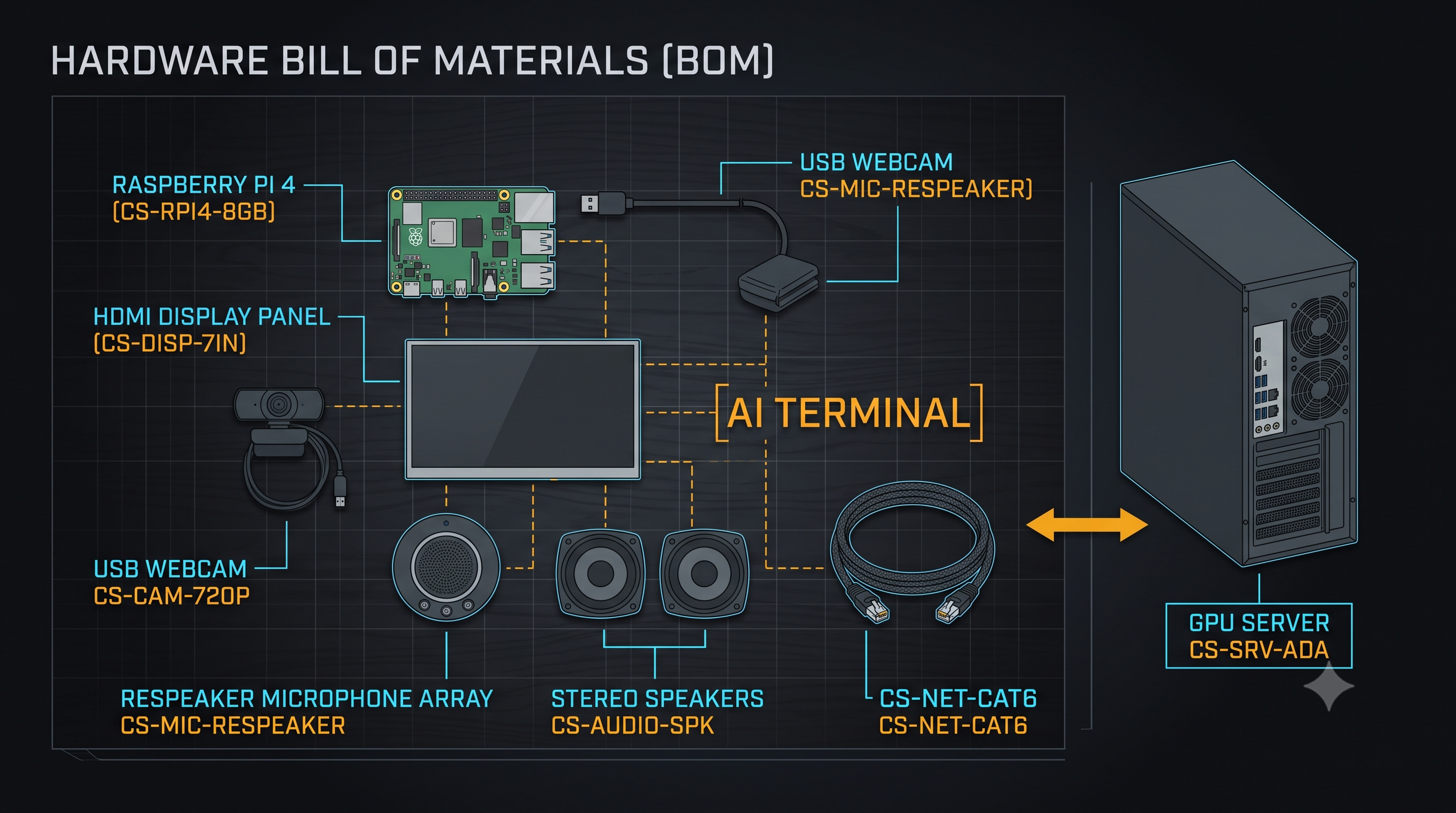
| Component | Part | Notes |
|---|---|---|
| Terminal | Raspberry Pi 4 (4GB+) | 8GB recommended if rendering a heavy avatar locally |
| Camera | Logitech USB webcam (e.g. C525) | Any UVC camera; used for vision only |
| Microphone | ReSpeaker 2-Mic / 4-Mic array or USB conference puck | Strongly recommended over the webcam mic |
| Display | Small HDMI panel | 800×480 to 1280×720 (bring-up used 1024×768) |
| Audio out | USB or 3.5mm powered speakers / HDMI | Kiosk plays TTS via Chromium (ADR 0001) |
| Brain | AI server with NVIDIA RTX 4000 Ada | AO + CodeProject.AI; preferred speech sidecars |
| Network | Wired ethernet to the Pi | Wi-Fi adds jitter to the frame stream |
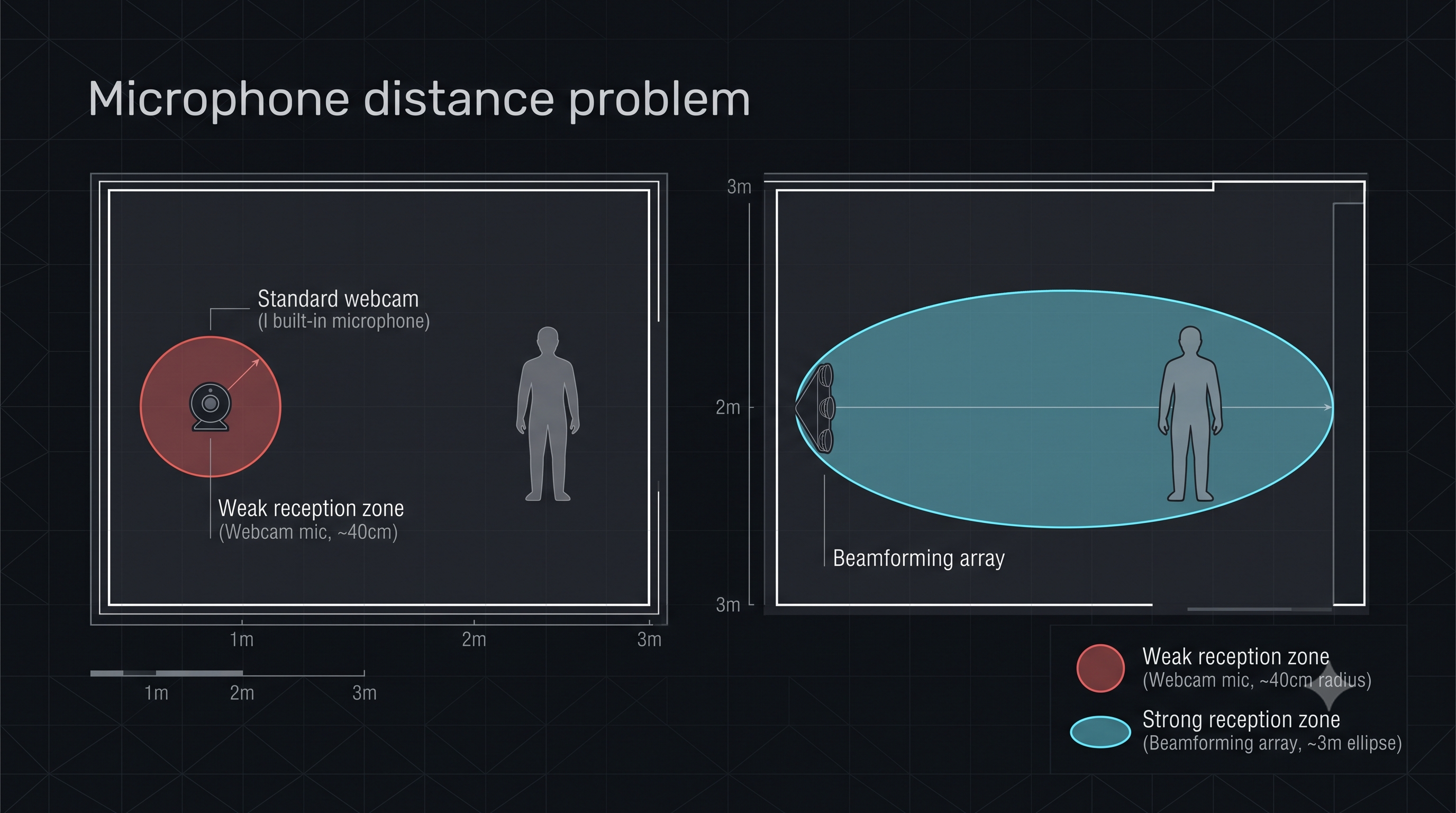
The webcam's built-in mic is the weakest link in the entire build. Those capsules are tuned for a face ~40 cm away. At 2–3 m across a room with any reverb, wake-word accuracy falls off a cliff.
A beamforming array will do more for the felt quality of this project than any other single upgrade. Keep the webcam for vision; add a separate mic for audio.
Documented in Baselines:
| Field | Value |
|---|---|
| Board | Raspberry Pi 4 Model B Rev 1.5, 4 GB |
| Hostname | comstar-ai |
| OS | Debian 12 Bookworm, kernel 6.12.x |
| Camera | Logitech HD Webcam C525 (/dev/video0) |
| Mic (bring-up) | C525 built-in — adequate close-range; room UAT open |
| Display | HDMI-A-1 1024×768@60 |
| Ethernet | Preferred default route |
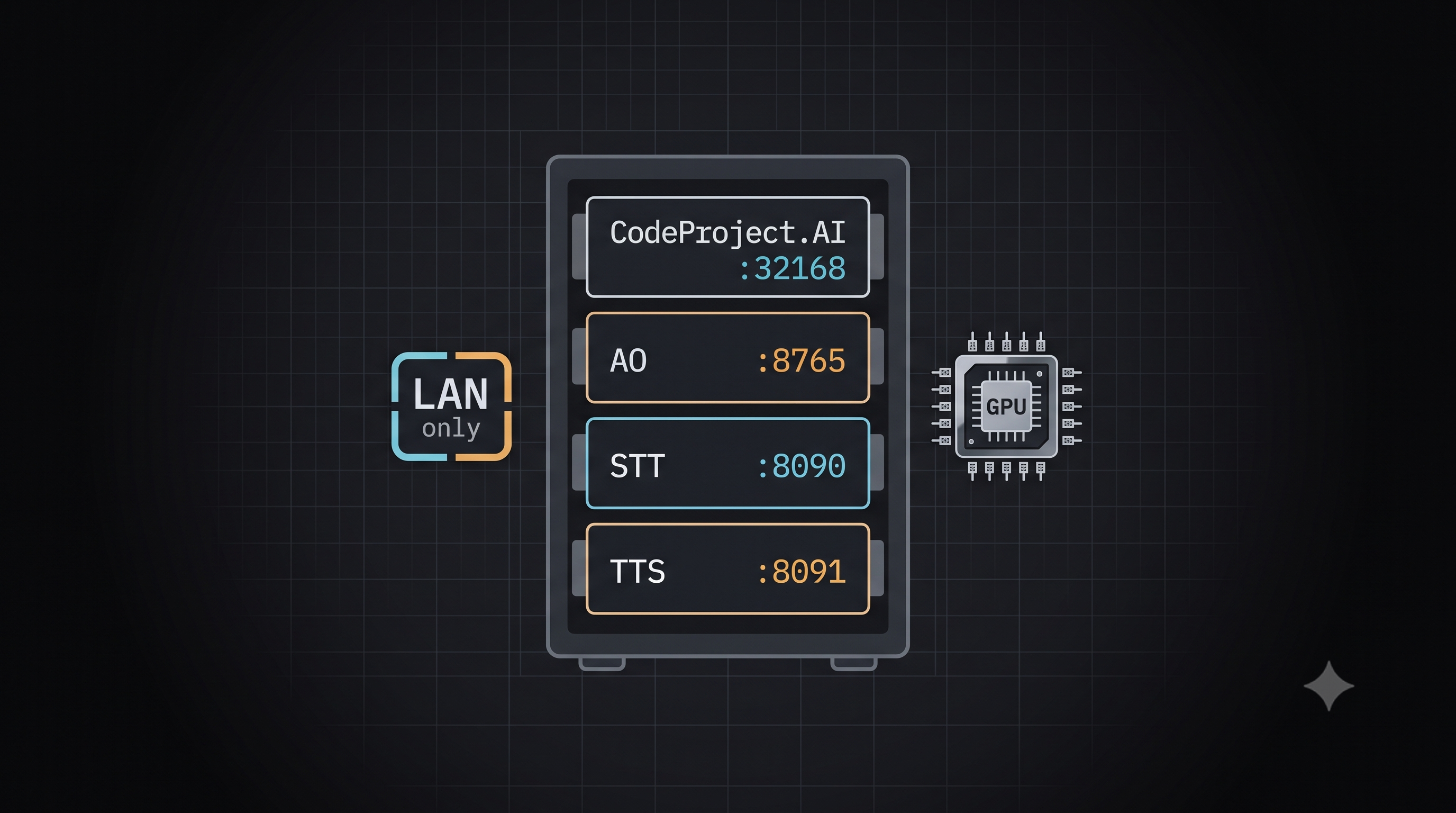
| Service | Port | Role |
|---|---|---|
| CodeProject.AI | 32168 |
YOLO detect + face recognize |
| agentic-orchestration | 8765 |
Planner, sessions, overlays, MCP |
| Speech STT sidecar | 8090 |
faster-whisper (preferred when advertised) |
| Speech TTS sidecar | 8091 |
Piper (preferred when advertised) |