Latency Budget
Total target: under 15 seconds, ideally under 6.
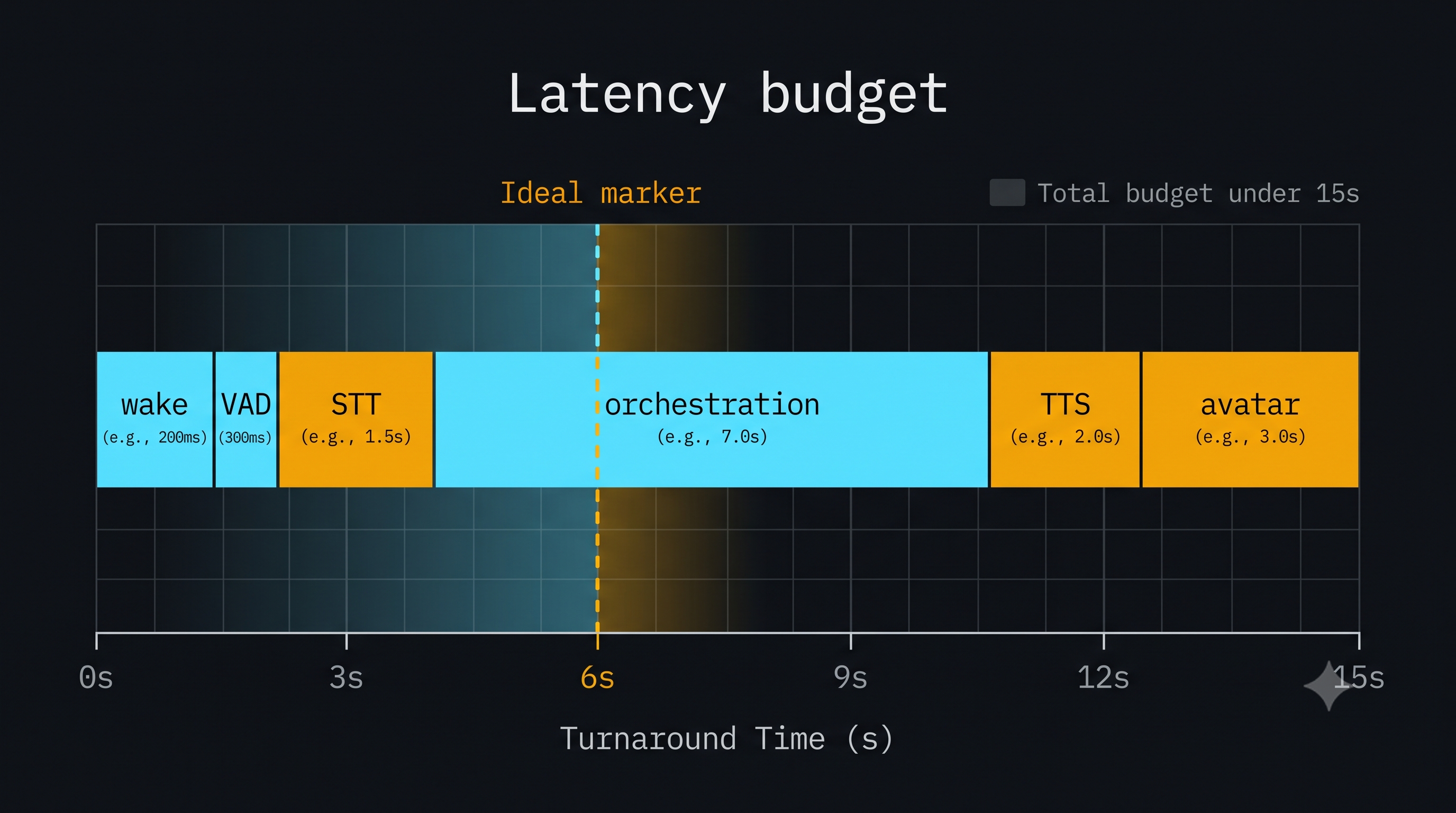
| Stage | Budget | Notes |
|---|---|---|
| Wake word → capture start | ~50 ms | local, negligible |
| Utterance + VAD close | speech + ~0.7–1.2 s silence | tune audio.vad_silence_ms / COMSTAR_VAD_SILENCE_MS
|
| STT (Reach → Ada, or local fallback) | ~1–5 s | GPU on Ada preferred; Pi CPU tiny ~3–5 s |
| Orchestration | 2–10 s | dominated by MCP calls — where the budget goes |
| TTS (Ada or local Piper) | ~1 s | roughly realtime; first chunk can start earlier |
| Avatar render + playback | ~200 ms |
Every process emits structured JSON logs. Latency spans (via Span helper) on close:
| Span | Meaning |
|---|---|
wake_to_listen |
Wake → listening armed |
stt |
Transcription |
orchestration |
directAgent |
tts_first |
Time to first TTS chunk |
tts_total |
Full synthesis |
avatar_start |
Until kiosk speak.started
|
turn_total |
End-to-end turn |
Shared turn_id (ULID) threads through all spans for one turn.
make logs-export SINCE="1 hour ago" > /tmp/run.jsonl
python scripts/latency_report.py /tmp/run.jsonl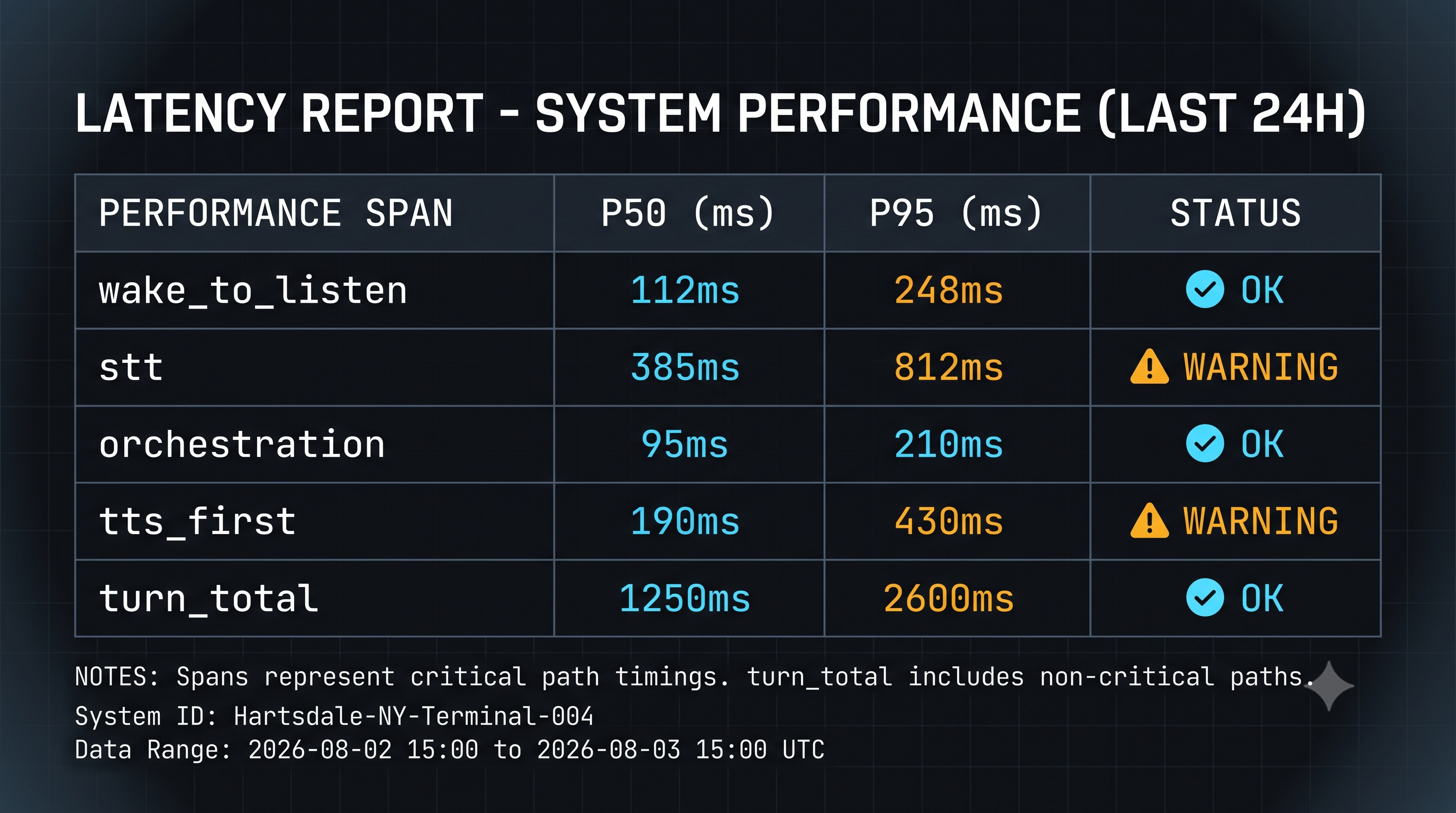
- Confirm orchestration dominates (if it doesn't, something else is wrong).
- Trim voice MCP set — remove slow tools.
- Prefer Ada STT over Pi
tiny. - Cache greetings.
- Clock skew between Mac and Pi must be < 1 s or span numbers are nonsense (
make doctor).