How It Works
flowchart LR
    A["AI Agent<br/>(any MCP client)"] -->|typed tool calls| S["ocm-mcp-server<br/>static guardrails · audit"]
    S -->|reads, dry-run, apply| H["OCM Hub<br/>Placement · ManifestWork<br/>Kyverno · RBAC"]
    H --> C1[cluster1]
    H --> C2[cluster2]
    H --> C3[cluster3]
    U["Human operator<br/>ocm-mcp approve"] -.approval token.-> A
    S -.spans.-> J["OpenTelemetry / Jaeger"]
The agent talks only to the server. The server holds the kubeconfig, applies static guardrails, writes an audit line and a trace span for every call, and talks to the hub. The hub enforces Kyverno policy and RBAC. A human, on a separate trusted terminal, is the only source of approval tokens.
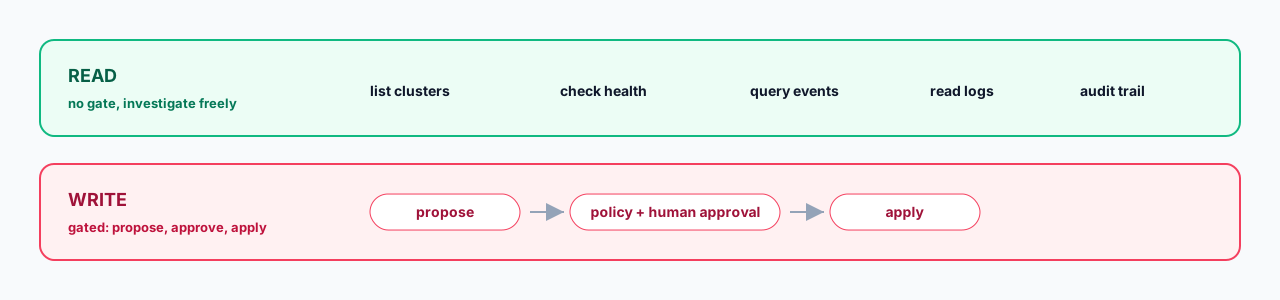
Investigation has no gate. The agent can call any read tool as often as it likes.
sequenceDiagram
    participant Ag as Agent
    participant Sv as ocm-mcp-server
    participant Hub as OCM Hub
    participant Sp as Spoke cluster
    Ag->>Sv: list_clusters()
    Sv->>Hub: list ManagedClusters
    Hub-->>Sv: inventory + health
    Sv-->>Ag: summarized JSON
    Ag->>Sv: get_cluster_health(cluster2)
    Sv->>Sp: list pods, deployments (read-only)
    Sp-->>Sv: unhealthy pods, degraded deploys
    Sv-->>Ag: focused summary
    Ag->>Sv: query_events / get_pod_logs
    Sv-->>Ag: the "why"
Results are summarized, not raw. The agent gets the fields an on-call engineer would look at, not thousand-line objects that burn context.
This is the heart of the design. Four independent checks, in order.
sequenceDiagram
    participant Ag as Agent
    participant Sv as ocm-mcp-server
    participant Ky as Kyverno (hub)
    participant Hu as Human
    participant Hub as OCM Hub
    Ag->>Sv: propose_manifestwork(cluster, name, summary, manifests)
    Sv->>Sv: 1. static guardrails
    alt fails static checks
        Sv-->>Ag: REJECTED (reason)
    else passes
        Sv->>Ky: 2. dry-run create ManifestWork
        alt policy denies
            Ky-->>Sv: denied (policy message)
            Sv-->>Ag: REJECTED (policy reason)
        else policy allows
            Sv-->>Ag: proposal_id, status pending_approval
            Note over Hu: reviews with ocm-mcp show
            Hu->>Hu: 3. ocm-mcp approve <id> -> token
            Ag->>Sv: apply_manifestwork(id, token)
            Sv->>Sv: verify token vs content hash + TTL
            Sv->>Hub: 4. create ManifestWork (RBAC-scoped)
            Hub-->>Sv: applied
            Sv-->>Ag: applied; verify with reads
        end
    end
Read the four checks as defense in depth: each fails differently, so a gap in one is covered by the others. Details in Guardrails Deep Dive.
A "yes" in chat approves a conversation. The token approves content. It is an
HMAC over the proposal's SHA-256 hash plus an expiry. If the agent changes even
one byte of the proposal after approval, the token no longer verifies. Tokens
expire (default one hour) and are minted only by the ocm-mcp CLI on a trusted
terminal, never by any tool the agent can call.
$ ocm-mcp show 4f1a2b3c
id:       4f1a2b3c
cluster:  cluster2
summary:  Pin payments-v2 to the last known-good image (fixes ImagePullBackOff)
manifests:
  - Deployment shop/payments-v2  image: registry.example.com/payments:1.9.2
$ ocm-mcp approve 4f1a2b3c
About to approve on cluster 'cluster2': Pin payments-v2 to the last good image
Approve? [y/N] y
Approval token (give this to the agent):
4f1a2b3c.1753vwxyz.9a1b...
Ten seconds to review, one keystroke to consent. That is the human's whole job, and it is the job that matters.
Next: Implementation.