Connections SSL and SSH
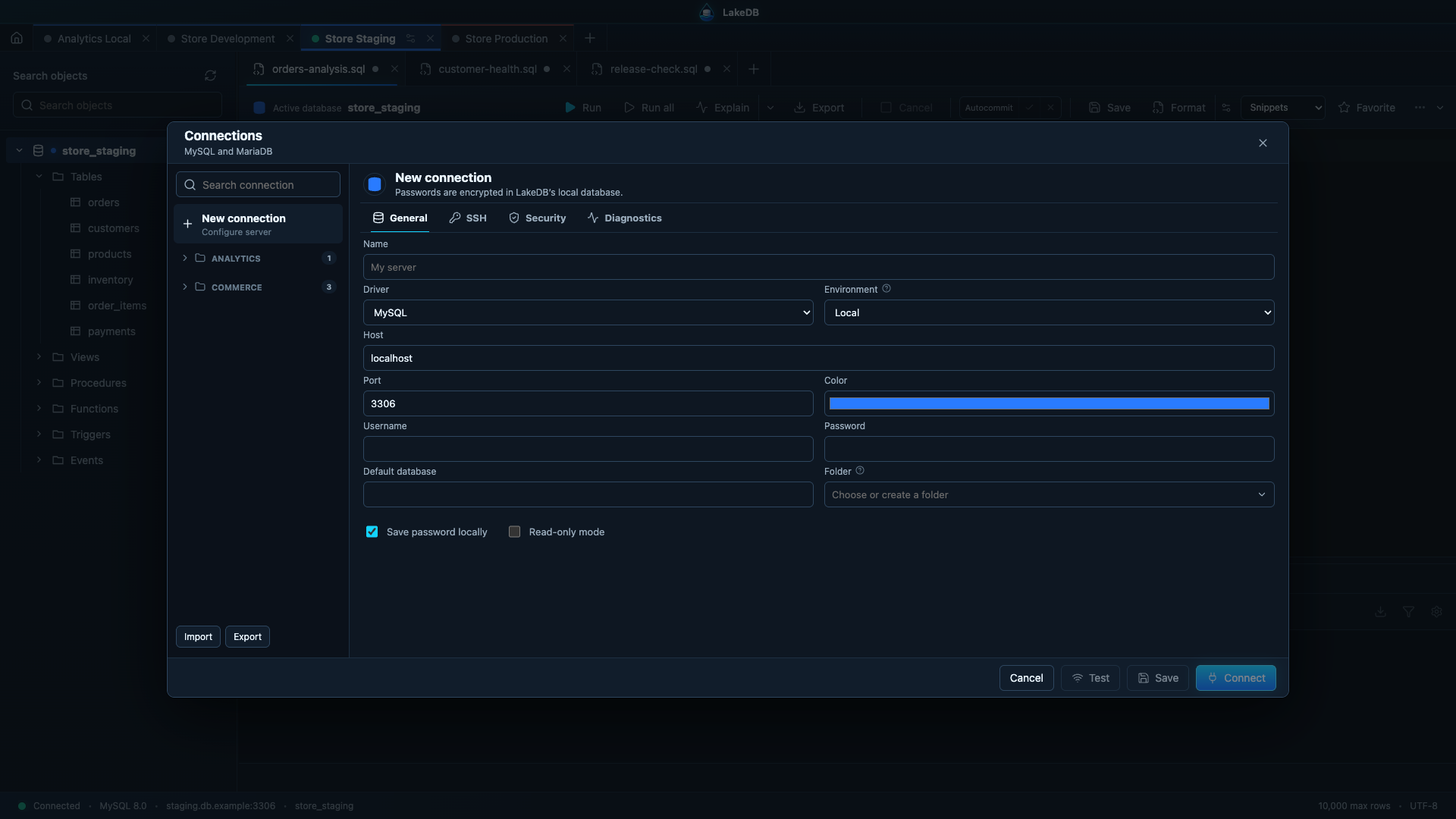
Save unlimited connections, assign colors and organise them in folders. Each open connection keeps an independent workspace. Saved passwords are encrypted in LakeDB's main process and are never exposed directly to its web-based renderer. Duplicating a connection does not copy its password.
LakeDB does not create folders from connection names during normal use. Select New folder, enter the name you want and choose the saved connections that belong there. The assignments are saved immediately and remain after restarting LakeDB.
If you have connections but no folders, Auto-generate groups is also available. It suggests a group from each connection name, applies the suggestions only when you explicitly confirm the action and persists the result. Once a folder exists, this shortcut disappears so your manual organisation remains in control.
- Disabled: connect without TLS.
- Preferred: use TLS when the server provides it.
- Required: refuse non-TLS connections.
You can provide a PEM certificate authority and control server certificate verification. Use required TLS with verification enabled for sensitive environments.
Enable Use integrated SSH tunnel and enter the SSH host, port, username, optional private-key path and keepalive interval. LakeDB uses the operating system's ssh binary and a temporary local port. Keys protected by a passphrase must already be available through ssh-agent.
LakeDB can reopen a session after selected network errors. It never automatically re-runs a failed query or write, preventing accidental duplicate operations.
The import assistant supports DBeaver, SQLyog, LakeDB JSON/CSV and SQL files containing MySQL or JDBC URLs. Review detected connections and choose how duplicates should be handled before importing.