Repository navigation
Library and Artwork
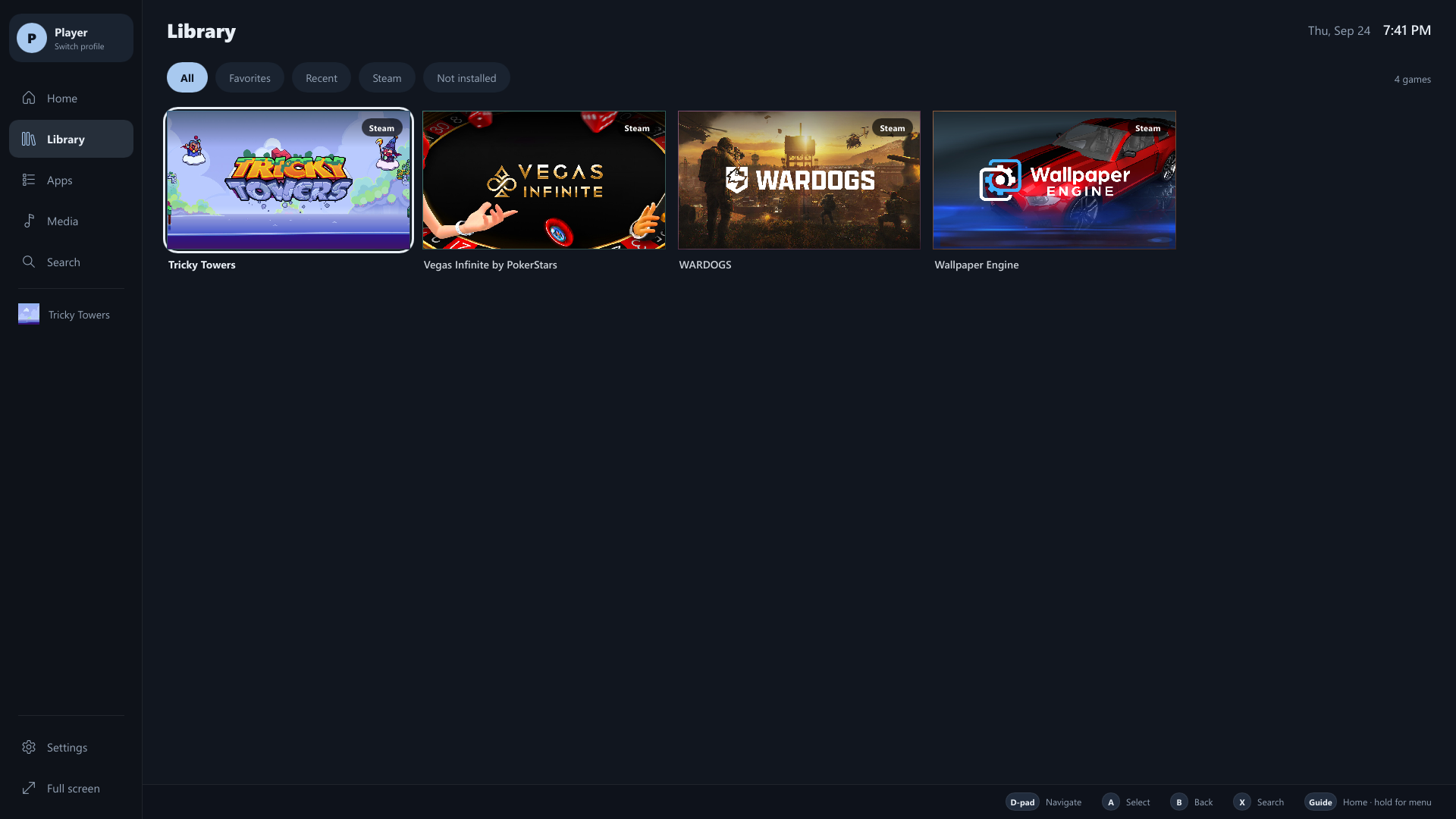
- Steam: installed games are read straight from your Steam library folders, no sign-in or API key needed. Tools, runtimes, redistributables and dedicated servers are left out.
- Local folders: games in the configured folders are found by scanning for their executables; installers, updaters and redistributables are skipped.
Homebase keeps looking in the background: shortly after startup, every few minutes, and right after a game closes. New installs appear on their own; Settings → Scan for games runs a scan now.
The Library has All, Favorites, Recent, one chip per store, and Not installed.
Not installed lists games you own on Steam that aren't on this PC. Press A or Start → Install and Steam opens its install window. Games you never want to see can be hidden from there, and brought back with Settings → Show hidden games.
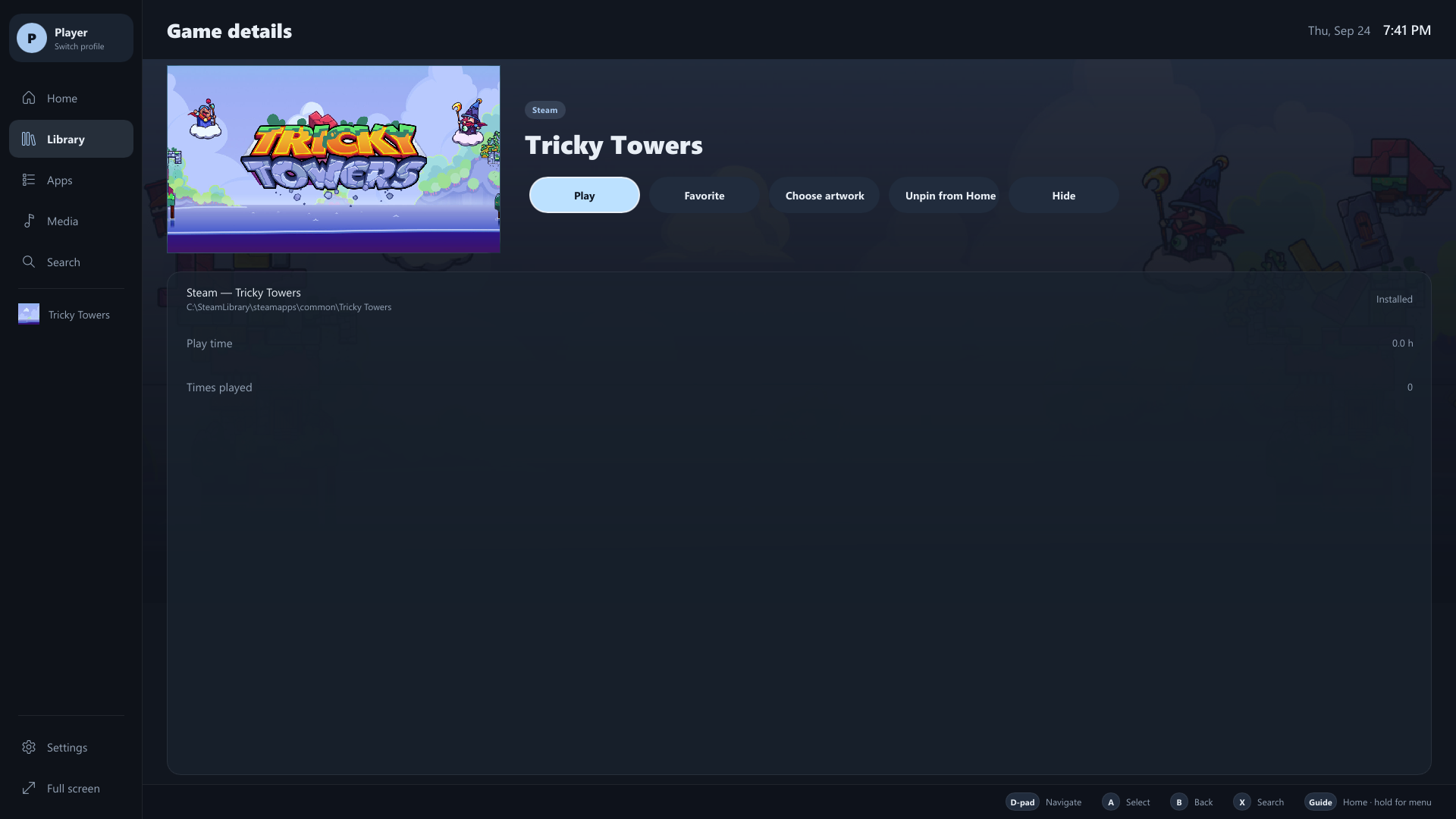
Select a game for its details: Play, Favorite, Choose artwork, pin or unpin, Hide, play time and how many times it's been played. While a game is running, the same screen and its Options offer Switch to, Close (asks the game to quit, like closing its window) and Force close (ends it right away; unsaved progress is lost).
Some PC games only understand a mouse and keyboard. Highlight the game, press Start and switch Controller: Native to Controller: Mouse & keyboard. While that game is in front, the left stick moves the mouse, A and RT click, LT right-clicks, the D-pad sends arrow keys, B is Esc and View opens the on-screen keyboard. Leave games that support controllers on Native so their own controls aren't doubled.
Launchers and dialogs that appear while any game runs (an EA or Ubisoft launcher, a store sign-in) are always controllable this way.
Homebase follows the real game process, including launcher handoffs such as Steam starting the actual game. It records play time and double-checks the process identity before closing anything, so it never closes the wrong program.
Homebase uses the best artwork it can find, in this order:
- Your own image, if you picked one.
- Steam's local library artwork (headers and covers).
- Steam's published artwork for the game's app ID, downloaded once and cached.
- The game's own high-resolution executable icon.
- A tidy letter tile.
Apps use your image, the app's own high-resolution icon, or the website's icon. To change any artwork: highlight it, press Start (or right-click), and choose Choose artwork / Choose icon. PNG, JPEG, WebP and ICO are supported.