Repository navigation
WORKED_CASES
Status: figure/heading inventory checked against the original scan; numerical reconstruction and complete judgement/outcome collation pending. This is part of the Lilly core packet. Exact per-page image locators are in packet.json; the Wellcome manifest is the governing page map.
- Book II: 35 distinct printed filled figures and 36 case groups when the separate office question at pp.456-457 is counted.
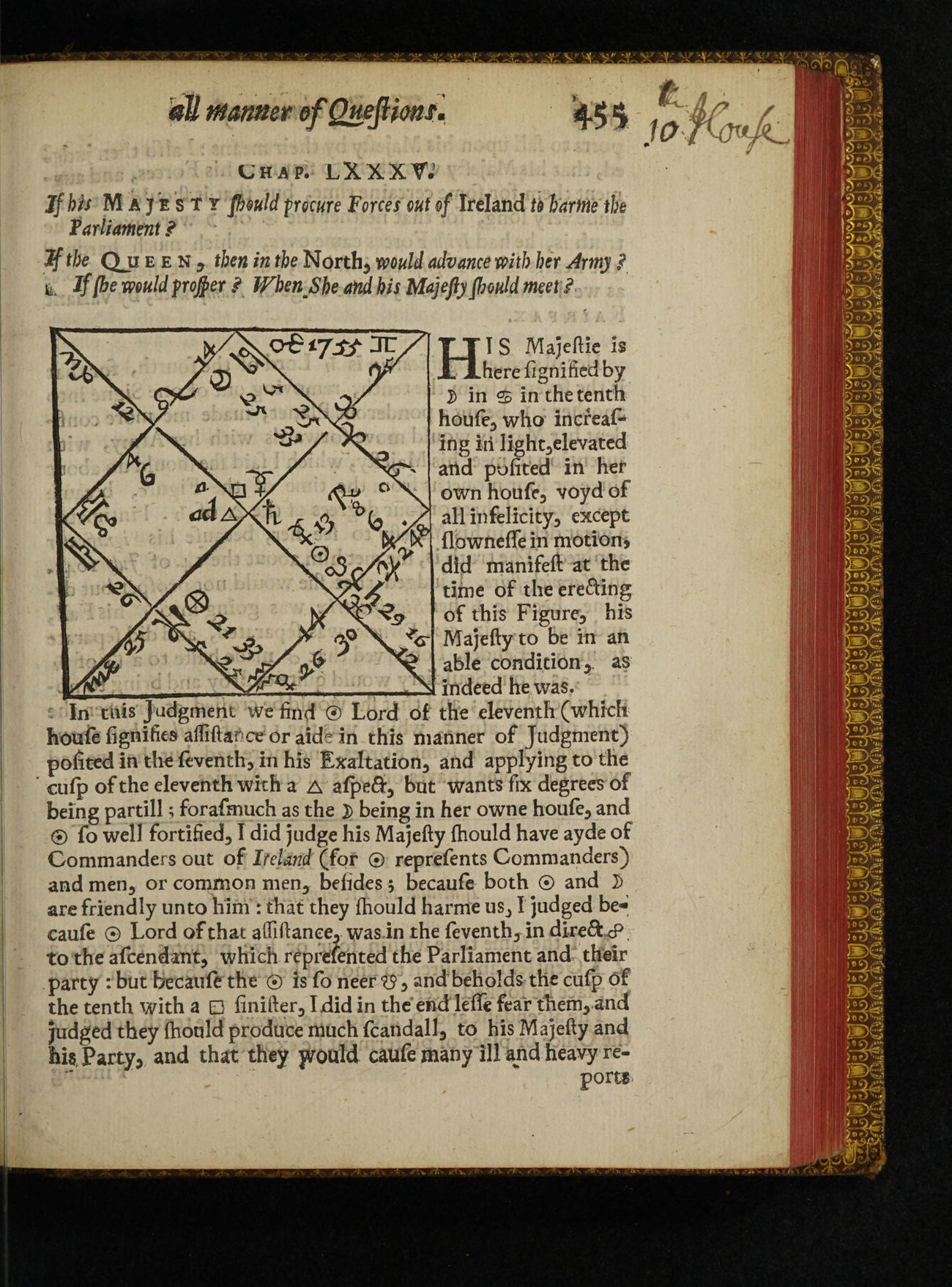
- C31 uses C30's p.455 figure; Lilly describes the questions as four or five minutes apart. This is neither a new printed diagram nor an identical admitted numerical epoch.
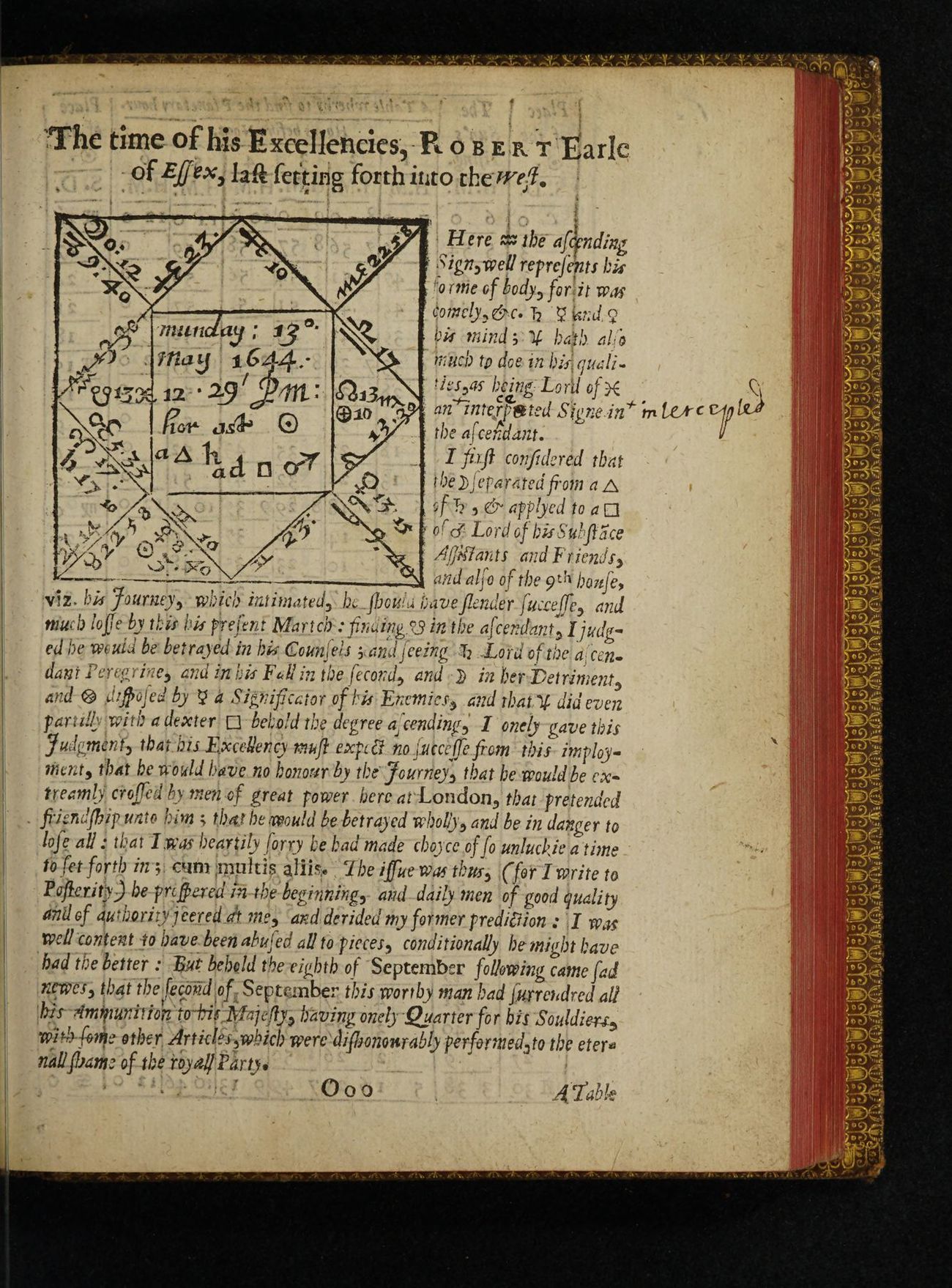
- C36 is a departure/inception figure, not automatically a propounded horary question. Excluding it leaves 35 other Book II groups; that is a corpus category count, not 35 proven independent consultations or predictions.
- Book I adds one filled figure at p.35 and two textual erection exercises. Thus Books I-II contain 36 filled figures in this inventory, using a different denominator from the 36 Book II case groups.
- The empty house template at p.33, unillustrated anecdotes, numerical definitions and hypothetical adaptations do not increase the historical worked-figure count.
The roster was built from original-page checks, OCR navigation and chapter navigation aids. All 35 distinct Book II diagram pages, p.456, and the three Book I exercises were visually inspected. This does not claim an exhaustive inventory of every unillustrated narrative or every topic-specific rule.
Titles are our normalized descriptions. Dates/clocks are literal readings in modern typography; they are not admitted civil timestamps. No calendar, year start, noon-clock conversion, locality, UT or JD has been inferred. An em dash means not established from the inspected heading/figure.
The topic column reports source context, not an automatically selected API house. Every row still needs full planetary/cusp transcription and complete judgement collation. The last column records additional distinctive blockers.
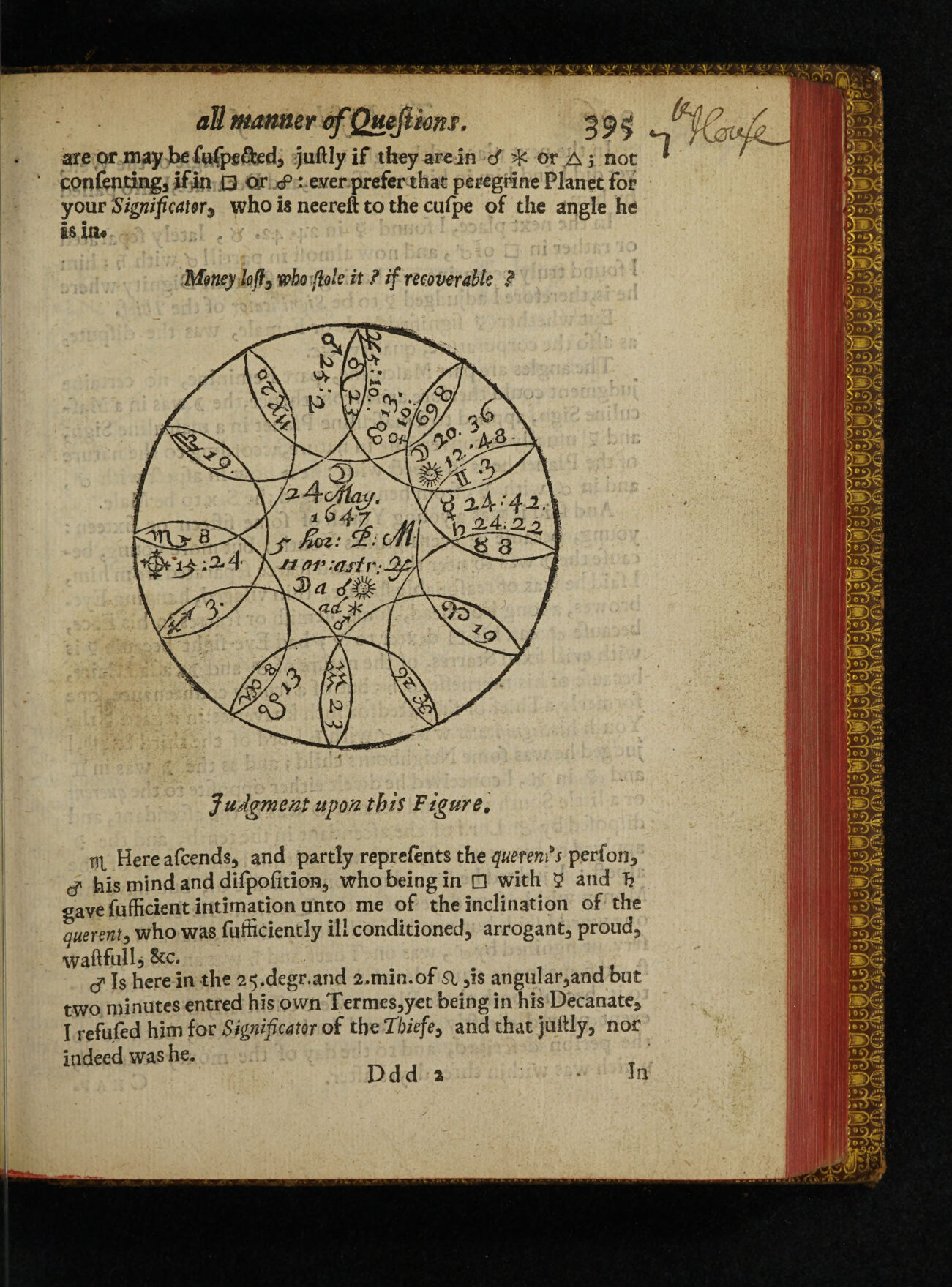
| ID | Normalized case | Figure page | Raw date; raw clock | Source context and additional blocker |
|---|---|---|---|---|
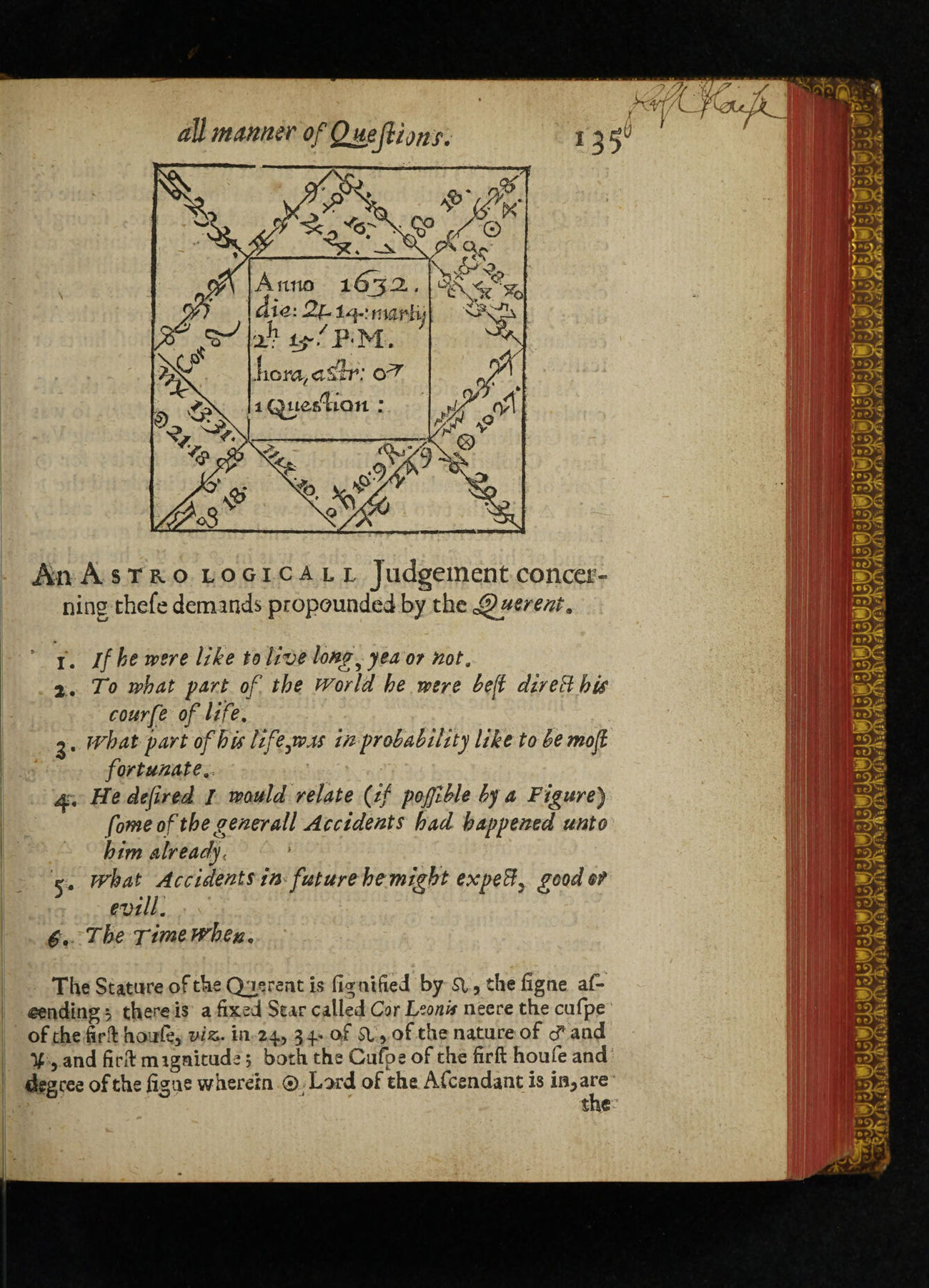
| C01 | Longevity, life direction, past and future circumstances | 135 | 14 March 1632; 2:15 P.M. | First house; multiple demands share a figure; year-start policy |
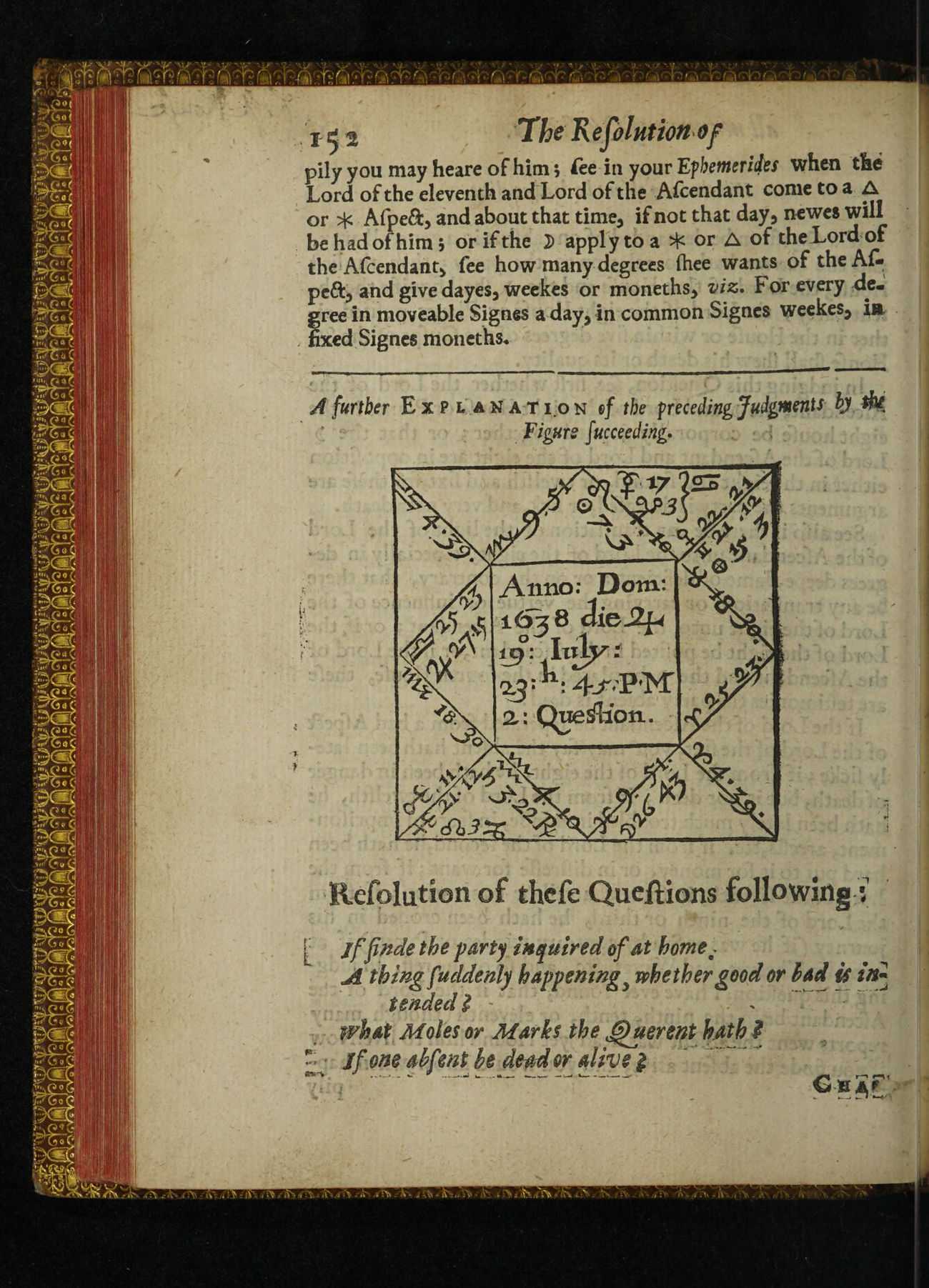
| C02 | Mother asks whether son is at home or with his master | 152 | 19 July 1638; 23h45 P.M. | First-house section; son fifth, mother's home fourth, master tenth; noon clock and hypothetical reuse |
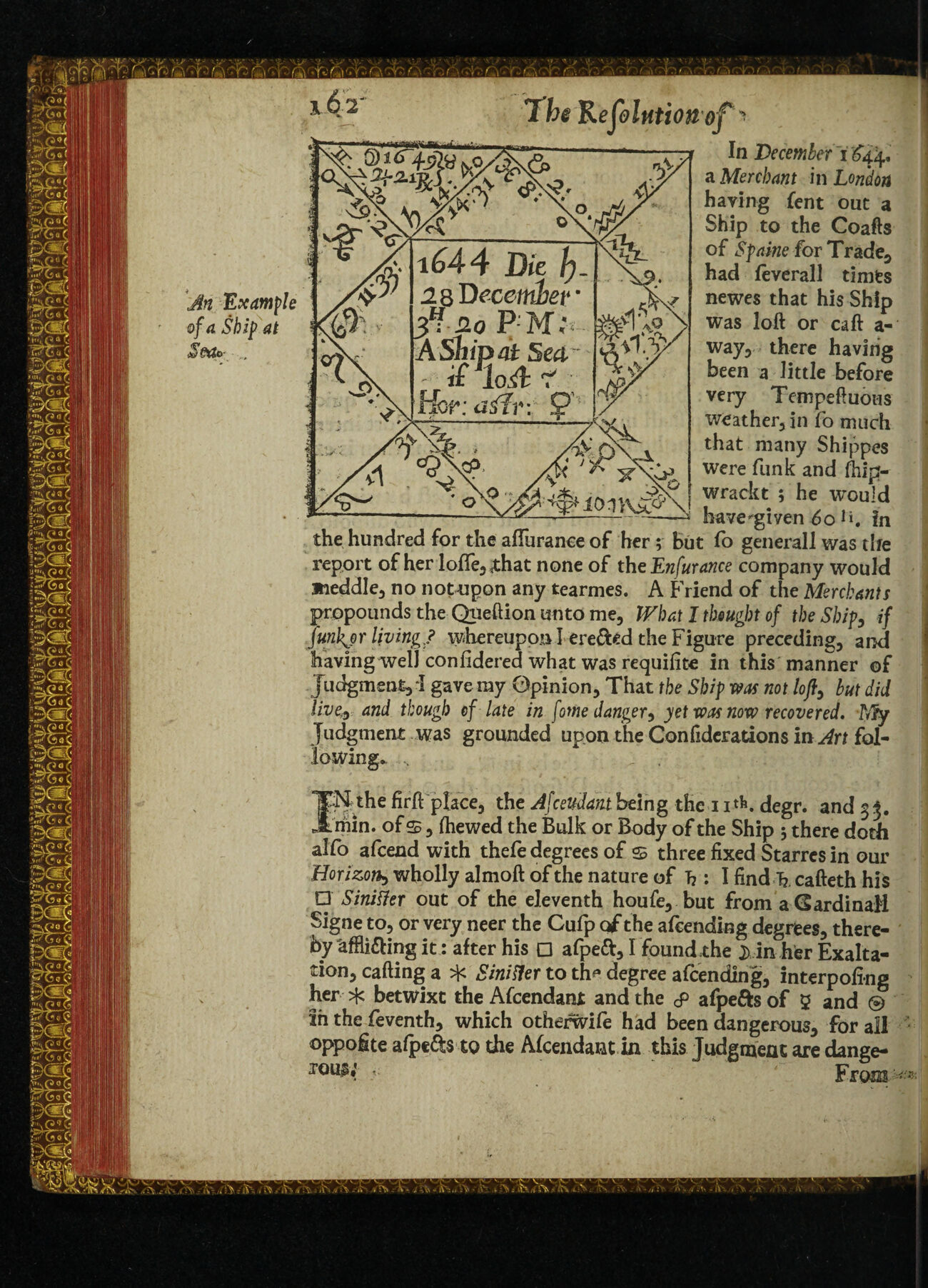
| C03 | Merchant's ship: lost or surviving | 162 | 28 December 1644; 3:20 P.M. | First house, ship; observer and ship locations must remain distinct |
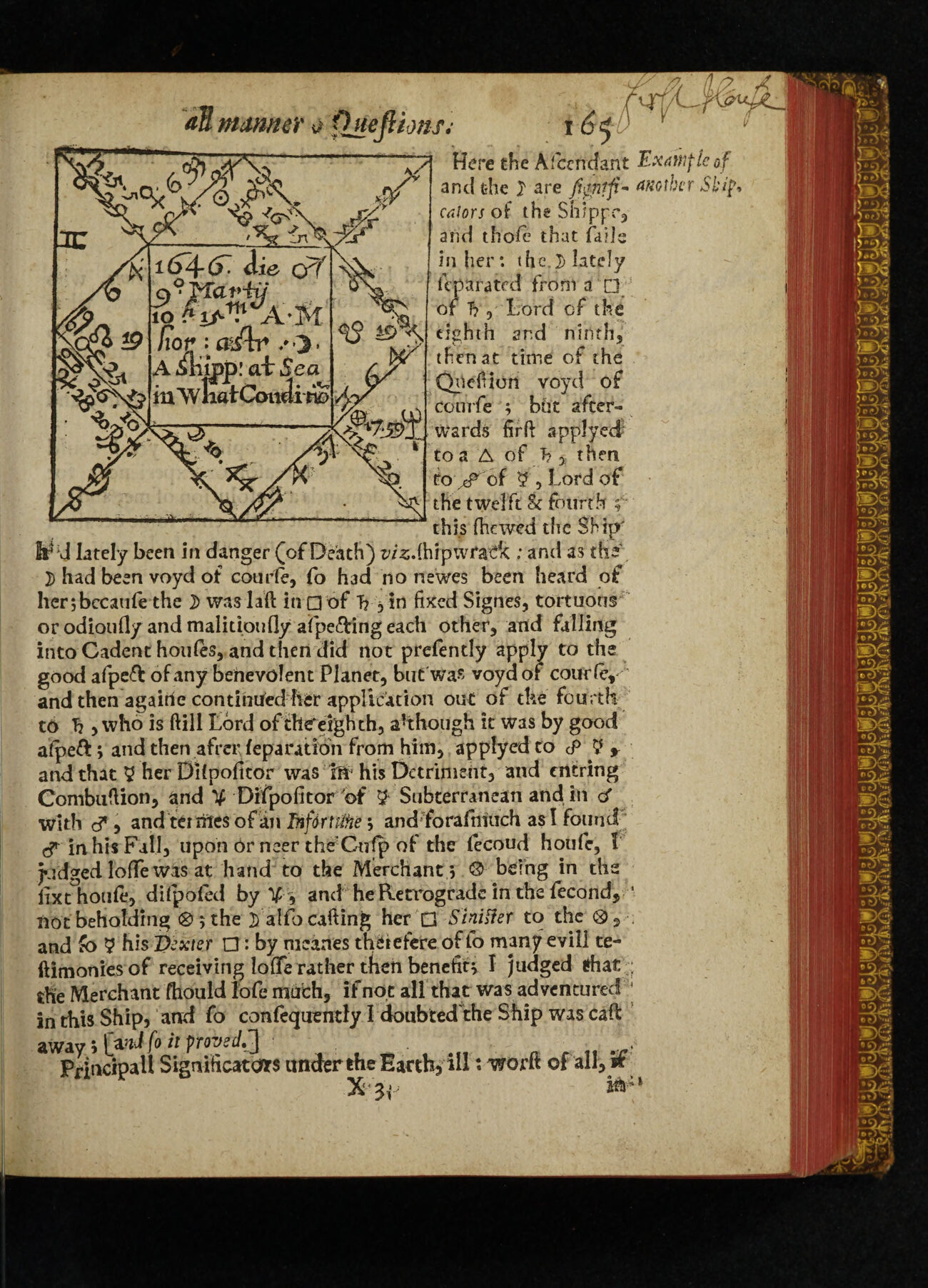
| C04 | Another ship: condition and possible loss | 165 | 9 March 1646; 10:15 A.M. | First house, ship; OCR suggests 1645 incorrectly; year-start policy |
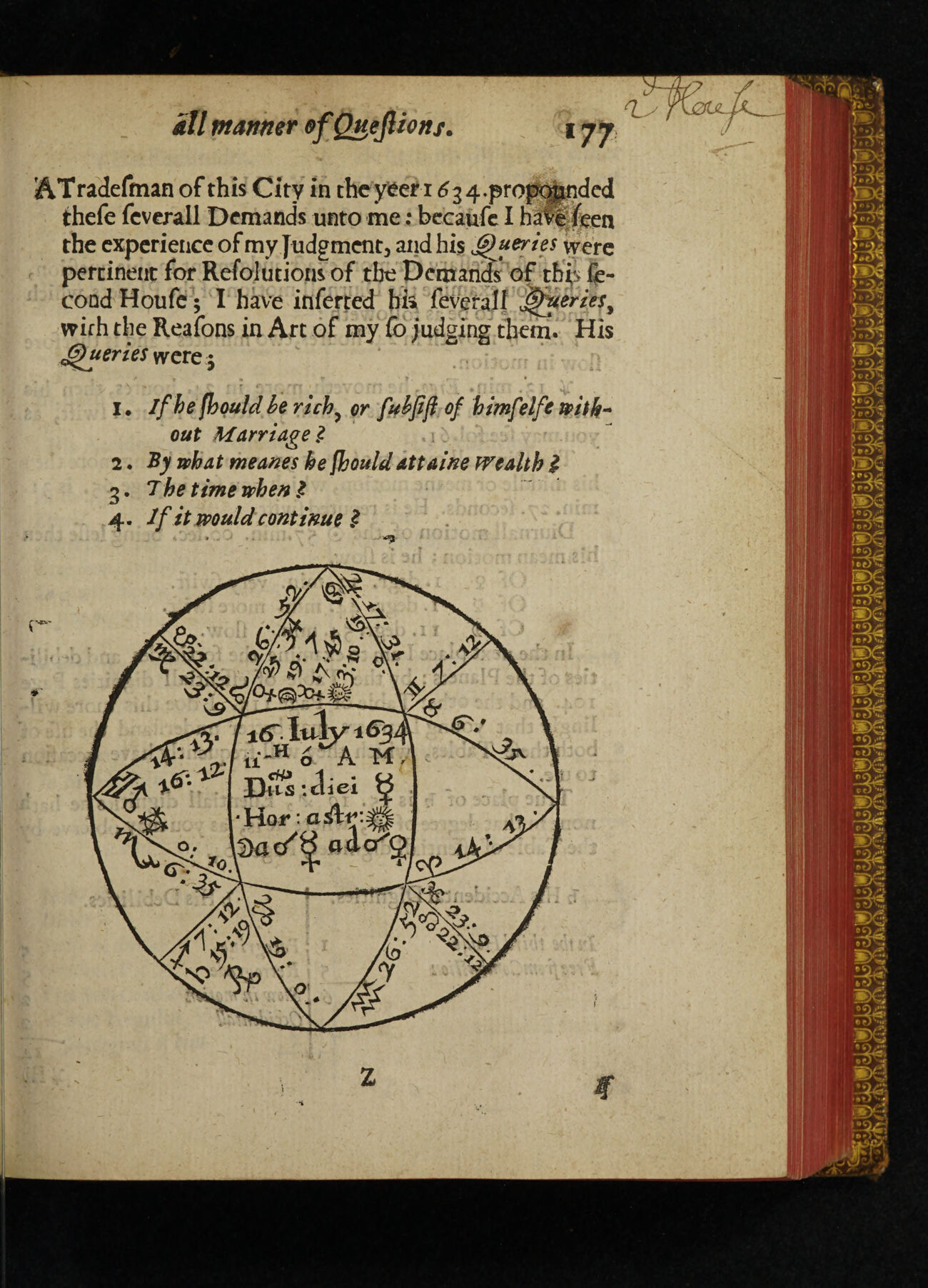
| C05 | Tradesman's wealth, means, timing and continuance | 177 | 16 July 1634; 11:00 A.M. | Second house; several demands and a strength-table dependency |
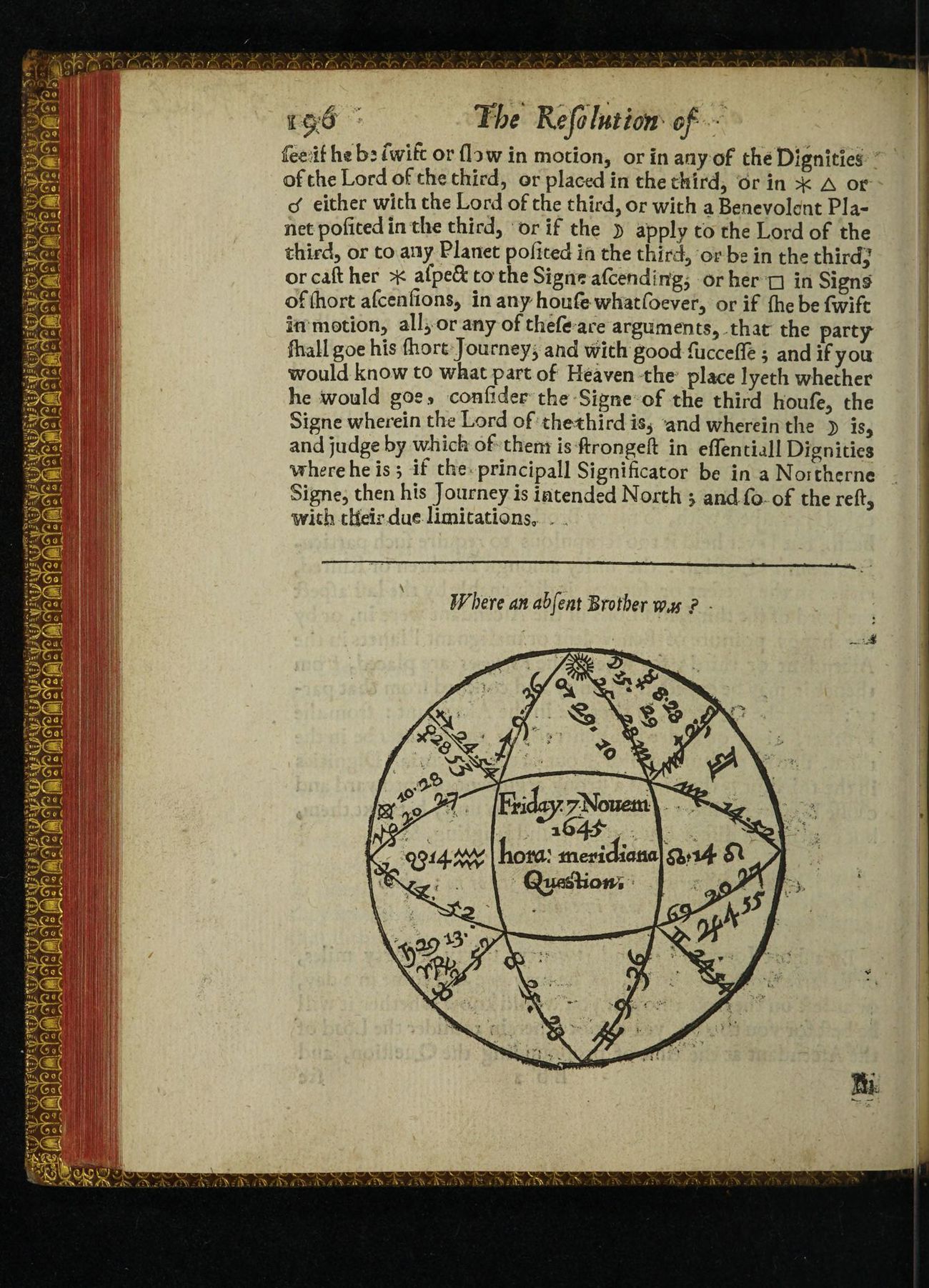
| C06 | Absent brother: life, whereabouts, news and return | 196 | Friday 7 November 1645; hora meridiana | Third house; judgement begins p.197; printed noon requires time policy |
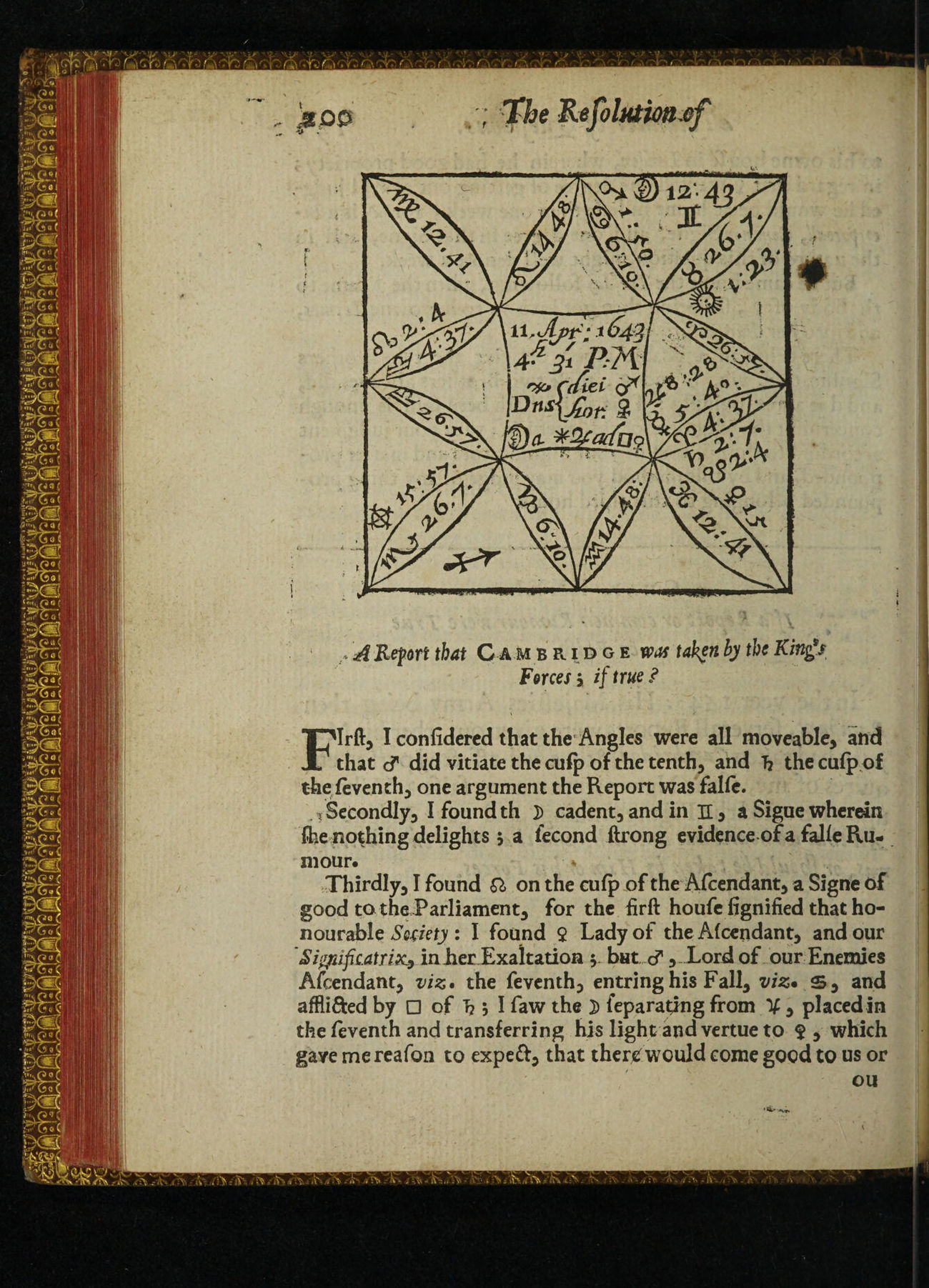
| C07 | Report that Cambridge was captured | 200 | 11 April 1643; 4:31 P.M. | Third, reports; first Parliament/seventh opponents; separate hypothetical sibling adaptation |
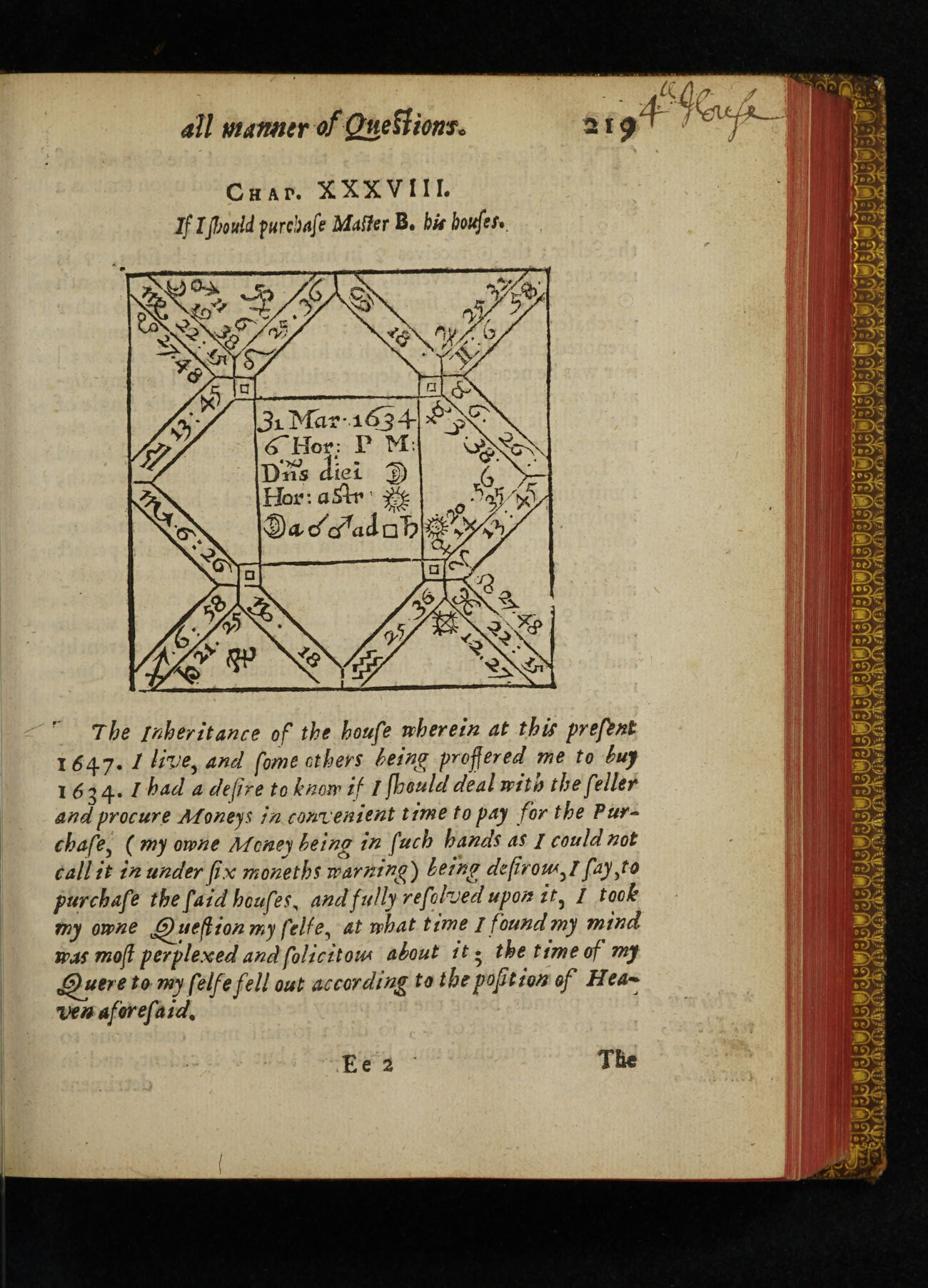
| C08 | Lilly's purchase of Master B.'s houses | 219 | 31 March 1634; 6 P.M. | Fourth, property; self-question; purchase, financing and descriptions are separate claims |
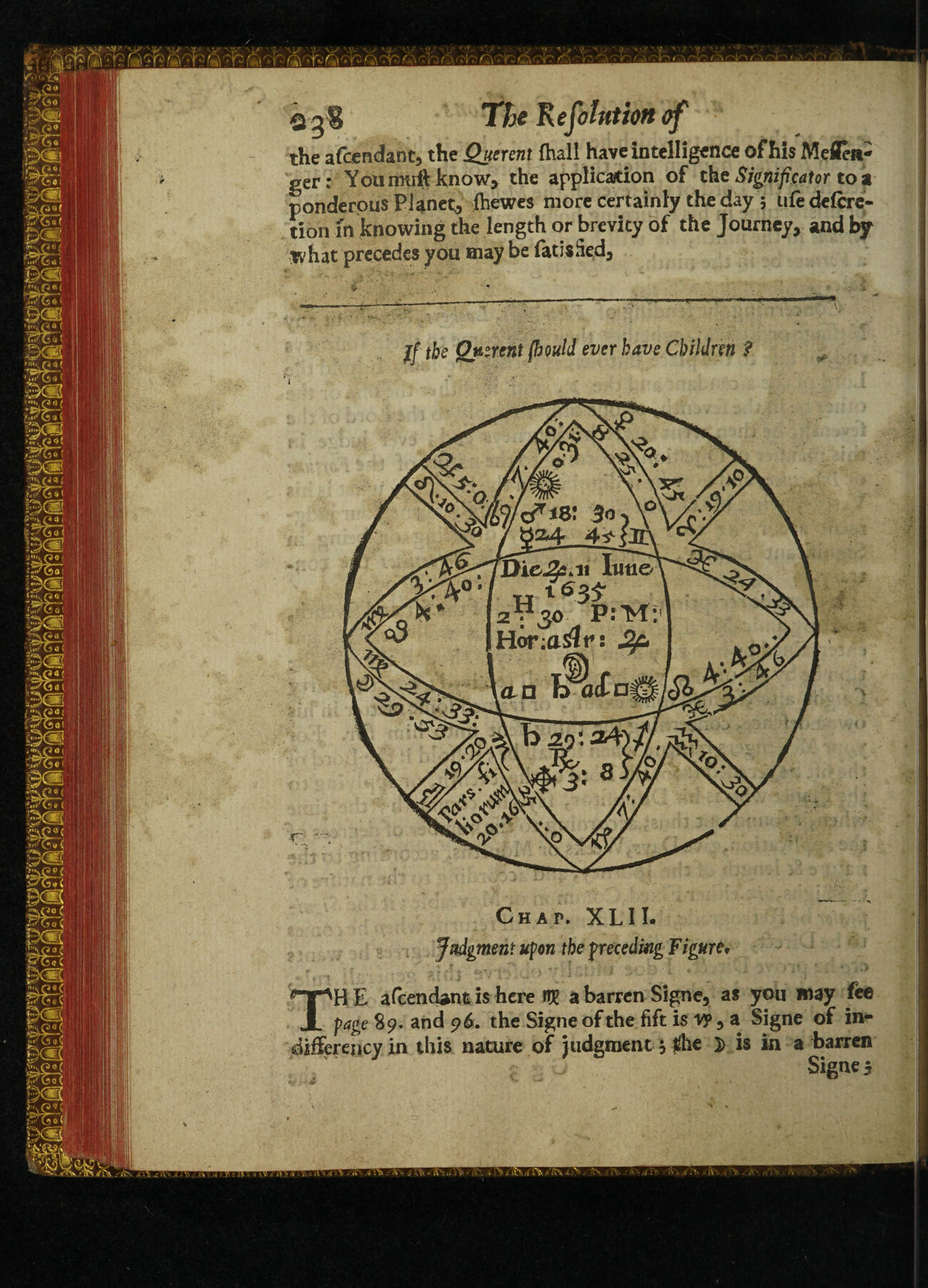
| C09 | Whether querent will ever have children | 238 | 11 June 1635; 2:30 P.M. | Fifth; separate fertility judgement, descriptions and later natal-policy discussion |
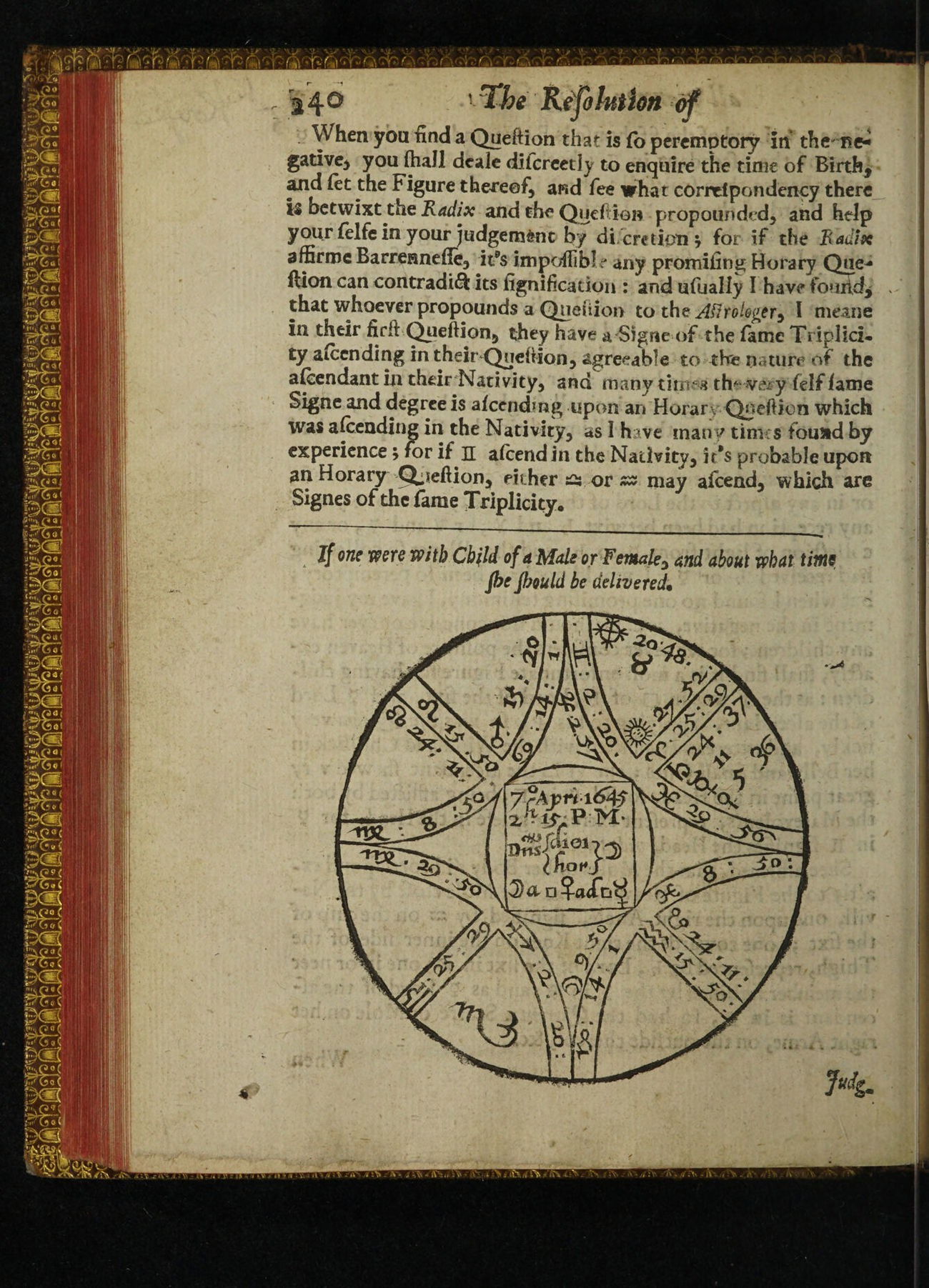
| C10 | Expected child's sex and delivery timing | 240 | 7 April 1645; 2:15 P.M. | Fifth; sex testimonies, timing and reported delivery need separate records |
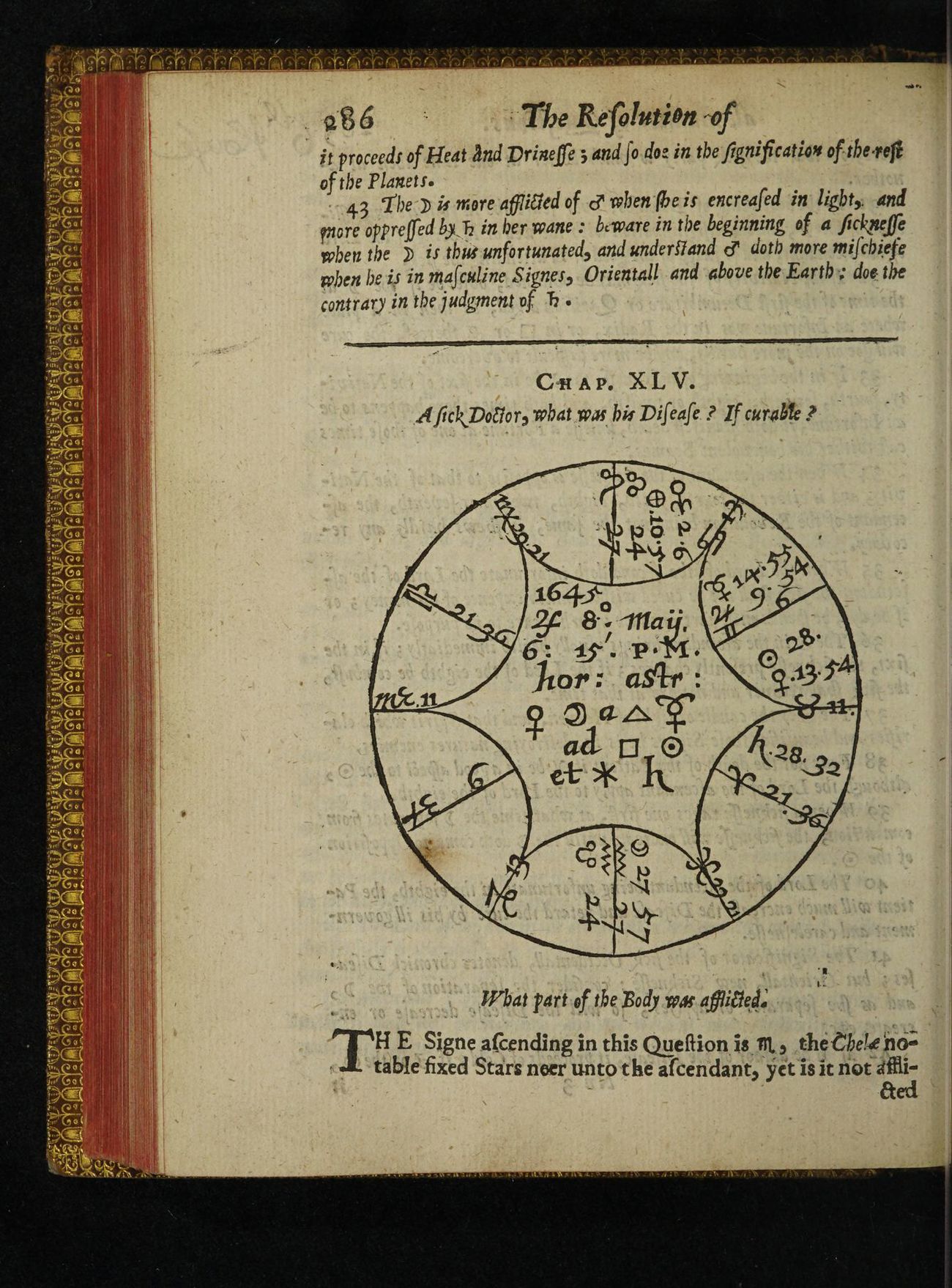
| C11 | Sick doctor: illness, affected parts and prognosis | 286 | 8 May 1645; 6:15 P.M. | Sixth; historical medical interpretation is doctrine, not clinical validation |
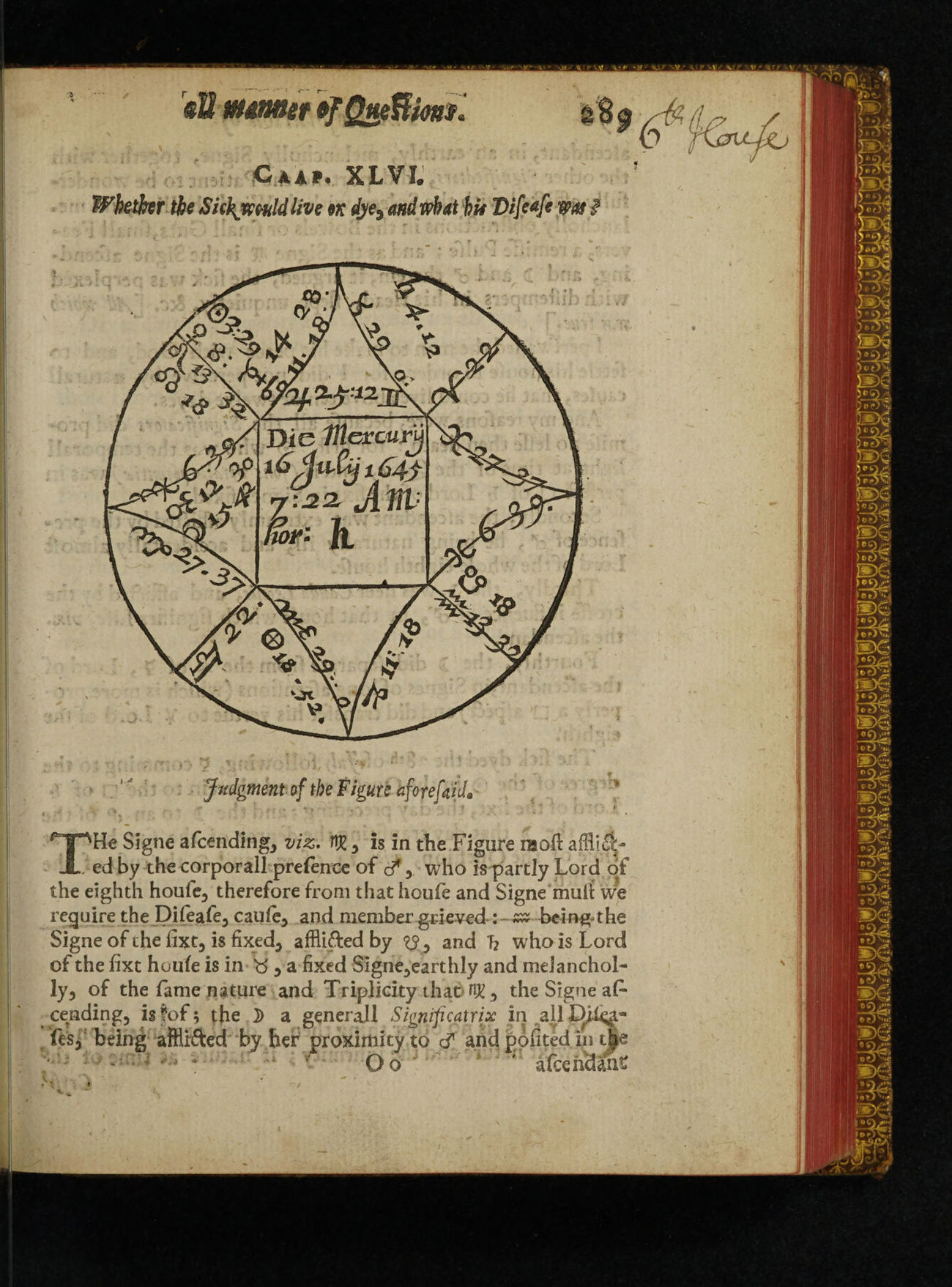
| C12 | Sick person: disease and survival | 289 | 16 July 1645; 7:22 A.M. | Sixth; later crisis arithmetic supposes this epoch as disease onset |
| C13 | Lady seeks marriage to previously rejected suitor | 385 | 16 June 1646; 19:26 P.M. | Seventh; noon clock, intervention advice and hypothetical extensions |
| C14 | Woman asks about marrying desired man | 389 | 11 June 1646; 10:38 A.M. | Seventh; separate consultation from C13 |
| C15 | Fugitive servant: direction and return | 390 | —; — | Seventh-house section, servant through sixth lord; judgement p.391; no readily stated epoch |
| C16 | Missing dog: location and recovery | 392 | 29 August 1646; 4:05 P.M. | Seventh-house section; dog assigned sixth as small animal |
| C17 | Missing money: thief and recovery | 395 | 24 May 1647; 5 P.M. | Seventh-house theft section; peregrine-planet selection is not simply seventh lord |
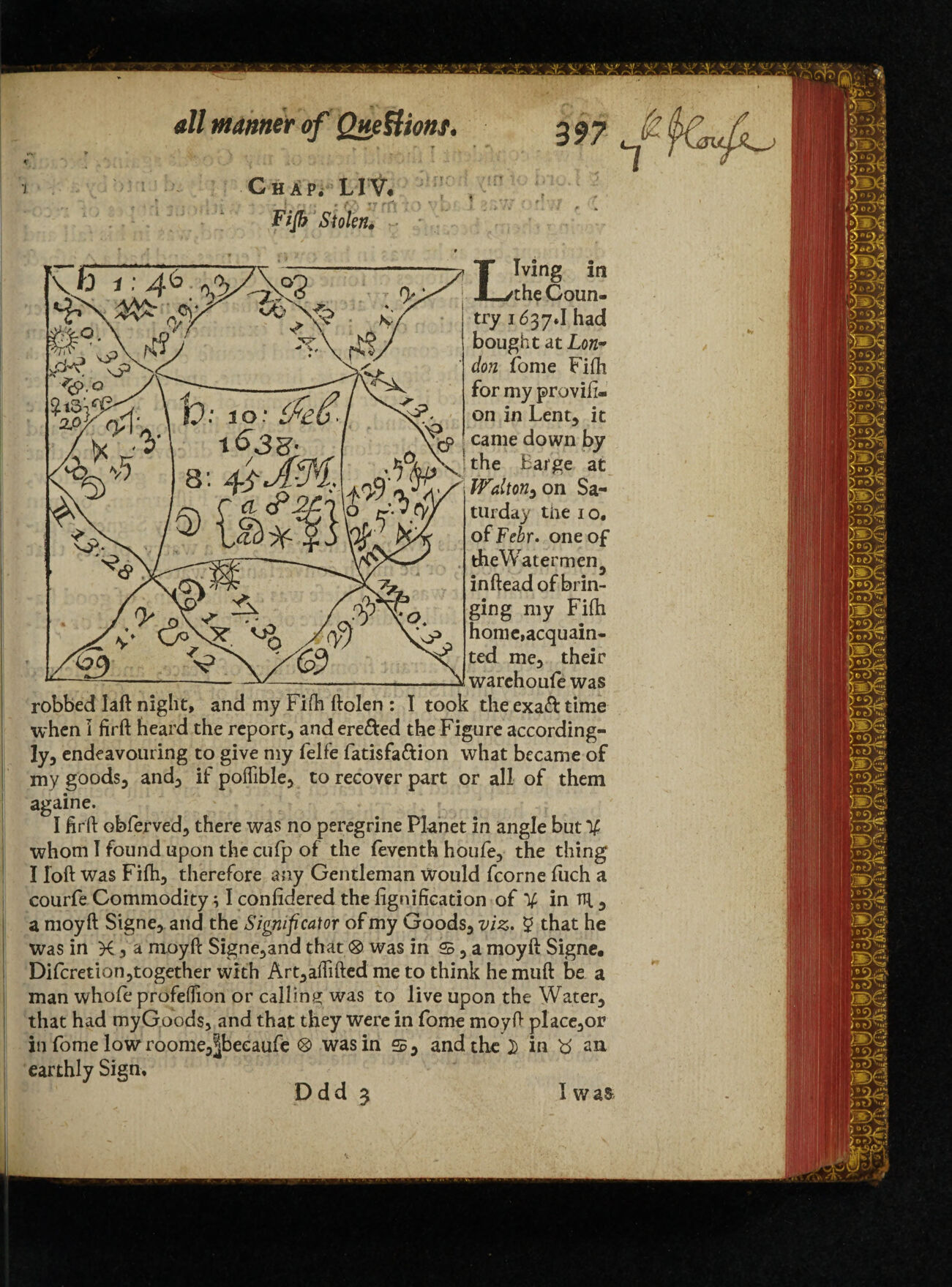
| C18 | Lilly's stolen fish | 397 | Chart 10 February 1638; 8:45 A.M.; narrative year 1637 | Theft; retain both years; possible chronology explanation remains unadmitted |
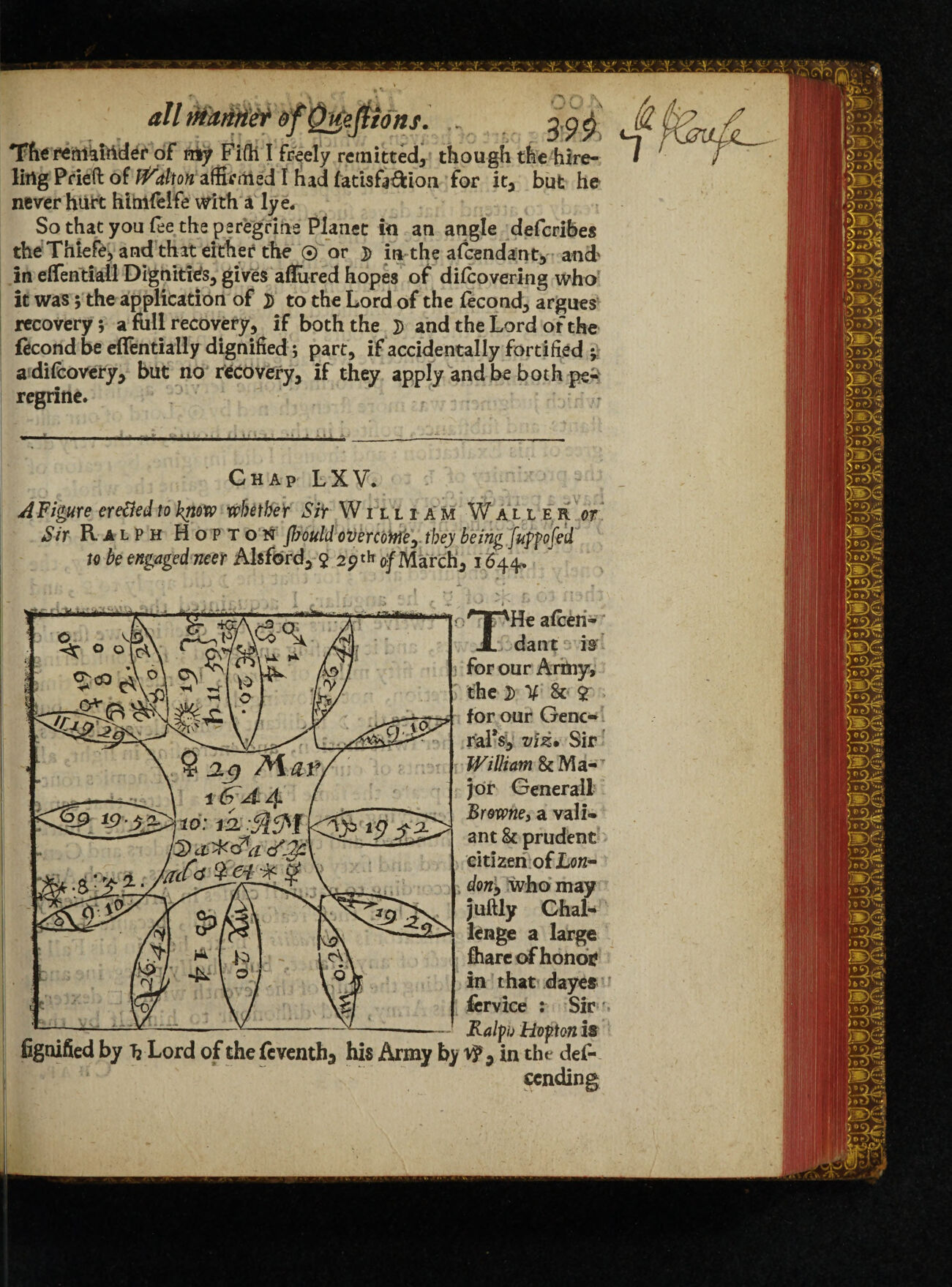
| C19 | Waller versus Hopton near Alresford | 399 | 29 March 1644; 10:12 A.M. | Seventh, conflict; diagram p.399, continuation p.400 |
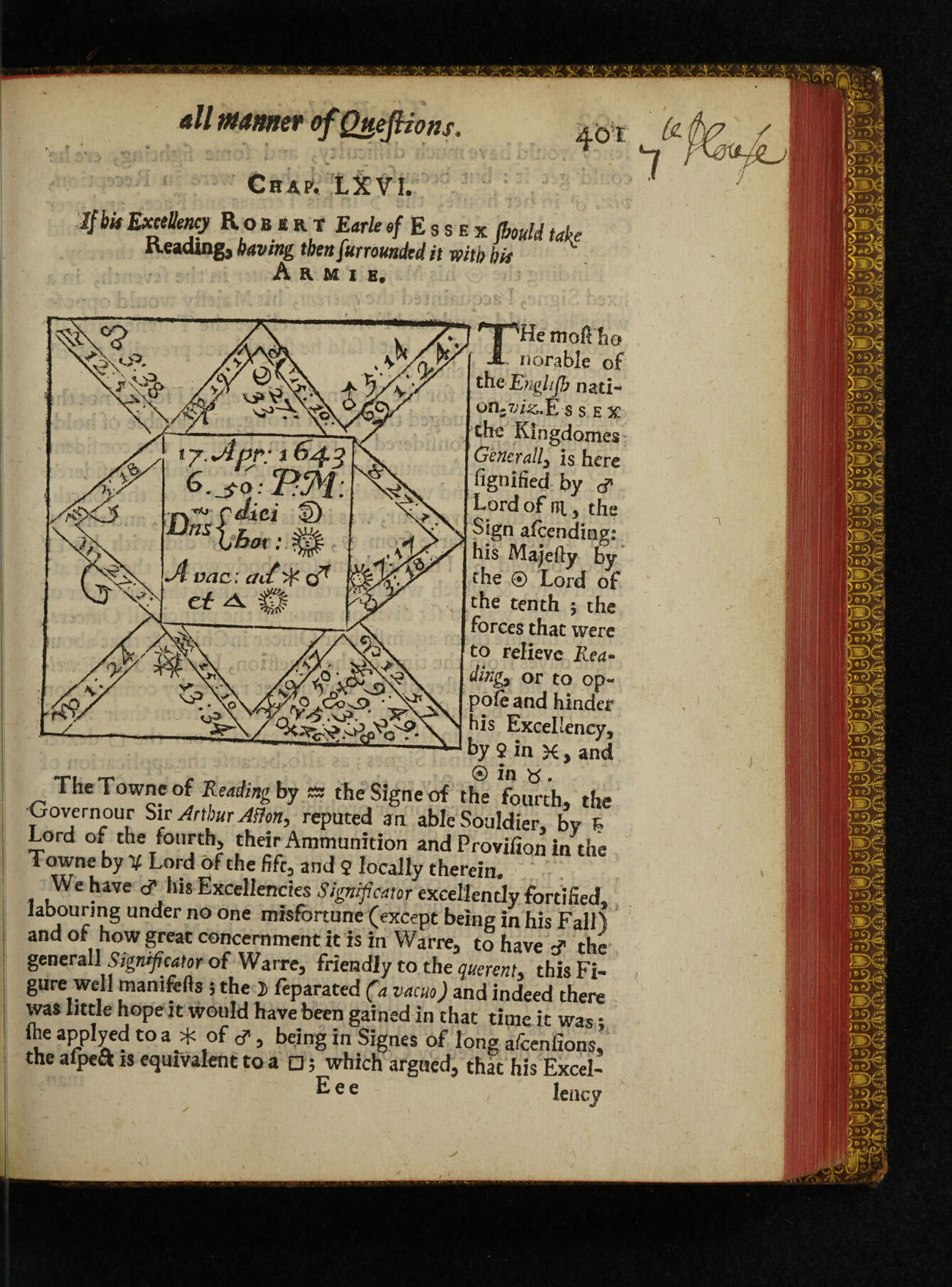
| C20 | Essex's siege of Reading | 401 | 17 April 1643; 6:50 P.M. | Seventh, siege; town fourth/king tenth; separate hypothetical lawsuit adaptation |
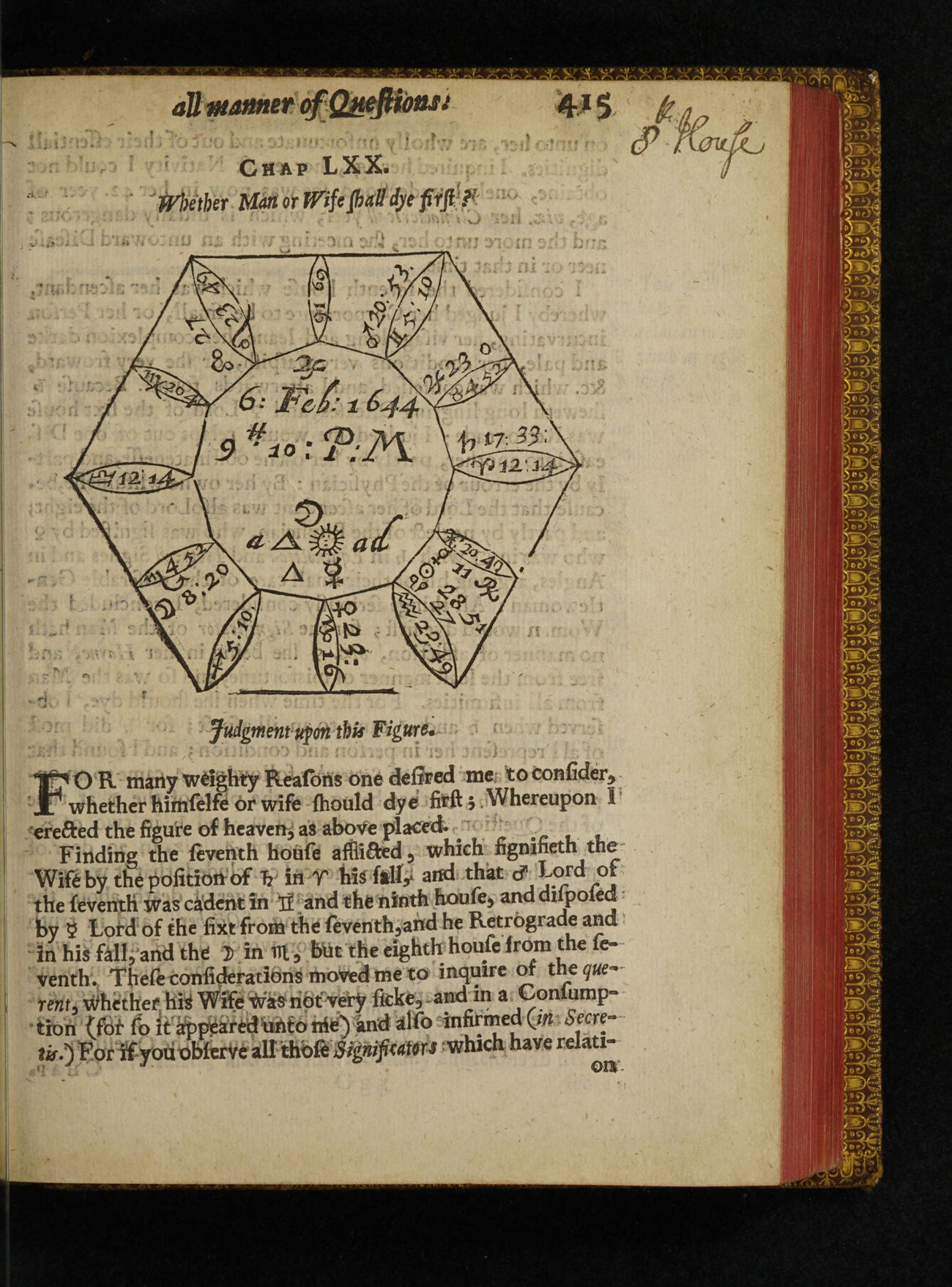
| C21 | Whether husband or wife dies first | 415 | 6 February 1644; 9:10 P.M. | Eighth-house section, wife seventh; year-start and outcome-source review |
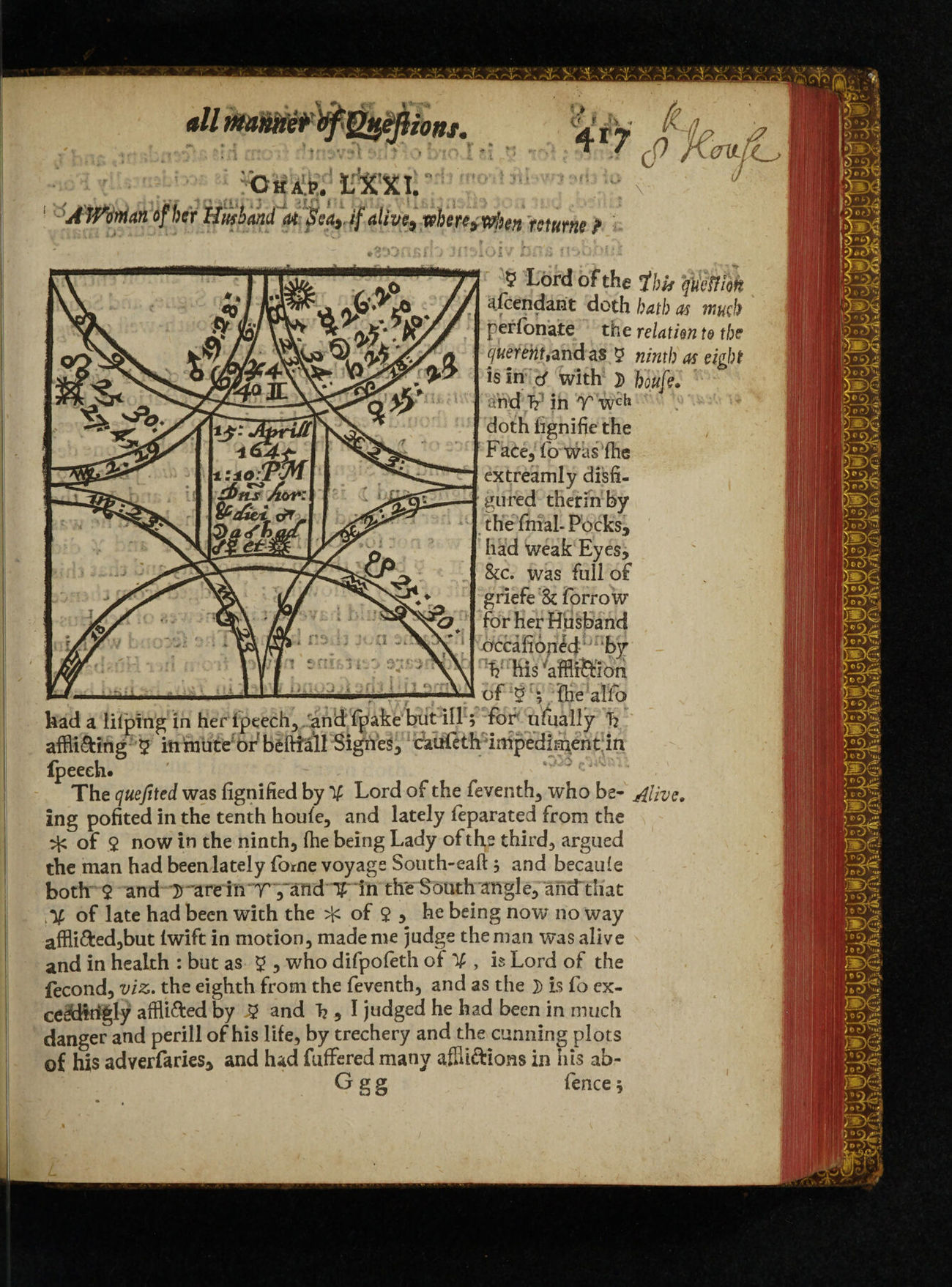
| C22 | Woman asks about husband at sea | 417 | 15 April 1645; 1:10 P.M. | Eighth section, also ninth; source assigns quesited eleventh; preserve actual role reasoning |
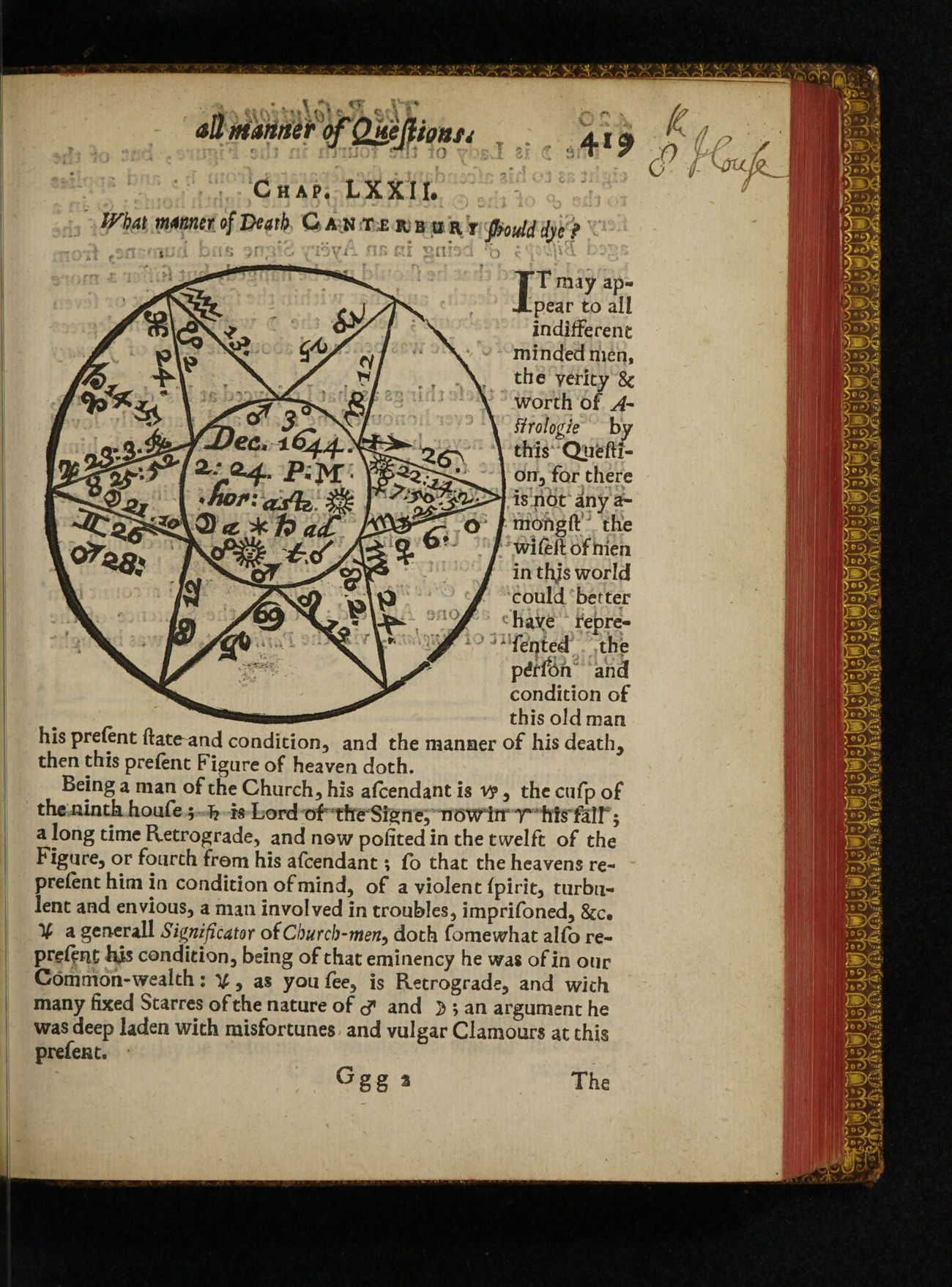
| C23 | Canterbury's manner of death | 419 | 3 December 1644; 2:24 P.M. | Eighth topic, churchman ninth; turning and retrospective political evidence |
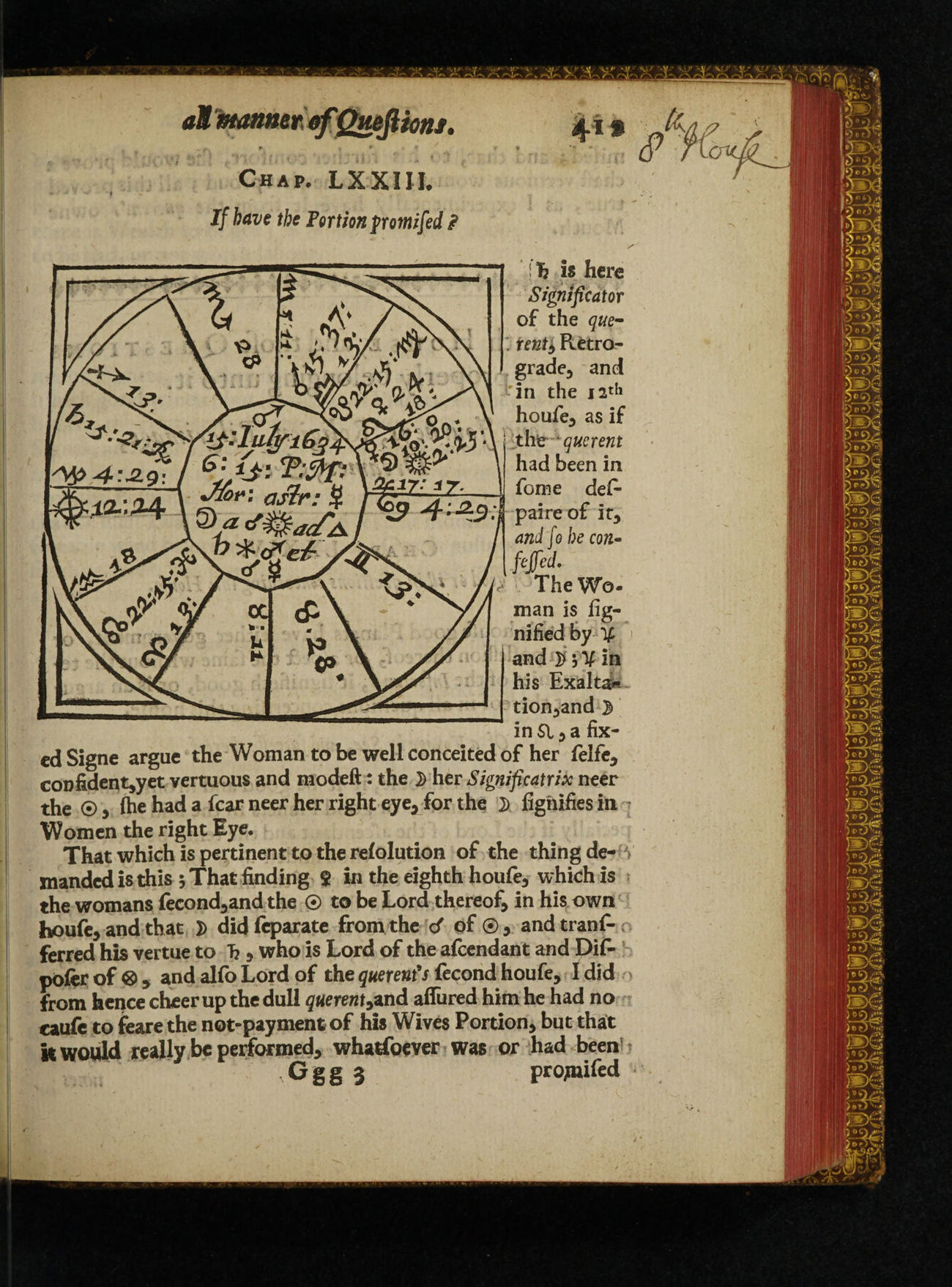
| C24 | Payment of promised marriage portion | 421 | 15 July 1634; 6:15 P.M. | Eighth, woman's substance; payment and descriptions differ |
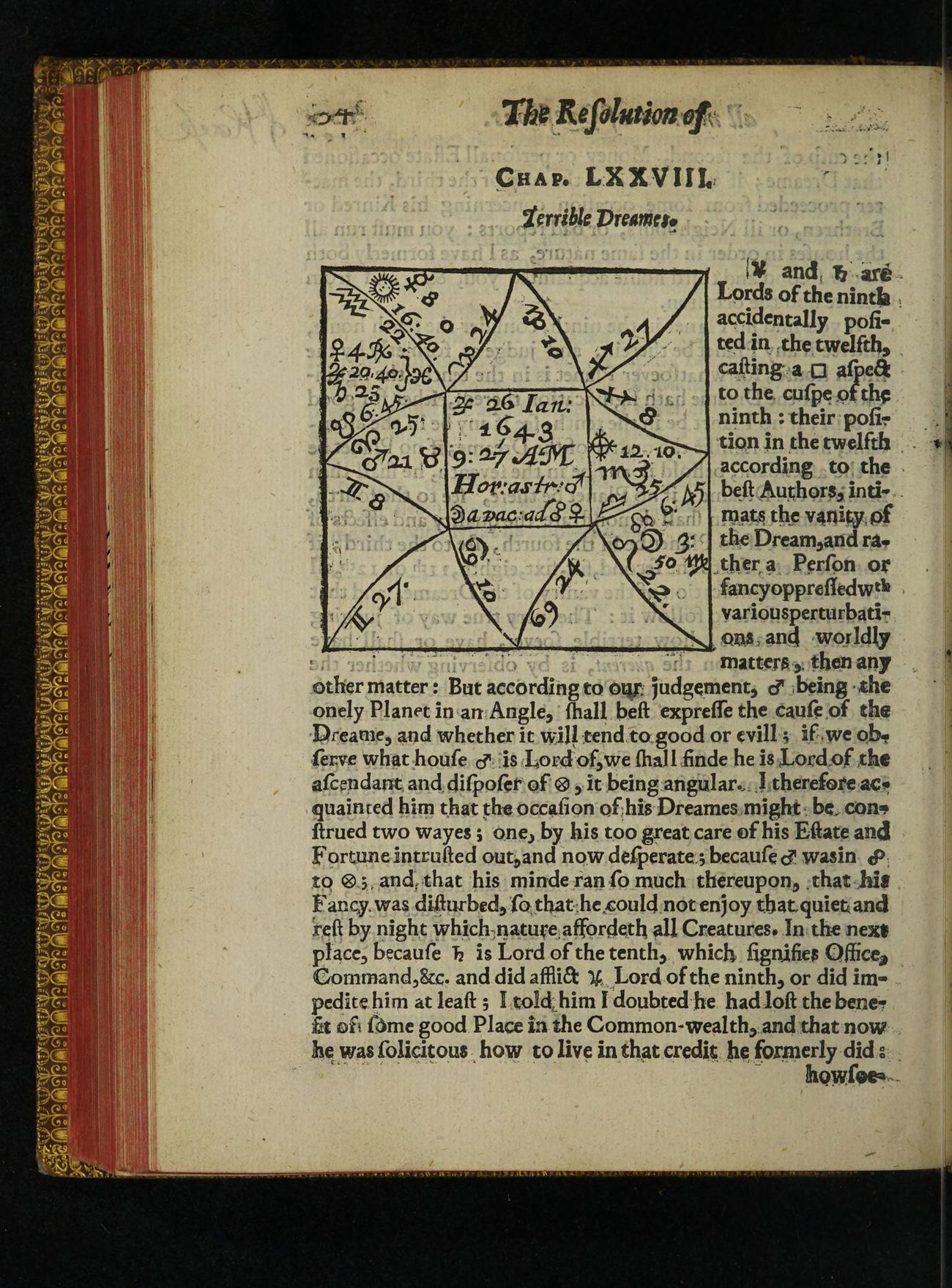
| C25 | Disturbing dreams | 436 | 26 January 1643; 9:27 A.M. | Ninth; year start; dream interpretation and reported financial circumstances differ |
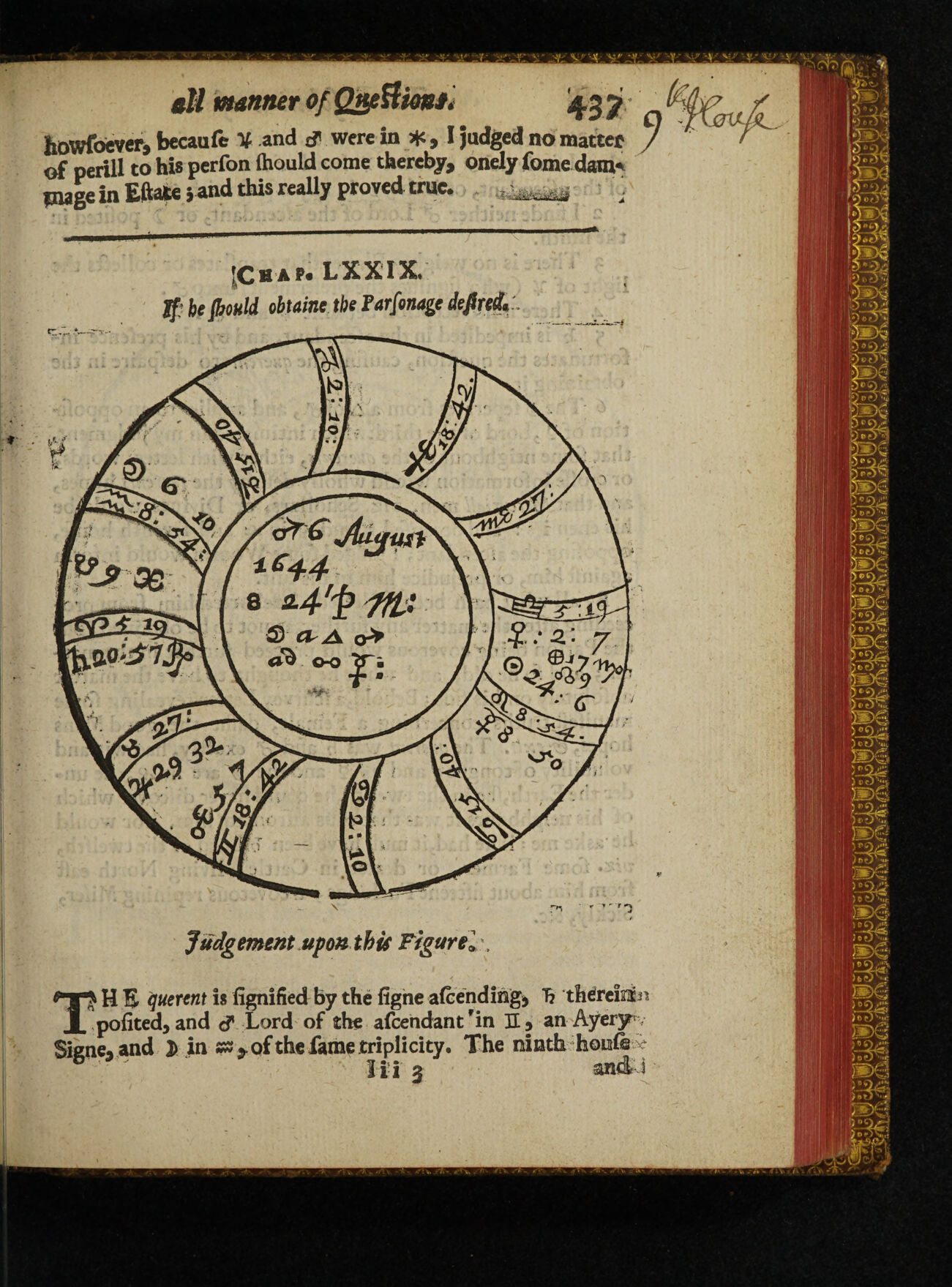
| C26 | Obtaining a parsonage | 437 | 6 August 1644; 8:24 P.M. | Ninth, ecclesiastical preferment; do not automatically recast as tenth |
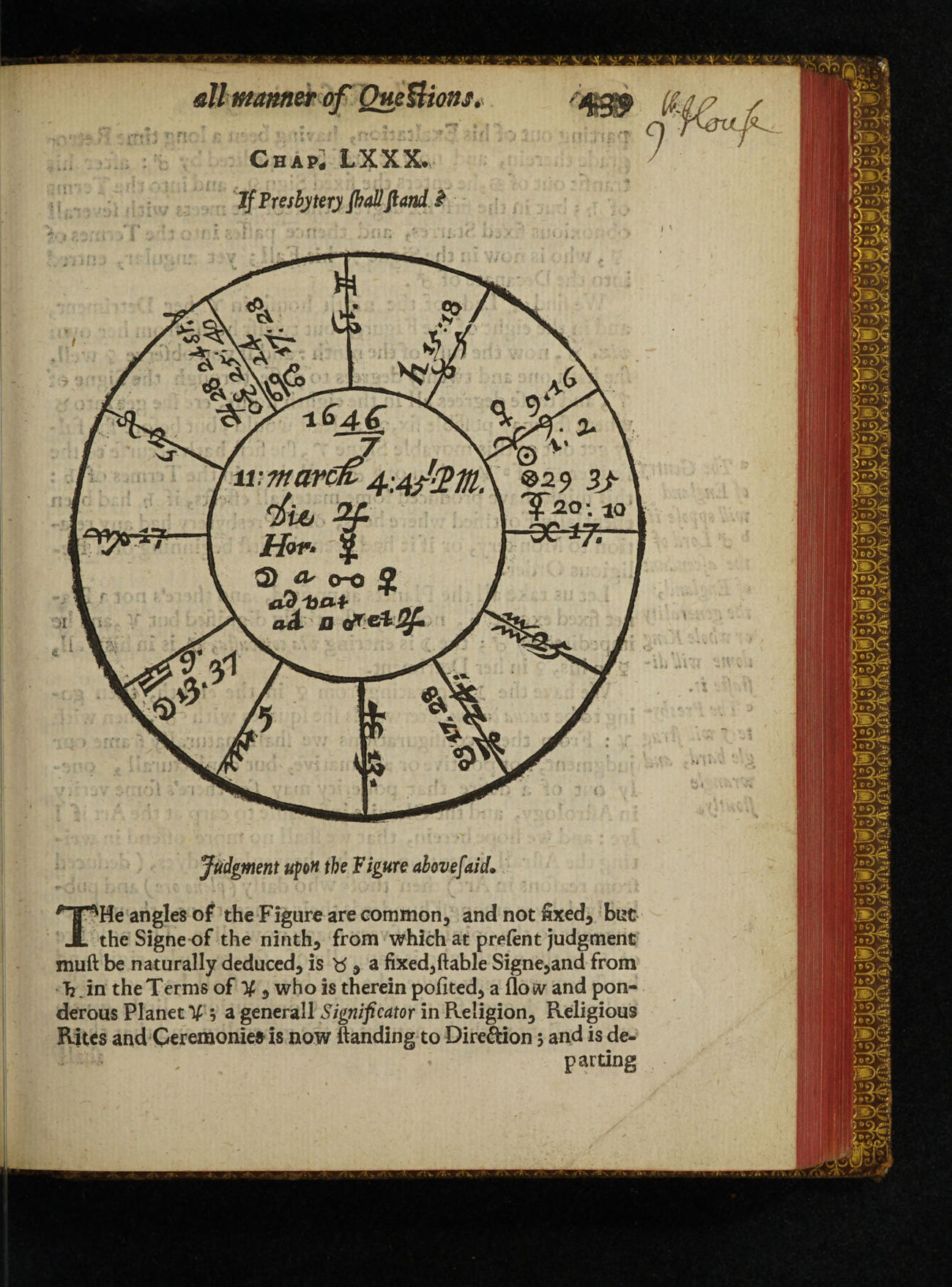
| C27 | Whether Presbytery will endure | 439 | 11 March 1646/7; 4:45 P.M. | Ninth, religious government; retain dual year and Lilly's conjectural qualification |
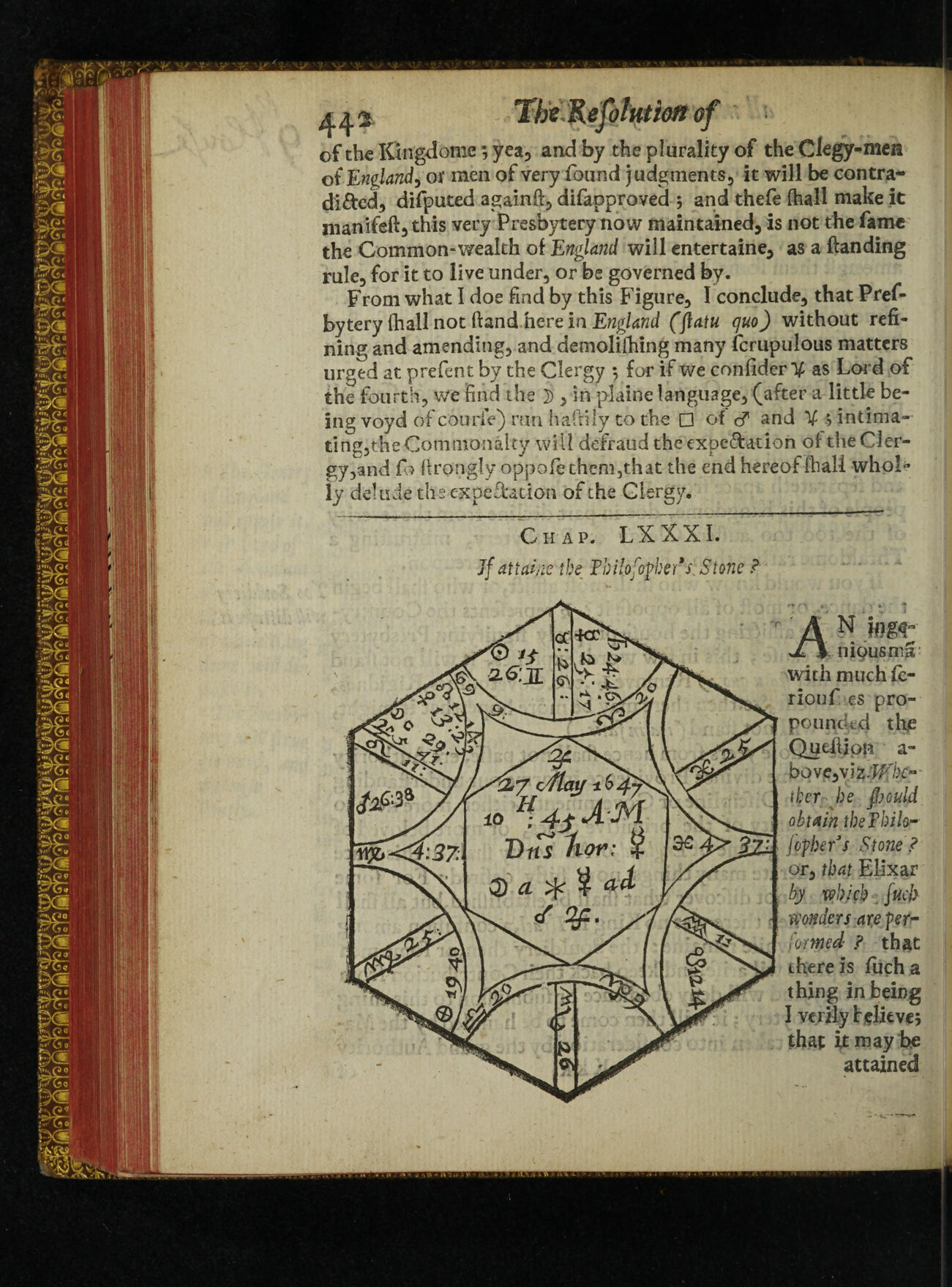
| C28 | Attaining the philosopher's stone | 442 | 27 May 1647; 10:45 A.M. | Ninth, knowledge/art; existing fixture is assignment-only; subsequent attainment not established here |
| C29 | Prince Rupert's honour, conflict with Essex and fate | 452 | 28 November 1642; 9:23 A.M. | Tenth section; Lilly acknowledges an interpretive error; do not erase it |
| C30 | Irish aid for king; queen's advance and meeting | 455 | —; — | Tenth king, fourth queen as seventh from tenth, eleventh aid; no readily printed epoch |
| C31 | Gentleman's desired office | Reuses 455 | —; — | Separate question, text pp.456-457; four/five-minute difference with unknown direction; no new diagram |
| C32 | Lost or stolen horse near Henley | 467 | 11 January 1646; 2:39 P.M. | Twelfth, horse; year start; source acknowledges a timing discrepancy |
| C33 | Whether patient is bewitched | 468 | 13 March 1646; 8:05 A.M. | Twelfth/sixth; year start; distinguish rejected witchcraft explanation from historical medical explanation |
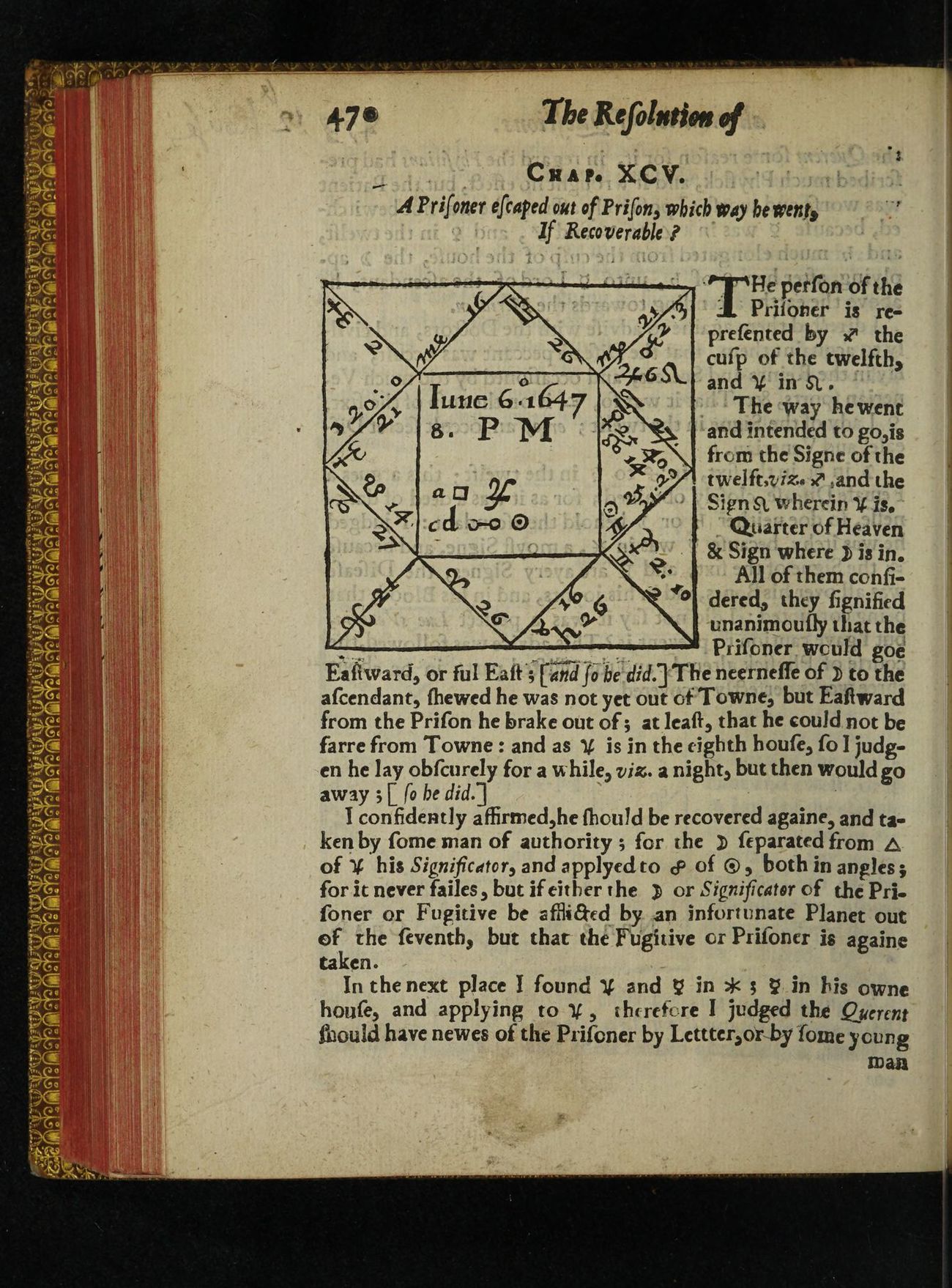
| C34 | Escaped prisoner: route and recapture | 470 | 6 June 1647; 8 P.M. | Twelfth; several status, location, news and recapture claims |
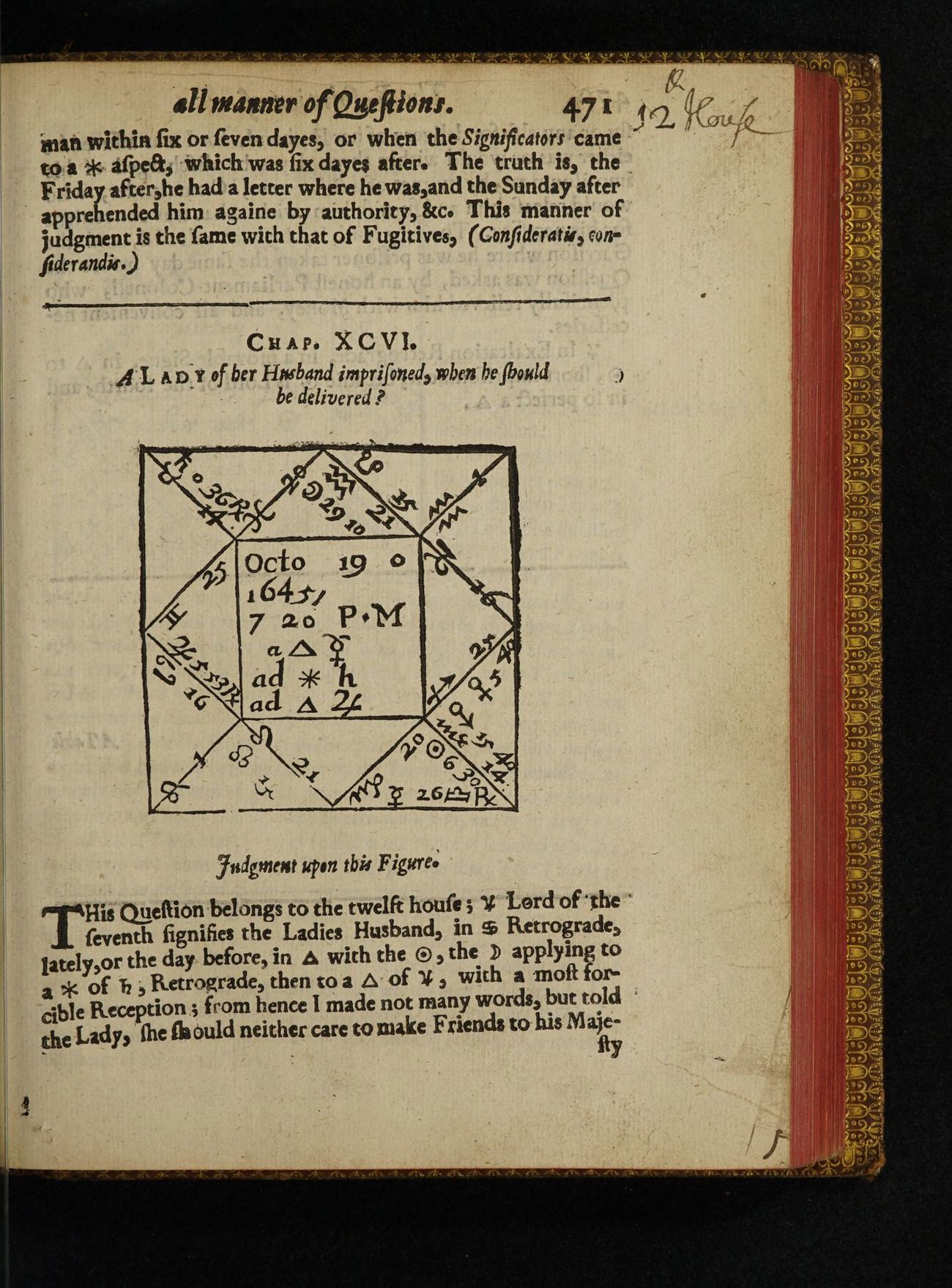
| C35 | Lady's imprisoned husband: release | 471 | 19 October 1645; 7:20 P.M. | Twelfth topic, husband seventh; source says release occurred before question: no prospective-prediction label |
| C36 | Essex's final departure westward | 473 | Monday 13 May 1644; 12:29 P.M. | Inception/event; journey ninth, commander first; noon clock and chart-purpose classification |
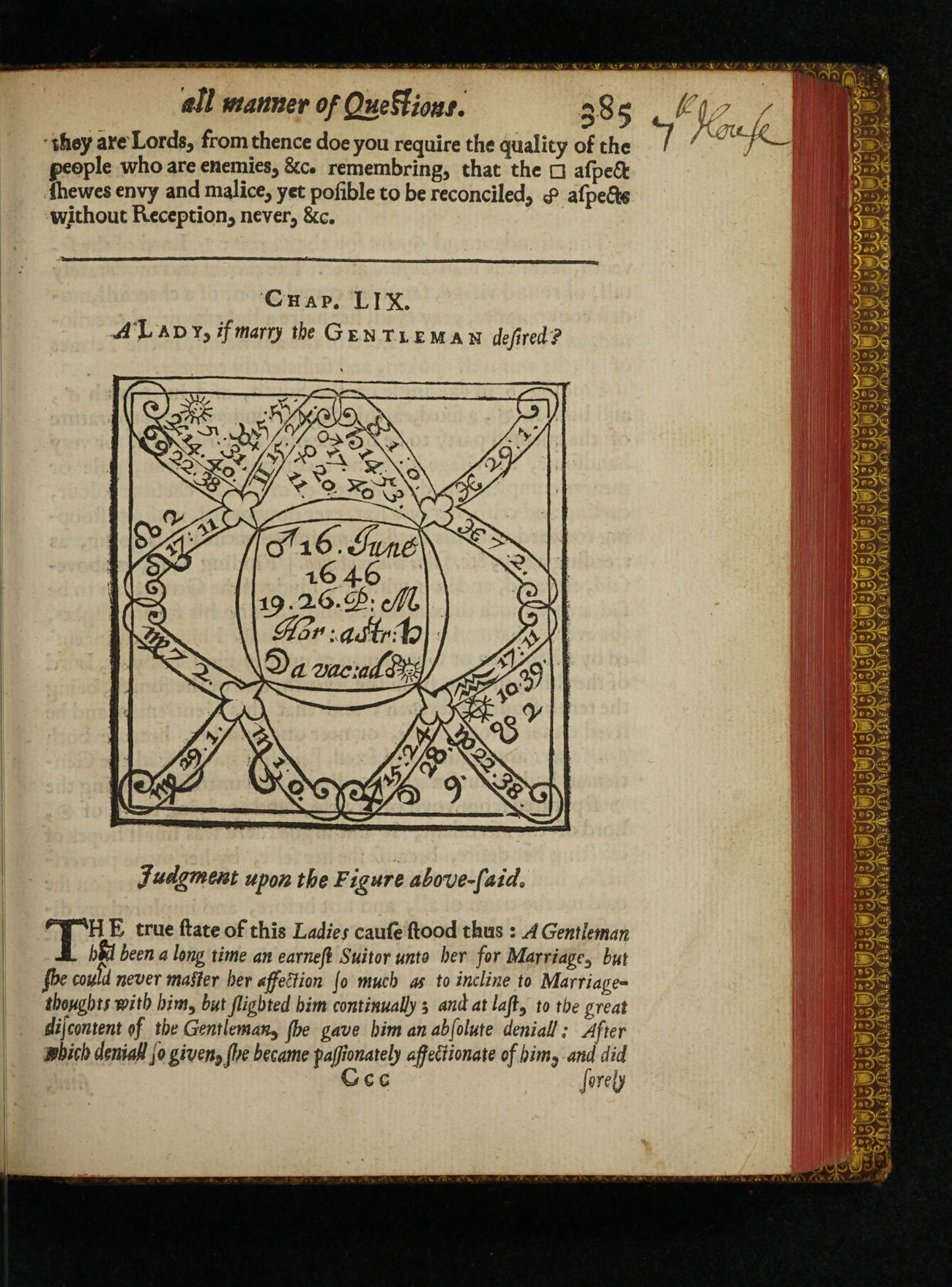
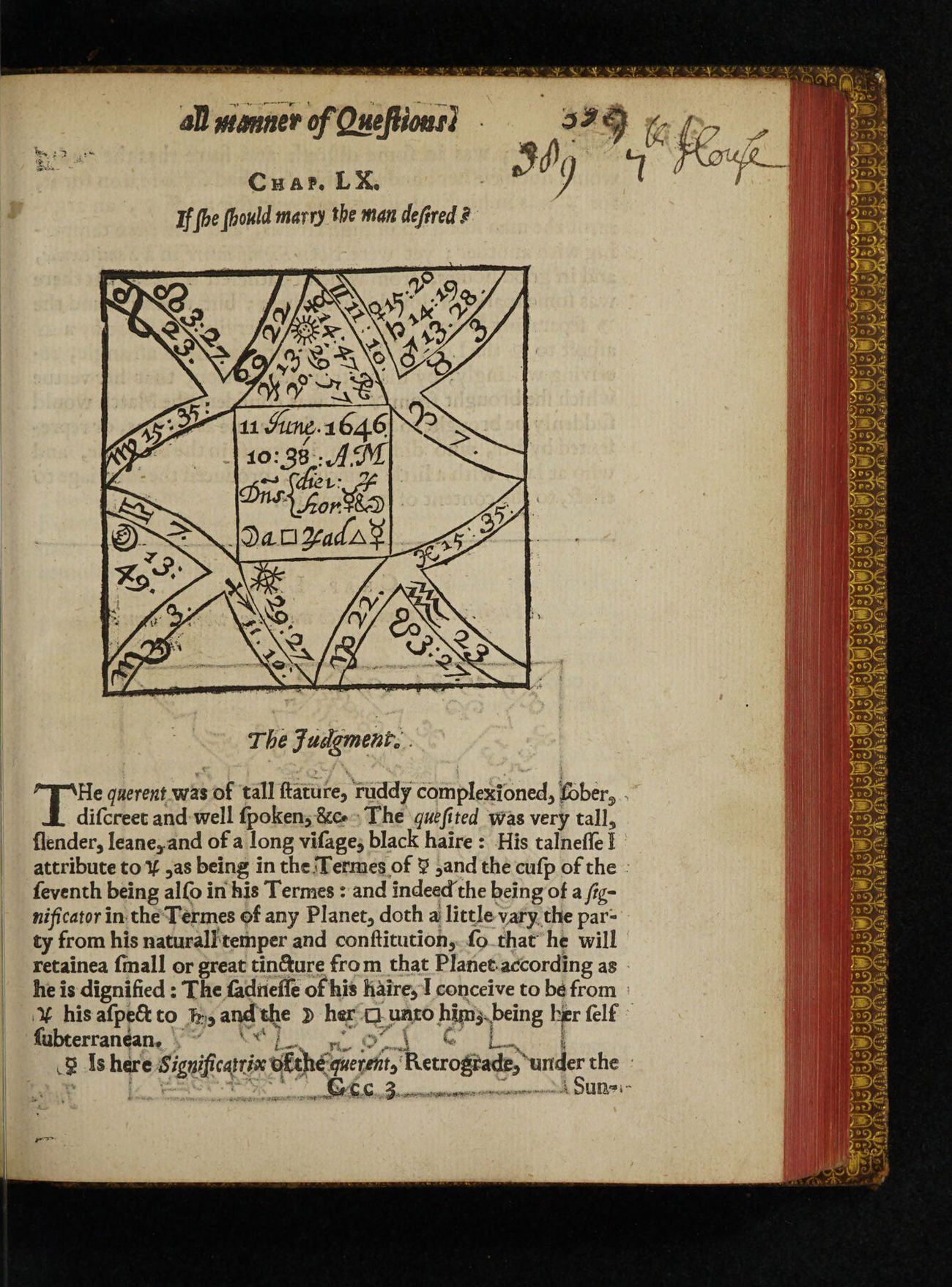
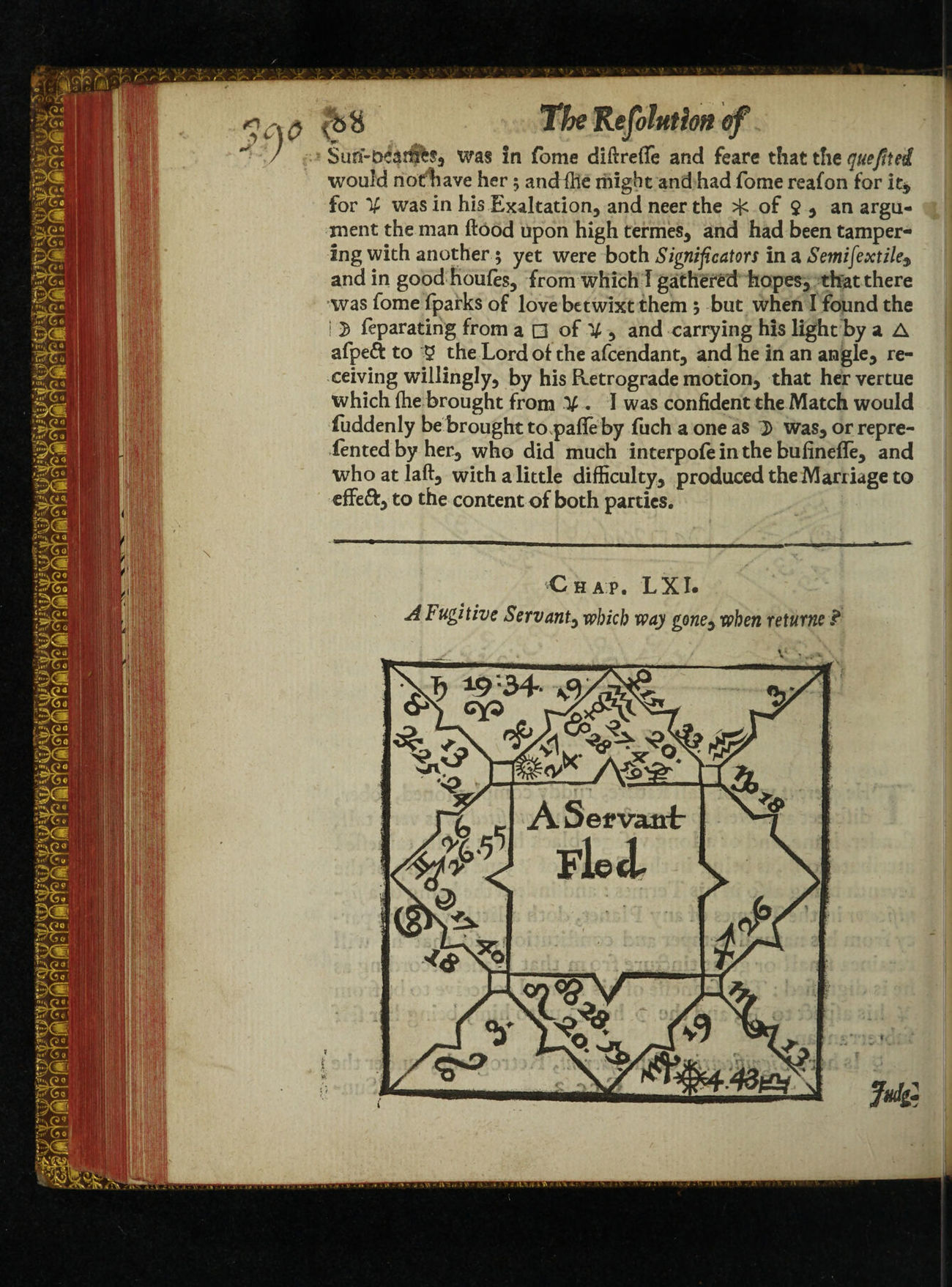
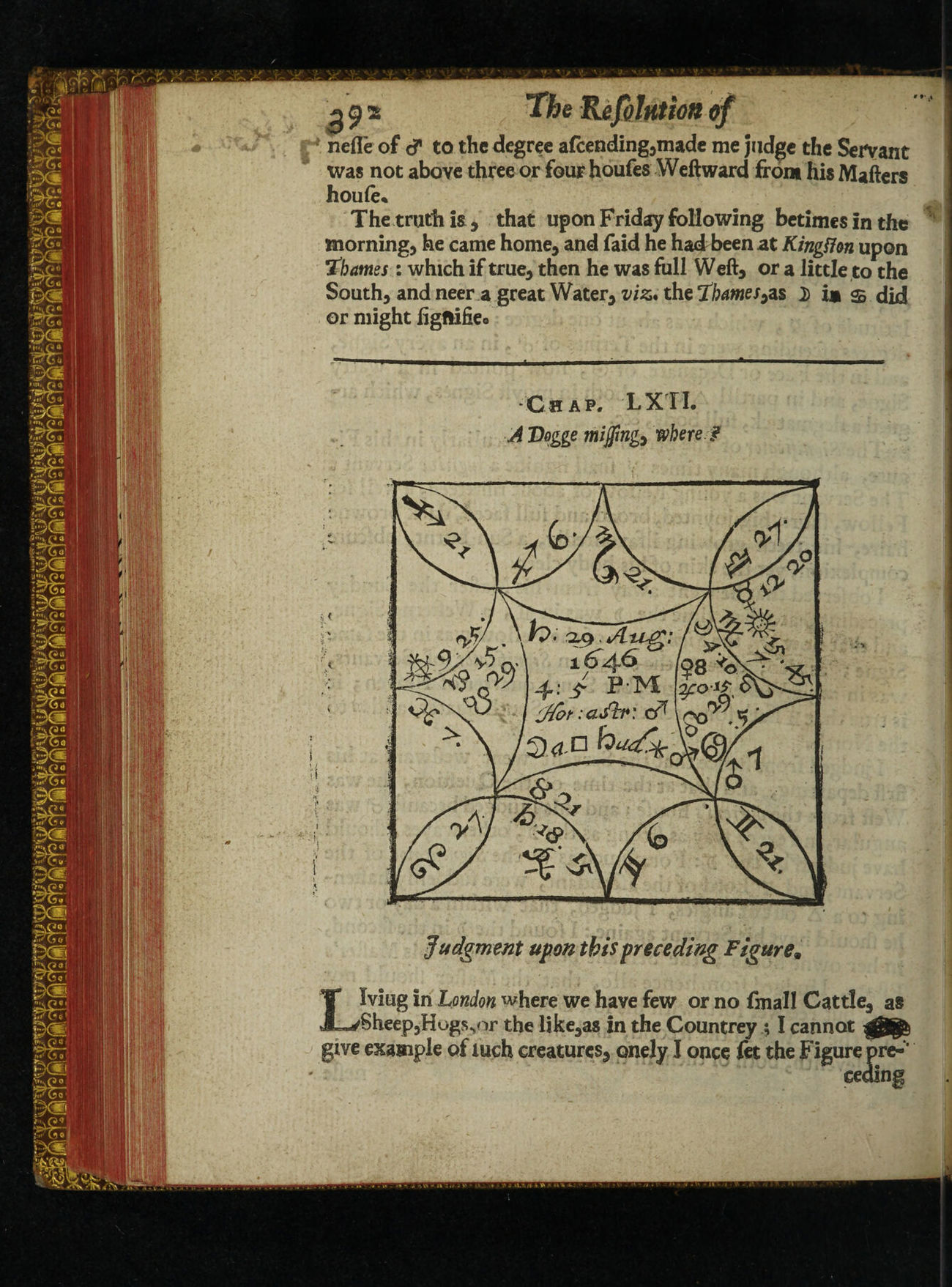



Only explicitly checked judgement starts/ranges are recorded in the index; blank ends do not mean that a judgement ends at the next diagram. The p.442 assignment fixture's known source span is pp.442-445. Full author-reported outcomes remain uncollated; C27/C29/C32/C35 preserve qualifications already noticed, rather than pretending a complete outcome audit has been performed.
| ID | Location / figure | Raw epoch | Admission concern |
|---|---|---|---|
| E01 | Filled figure p.35; discussion pp.34-39 | Tuesday 6 January 1646; one hour thirty minutes P.M. | P.39 explains that the first figure's planetary positions were not fully rectified to its hour. Printed-chart and modern-reconstruction expectations must differ. |
| E02 | Text pp.39-40; no new figure | Saturday 17 January 1646; eleven o'clock and twenty after noon | House-erection arithmetic; preserve the noon-based statement before conversion. |
| E03 | Text pp.41-42; no new figure | Monday 26 January 1646; 9:45 before noon | P.41 explicitly equates this with Sunday 25 January, 21h45 after noon. This is an independent historical-clock control. |
These are computational examples, not outcome predictions. P.47's interpolation/local ephemeris instructions add another reason not to demand that every printed coordinate equal a modern precise reconstruction. A historical discrepancy must be explained and preserved, not tuned away by changing an astronomical calculation.
Didactic numerical examples are separate from historical case groups:
| ID | Pages | Definition/example to transcribe independently | Initial fixture purpose |
|---|---|---|---|
| D01 | 110 | Jupiter/Saturn application with nine-degree full orbs each | Named orb choice, summed halves and complete separation |
| D02 | 110-111 | Bodily and aspectual prohibition examples | Role orientation, intended contact and third-party sequence |
| D03 | 111 | Mars/Saturn intended conjunction interrupted by Mars reversal | Refranation without requiring a later exact conjunction |
| D04 | 111 | Mercury 16 Aries separating from Mars 15 and joining Saturn 20 | Structural translation; p.126's fuller qualifications remain separate |
| D05 | 112 | Mutual reception examples by dignity | Host/guest direction and same/mixed basis; uncertain glyphs still need collation |
| D06 | 112-113 | Mercury 10 Aries, Mars 12, Jupiter 13 | Frustration's bodily conjunction scope |
| D07 | 113-114 | Combustion, beams and cazimi examples | Same-sign condition; apparent p.113 numeric inconsistency is not a golden |
| D08 | 121-122 | Planetary-hour identity, triplicity and nature examples | Preserve Lilly's distinct agreement paths |
Additional teaching reuse, discovered but not exhaustively catalogued:
- C02: pp.154-157 hypothetical relatives, strangers, sudden events and absent persons, plus bodily marks.
- C07: p.201 hypothetical sibling application.
- C12: pp.292-293 supposed disease-onset/crisis arithmetic.
- C13: p.388 hypothetical longevity, wealth, agreement and character.
- C20: pp.403-404 hypothetical litigation adaptation.
- P.166: hypothetical visitor/letter-receipt examples about when to erect a question; not additional historical figures.
- Practice anecdotes at pp.149-150, 213, 233 and 466 need a separate narrative register. This is a discovery list, not a complete narrative denominator.
The separate 1644 gentlewoman/aged-man fixture mentioned in earlier research does not belong to the 1647 Christian Astrology case lineage. Do not blend it into this denominator or promote it as a first-edition case without its own source record.
Each case must earn its own promotion; catalogue presence grants none of the following gates automatically:
- Printed-chart transcription: two independent entries of every used planet, degree/minute, sign, motion mark and cusp, with page/crop locators, uncertain readings and alternate-image resolution. Keep printed values.
- Historical input receipt: literal and normalized dates, calendar/year start/noon clock, timezone or local-time model, locality and coordinates, conversion derivation and uncertainty. Unknown time stays unknown. C31 needs its own offset receipt even though it shares a printed figure.
- Question/role receipt: literal question location, normalized proposition, entities, caller context, radical/turned derivation, each proposed significator and ambiguity. Chapter placement cannot replace the actual house assignment in the judgement.
- Doctrinal witness: passage-by-passage support and opposition, source rules, event order and conditions, qualitative judgement and any timing derivation. Mark hypothetical extensions and conjectures explicitly.
- Numerical reconstruction: a separate modern calculation with declared astronomical products, kernels, house policy, timescales and tolerances. Preserve disagreements with the printed chart and explain them; never edit the printed data to manufacture agreement.
- Outcome receipt: distinguish what Lilly reports, when it was known, independently dated corroboration and what remains unknown. C35 cannot demonstrate a prediction of release after the question. An author's retrospective report alone is not independent outcome verification.
- Test admission: source-owned expected results, reviewer provenance, positive/negative/boundary controls and explicit assertions about which evidence class the fixture validates. No implementation-output goldens.
Recommended first tranche: E01-E03 and D01-D08, then C28 for the existing role assignment lineage, C08 for a transaction and C13/C14 for marriage. Select a complete topic module only after its full rule chapter and worked judgement are collated. Numerical agreement, faithful historical interpretation and prospective predictive performance must remain separately measured.