Multi Tile and Mux
One map is 128×128 pixels; a mural is a grid of them. Two mechanisms keep grids manageable: whole-composition processing, which avoids visible seams, and mux, which avoids wasted bytes.
-
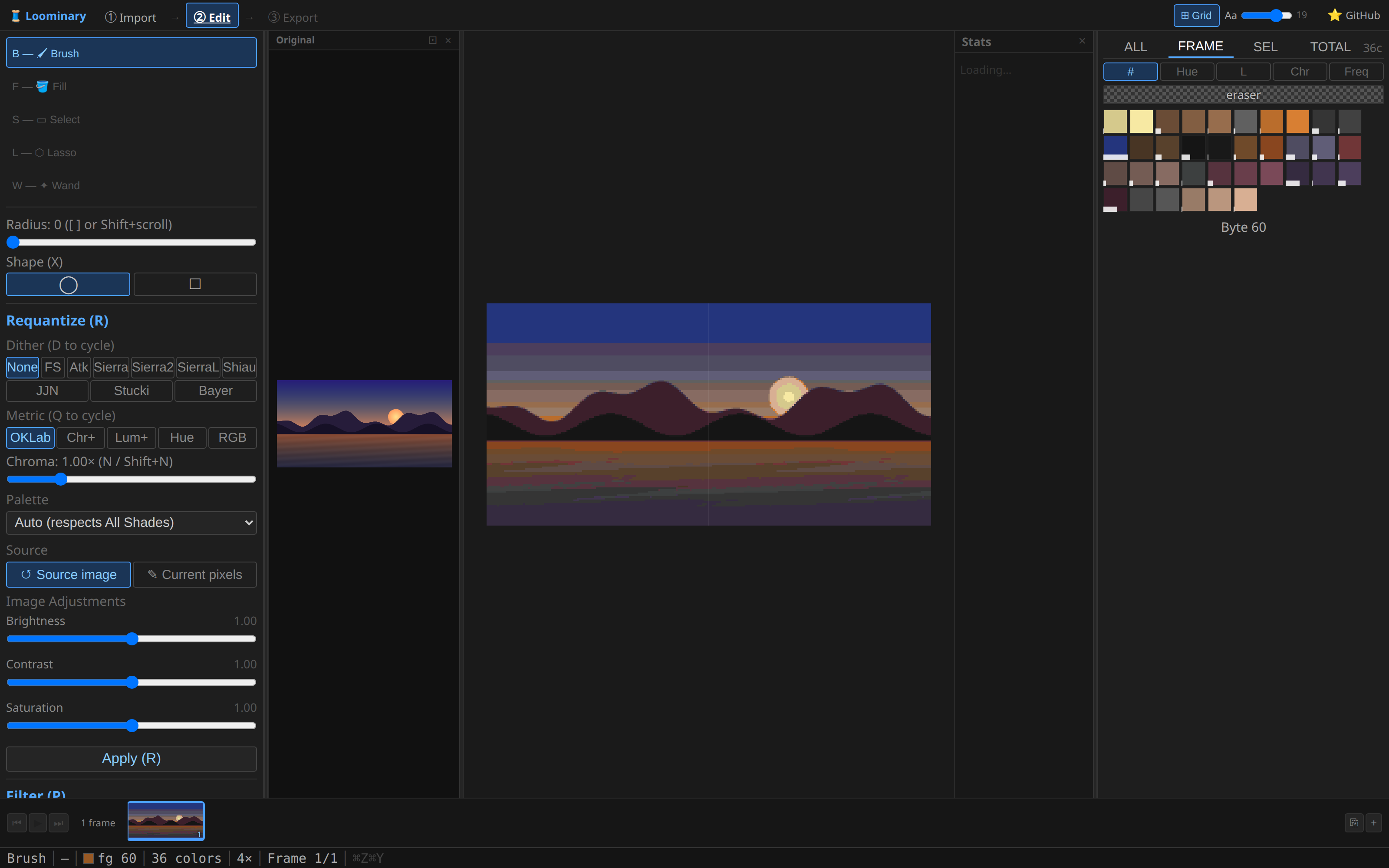
Set the grid at import (Cols × Rows, up to 128 each; "auto" derives it from the aspect ratio). Quantization and dithering run on the whole image before splitting, so colors and dither patterns flow across tile borders as if they weren't there.
-
Edit with the ⊞ Grid canvas; selections, fills, and brush strokes work across boundaries:
-
Export produces one schematic per tile, named
loominary_carpet_r<row>_c<col>.litematic, plus per-tile budget stats: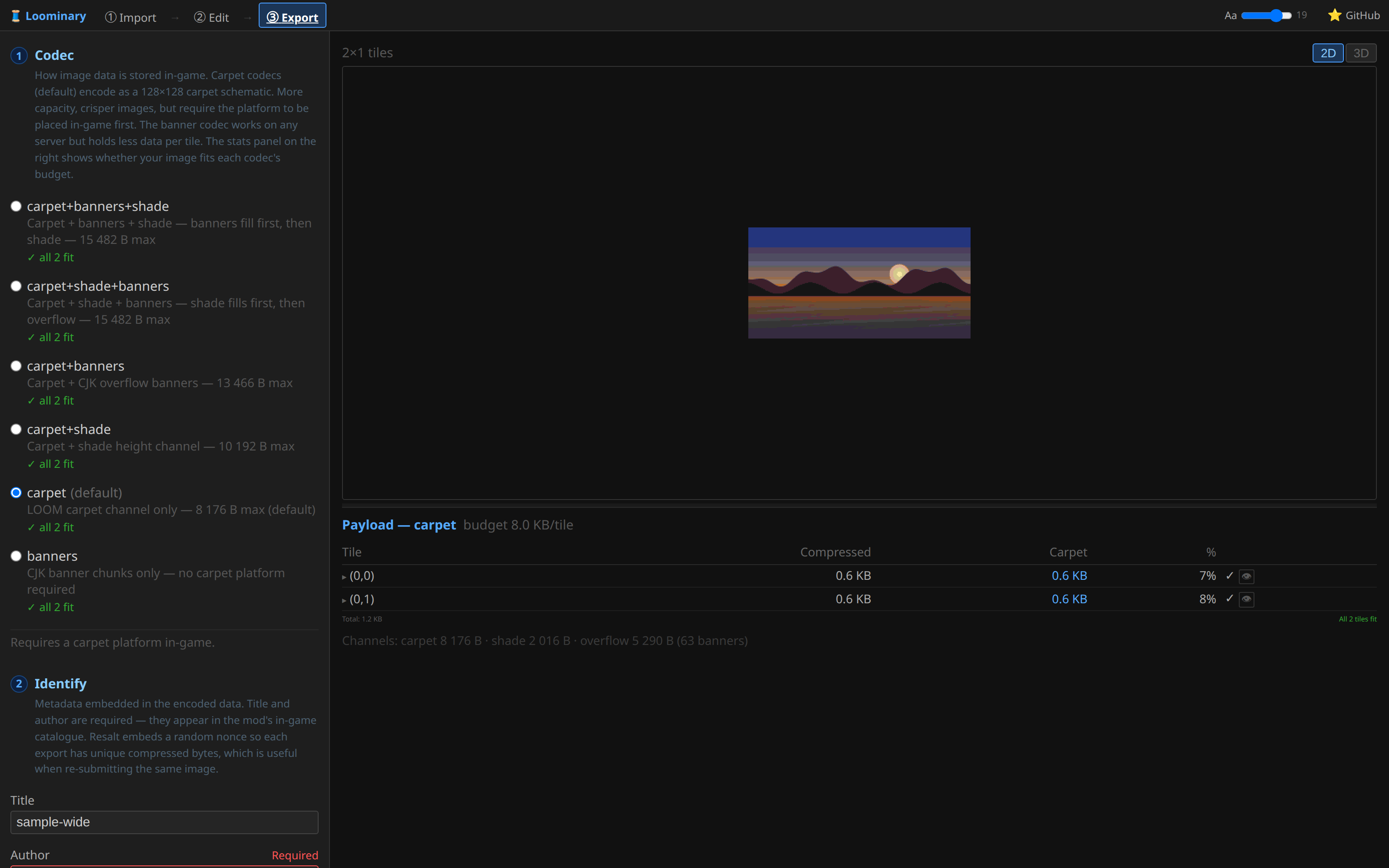
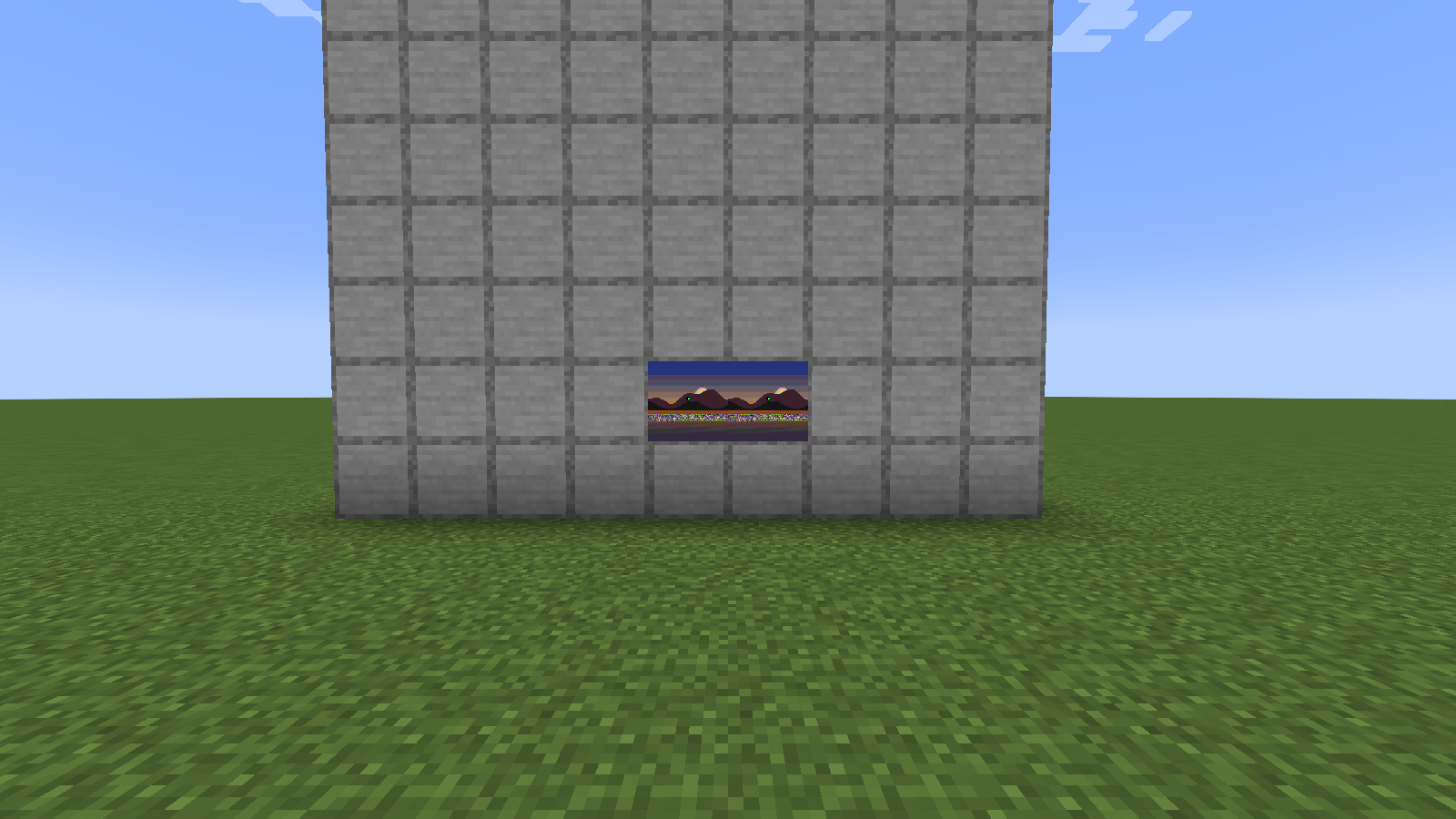
In-game: place each tile's platform, scan a map per tile, hang them in a matching wall of item frames (placement guide). /loominary tile next / tile pos <col> <row> step the active tile for banner work. Preview can discover the whole wall: look at any one frame and /loominary preview paints every tile of the grid:
Tiles never fill evenly: the sky tile compresses to 800 bytes while the busy center tile wants 18,000. Mux lets over-budget tiles (receivers) spill overflow into under-budget siblings (donors):
- Each donor reserves part of its channel capacity for guest segments (a 10-byte routing descriptor plus the guest bytes), which are invisible to the donor's own art.
- The export page's mux panel shows the whole allocation: every tile's role (normal / receiver / donor), its own vs guest byte counts, and who routes to whom. If the art tiles can't absorb everything, blank auto-donor tiles (pure carriers, no art) are appended.
- In banner-only mode donors work too; a donor tile spends spare banner slots on guest chunks (one extra routing banner per guest).
- The mod reassembles every receiver from its donors before decoding. The allocator is implemented identically in the web editor and the mod and locked by cross-language tests, so a web-baked allocation always reassembles.
In-game equivalents: /loominary mux appends blank donor tiles to the loaded batch (mux undo removes them), and /loominary status donors pages through donor assignments.
A muxed receiver can't decode until its donors are scanned, and a composite lossy animation needs every tile scanned. Until then, waiting tiles paint a status screen counting scanned siblings:
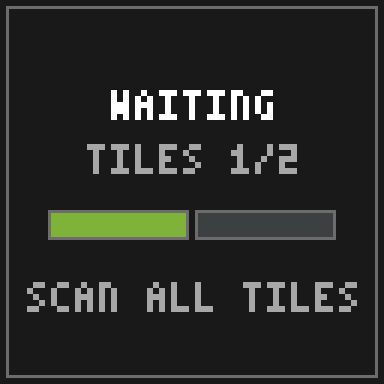
Scan each map of the grid once and the whole wall resolves together.
- Frames on a wall must form the same grid shape as the export. The decoder identifies tiles by the grid position embedded in each payload, but
preview's auto-discovery and animation sync walk frame adjacency outward from the one you're looking at. - Murals multiply everything: platforms, scans, banners. The
carpet+shade+bannerscodec variant trades staircase building for fewer banners if your bottleneck is anvil time. - For animated murals, composite lossy encoding means seams never exist in the first place; see Animated Art.