wiring uart logic
Connect a logic-level serial adapter to a compatible board console.
Applies to: Non-isolated, compatible logic-level UART. TX/RX labels are from each device's own perspective; no universal header order is implied.
Reading development-board logs or sending simple commands over a short local connection.
UART needs no separate clock wire, but both ends must agree on baud rate and framing.
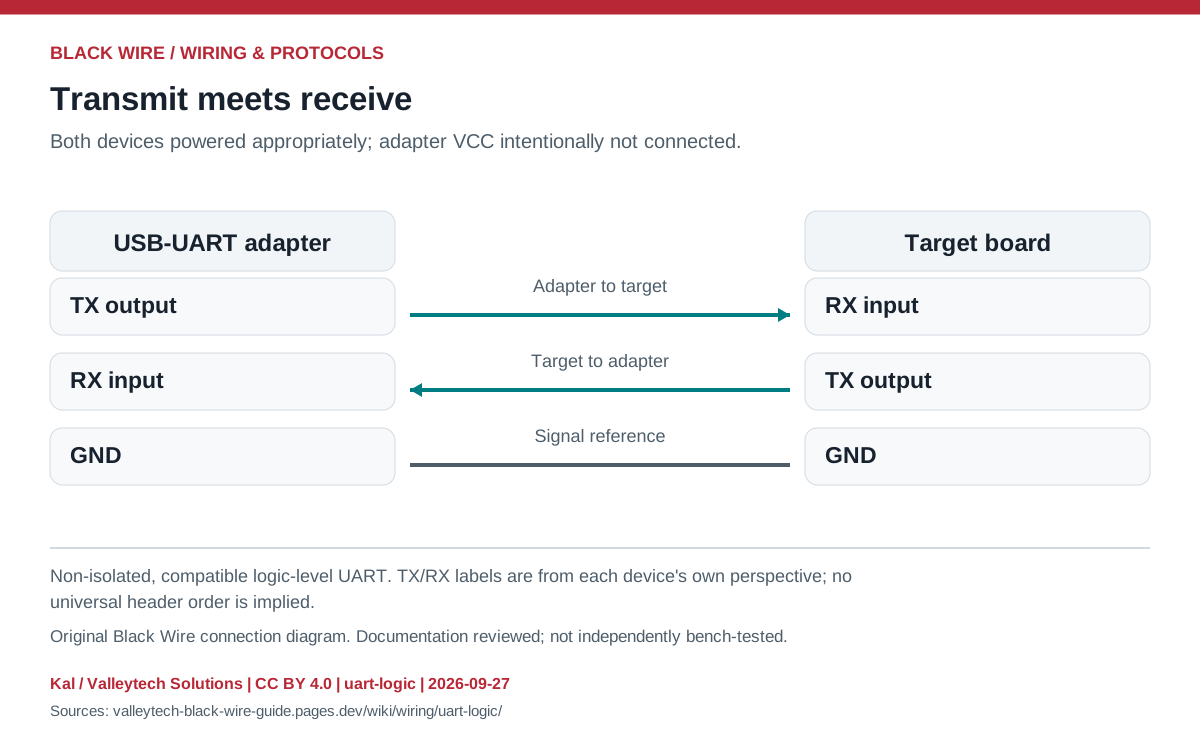
| Adapter | Target | Purpose |
|---|---|---|
| TX | RX | Send data |
| RX | TX | Receive data |
| GND | GND | Common reference |
- Confirm the target's I/O voltage and the adapter's actual TX level; a supply-voltage jumper may not change TX voltage.
- Wire with power off, then select the documented baud, data bits, parity and stop bits.
- Start by reading logs; garbled text often indicates framing, voltage or grounding trouble.
- Do not connect two TX outputs together.
- RS-232 voltage levels require a transceiver; a USB connector alone does not identify an adapter's electrical interface.
This is a general interface guide; match your own hardware documentation.
Source documents inspected; independent electrical and bench review pending. Reviewed 2026-09-27.
- Analog Devices: UART communication — Hardware interface, baud rate and data framing; checked 2026-09-27
- Analog Devices: RS-232 fundamentals — DTE / DCE and RS-232 electrical interface; checked 2026-09-27
Original writing and diagram by Kal / Valleytech Solutions, CC BY 4.0. Manufacturer artwork and documentation retain their own rights.
CC BY 4.0 · SHA-256: e0b314edb092a27b6f3aaf22efd15f30637cd7c8c2cd2e28d1fbd62b09670ab9